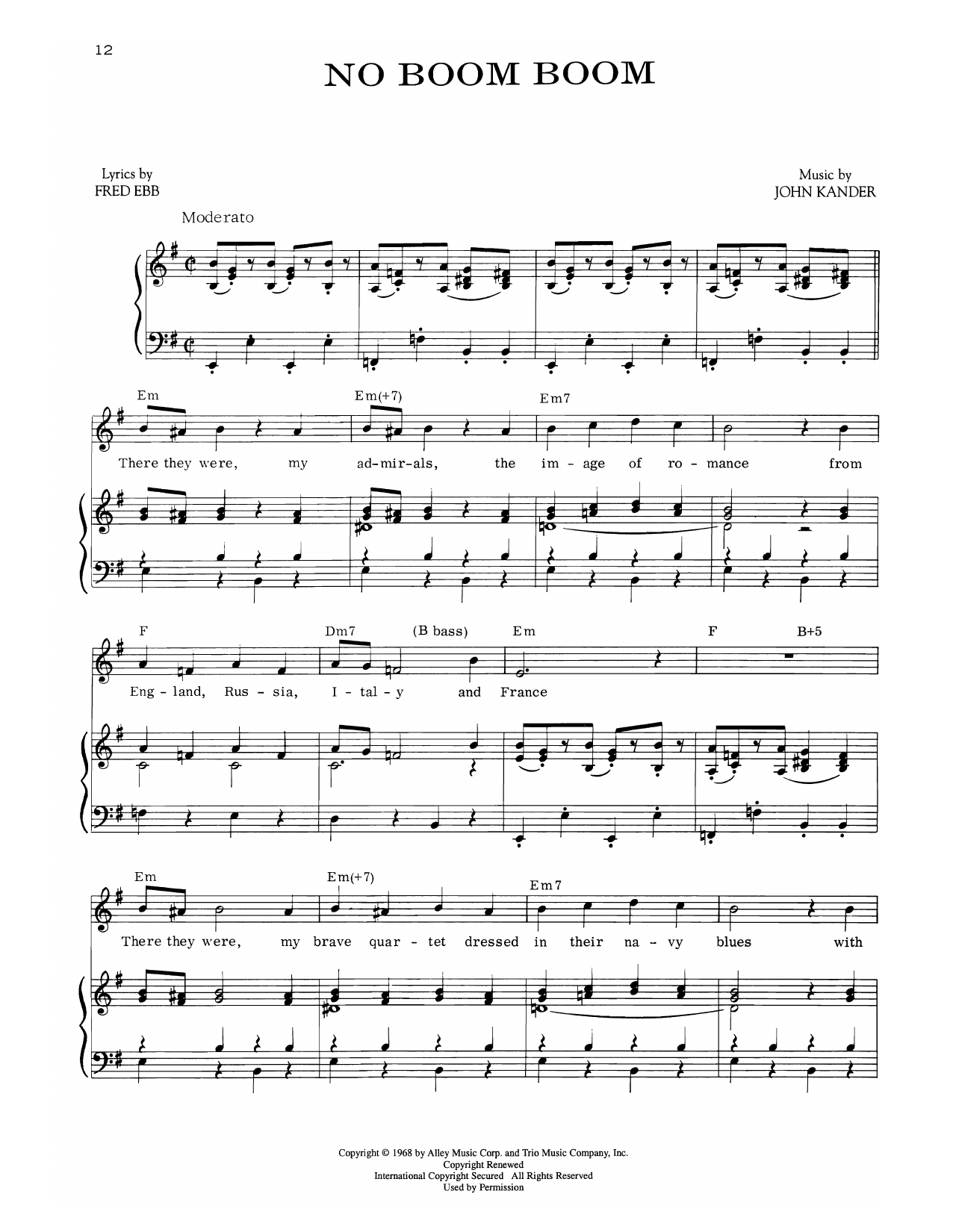
No Boom Boom (from Zorba) Sheet Music Preview

No Boom Boom (from Zorba): Piano Vocal

Item: 35-DS01732045

Digital Download
$5.99
Description

No Boom Boom (from Zorba): Piano Vocal isn't in MakeMusic Cloud just yet...but it could be. Let us know you'd like to see it, and you'll help shape what comes next. In the meantime, start a free trial and dive into thousands of interactive titles your students can play along with today.

Sample Audio
No sample audio found.
Sample Video
Additional Details
Publisher: Hal Leonard
Page Count: 6
SKU: 35-DS01732045

More about this title

About the Creator: John Williams

John Williams composed the score for the 1969 film adaptation of Zorba the Greek, bringing the spirited world of Nikos Kazantzakis to vivid musical life. His orchestral work captures both the Mediterranean warmth and the existential yearning at the heart of the story, with themes that have become iconic in film music.

Williams' approach to this score balances grand orchestral gestures with intimate character moments, creating music that serves the emotional arc of the narrative while standing on its own as concert material. His gift for memorable melody and orchestral color made the Zorba score a lasting contribution to twentieth century cinema music.

Why we love this

This arrangement captures the carefree spirit of one of cinema's most beloved themes in an accessible piano/vocal format. The character of the piece comes through clearly in a smaller ensemble setting, making it an excellent choice for recital programs, character song collections, or singers looking for material with genuine theatrical personality.

What to expect

You're sitting at a café overlooking the Mediterranean, watching life unfold with a sense of acceptance and warmth. The music has a carefree buoyancy to it, yet underneath runs a current of something deeper and more contemplative about human existence and freedom.

Who it's for

Singers in search of accessible Broadway/film music with genuine personality will find this a rewarding addition to their repertoire. The piece works equally well for recital soloists, cabaret performers, and music theater students exploring material beyond traditional Broadway.

How to get the most out of it

  • Lean into the rhythmic bounce of the accompaniment; the piano part has a lilting quality that should feel unhurried but propulsive.
  • Balance the vocal line so it sits naturally over the piano texture without oversinging the relatively intimate scale of this arrangement.
  • Pay attention to the phrasing and articulation in the piano part, as it often carries the character and mood of the original orchestration.
  • Let the joy and openness of the melody inform your interpretation; this is music meant to celebrate life's pleasures.

How to use it

This pairs beautifully on a program celebrating film music or character songs from cinema. Its relatively modest accompaniment also makes it suitable for recital programs that benefit from a lighter, more theatrical moment between heavier art song selections.

Skills your students will build

  • Phrasing and legit vocal production in a theatrical context
  • Interpretive choices that honor both character and musicality
  • Piano/vocal collaboration and balance
  • Connecting to music's emotional subtext rather than surface cheerfulness

You May Also Like