No. 5, Chords and Arpeggios Sheet Music Preview

No. 5, Chords and Arpeggios: Easy Guitar

By Philip Groeber

Item: 98-DGS8005

Digital Download
$5.95
Description
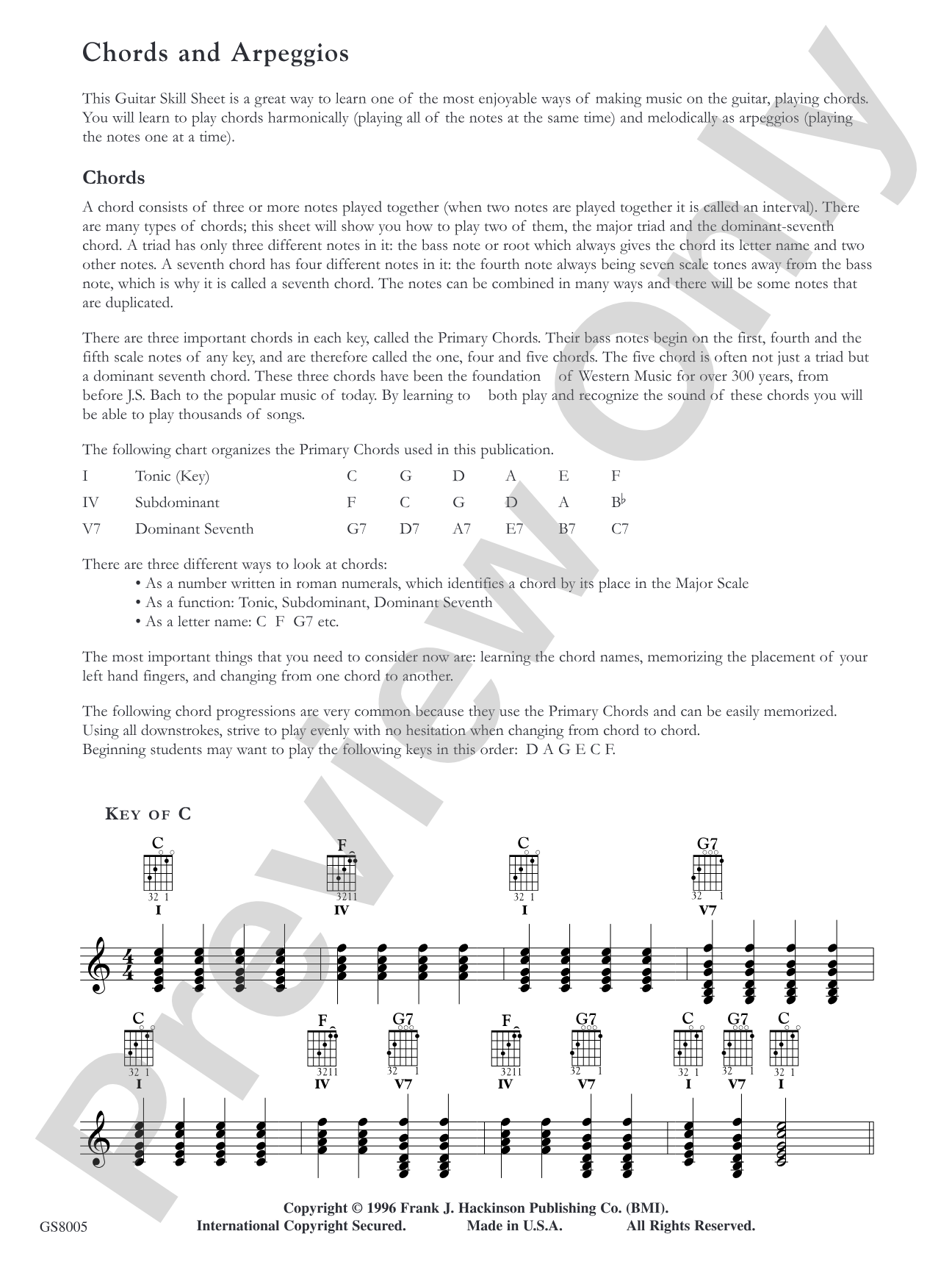
An innovative presentation of major and minor scale patterns, chords, and arpeggios designed to build speed, strength, and agility.

No. 5, Chords and Arpeggios: Easy Guitar isn't in MakeMusic Cloud just yet...but it could be. Let us know you'd like to see it, and you'll help shape what comes next. In the meantime, start a free trial and dive into thousands of interactive titles your students can play along with today.

Sample Audio
No sample audio found.
Sample Video
Additional Details
Publisher: The FJH Music Company, Inc.
SKU: 98-DGS8005

More about this title

Why we love this

Groeber's approach cuts through the typical scale-and-chord routine by treating technical material as something worth playing, not enduring. The integrated design of major and minor patterns alongside chord and arpeggio work means students build muscle memory and tonality awareness simultaneously, making every minute of practice time count.

What to expect

Purposeful and direct. There's a satisfying physicality to working through organized chord and arpeggio patterns, and the systematic progression lets you track tangible improvement in strength and control. Each passage builds naturally on what came before, creating momentum rather than repetition.

Who it's for

Guitar students building foundational technique and fingerboard familiarity, from early intermediate players strengthening basic chord vocabulary to advancing students refining speed and finger independence. Teachers looking for structured, focused supplemental material that addresses the mechanical requirements of chord work and scale fluency will find this especially useful.

How to get the most out of it

  • Start slowly enough that you can feel each note clearly and maintain consistent tone across the fingerboard. Speed follows precision, not the reverse.
  • Pay attention to finger placement on each chord shape before you move; rushing the transition costs more time than taking an extra beat to set up cleanly.
  • Alternate which hand initiates the pattern work. If you typically start with a downstroke on arpeggios, deliberately begin with an upstroke the next time through to develop balanced technique on both sides.

How to use it

Assign this as a warm-up or technical study rotated through a weekly lesson plan. Students can work through one section per week while also learning repertoire, ensuring consistent finger development without derailing musical study.

Skills your students will build

  • Major and minor scale pattern recognition across the fingerboard
  • Chord shape visualization and finger agility in transitions
  • Arpeggio technique and finger independence
  • Right-hand consistency and alternation control
  • Speed and precision at controlled tempos

You May Also Like