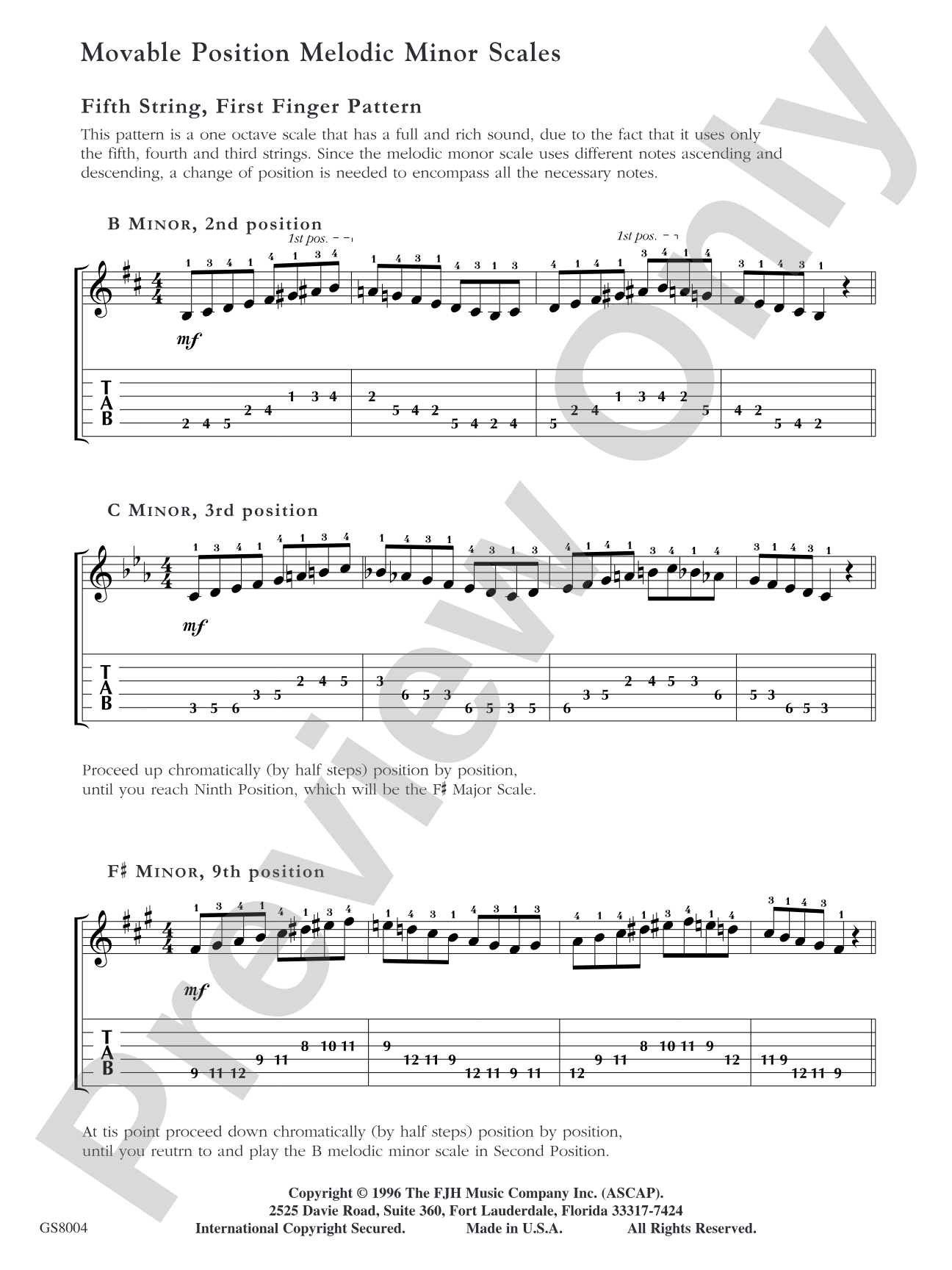
No. 4, Movable Position Minor Scales Sheet Music Preview

No. 4, Movable Position Minor Scales: Easy Guitar

By Philip Groeber

Item: 98-DGS8004

Digital Download
$3.95
Description
An innovative presentation of major and minor scale patterns, chords, and arpeggios designed to build speed, strength, and agility.

No. 4, Movable Position Minor Scales: Easy Guitar isn't in MakeMusic Cloud just yet...but it could be. Let us know you'd like to see it, and you'll help shape what comes next. In the meantime, start a free trial and dive into thousands of interactive titles your students can play along with today.

Sample Audio
No sample audio found.
Sample Video
Additional Details
Publisher: The FJH Music Company, Inc.
SKU: 98-DGS8004

More about this title

Why we love this

Groeber's approach to scale patterns cuts through the typical gridlock of movable-position work by presenting minor scales in a way that actually builds muscle memory rather than just drilling finger placements. The integration of scales, chords, and arpeggios in one resource means students spend less time shuffling between materials and more time applying patterns to real playing.

What to expect

Deliberate and goal-driven. Each position unfolds logically, and the minor tonality creates a focused, slightly introspective character that rewards patient, methodical practice.

Who it's for

Guitar students ready to move beyond open-position scales and tackle the fingerboard systematically. This works well for intermediate players building speed and fingerboard familiarity, as well as students preparing for classical or jazz contexts where movable patterns are essential.

How to get the most out of it

  • Start slowly enough that you can maintain even pressure across all strings; speed emerges naturally from relaxed, consistent technique, not from rushing the tempo.
  • Practice in short segments (4-8 measures) rather than running entire pages, then gradually extend the phrases as accuracy improves.
  • Focus on clarity in the minor tonality; listen for the characteristic interval relationships that distinguish minor scales from their major counterparts.

How to use it

Integrate this as a warm-up resource in regular practice routines rather than as a standalone lesson. Pair it with repertoire in minor keys so students hear the scales they're building applied immediately to real music.

Skills your students will build

  • Reading and executing movable minor scale patterns across the fingerboard
  • Building finger strength and agility in extended positions
  • Transferring scale shapes to chord voicings and arpeggios
  • Recognizing minor tonality and interval relationships
  • Developing consistent tone production across different string sets

You May Also Like