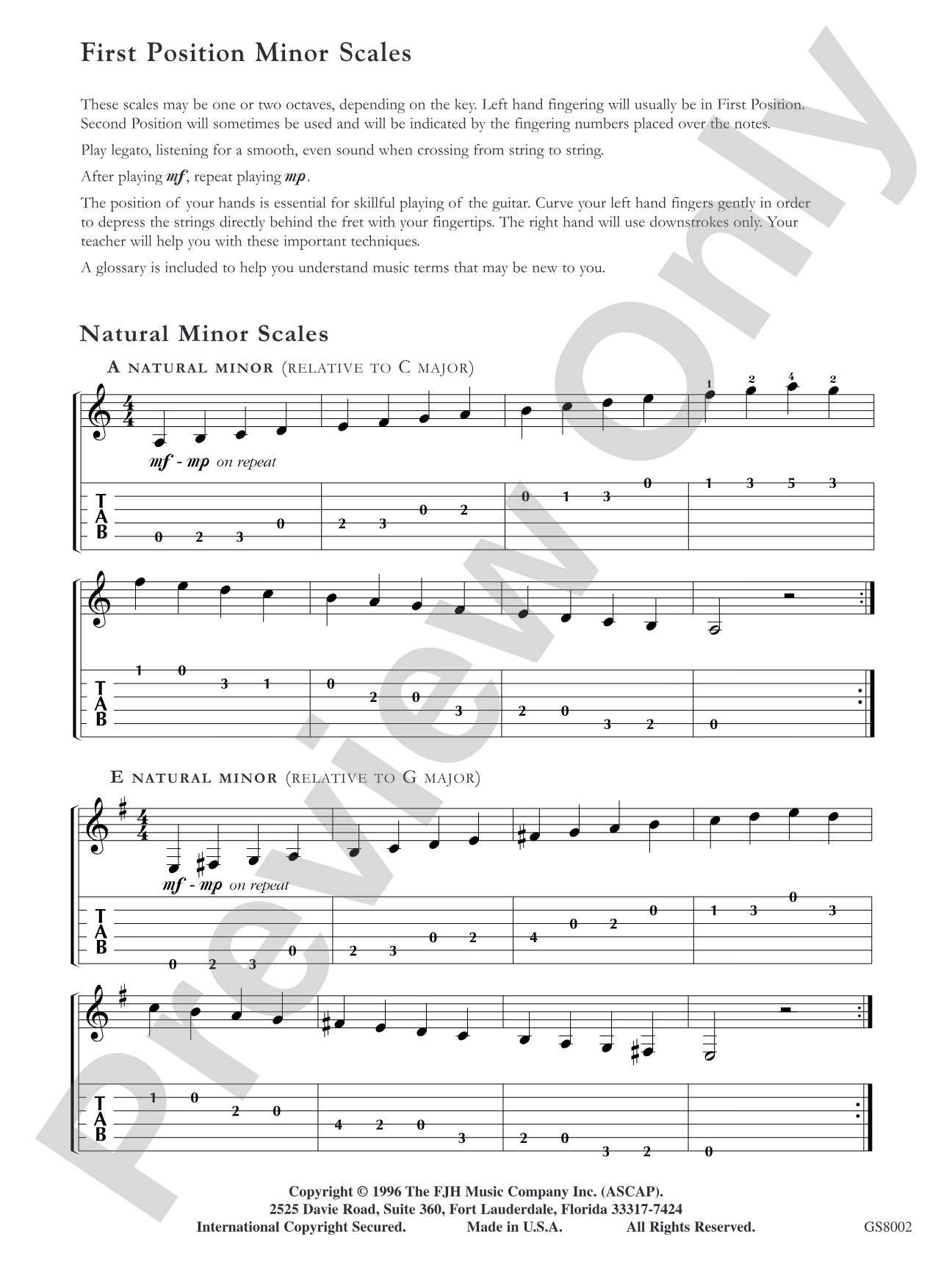
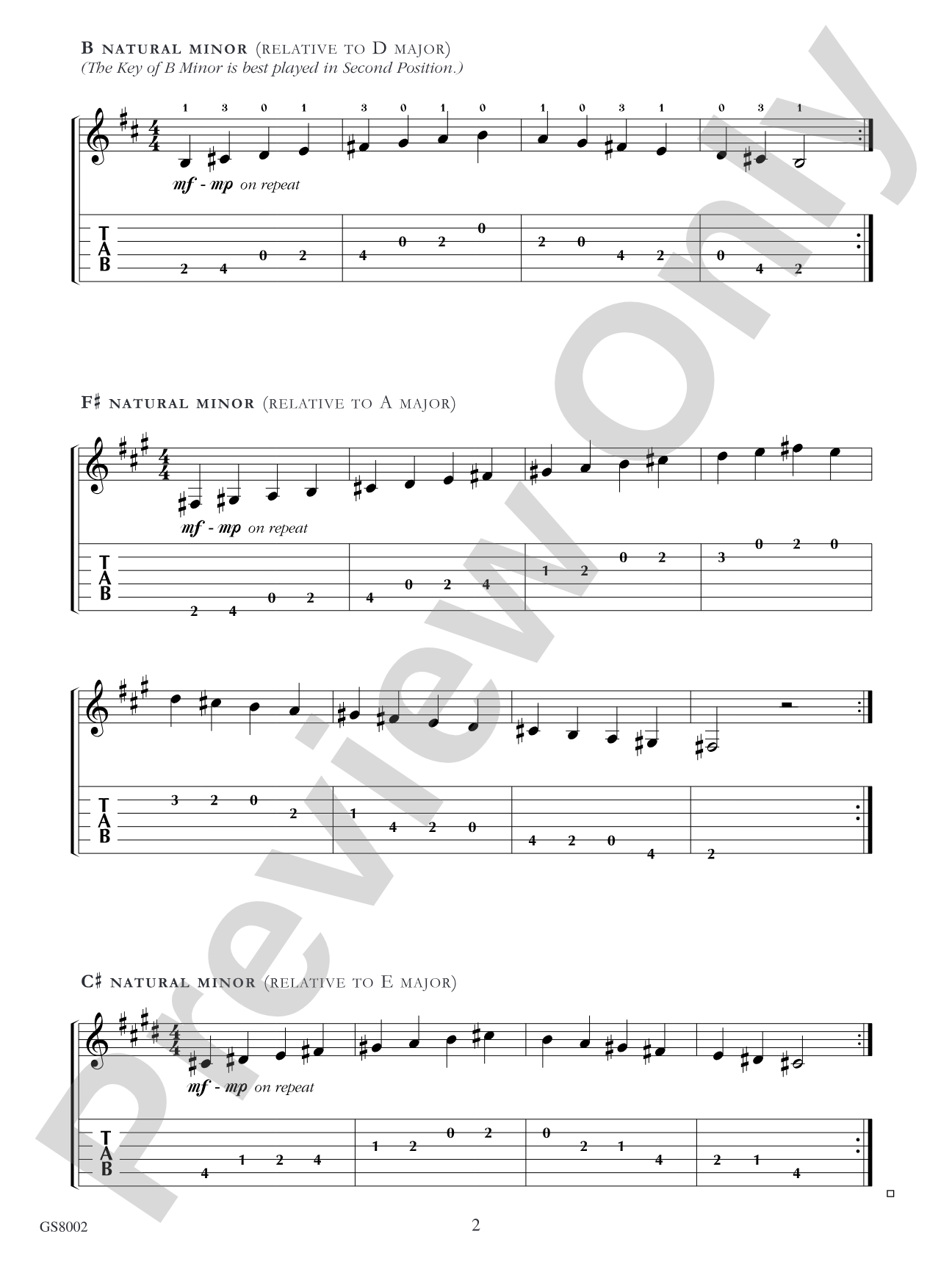
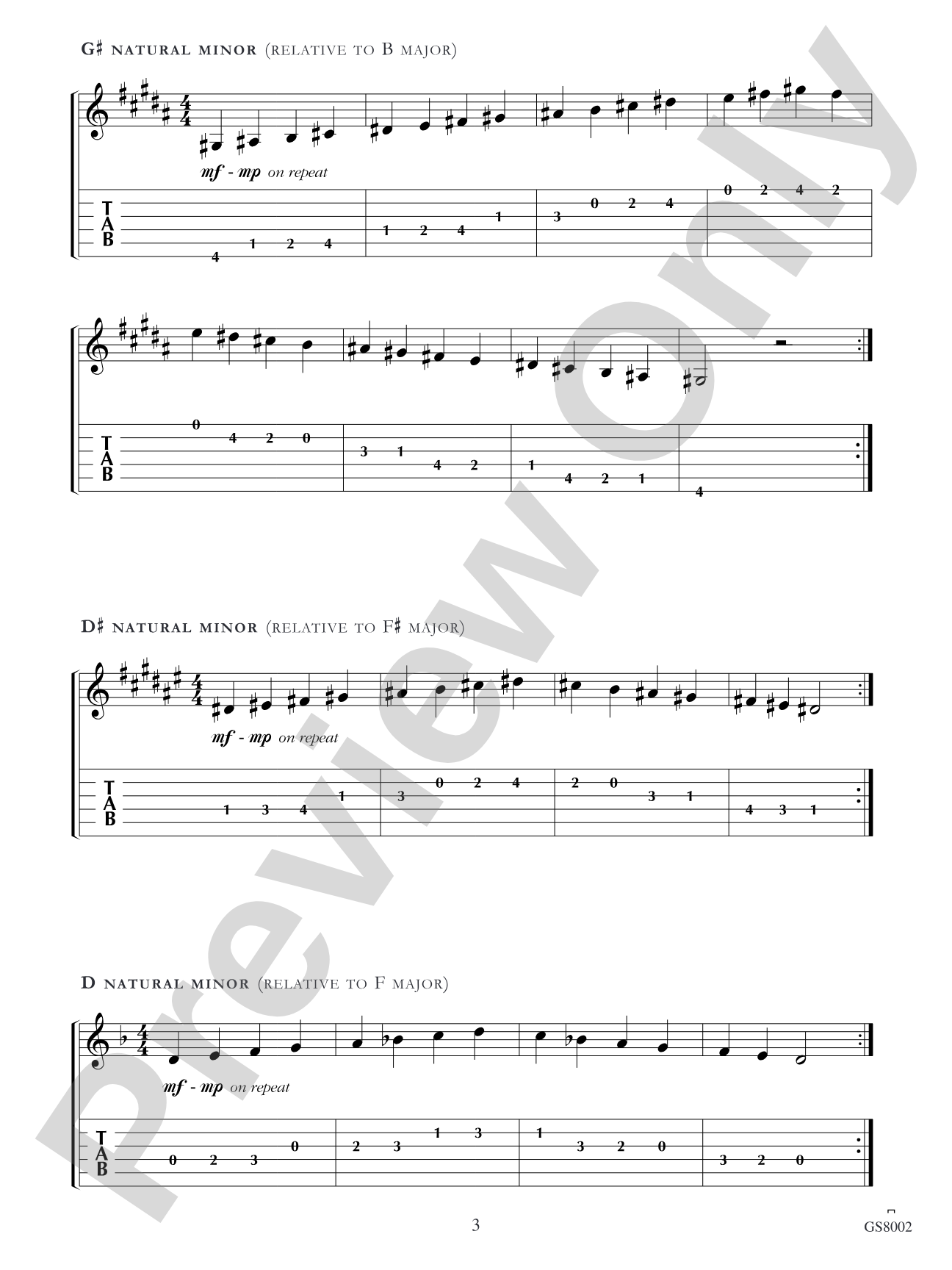
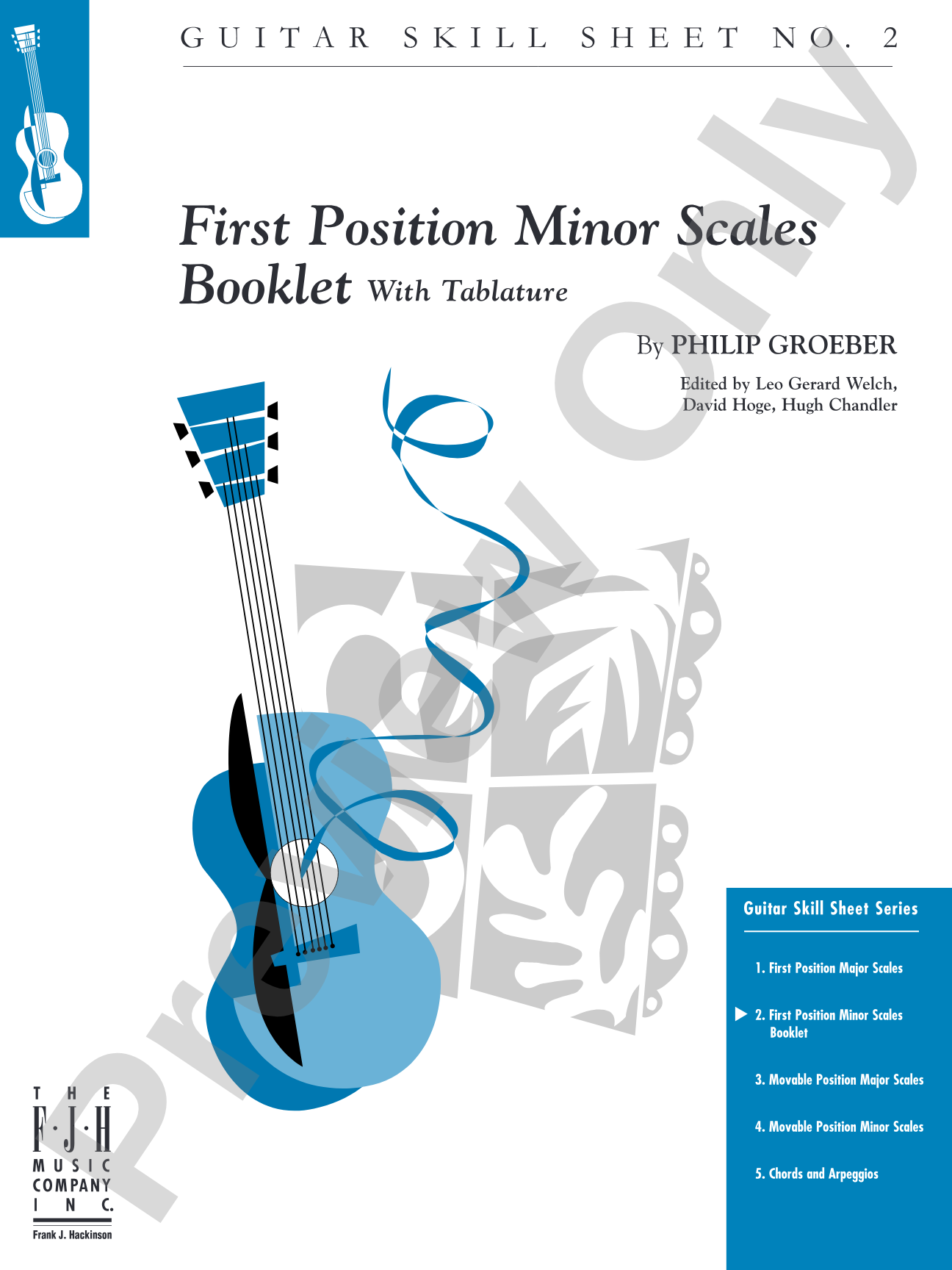
No. 2, First Position Minor Scales Sheet Music Preview

No. 2, First Position Minor Scales: Easy Guitar

By Philip Groeber

Item: 98-DGS8002

Digital Download
$8.95
Description
An innovative presentation of major and minor scale patterns, chords, and arpeggios designed to build speed, strength, and agility.

No. 2, First Position Minor Scales: Easy Guitar isn't in MakeMusic Cloud just yet...but it could be. Let us know you'd like to see it, and you'll help shape what comes next. In the meantime, start a free trial and dive into thousands of interactive titles your students can play along with today.

Sample Audio
No sample audio found.
Sample Video
Additional Details
Publisher: The FJH Music Company, Inc.
SKU: 98-DGS8002

More about this title

Why we love this

This resource cuts straight to what early guitarists need: a systematic way to internalize minor scale patterns without filler. Groeber's approach emphasizes muscle memory and dexterity in one of the most practical keys for beginning repertoire, making it both efficient and immediately applicable to real pieces students will play.

What to expect

Methodical and purposeful. These scales reward attention to detail, developing finger strength and consistency without demanding physical strain. Each repetition builds confidence and muscle memory in a controlled, progressive way.

Who it's for

Early intermediate guitarists working to solidify first position technique and building confidence across the fretboard. This resource serves students who have learned basic major scales and are ready to expand into minor scale vocabulary with structured, focused exercises.

How to get the most out of it

  • Start slowly enough that each note rings clearly before moving to the next. Speed develops naturally from accuracy; rushing the process only locks in sloppy habits.
  • Pay attention to finger placement and release. Minor scales require the same precision as major ones; use this as an opportunity to refine left-hand consistency across position shifts.
  • Practice small sections repeatedly rather than running through the entire scale. Three perfect repetitions beat ten sloppy ones.

How to use it

Assign this as regular supplementary material during the first few weeks of a semester or unit focused on minor key repertoire. Students who work through these patterns will find themselves far more secure when tackling pieces in minor keys, reducing rehearsal time needed for technical foundation.

Skills your students will build

  • First position minor scale fluency (natural, harmonic, and melodic forms if included)
  • Left-hand finger placement consistency and strength
  • Picking accuracy and control across scale passages
  • Muscle memory for common minor patterns across the fretboard
  • Speed development through systematic, incremental practice

You May Also Like