Nisi Dominus Sheet Music Preview

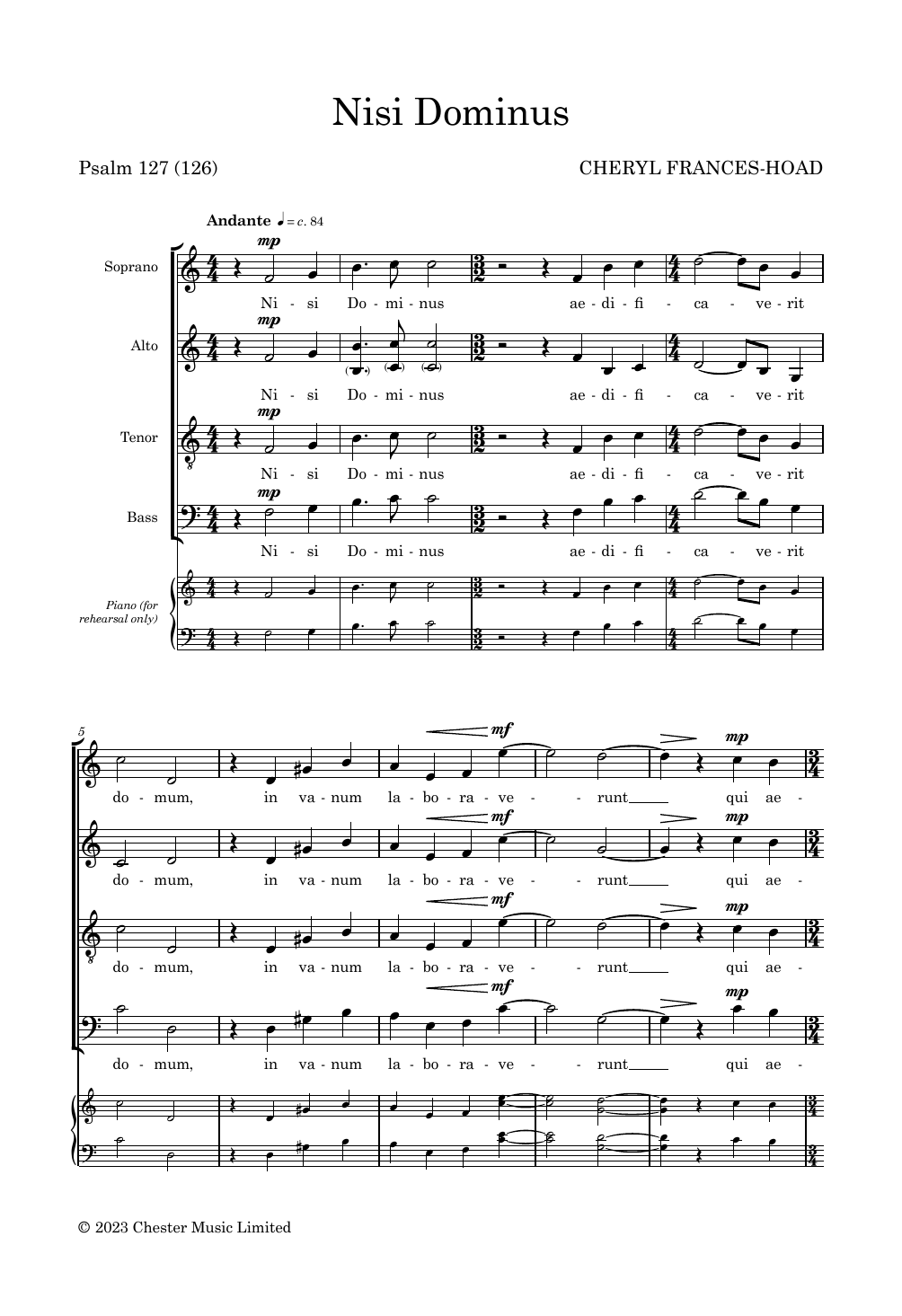
Nisi Dominus: SATB Choral Octavo

By Cheryl Frances-Hoad

Item: 35-DS01538580

Digital Download
$3.95
Description

Nisi Dominus: SATB Choral Octavo isn't in MakeMusic Cloud just yet...but it could be. Let us know you'd like to see it, and you'll help shape what comes next. In the meantime, start a free trial and dive into thousands of interactive titles your students can play along with today.

Sample Audio
No sample audio found.
Sample Video
Additional Details
Publisher: Hal Leonard
Page Count: 13
SKU: 35-DS01538580

More about this title

About the Composer: Cheryl Frances-Hoad

Cheryl Frances-Hoad is a British composer whose choral works span sacred and secular texts, often drawing on liturgical and devotional language. Her compositions for choir demonstrate a gift for word-setting and harmonic sophistication, creating pieces that challenge singers while remaining rooted in musical accessibility.

Why we love this

Frances-Hoad's setting of this Latin text brings fresh harmonic language to material that choirs know well. The piece sits comfortably for SATB voices across a 13-page span, offering substance without requiring extended rehearsal time or unusual technical demands. It's the kind of work that rewards careful preparation without exhausting your singers.

What to expect

The work inhabits a meditative space where harmonic color takes priority over dramatic gesture. Frances-Hoad's writing creates moments of stillness punctuated by subtle shifts in sonority, inviting listeners into contemplation rather than spectacle.

Who it's for

Strong intermediate to advanced SATB choirs looking for contemporary choral music rooted in classical tradition. Directors seeking pieces that work well for concert programs or liturgical settings will find this a solid addition. Singers comfortable with chromatic harmony and independent part-writing will engage fully with the score.

How to get the most out of it

  • Balance the independent line writing across all four voices; no single part should dominate. Listen for moments where the soprano and alto lines interweave, ensuring both are audible.
  • Shape phrases according to the text's natural breathing points rather than musical bar lines. Latin prosody often sits differently than our usual phrasing conventions.
  • Maintain clarity of articulation in areas of rhythmic density. Precision here prevents the piece from feeling muddy.
  • Pay attention to dynamic contrast between sections. Frances-Hoad's writing often relies on textural shift rather than extreme dynamic range, so small changes in volume carry weight.

How to use it

This works well as a centerpiece in a concert pairing classical and contemporary sacred music. Program it alongside Renaissance motets or more recent liturgical settings to create a cohesive thematic arc. It also serves effectively as concert-closing material, leaving audiences with an impressionistic rather than triumphant final image.

Skills your students will build

  • Reading contemporary harmonic language and chromatic voice leading
  • Independent part-singing with rhythmic precision across all four voices
  • Latin text pronunciation and natural word-stress alignment with musical phrasing
  • Listening to blend and balance within a four-part texture
  • Interpretive flexibility with dynamic nuance and tonal control

You May Also Like