Nino (Boy) Sheet Music Preview

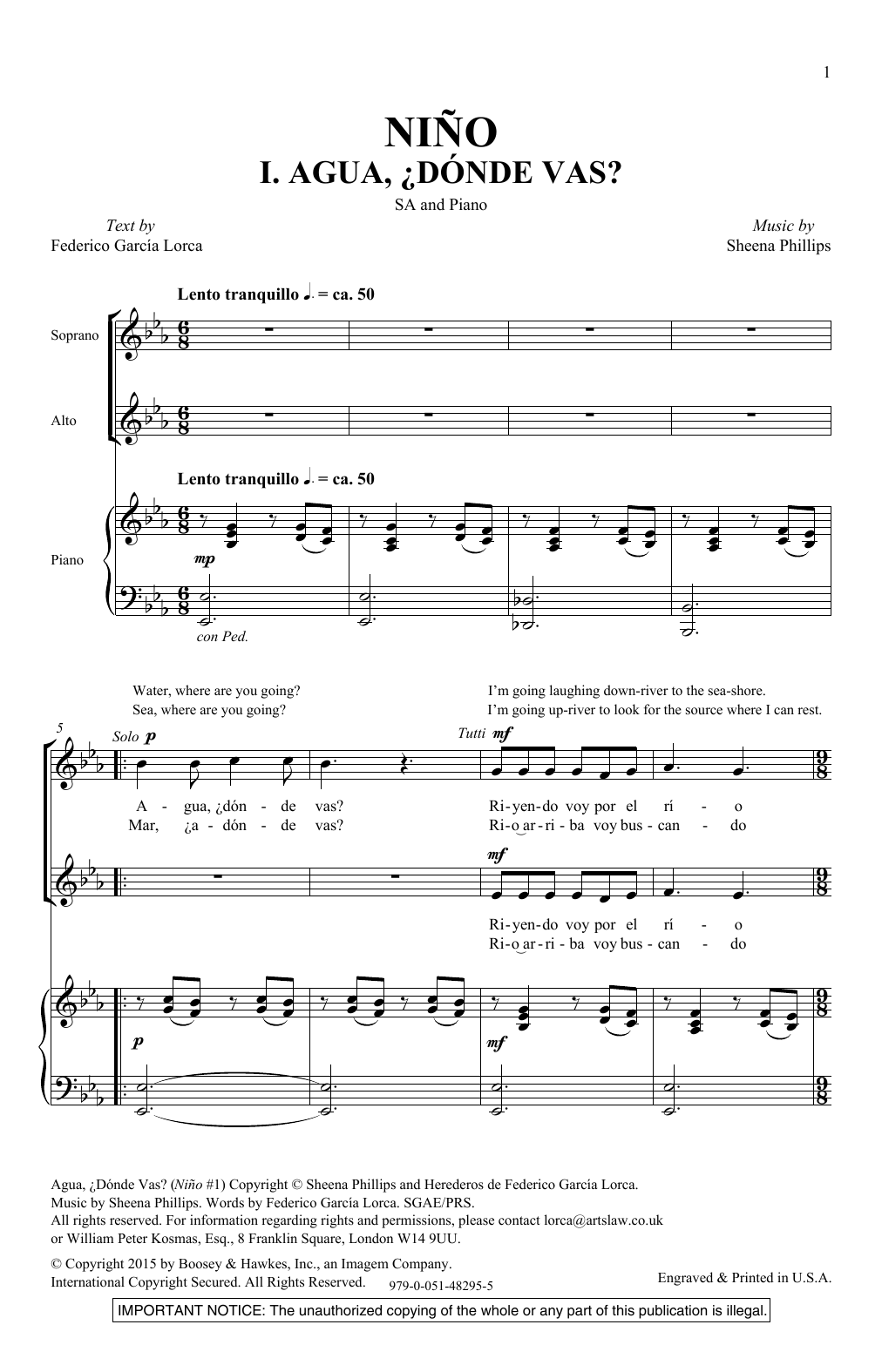
Nino (Boy): 2-Part Choral Octavo

As performed by Federico Garcia Lorca / As performed by Frederico Garcia Lorca / Arranged by Sheena Phillips

Item: 35-DS00322921

Digital Download
$2.99
Description

Nino (Boy): 2-Part Choral Octavo isn't in MakeMusic Cloud just yet...but it could be. Let us know you'd like to see it, and you'll help shape what comes next. In the meantime, start a free trial and dive into thousands of interactive titles your students can play along with today.

Sample Audio
No sample audio found.
Sample Video
Additional Details
Publisher: Hal Leonard
Page Count: 13
SKU: 35-DS00322921

More about this title

About the Artist: Federico Garcia Lorca

Federico García Lorca stands as one of Spain's most celebrated poets and playwrights of the 20th century. His work drew deeply from Spanish folk traditions, Gypsy culture, and the landscapes of Andalusia, infusing his writing with vivid imagery and emotional intensity that resonates across generations.

For music educators, García Lorca's poetry offers rich material for choral arrangement. His texts carry inherent musicality and emotional accessibility; they invite singers to explore both technical precision and genuine expression within compact, meaningful pieces.

Why we love this

Sheena Phillips' arrangement captures the intimate simplicity of García Lorca's poem while remaining vocally grateful for young singers. The 2-part voicing keeps technical demands manageable, yet the piece never sacrifices emotional authenticity or the rhythmic vitality that makes Latin texts so engaging to perform.

What to expect

Tender and observant, like watching something precious unfold in real time. The Spanish text and García Lorca's attention to childhood perspective bring a quiet poignancy; singers discover that simplicity and depth are not opposites.

Who it's for

This arrangement serves intermediate to advanced middle school choirs, high school ensembles seeking accessible concert repertoire, and adult community choirs. It works equally well for festival competitions and informal performance settings where authentic, character-driven singing matters.

How to get the most out of it

  • Establish a steady, natural pulse early in rehearsal; let the text drive the phrasing rather than fighting the meter.
  • Pay attention to vowel consistency between the two parts, especially in moments where voices sustain the same pitch.
  • Shape phrases around punctuation and meaning in the poetry, treating each sentence as a musical arc rather than singing through the text.
  • Balance the parts so both lines remain audible; avoid letting one voice dominate, particularly in dialogue or call-and-response sections.

How to use it

Pair this with other Latin-influenced or Spanish-language pieces to create a thematic concert section, or use it as a palate cleanser between larger, more complex works. Its modest page count and straightforward voicing make it ideal for programs where you need a sophisticated yet unpretentious moment of connection.

Skills your students will build

  • Phrasing and interpretation of lyrical text
  • Part independence in two-part writing
  • Vowel consistency and tone matching across divided voices
  • Expressive control and dynamic shaping in accompanied ensemble singing

You May Also Like