
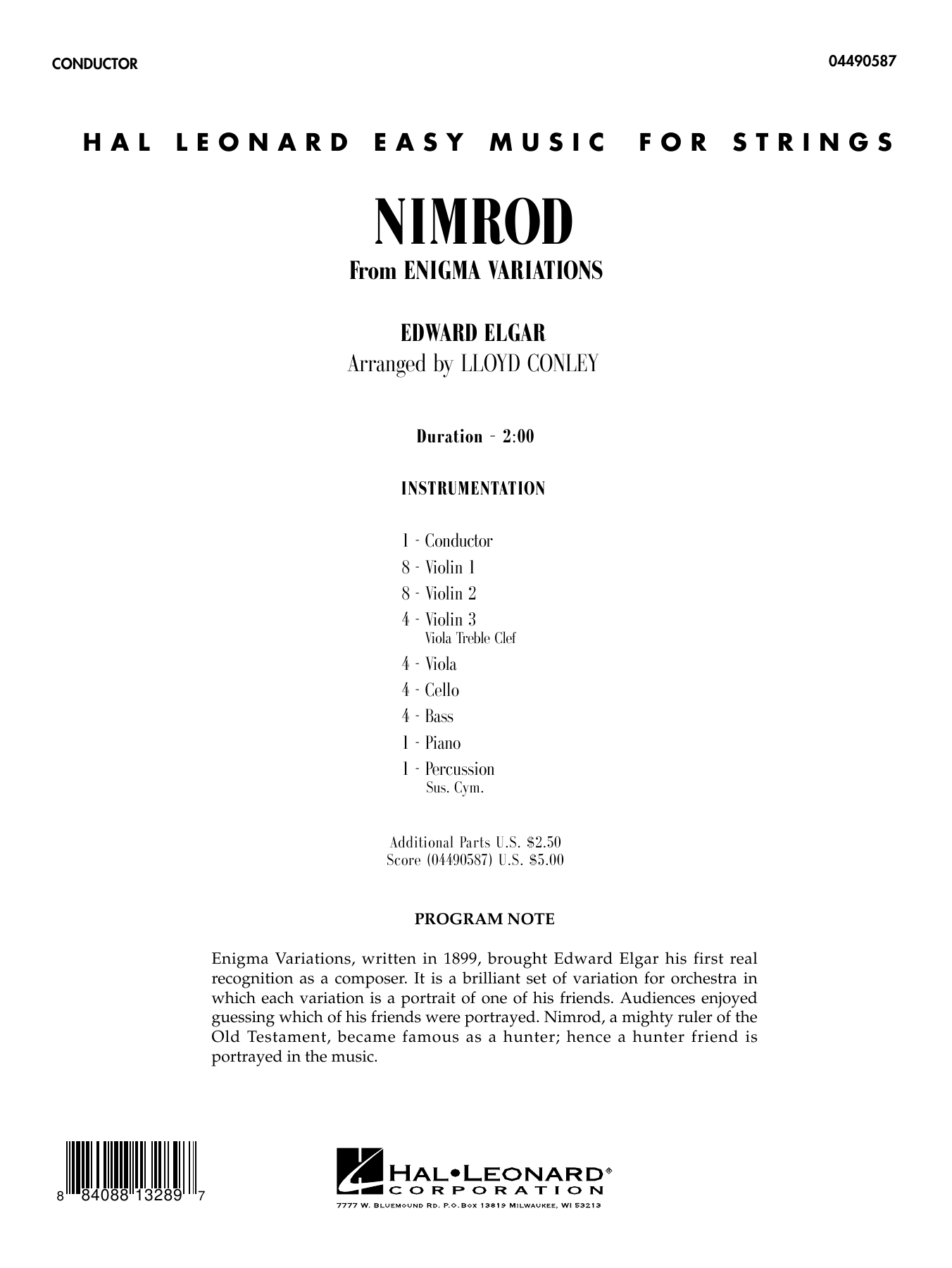

Nimrod (from Enigma Variations) (arr. Lloyd Conley): String Orchestra Conductor Score & Parts
By Edward Elgar / Arranged by Lloyd Conley
Grade: 2-3
Item: 35-PK01047685
$40.00
Pickup currently not available
Buy Extra Parts (Digital PDF Download)
Parts Added to Cart!
Description
One of the all-time beloved melodies from the revered Sir Elgar, "Nimrod" is skillfully arranged for developing groups with this new arrangement from Lloyd Conley. As always, Lloyd's skilled writing brings quality music within the reach of younger players.


Nimrod (from Enigma Variations) (arr. Lloyd Conley): String Orchestra Conductor Score & Parts isn't in MakeMusic Cloud just yet...but it could be. Let us know you'd like to see it, and you'll help shape what comes next. In the meantime, start a free trial and dive into thousands of interactive titles your students can play along with today.
Request This Title
Tell us you want it.
Start Your Free Trial
Explore everything that's ready to play right now.
Sample Audio
No sample audio found.
Sample Video
No sample videos found.
Additional Details
Publisher:
Hal Leonard
SKU:
35-PK01047685
More about this title
About the Composer: Edward Elgar
Edward Elgar (1857–1934) stands as one of Britain's most consequential composers, defining the sound of English classical music in the late Romantic era. His works span symphonies, concertos, choral masterpieces, and the beloved Enigma Variations, which showcase his gift for memorable melody paired with sophisticated orchestration and harmonic language.
For music educators, Elgar's music offers students access to genuine artistry and emotional depth. His melodies are instantly singable yet harmonically rich, making his work ideal for developing ensembles learning to balance technical accuracy with expressive musicmaking.
Why we love this
Conley's arrangement respects the profound dignity of Elgar's original while meeting developing players where they are. The voicing remains transparent enough for younger musicians to hear themselves in the texture, yet the emotional weight of the melody stays intact. Programming "Nimrod" signals that your ensemble plays music that matters.
What to expect
Serene and introspective, with an underlying nobility that unfolds gradually. The melody carries quiet yearning, a meditation that invites listeners inward. Despite its gentle surface, the piece speaks with real emotional authority.
Who it's for
Grade 2-3 string orchestras working with musicians who can handle sustained expression and inner-part independence. This arrangement serves directors seeking repertoire that introduces their students to the Romantic idiom without overwhelming technical demands.
How to get the most out of it
- Shape the melodic line with gentle dynamic waves rather than treating it as static. Elgar's phrasing is inherently vocal; let your first violins sing with a sense of forward motion even in the softest moments.
- Balance the string sections carefully so that inner voices support the melody without obscuring it. Lower voices should anchor the harmony with warmth and presence.
- Allow space for breath between phrases. This music breathes; rushing it flattens its contemplative character.
- Attend to the harmonic movement beneath the melody. Elgar's genius lies partly in how his accompaniment propels the line forward. Encourage players to listen across parts, not just to their own.
How to use it
Position "Nimrod" as a concert centerpiece that offers contrast to faster, more technically driven works on the same program. Its reflective character works beautifully in contexts calling for reverence or remembrance, or simply as a moment of genuine musical beauty in a mixed repertoire evening.
Skills your students will build
- Sustained tone production across multiple phrases
- Balancing melody against harmonic accompaniment
- Maintaining expression and shape in slow tempos
- Listening across parts to support harmonic progression
- Responding to long-line phrasing rather than beat-by-beat counting