
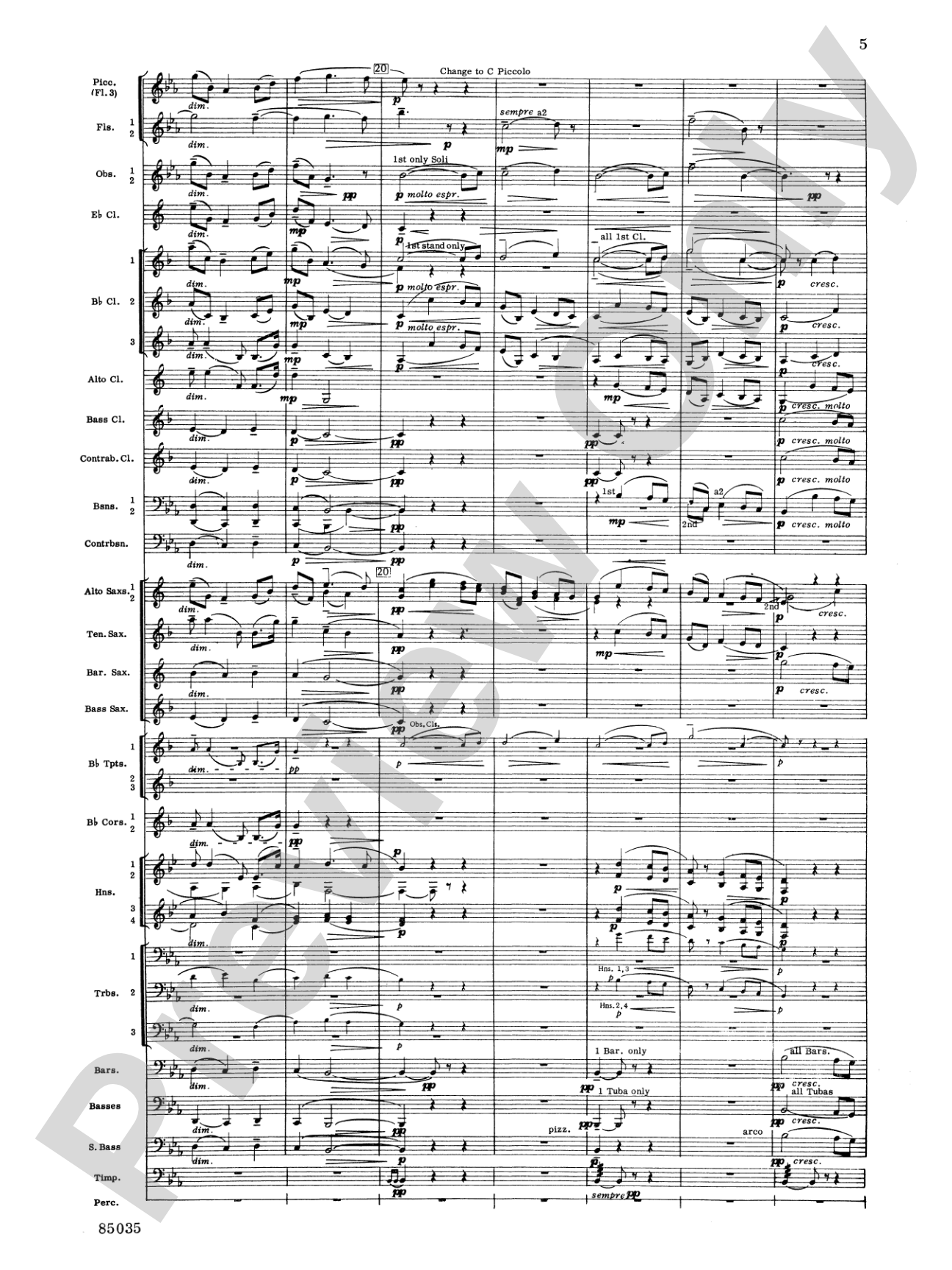
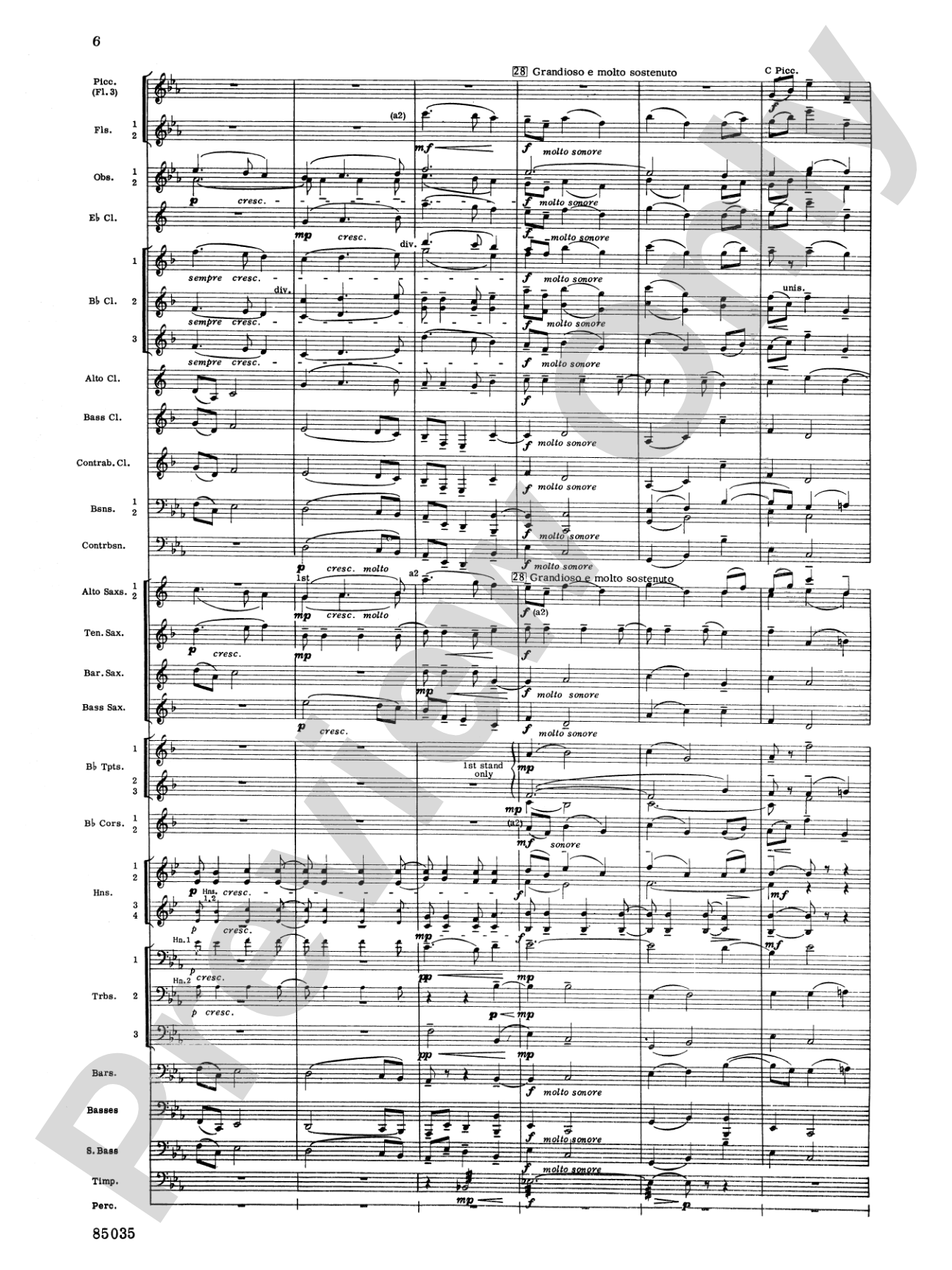
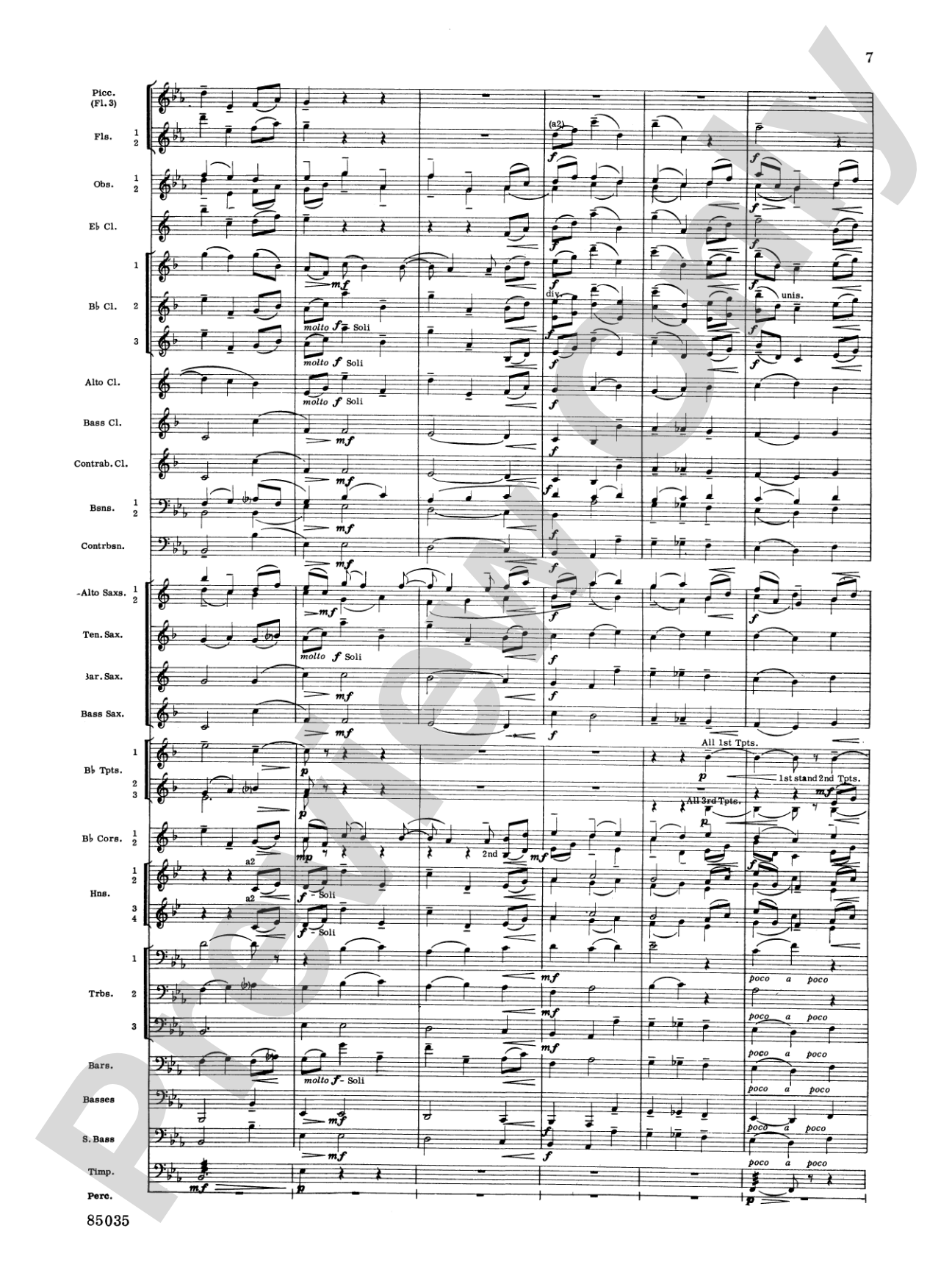
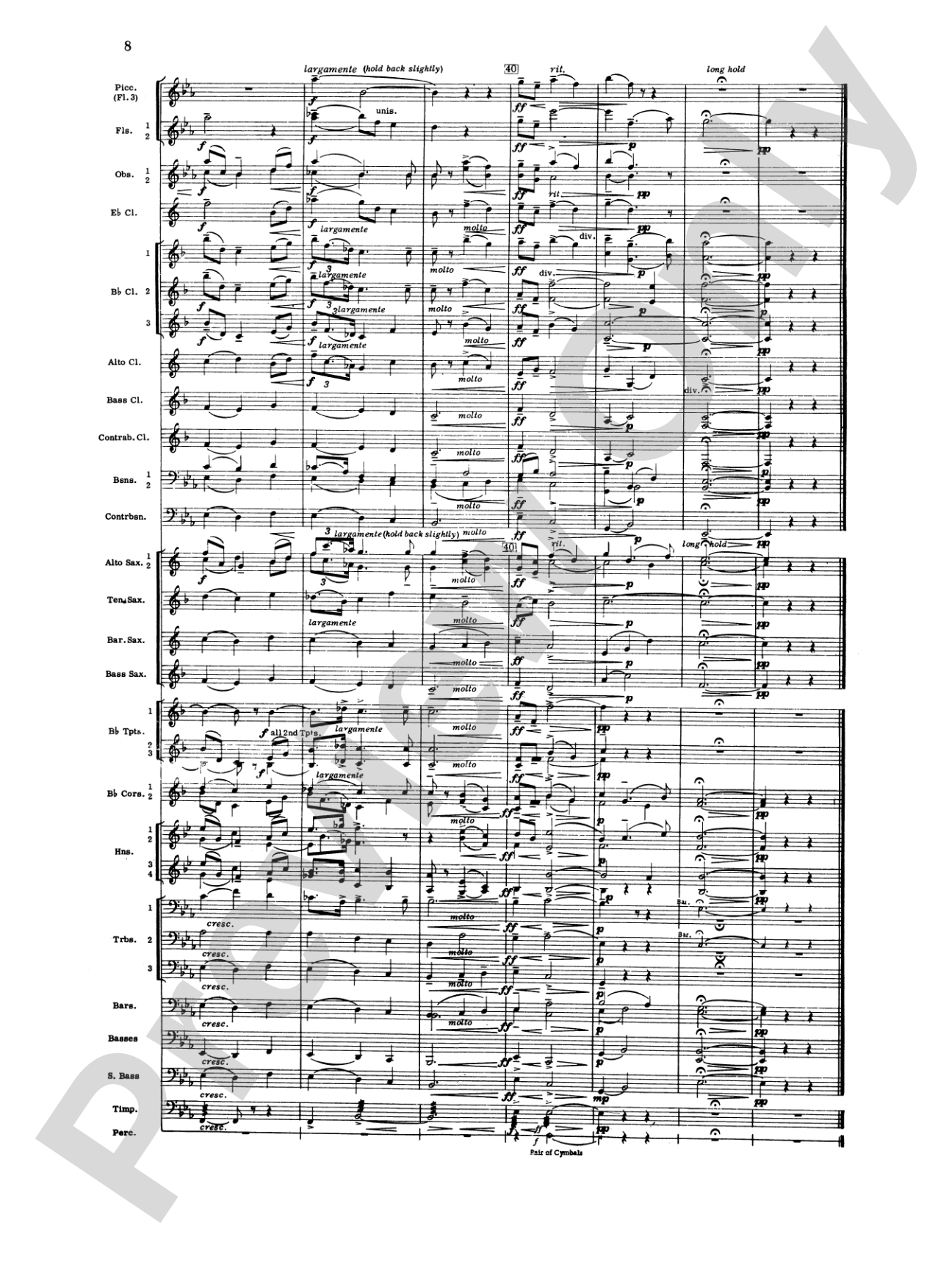

Nimrod (from Elgar's Variations): Concert Band Conductor Score & Parts
from Elgar's Variations
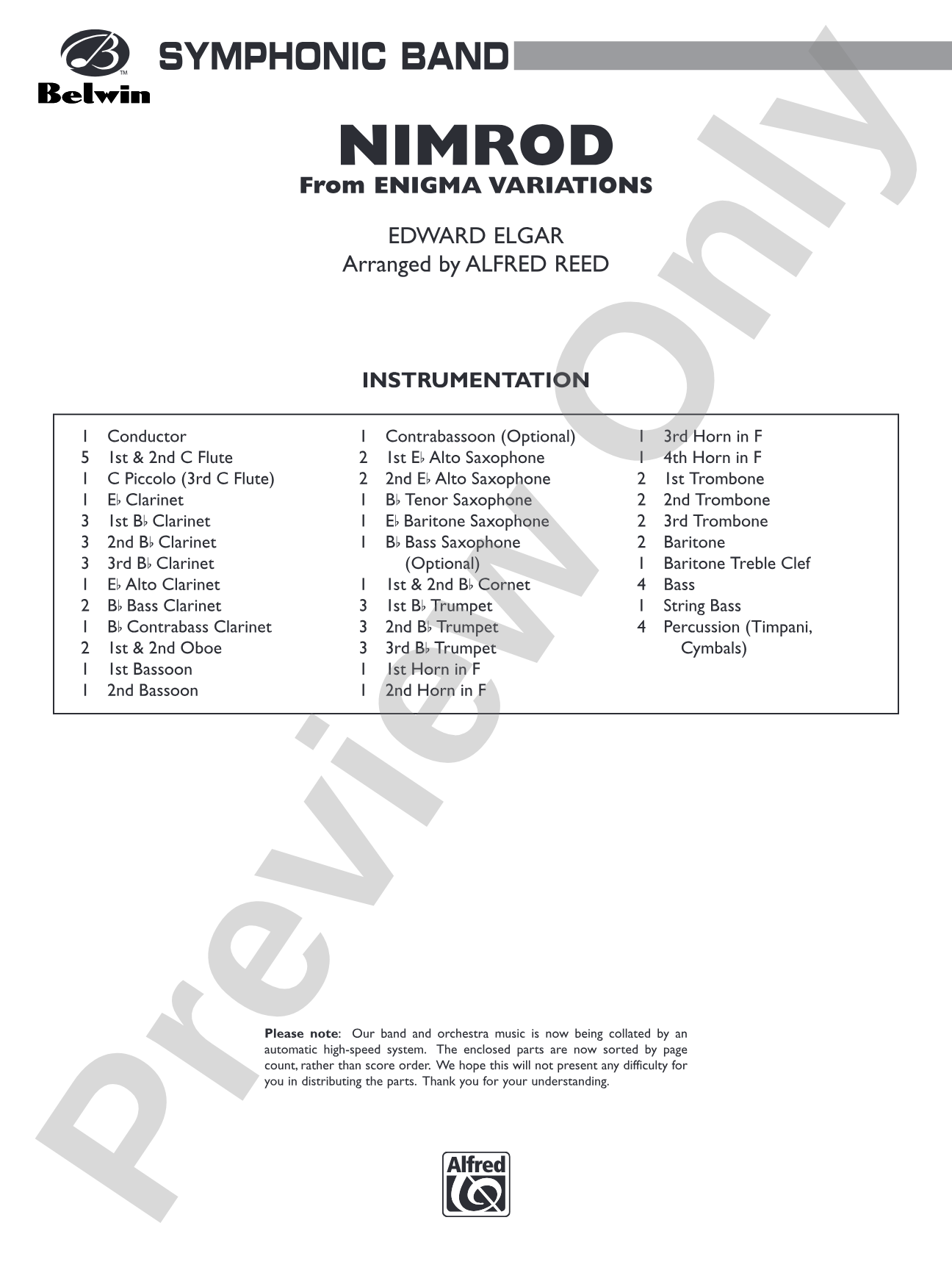
By Edward Elgar / arr. Alfred Reed
Grade: 3.5 (Medium Easy to Medium)
Item: 00-PK-0001961

$72.00
Pickup currently not available
Buy Extra Parts (Digital PDF Download)
Parts Added to Cart!
Related Items
Nimrod: Concert Band Conductor Score & Parts |
$72.00
|
View |
Description
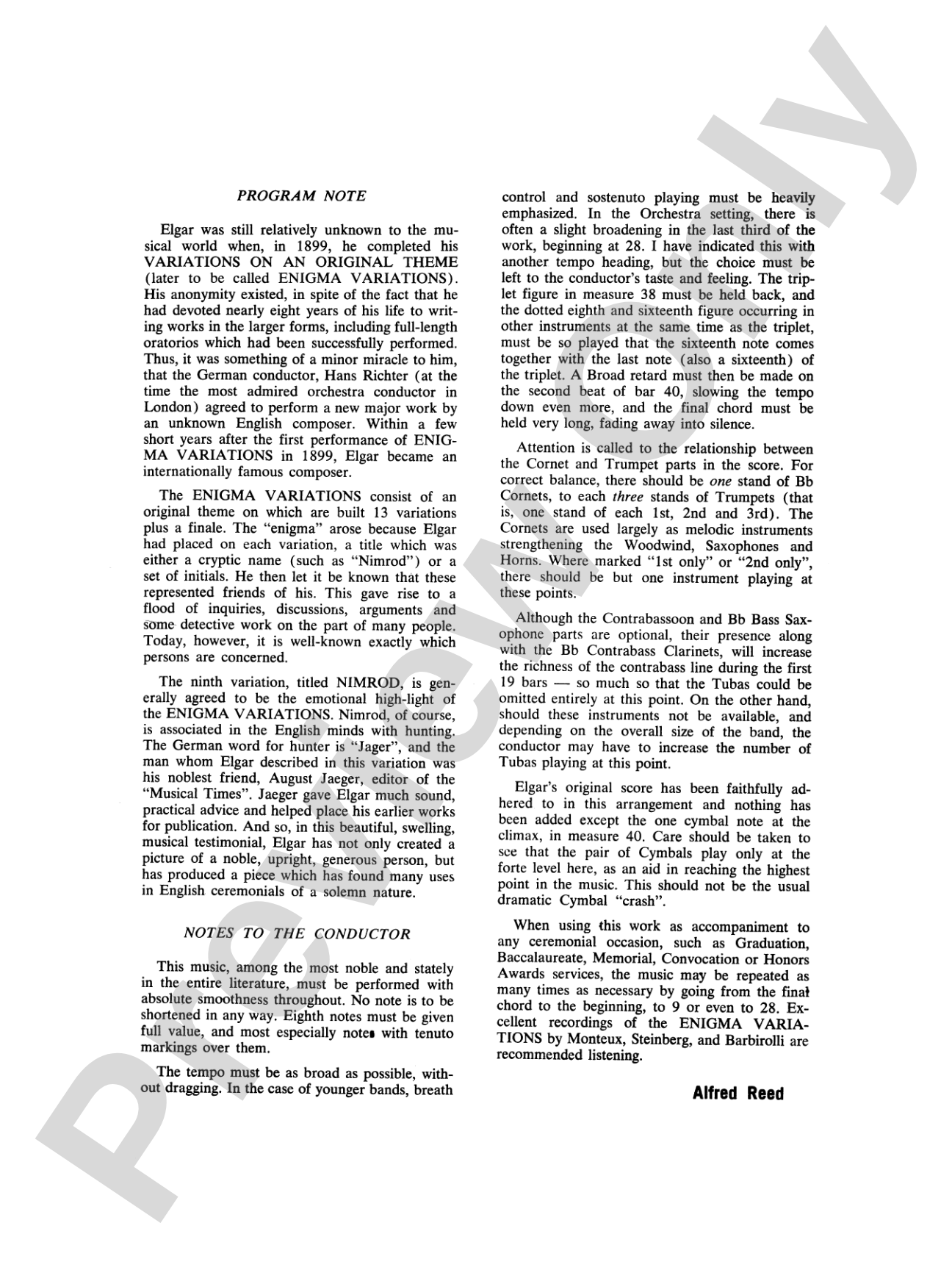
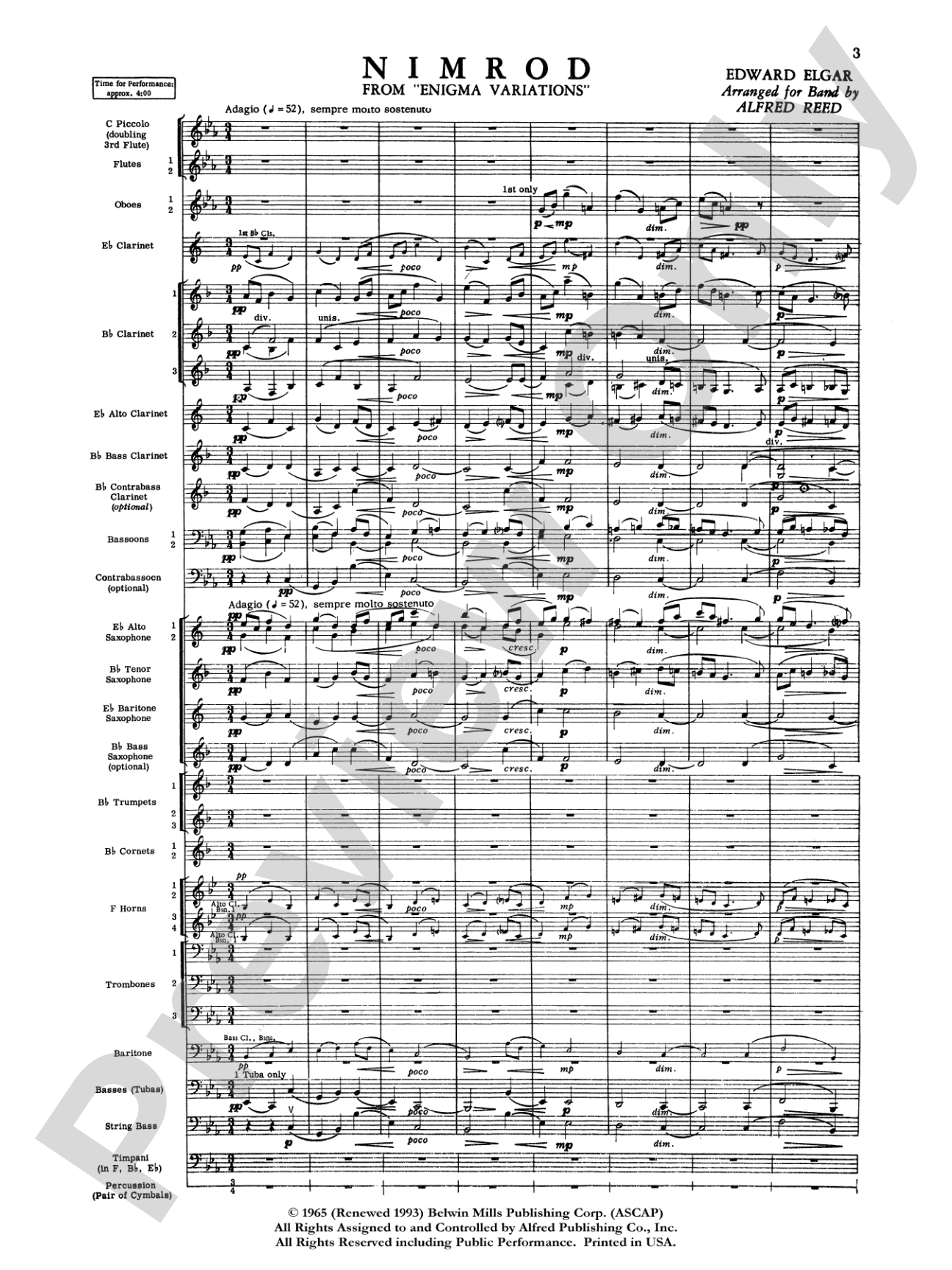
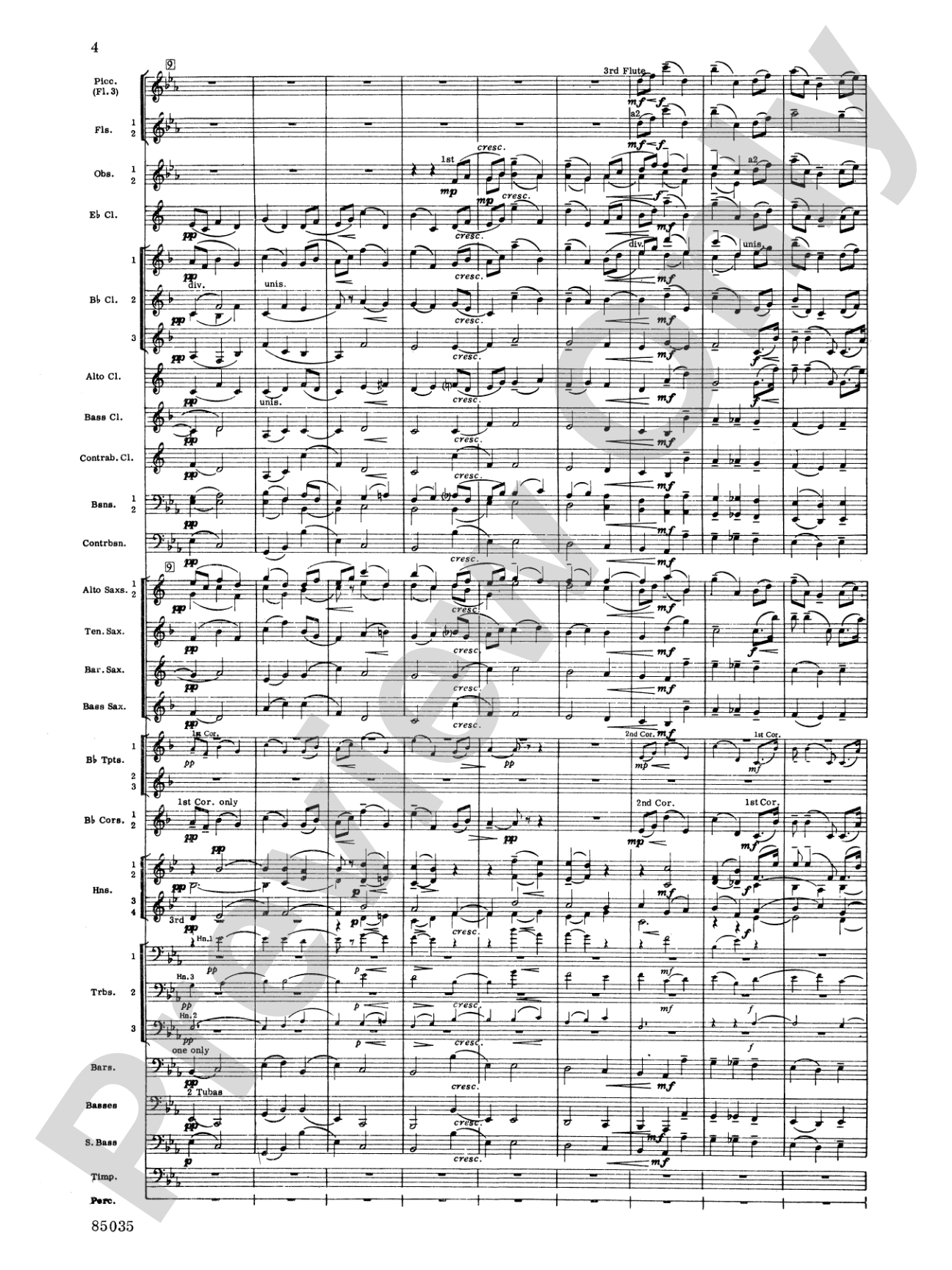
This is among the most noble and stately music in all of band literature. Great for graduation, baccalaureate, memorial, or awards ceremonies. This title is available in MakeMusic Cloud.


Don't just read it, hear it, play along with it, and watch your students grow with it. In MakeMusic Cloud, Nimrod (from Elgar's Variations): Concert Band Conductor Score & Parts comes alive with professional accompaniment, adjustable tempo, and built-in practice tools that turn solo practice into real progress.
Open in the Player
Jump straight in and assign it today.
Start Your Free Trial
Open this title and explore the full library in minutes.
Sample Audio
1
Audio File
--:--
0:00
0:00
Sample Video
No sample videos found.
Additional Details
Series:
Belwin Classic Band
Publisher:
Alfred Music
Page Count:
120
SKU:
00-PK-0001961
More about this title
About the Arranger: Alfred Reed
Alfred Reed (1921-2005) shaped American band music through arrangements and compositions that made repertoire accessible without sacrificing musical integrity. His work with the Belwin catalog helped establish a bridge between concert hall masterworks and the concert band medium, introducing generations of young musicians to music originally written for orchestra.
Why we love this
Reed's arrangement preserves every ounce of Elgar's nobility while writing idiomatically for band. The orchestration never feels transcribed; instead, it breathes naturally through the concert band sonority, making this genuinely moving music that audiences recognize and respect.
What to expect
Stately and reflective, with a warmth that invites both reverence and remembrance. The music unfolds without rush, inviting the listener into quiet contemplation through soaring melodic lines and rich harmonic progressions that feel both inevitable and deeply moving.
Who it's for
Conductors seeking music of genuine substance for ceremonies and formal occasions. This arrangement serves mature ensembles at Grade 3.5, where the band has the tone control and balance to render Elgar's harmonic language with dignity.
How to get the most out of it
- Balance the principal melodic line through shifts in instrumentation. Elgar's voice often moves between sections, so listen across the ensemble rather than spotlighting individual chairs.
- Allow space and silence to speak. This music's power lies partly in what isn't played. Resist the urge to fill every moment.
- Maintain a singing, sustained quality in the harmonic foundation. Low brass and reeds should support the melody with legit weight, not neutral accompaniment.
- Shape the arc across the full work rather than gesture within phrases. One broad, graceful line from beginning to end gives the piece its ceremonial character.
How to use it
Program this for graduation ceremonies, memorial services, baccalaureate events, or as a concert closer when you want to leave the audience with something profound. It pairs naturally with lighter concert openers and need not share a program with overly dramatic or contemporary works.
Skills your students will build
- Sustaining long phrases with consistent tone and air support
- Blending harmonic sonorities across diverse instrumental timbres
- Following a single melodic line as it travels between sections
- Responding to subtle dynamic and expressive gestures from the conductor
- Reading and balancing parts that support rather than compete with the primary voice