Nimrod: B-flat Trumpet 2 Sheet Music Preview

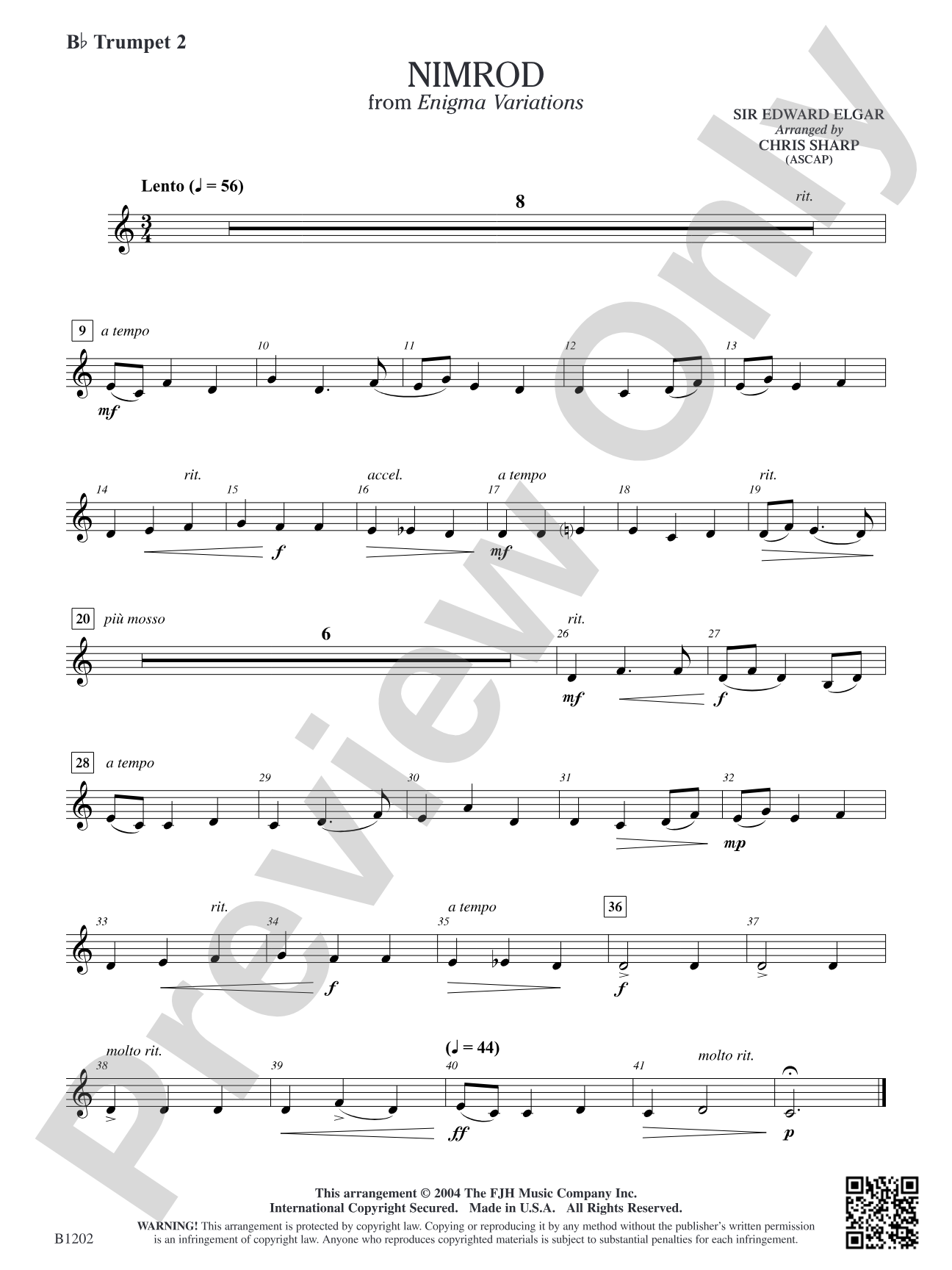
Nimrod: B-flat Trumpet 2

By Sir Edward Elgar / arr. Chris Sharp

Grade: 2

Item: 98-PC-DB1202_T2

Digital Download
$7.00
Description
Finally - here is a beautiful arrangement for young band of the famous Nimrod variation from Elgar's Enigma Variations.

Nimrod: B-flat Trumpet 2 isn't in MakeMusic Cloud just yet...but it could be. Let us know you'd like to see it, and you'll help shape what comes next. In the meantime, start a free trial and dive into thousands of interactive titles your students can play along with today.

Sample Audio
0:00
0:00
Sample Video
Additional Details
Series: FJH Young Band
Publisher: The FJH Music Company, Inc.
SKU: 98-PC-DB1202_T2

More about this title

About the Composer: Edward Elgar

Edward Elgar (1857, 1934) stands as one of England's greatest composers, a figure who elevated British music to international prominence during the late Romantic era. His Enigma Variations, composed in 1899, remains his most celebrated work, a masterpiece that combines technical brilliance with emotional depth, where each variation depicts a friend or colleague of the composer through musical characterization.

Why we love this

Nimrod is the heart of Enigma Variations, and this Grade 2 arrangement by Chris Sharp captures its nobility and warmth without sacrificing the emotional impact that makes the original so moving. Young musicians get to play a genuine masterwork rather than a simplified knockoff, and conductors benefit from repertoire that sounds mature and sounds good without overwhelming younger ensembles.

What to expect

Nimrod unfolds with quiet dignity and warmth, a gentle but profound meditation that asks for patience and depth of feeling rather than technical flash. The arrangement flows naturally through its harmonic progressions, creating moments of real beauty that young musicians can genuinely own and express.

Who it's for

Concert bands at the Grade 2 level looking for serious, substantial repertoire that builds musicianship while remaining accessible. Directors preparing young ensembles for formal concerts or competitions will find a piece that audiences recognize and respect, one that teaches ensemble discipline and musical sensitivity.

How to get the most out of it

  • Shape the melody with a long, singing line; resist the urge to break the phrasing into smaller chunks even when young players need to breathe.
  • Balance the inner voices carefully so the harmonic progression stays audible; the arrangement's beauty depends on hearing how the chords shift underneath the primary melody.
  • Let the tempo breathe slightly in the most lyrical moments, but maintain a steady pulse in transitions to keep the ensemble grounded.
  • Encourage the melody section to listen inward rather than lead outward; this piece asks players to blend into something larger than themselves.

How to use it

Pair this with other lyrical Grade 2 or 3 selections to create a program that showcases your ensemble's musical maturity and control. It also works exceptionally well as a finale or closing piece, leaving audiences with something they'll remember long after the concert ends.

Skills your students will build

  • Sustaining long, connected phrases with proper breath management
  • Balance and blend in four-part harmonic texture
  • Listening to harmonic movement and supporting the overall architecture rather than playing individual lines
  • Dynamic control and shaping within a narrow, intimate dynamic range
  • Ensemble intonation under expressive, slower tempos

You May Also Like