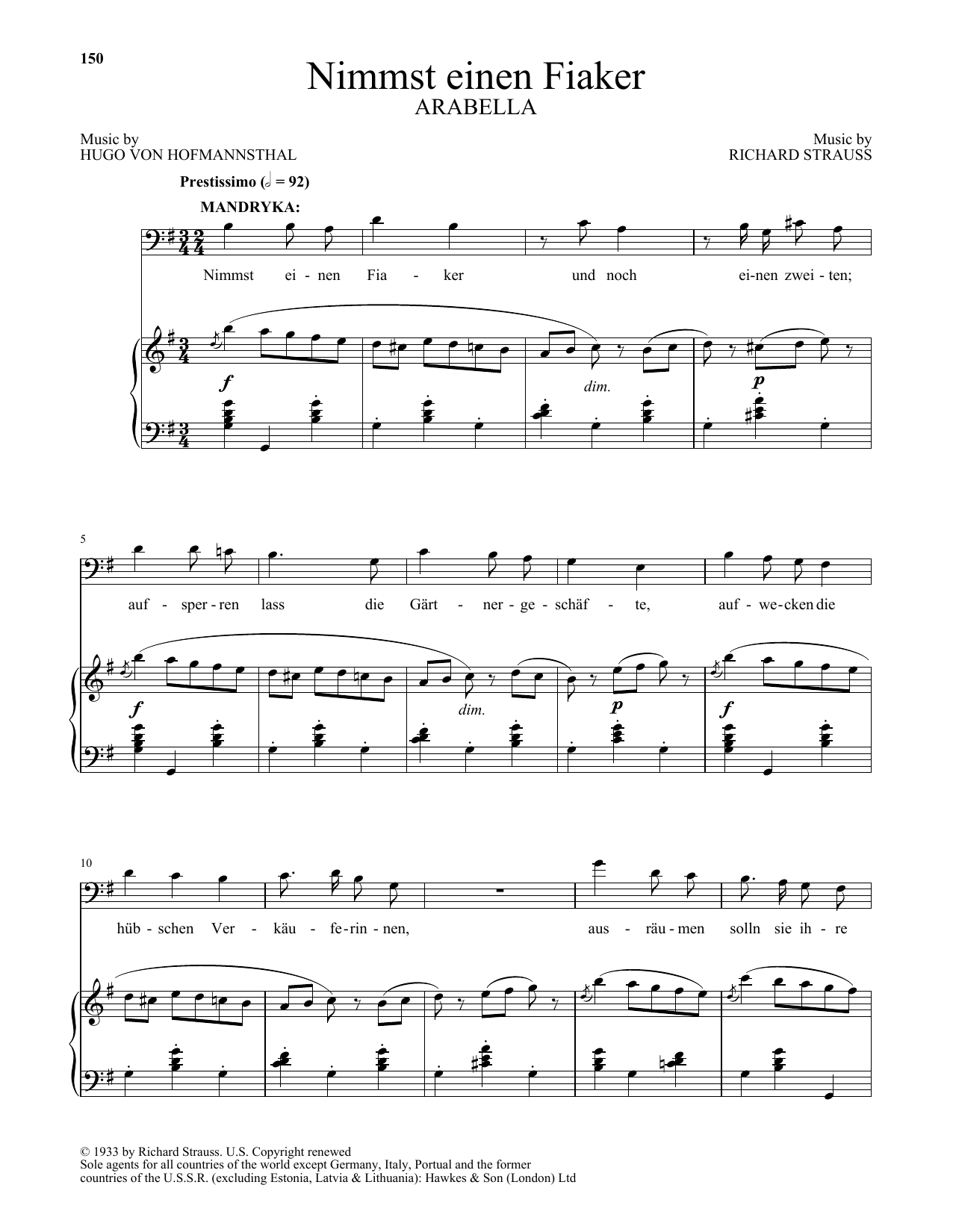
Nimmst einen Fiaker (from Arabella) Sheet Music Preview

Nimmst einen Fiaker (from Arabella): Piano Vocal

Edited by Richard Walters

Item: 35-DS00438505

Digital Download
$5.99

One moment…

One moment…

Description

Nimmst einen Fiaker (from Arabella): Piano Vocal isn't in MakeMusic Cloud just yet...but it could be. Let us know you'd like to see it, and you'll help shape what comes next. In the meantime, start a free trial and dive into thousands of interactive titles your students can play along with today.

Sample Audio
No sample audio found.
Sample Video
Additional Details
Publisher: Hal Leonard
Page Count: 3
SKU: 35-DS00438505

More about this title

About the Composer: Richard Strauss

Richard Strauss (1864–1949) was one of the most prolific and successful composers of the late Romantic era, known for his lush orchestrations and gift for melody. His operatic works showcase his mastery of the human voice and his ability to blend psychological drama with musical sophistication. Arabella, premiered in 1933 with a libretto by Hugo von Hofmannsthal, stands among his final major operas and demonstrates the composer's enduring command of romantic expression and harmonic richness even in his later years.

Why we love this

Strauss's vocal writing here captures the warmth and urbane charm of Viennese society through music that feels both intimate and dramatically alive. The piano reduction preserves the essential character of the orchestral voice, making this accessible for studio work and intimate recitals while maintaining the elegance that defines the opera.

What to expect

This moment unfolds with the opulence of turn-of-the-century Vienna, all graceful melody and warm harmonic color. The music radiates charm and romantic sincerity, inviting the singer into a world of elegant repose and emotional directness.

Who it's for

Soprano or lyric mezzo singers preparing operatic repertoire or art song recitals will find this excerpt substantial enough for study or performance. Vocal students benefit from engaging with Strauss's approach to melodic construction and the technical demands of sustaining a soaring line over complex harmonic accompaniment.

How to get the most out of it

  • Shape the vocal line with generous phrasing; Strauss expects legit singing that breathes naturally with the text rather than mechanical precision
  • Balance the piano accompaniment to support without overwhelming the singer; the harmonies are rich enough to establish the harmonic language without drowning out the voice
  • Honor the Viennese lilt inherent to the melodic contour; rubato here feels earned and idiomatic rather than affected
  • Attend to text clarity since the German language and the dramatic situation both deserve full attention from performer and listener

How to use it

This works beautifully in a Strauss recital alongside other vocal excerpts from his operas, or within a broader program tracing German Romantic opera from Weber through the twentieth century. Its three pages make it ideally suited for a recital slot that honors substantial artistry without demanding extended performance time.

Skills your students will build

  • Sustaining legit singing across extended high passages
  • Coordinating text delivery with complex harmonic progressions
  • Interpreting rubato and phrasing in late Romantic vocal music
  • Collaborating with a pianist on balance and accompaniment styles

You May Also Like