
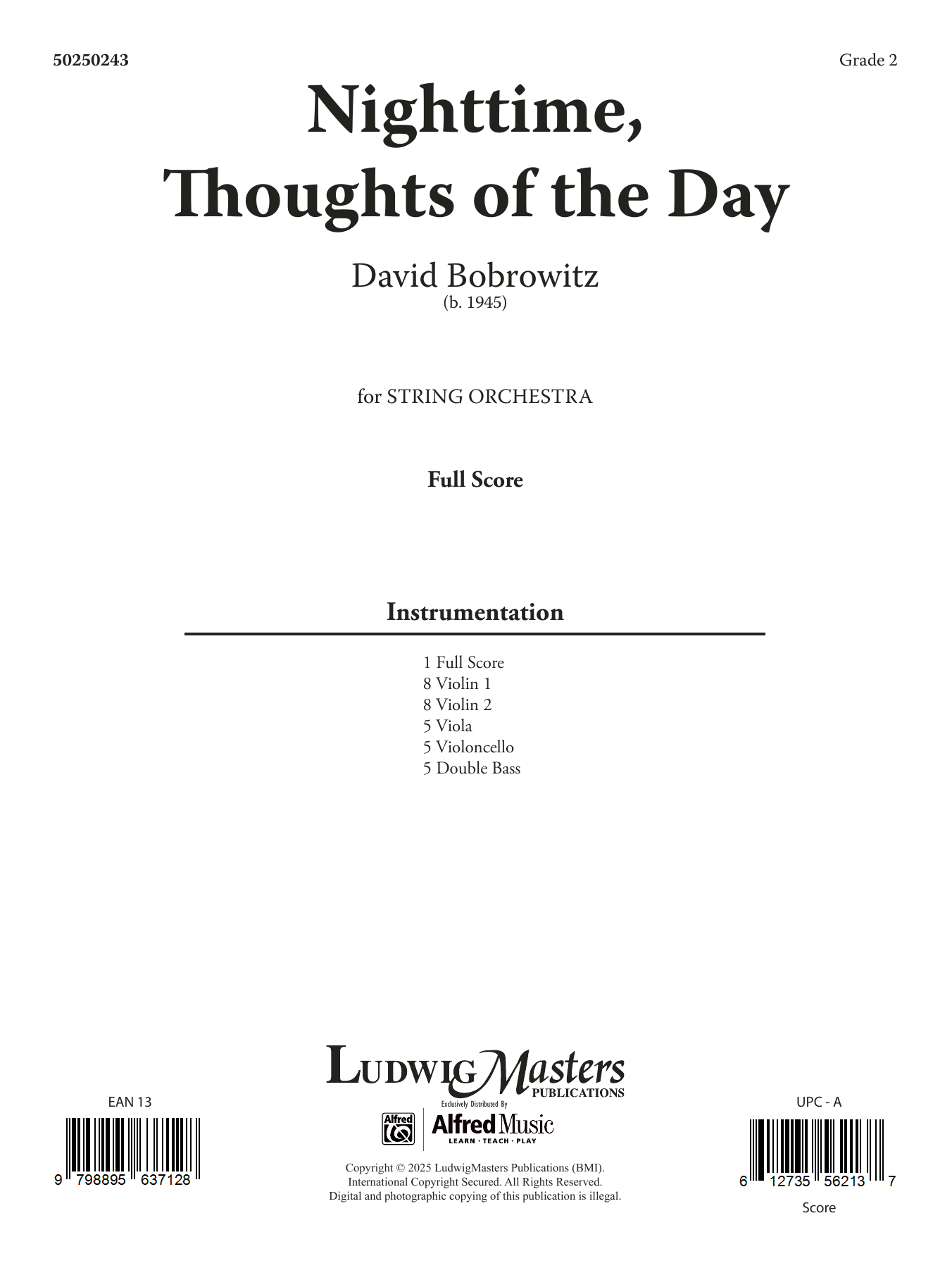

Nighttime, Thoughts of the Day: String Orchestra Conductor Score & Parts
By David Bobrowitz
Grade: 2
Item: 35-PK01699140
$40.00
Pickup currently not available
Buy Extra Parts (Digital PDF Download)
| Product | Price | Quantity |
|---|---|---|
| Nighttime, Thoughts of the Day - Full Score | $4.00 | |
| Nighttime, Thoughts of the Day - Violin 1 | $2.50 | |
| Nighttime, Thoughts of the Day - Violin 2 | $2.50 | |
| Nighttime, Thoughts of the Day - Viola | $2.50 | |
| Nighttime, Thoughts of the Day - Cello | $2.50 | |
| Nighttime, Thoughts of the Day - Bass | $2.50 |
Parts Added to Cart!
Description
One thing that most of us do at bedtime, is to review the happenings of the day. The composer has chosen a day that has gone well, and therefore, the thoughts in review are very pleasant. Bar 8 starts the day's review, and is quite serene in character. Bar 15, the ritard should be quite substantial, especially the last 3 quarter notes in bar 16. Bar 17 picks up the lovely melody again, this time with counter activity in the cellos and basses. Bar 29 should be a little faster, as the pizzicato technique sets a different tone for the day that was. Bar 41 is a repeat of the main melody, this time, without the counter low strings. One could think that the nighttime thoughts are beginning to calm, and sleep is on its way. All in all, this is a lovely selection that would be a wonderful offset to a fast, aggressive piece on your program. All parts have important material, and it should be a solid learning experience for your ensemble to play musically!


Nighttime, Thoughts of the Day: String Orchestra Conductor Score & Parts isn't in MakeMusic Cloud just yet...but it could be. Let us know you'd like to see it, and you'll help shape what comes next. In the meantime, start a free trial and dive into thousands of interactive titles your students can play along with today.
Request This Title
Tell us you want it.
Start Your Free Trial
Explore everything that's ready to play right now.
Sample Audio
No sample audio found.
Sample Video
No sample videos found.
Additional Details
Publisher:
Hal Leonard
SKU:
35-PK01699140
More about this title
Why we love this
Bobrowitz understands what string players need to develop musically at this level: a chance to shape a long, singing line while managing dynamic nuance and textural shifts. The piece asks your ensemble to think about phrasing and ensemble balance without the complexity of advanced rhythmic or harmonic language, making it an ideal vehicle for teaching musicality itself.
What to expect
Warm and introspective. The piece opens with the quiet contentment of reviewing a good day, unfolding through gentle waves of melody and counter melody. A brief pizzicato interlude offers texture and tempo variety before returning to the serene main theme, creating the sense of drifting toward restful sleep.
Who it's for
Intermediate string orchestras ready to move beyond basic technical exercises toward expressive ensemble playing. This works beautifully for groups that have solid intonation and the capacity to sustain a phrase but still benefit from a piece centered on musical storytelling rather than technical display.
How to get the most out of it
- Make the ritardando at bar 15 substantial; the last three quarter notes in bar 16 should feel like a genuine settling before the melody returns. Communicate this shape clearly in rehearsal so the ensemble doesn't rush the resolution.
- Highlight the counter activity in cellos and basses starting at bar 17. These lines support the main melody but deserve clarity; a brief sectional with low strings helps them own their material.
- Shift the character noticeably at bar 29 when pizzicato enters. The tempo lift and texture change should feel like a conscious turn in the narrative, not an accident.
- Balance is everything in bar 41. Without the counter activity in the low strings, the melody line needs to float forward; shape each phrase deliberately so it doesn't flatten.
How to use it
Pair this after an energetic or dramatic work to provide genuine contrast and give your audience a moment to settle. It also serves as an excellent closing number for a shorter concert, leaving listeners with a sense of peace rather than excitement.
Skills your students will build
- Sustaining long melodic lines with consistent tone and vibrato control
- Balancing melody against counter melody and accompaniment
- Managing substantial tempo changes and ritardandi with ensemble precision
- Executing pizzicato technique as a timbral and textural choice
- Responding to dynamic markings as part of a larger musical narrative