
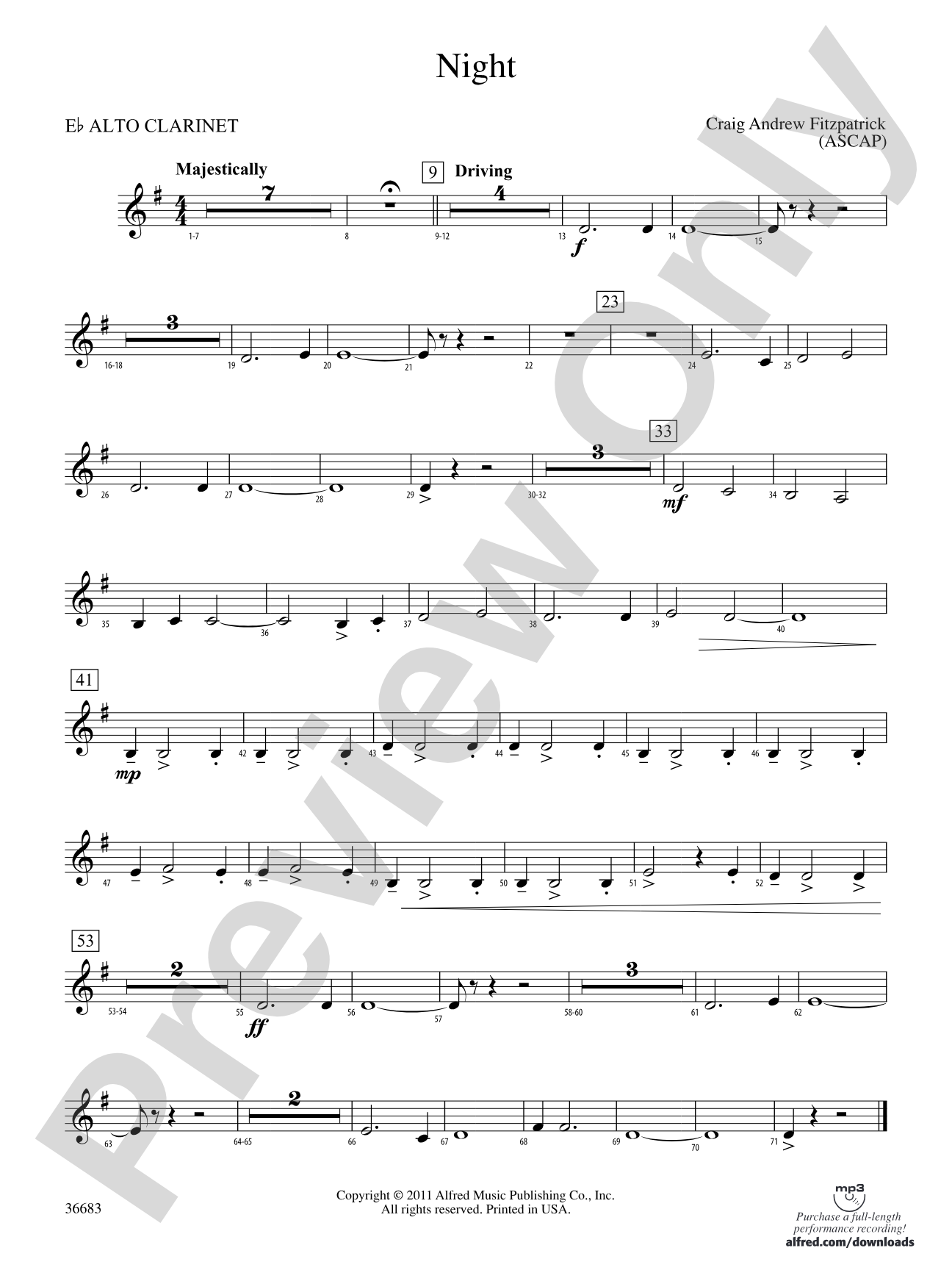

Night: (wp) E-flat Alto Clarinet
By Craig Andrew Fitzpatrick
Grade: 1 (Very Easy)
Item: 00-PC-0015111_wpAC1
$3.00
Pickup currently not available
Description
"Night" is the result of a collaborative project between the composer and the 6th grade beginning band directed by his wife in Morton, Illinois. The students in her band class each write an eight-measure melody as a composition project which is part of the beginning band curriculum. These melodies each start and end on concert B-flat and use only the notes the students have learned on their instruments. The class voted on the best melody, and the winner was "Majestic Night, Oh Winter Night" by Sarah Gunter. The students then observed how this melody was developed by the composer into a concert band piece that they would perform later that year. Compositional terms such as repetition, fragmentation, and augmentation could then be taught to the 6th graders in a new piece for young band that was written just for them. This title is available in MakeMusic Cloud.


Don't just read it, hear it, play along with it, and watch your students grow with it. In MakeMusic Cloud, Night: (wp) E-flat Alto Clarinet comes alive with professional accompaniment, adjustable tempo, and built-in practice tools that turn solo practice into real progress.
Open in the Player
Jump straight in and assign it today.
Start Your Free Trial
Open this title and explore the full library in minutes.
Sample Audio
1
Audio File
--:--
0:00
0:00
Sample Video
No sample videos found.
Additional Details
Series:
Alfred Debut Series
Publisher:
Alfred Music
Page Count:
134
SKU:
00-PC-0015111_wpAC1
More about this title
About the Composer: Craig Andrew Fitzpatrick
Craig Andrew Fitzpatrick understands what it takes to build a beginning band program that engages young musicians and connects them to real compositional thinking. His collaborative approach to writing music for young ensembles reflects a deep commitment to music education and a willingness to let students' ideas shape professional concert works.
Fitzpatrick's work with beginning band students in Illinois demonstrates how composition can become a vehicle for teaching musical form and development. By transforming a student's original melody into a full concert band piece, he models for educators how to make abstract concepts like fragmentation and augmentation tangible and audible.
Why we love this
Fitzpatrick has written a piece that turns a student composition into a teaching moment about form and development. Your band gets to see how a simple eight-measure melody transforms through compositional techniques, then perform the finished work they helped inspire. That connection between the writing process and the final product creates genuine engagement that transcends typical concert band repertoire.
What to expect
A quiet, contemplative journey through winter night. Gunter's melody carries a lyrical dignity that Fitzpatrick honors throughout the piece, never overshadowing it with busy accompaniment. The sound is spacious and reflective, with moments of gentle development that unfold naturally rather than rushing ahead.
Who it's for
Beginning concert bands in grades 5-7 will find immediate relevance here, especially if your own students are creating melodies as part of their curriculum. Directors seeking Grade 1 pieces with genuine pedagogical layering (rather than pure simplification) will appreciate how the music itself teaches form. This work also reaches experienced young bands looking for material that connects composition study to performance.
How to get the most out of it
- Balance the restatements of Sarah Gunter's melody across sections. When it passes between clarinets, saxophones, and trumpets, keep the line singing at the same dynamic level so the tune remains the hero.
- Mark where fragmentation begins and identify which instruments carry the broken melodic fragments. Clarity here teaches the band (and your audience) what that compositional device actually sounds like in practice.
- Attend to the supporting voices throughout. Grade 1 literature often leaves accompaniment parts to find themselves; shape the harmonic background as intentionally as you shape the melody.
- Use the fact that students wrote this melody to kindle ownership during rehearsal. Ask players to point out where they hear repetition, where the tune gets broken apart, and where it comes back whole.
How to use it
Program this early in a concert when the audience's attention is fresh and the piece can speak in its understated way. It pairs well with other Grade 1 concert band selections that emphasize melody and ensemble blend. If you've incorporated student composition into your curriculum, this is the perfect vehicle for discussing how composers take ideas and develop them, turning a classroom project into concert-worthy music.
Skills your students will build
- Identifying and listening for compositional techniques (repetition, fragmentation, augmentation) within a performed piece
- Balancing melody and accompaniment across multiple sections
- Sustaining tone and phrase shape on simple, lyrical material
- Reading concert B-flat and transposing from students' learned pitches to their written parts
- Understanding how a single melody can be the structural foundation of a larger work