Night Shift: String Bass Sheet Music Preview

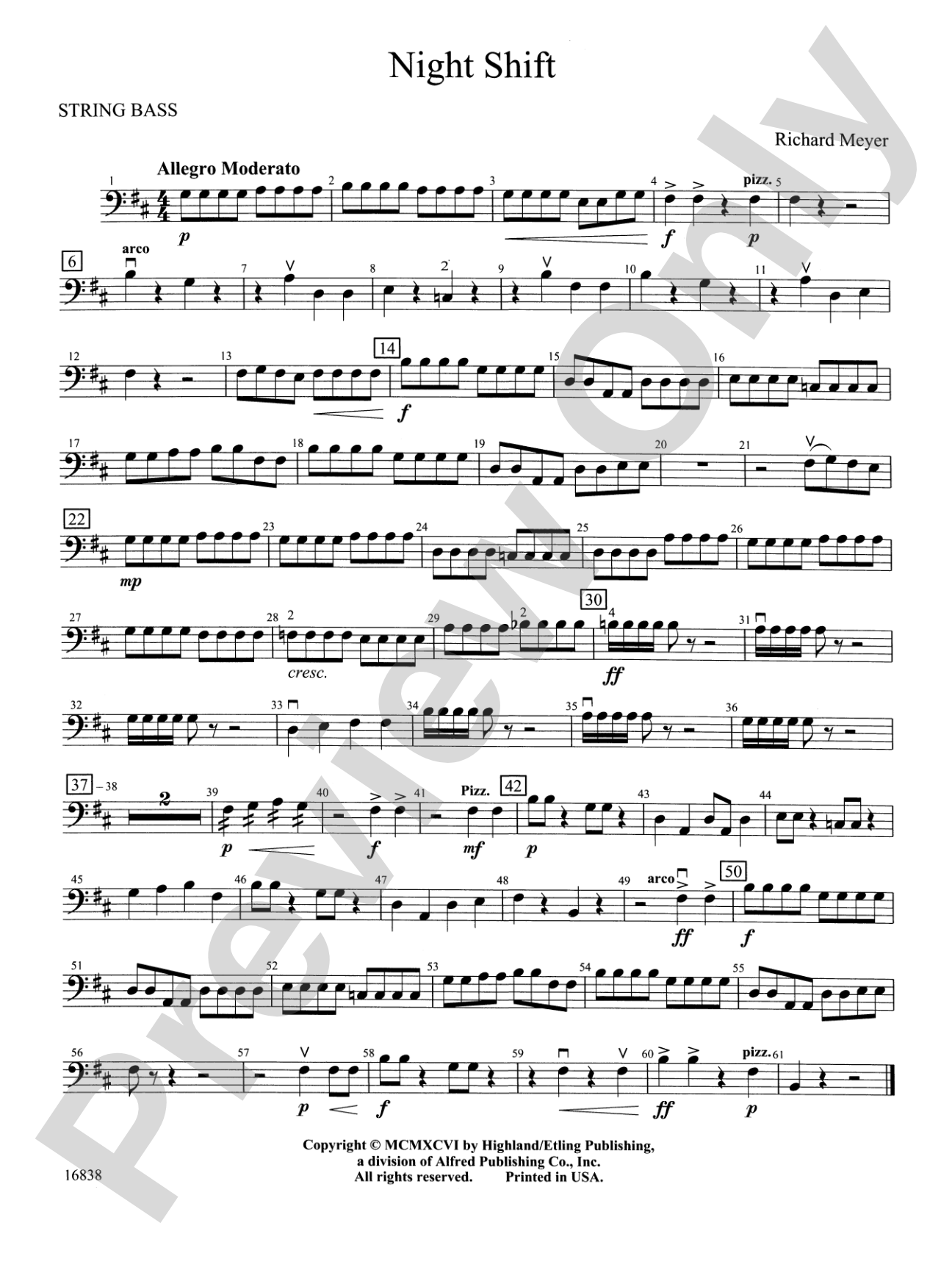
Night Shift: String Bass

By Richard Meyer

Grade: 1

Item: 00-PC-0000204_SB

Digital Download
$5.99
Description
What better way to practice early shifting than with this exciting original work by Richard Meyer. The exciting rhythms and sounds of this creative work will inspire your students to attain new heights of skill and musicianship. First violins and violas use third position, cellos use fourth position, while second violins and basses remain in first. (Grade 2 - Correlates with Strictly Strings, Book 2, page 19) This title is available in MakeMusic Cloud. A Federation Festivals 2020-2024 selection.

Don't just read it, hear it, play along with it, and watch your students grow with it. In MakeMusic Cloud, Night Shift: String Bass comes alive with professional accompaniment, adjustable tempo, and built-in practice tools that turn solo practice into real progress.

Sample Audio
0:00
0:00
Sample Video
Additional Details
Series: Highland/Etling Strictly Strings
Publisher: Alfred Music
Page Count: 72
SKU: 00-PC-0000204_SB

More about this title

About the Composer: Richard Meyer

Richard Meyer

Richard Meyer spent 35 years teaching strings across elementary, middle, and high school levels in California's public schools. At Oak Avenue Intermediate School in Temple City, he built the orchestra program from 29 students to 200 over 22 years while also overseeing the city's elementary string instruction. In 2009, Meyer created the "Giving Bach" program, an initiative that uses interactive concerts to reach special needs and underserved students throughout Southern California, earning national recognition for its impact.

Beyond the classroom, Meyer has shaped the field through composition, editing, and mentorship. He directed the Pasadena Youth Symphony Orchestra for 16 years and has led All-State and Honor Orchestras nationwide. As string editor for Alfred Publishing for 16 years and co-author of method books including the String Explorer Series, his influence extends to thousands of young musicians. His catalog of over 190 published compositions and arrangements reflects a deep understanding of what works pedagogically and musically with developing orchestras.

Why we love this

Meyer knows exactly what Grade 2 orchestras need: a piece that makes shifting feel like an adventure rather than a chore. The rhythmic energy and forward motion carry students through the technical work without ever feeling like an exercise, and the Festival selection history proves it holds up under performance pressure.

What to expect

Propulsive and engaging, with a working-day rhythm that keeps momentum alive across the full seven-minute arc. The music crackles with activity without overwhelming developing players.

Who it's for

String orchestras at Grade 2 level, particularly those using the Strictly Strings curriculum and ready to tackle multiple positions simultaneously. This works equally well for groups preparing festival or contest material.

How to get the most out of it

  • Anchor the intonation in first position before moving to third and fourth positions. Spend rehearsals establishing the pitch relationships students will reference once they shift.
  • Balance the energy between parts during those rhythmic unison sections; second violins and basses in first position must punch through with the same conviction as their shifting colleagues.
  • Record a run-through early and listen as an ensemble. Student ears often catch tuning inconsistencies in the shifted positions faster than a conductor's eye can spot them.

How to use it

Pair this with your Strictly Strings Book 2 sequence to reinforce the shifting concepts students are learning on the page. It's also a reliable choice for early-season concerts when you want a piece that sounds polished without requiring months of rehearsal.

Skills your students will build

  • Shifting to third position (first violins and violas)
  • Shifting to fourth position (cellos)
  • Maintaining intonation across multiple positions within a single piece
  • Reading and executing rhythmic figures with precision across divisi parts
  • Balancing articulation and tone quality while navigating position changes

You May Also Like