William Gillock (1917–2002) built his career on a simple conviction: young pianists deserve music that challenges them musically without overwhelming them technically. His educational works balance melodic appeal with genuine compositional craftsmanship, making him a staple in studios and conservatories worldwide. Gillock understood what motivates students to practice, and his pieces deliver the satisfaction of playing "real" music at accessible levels.
Why we love this
Gillock crafts pieces that sound far more sophisticated than their technical demands suggest. This single-page work demonstrates why his educational catalog remains essential: it builds genuine musicianship while keeping students engaged through strong character and narrative arc.
What to expect
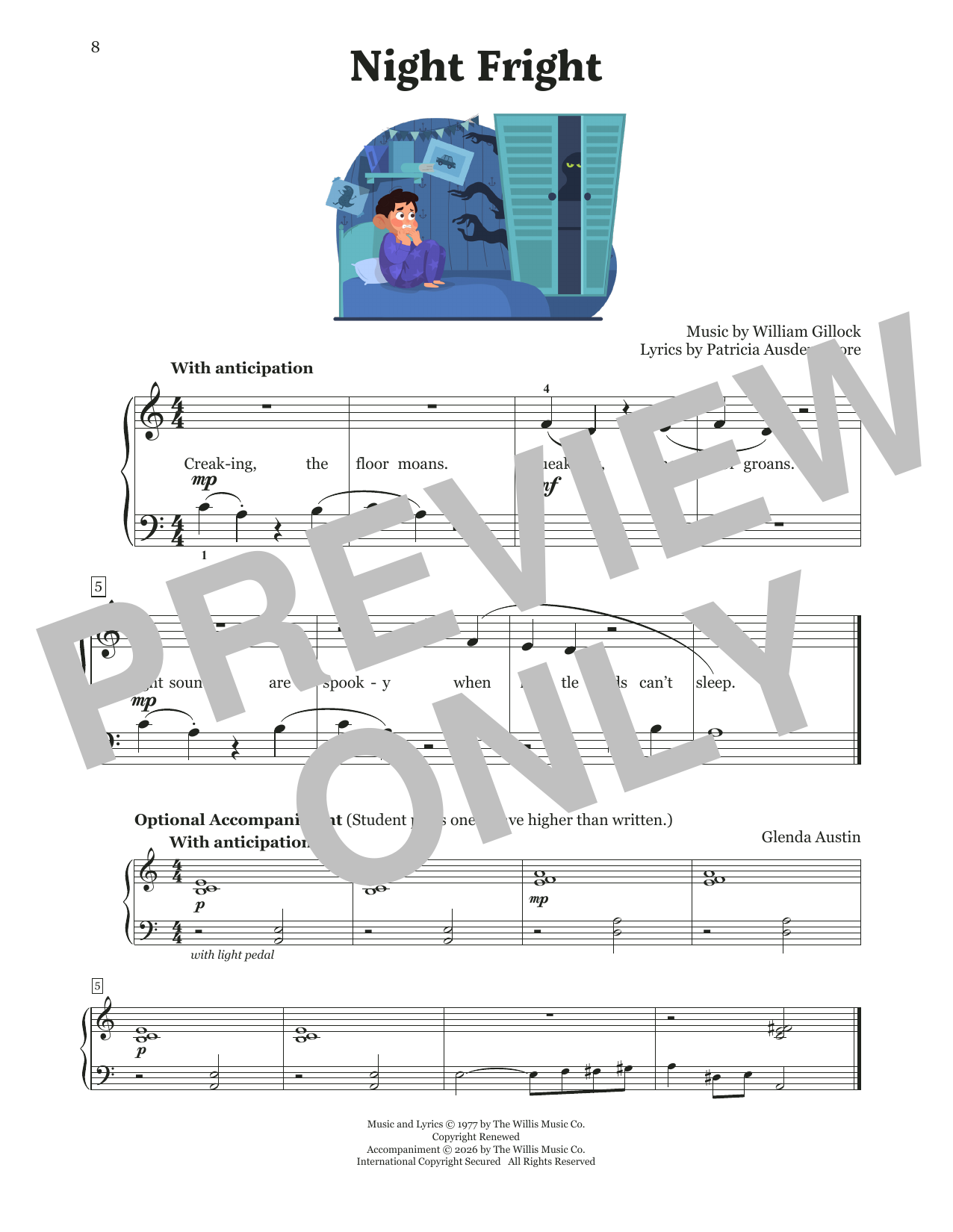
A theatrical, slightly unsettling narrative unfolds across this compact piece. Gillock captures the essence of spookiness through harmonic language and pacing rather than relying on cheap tricks, creating a piece that's genuinely engaging rather than gimmicky.
Who it's for
This works well for intermediate early-advanced students building confidence with character pieces. It suits performers ready to tackle pieces with genuine musical personality and expressive demands beyond simple technical exercises.
How to get the most out of it
Shape the melody with clear phrase breathing; treat this as a storytelling piece where tension and release matter as much as note accuracy.
Differentiate the accompaniment texture from the melodic line through dynamic balance. The supporting material should remain transparent rather than compete for attention.
Consider the harmonic and tonal journey from start to finish. Gillock often uses strategic key or color shifts to mark dramatic moments; let those breathe.
How to use it
Pair this with other character works by Gillock or contemporaries for a recital segment exploring mood and storytelling in piano music. It also serves as an excellent model for students studying how composers use harmony and texture to convey emotion.
Skills your students will build
Phrasing and narrative arc in single-line melody
Harmonic awareness and chord quality discrimination
Dynamic differentiation between melodic and accompanying voices
Expressive interpretation of character and mood
You May Also Like
Scan to Complete Your Purchase
Use your phone's camera to scan the code below
You'll log in on your phone and the order will be added to your account