
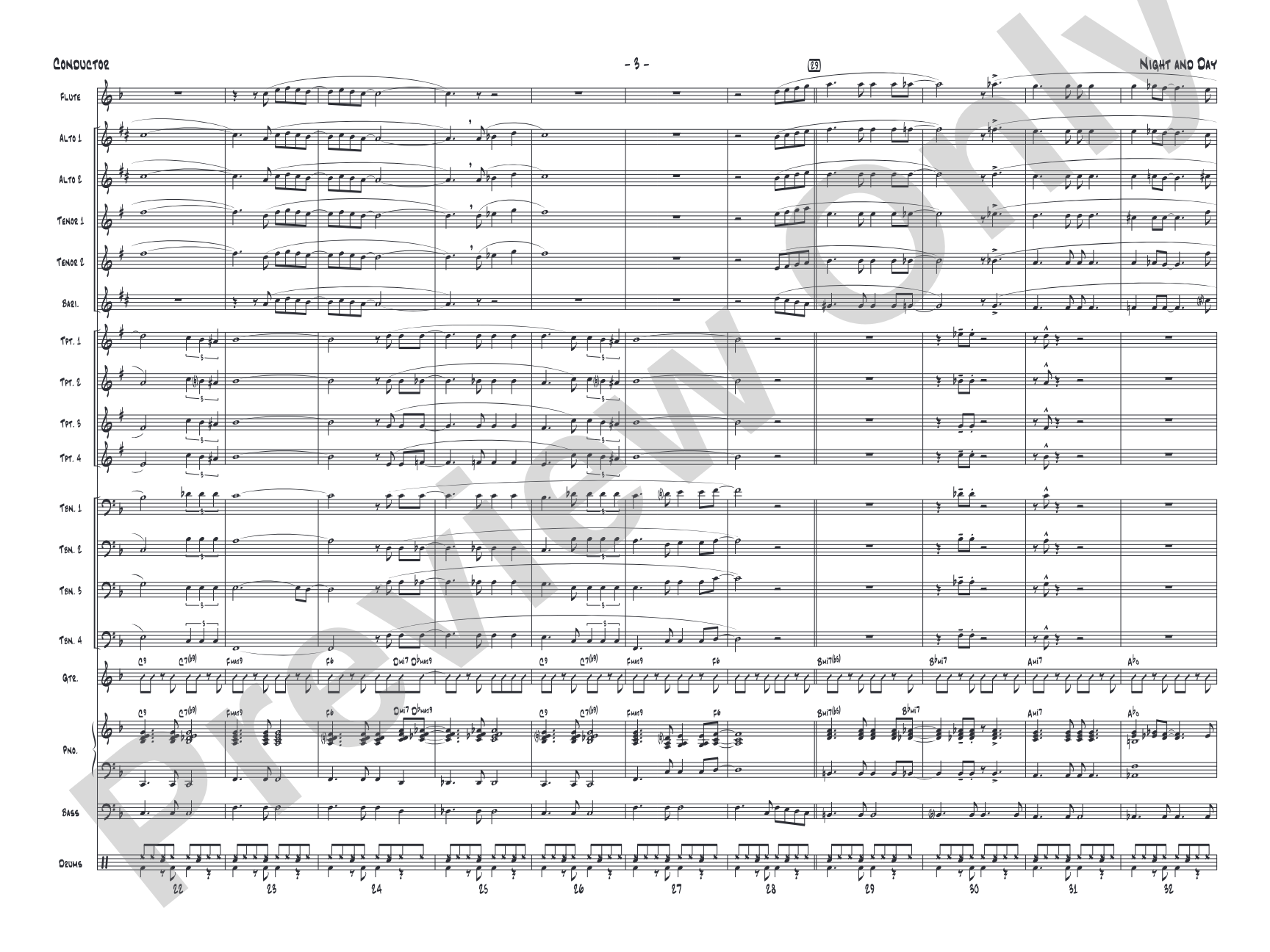
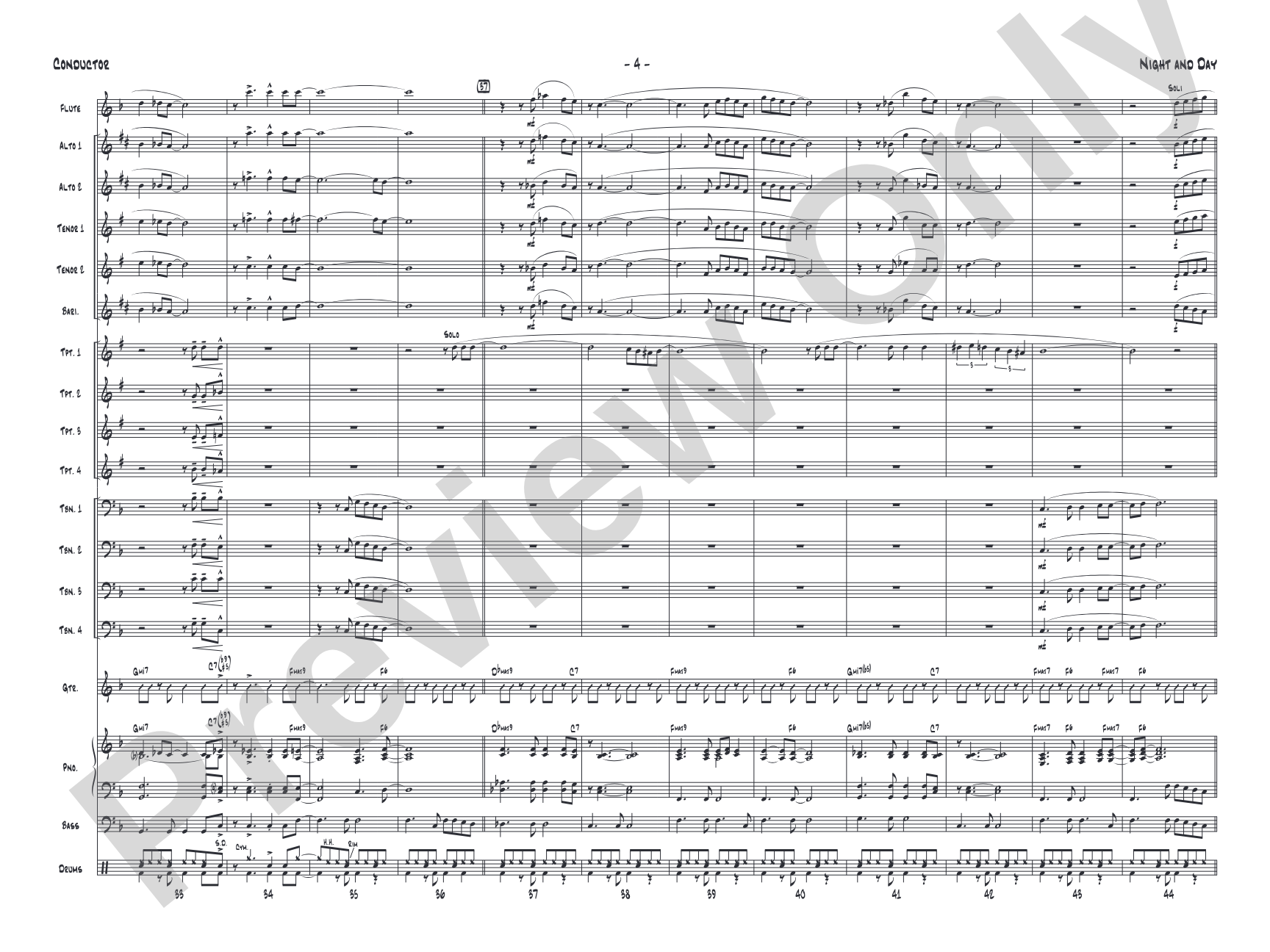
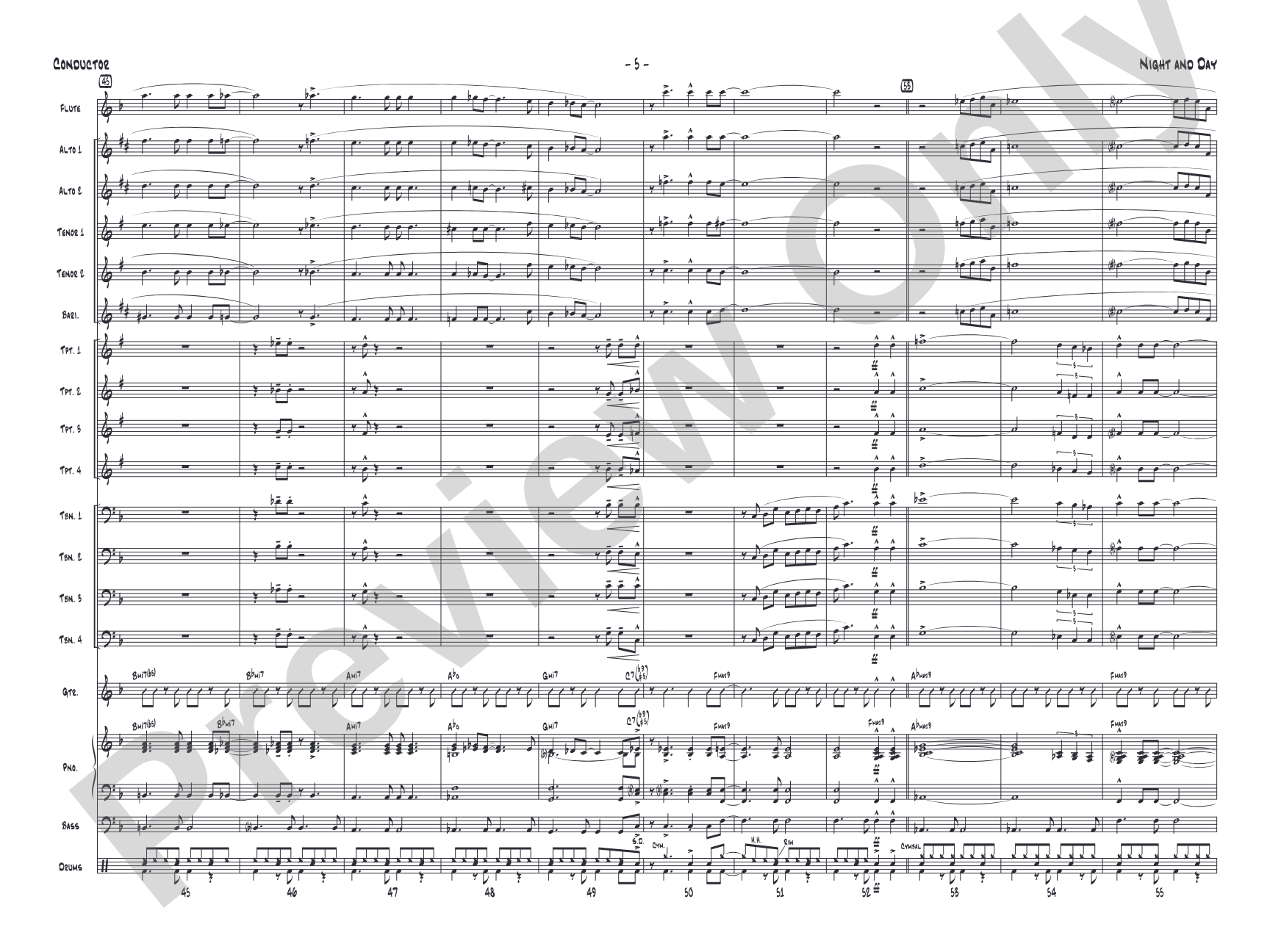
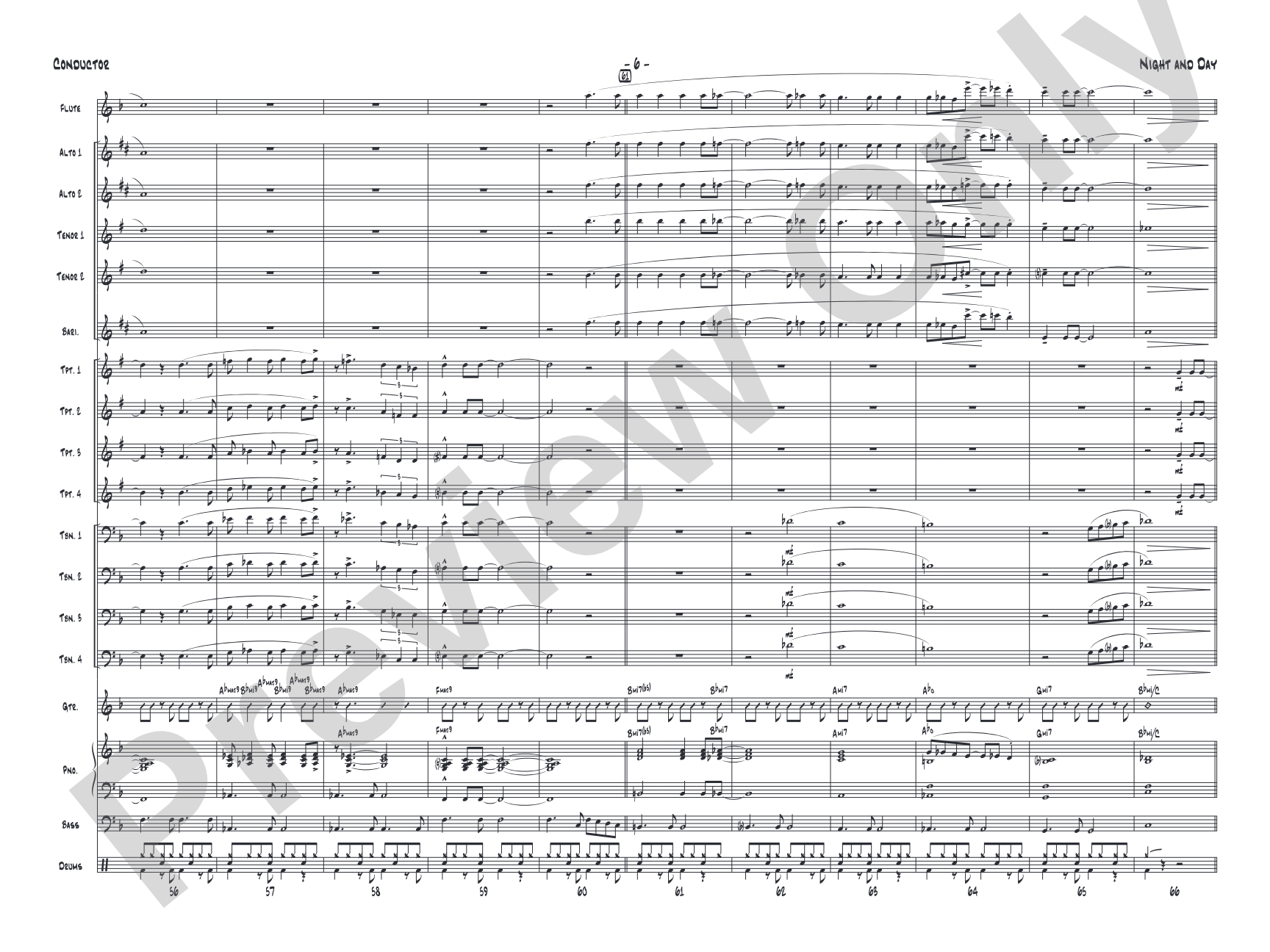
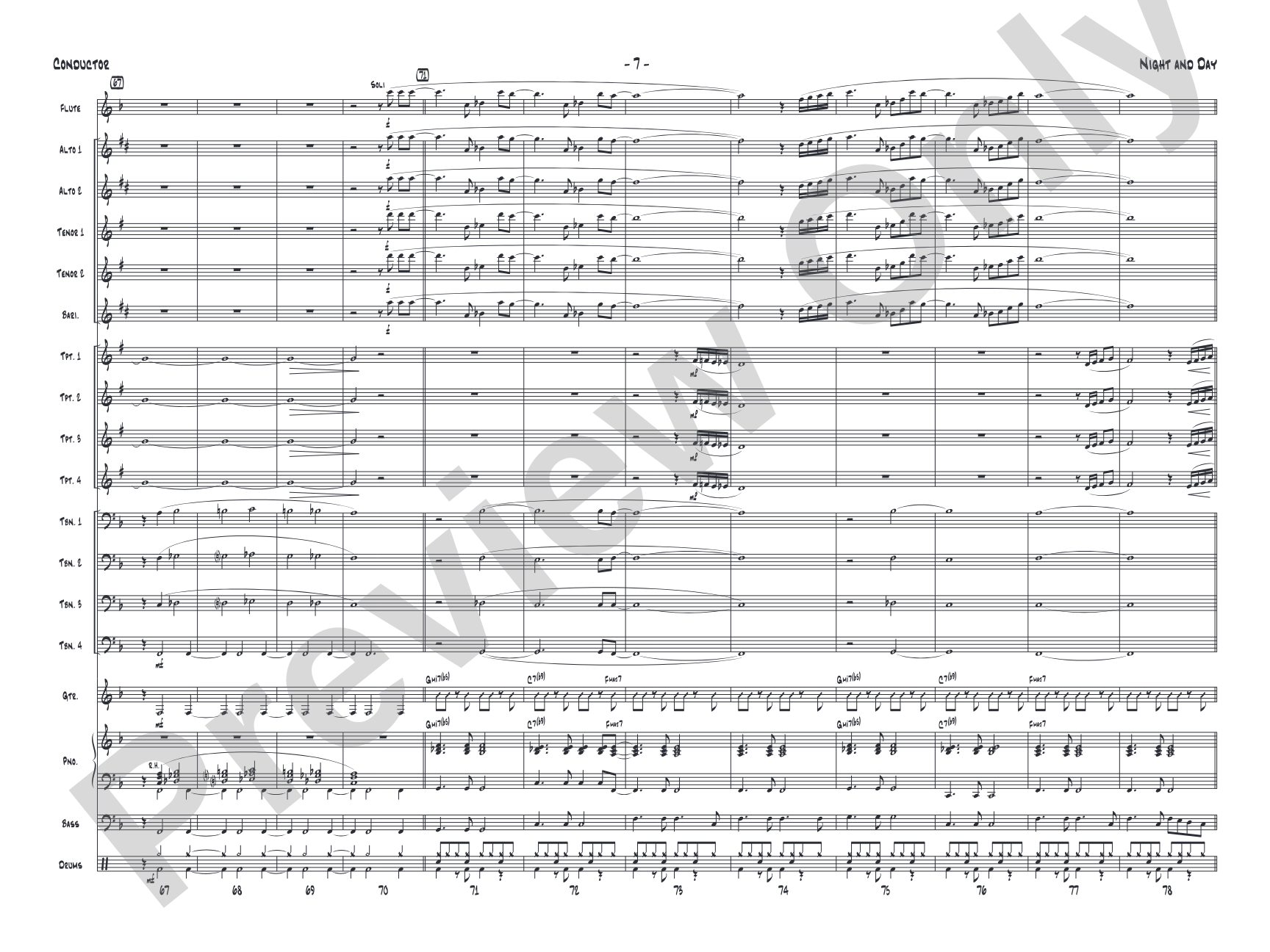
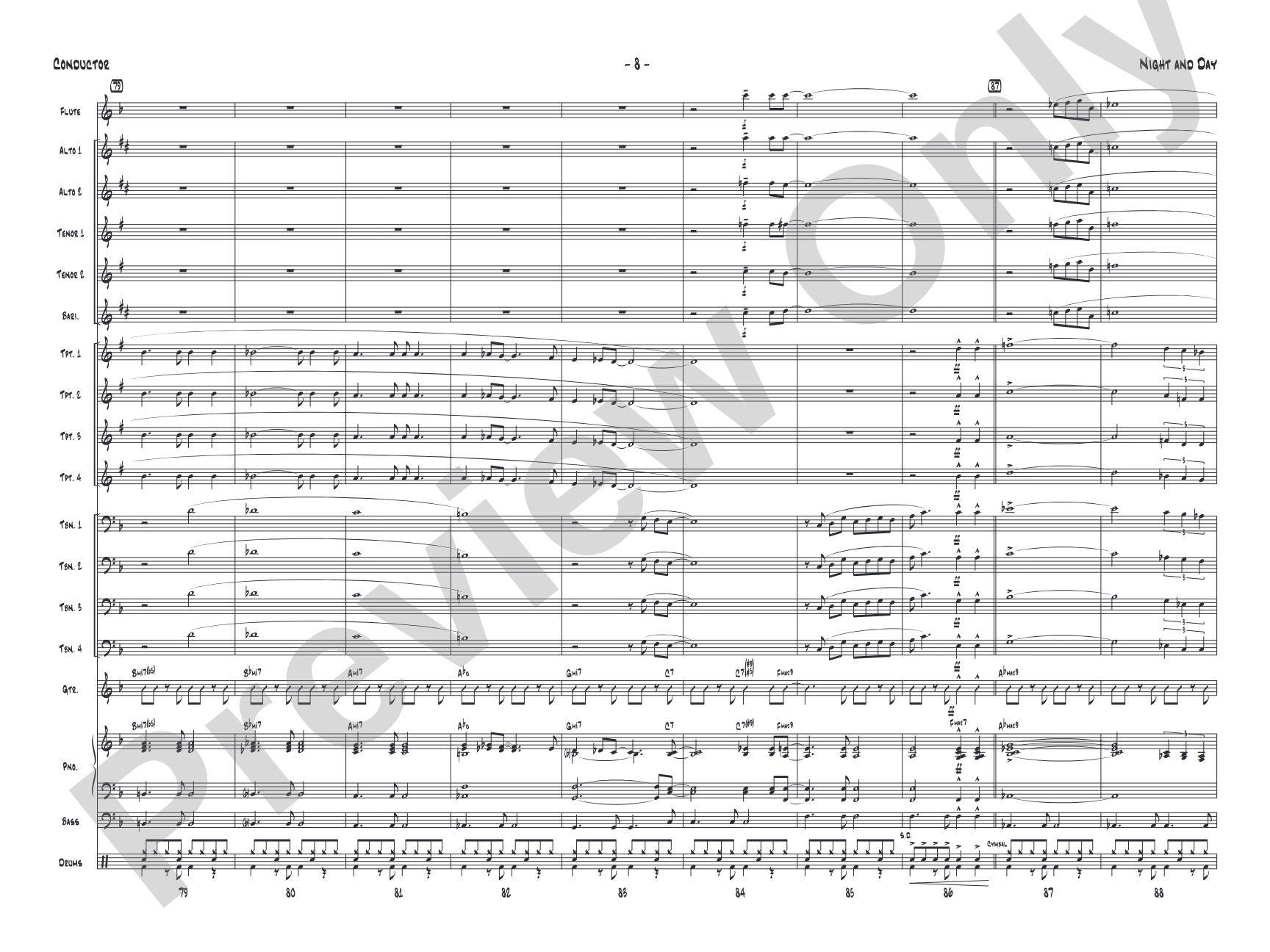
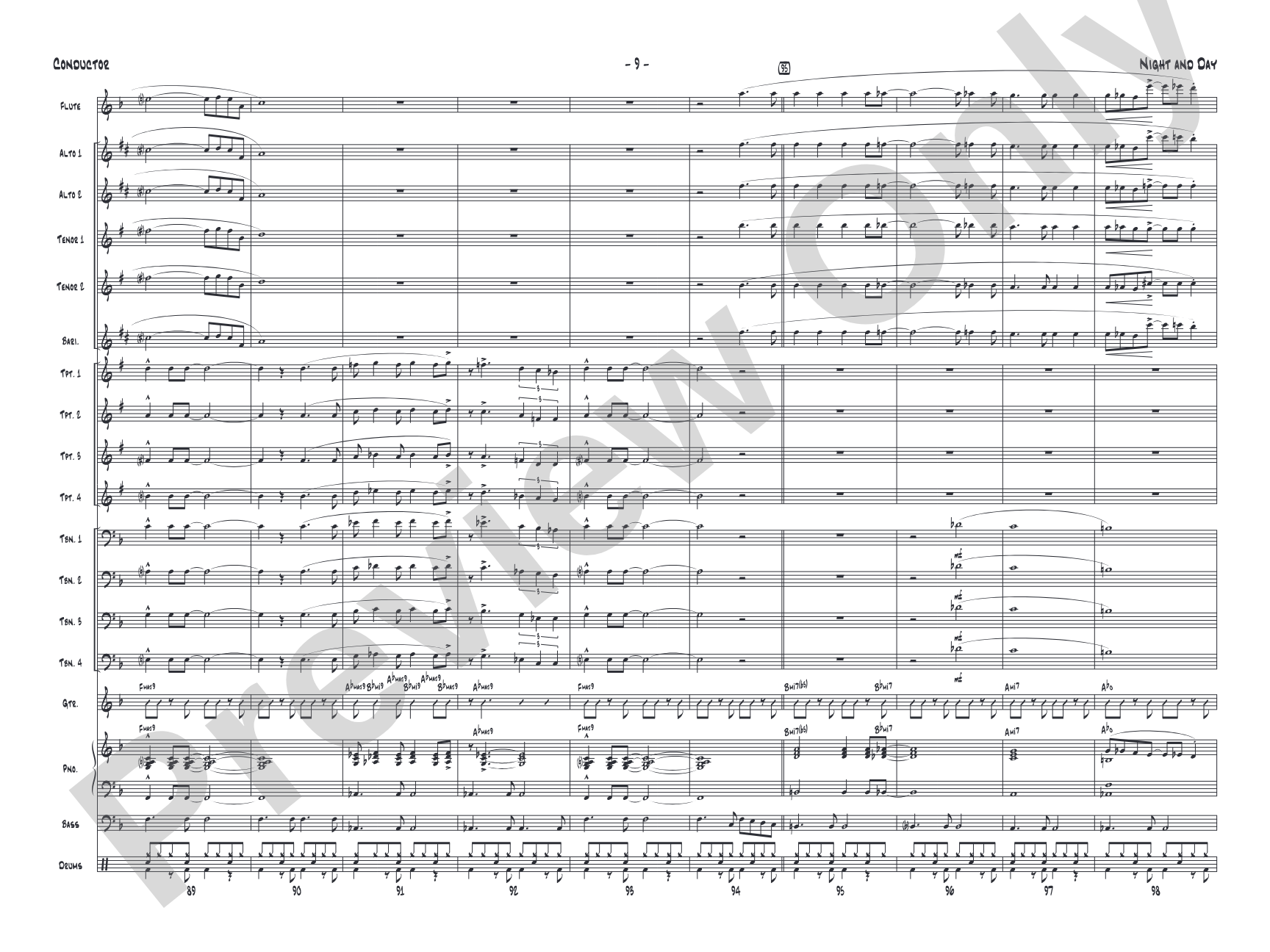
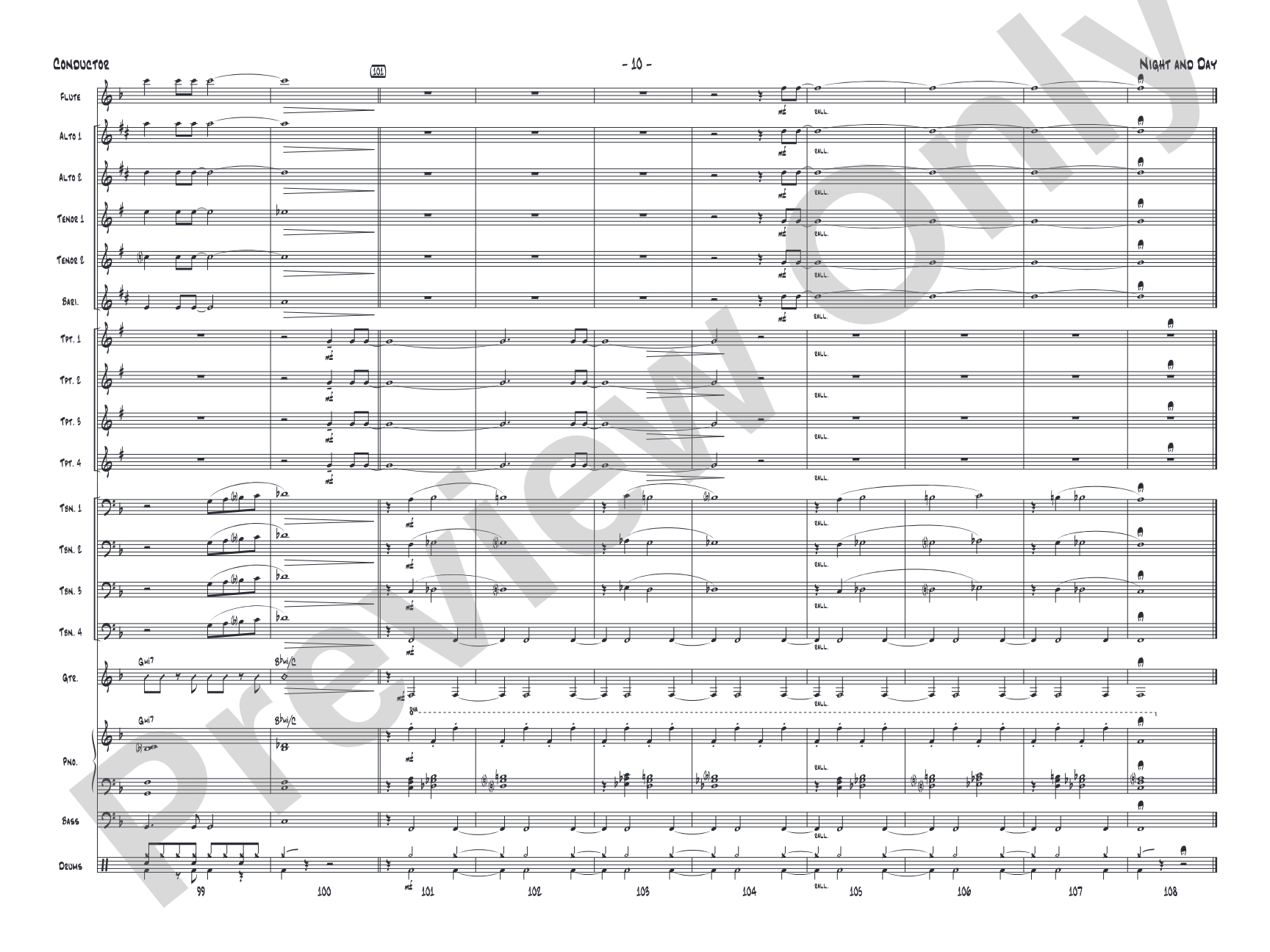

Night and Day: Score
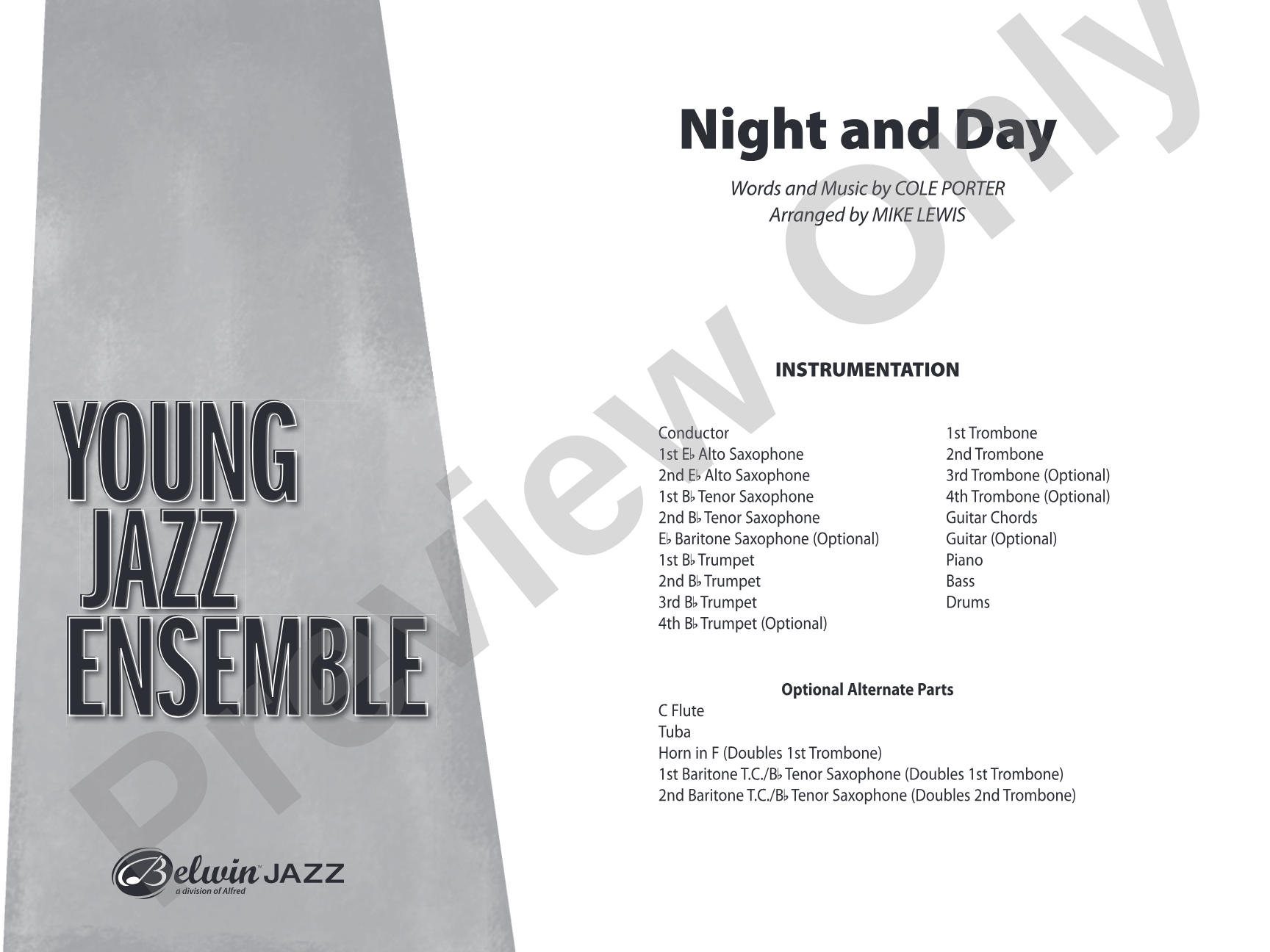
Words and music by Cole Porter / arr. Mike Lewis
Grade: 2 (Medium Easy)
Item: 00-PR-0005474
$8.00
Pickup currently not available
Description
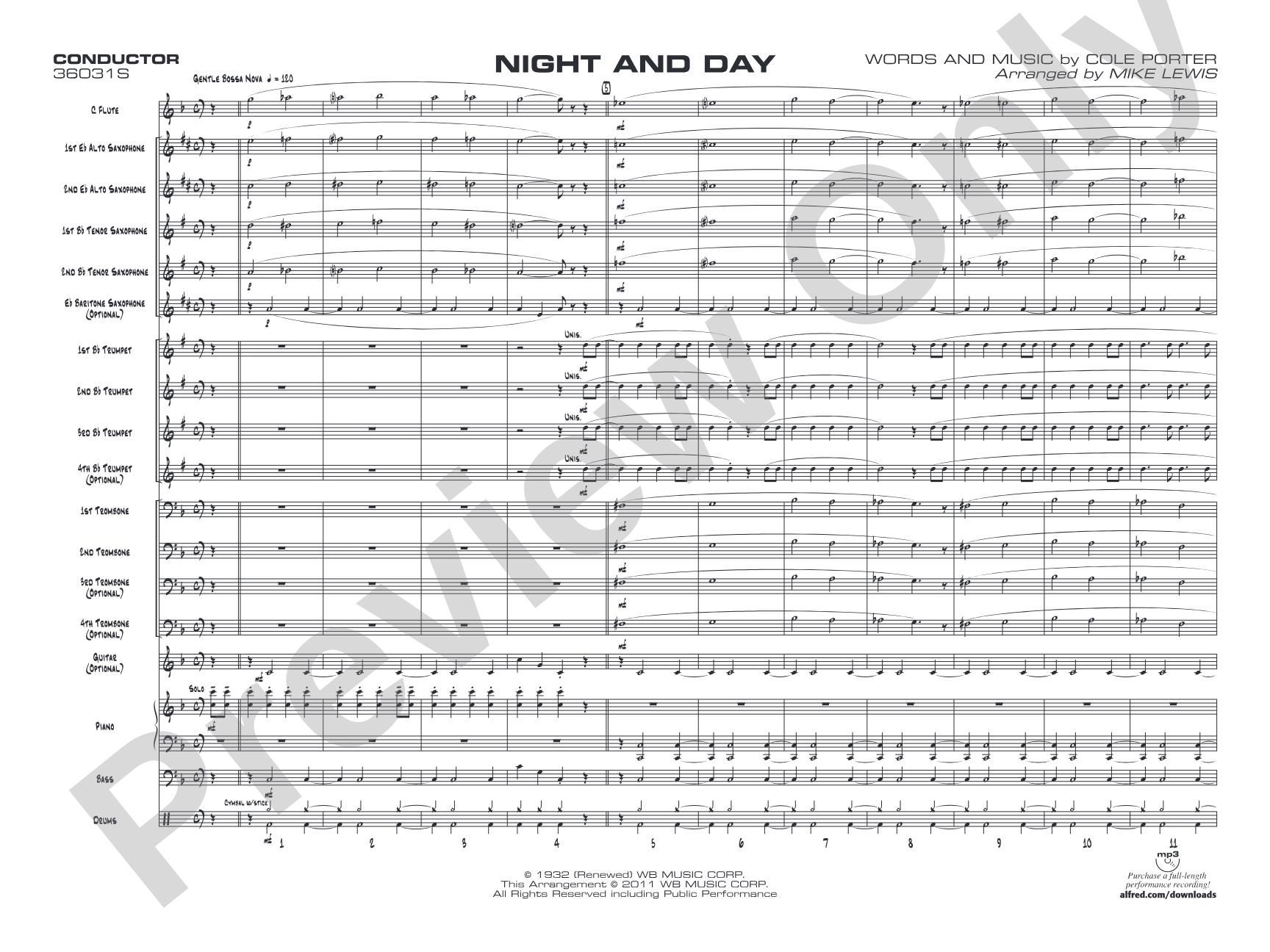
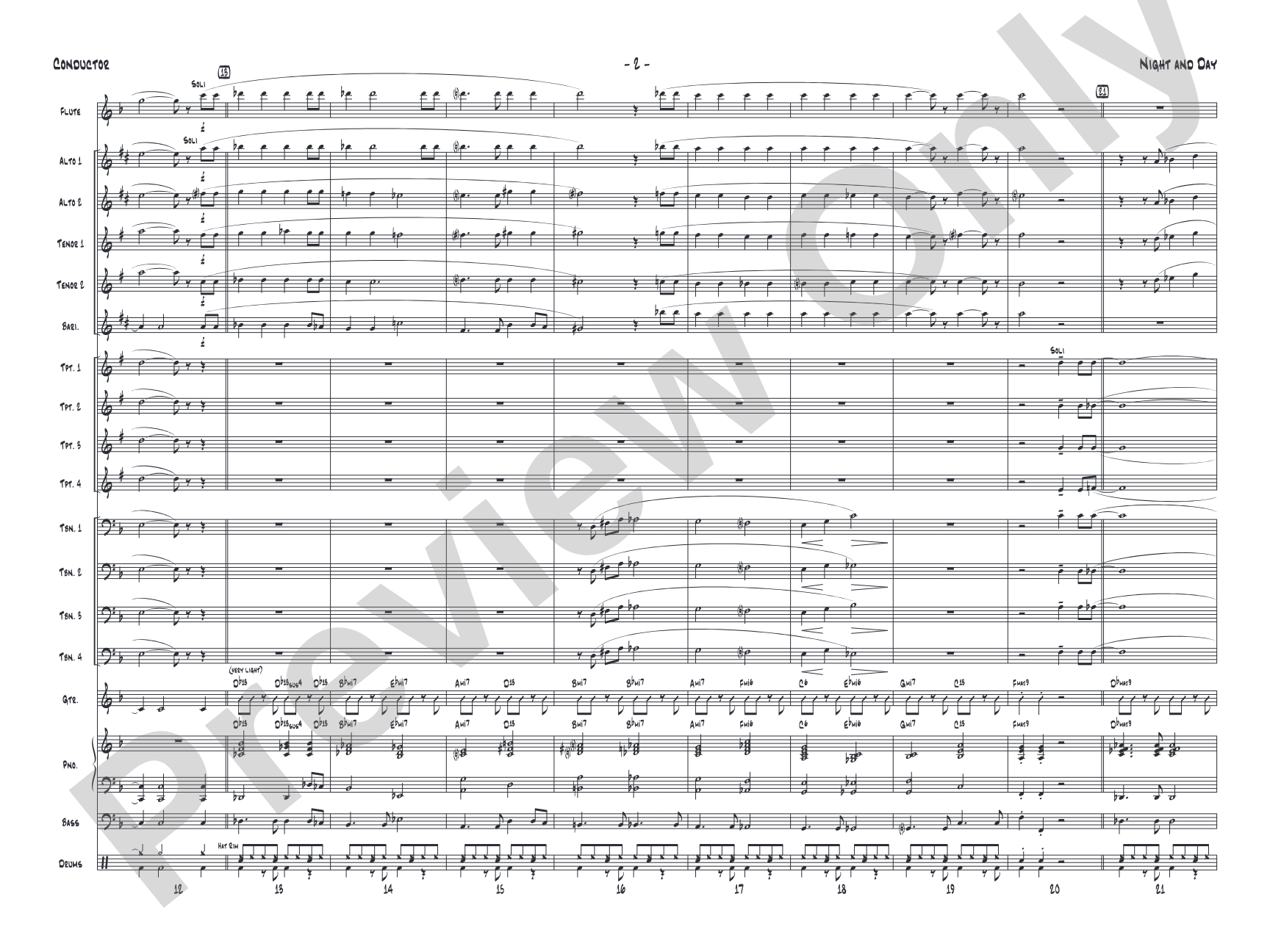
Beginning with excerpts from the verse into the melody with a smooth bossa feel, the sections bounce the melody back and forth with solis, and a brief solo melody line for trumpet 1. Lead trumpet range is to written G on top of the staff.


Don't just read it, hear it, play along with it, and watch your students grow with it. In MakeMusic Cloud, Night and Day: Score comes alive with professional accompaniment, adjustable tempo, and built-in practice tools that turn solo practice into real progress.
Open in the Player
Jump straight in and assign it today.
Start Your Free Trial
Open this title and explore the full library in minutes.
Sample Audio
1
Audio File
--:--
0:00
0:00
Sample Video
No sample videos found.
Additional Details
Series:
Young Jazz Ensemble
Publisher:
Alfred Music
Page Count:
90
SKU:
00-PR-0005474
More about this title
About the Composer: Cole Porter
Cole Porter (1891-1964) was an American composer and lyricist who created some of the twentieth century's most sophisticated popular songs. Known for witty, urbane lyrics and harmonically adventurous melodies, Porter wrote for Broadway musicals and Hollywood films with equal brilliance, crafting standards that have become central to the jazz repertoire. His songs endure because they balance accessibility with harmonic and melodic complexity, making them ideal vehicles for both straight interpretation and creative reharmonization.
Why we love this
Mike Lewis's arrangement captures the essential sophistication of Porter's melody while keeping the ensemble writing lean and playable at Grade 2. The bossa feel paired with strategic soli and a focused trumpet feature creates genuine musical moments without demanding virtuosic technical passage work, letting young players feel like they're interpreting a real jazz standard rather than reading simplified versions.
What to expect
Sophisticated yet approachable. The bossa feel brings warmth and forward motion, while the melody floats easily over the rhythm section. Soli passages break up the texture with call-and-response energy, and the trumpet feature feels like a natural spotlight moment rather than a technical showpiece. The overall impression is refined swing without pretension.
Who it's for
Jazz ensemble directors building repertoire for young players (high school or advanced middle school) who understand jazz voicing and section roles but don't yet have the harmonic fluency of an advanced ensemble. This is also strong material for jazz combos or smaller groups who want to perform a recognizable standard with minimal arrangement complexity.
How to get the most out of it
- Balance the back-and-forth soli sections by assigning specific players to each line well ahead of performance so those voicings sit cleanly in the ensemble texture.
- Shape the trumpet 1 solo line with dynamic control and rubato; the written G top note should land with authority but the overall solo feels conversational, not strained.
- Keep the bossa rhythm secure in the rhythm section. The groove underpins everything, so lock that feel in rehearsal before layering melody and soli on top.
- Use the verse material as a warm-up to the main melody; let students hear how Porter sets up the tune before the full ensemble statement.
How to use it
Feature this as a standalone opening number for a jazz concert or as a bridge piece between uptempo repertoire and ballads. It also works well alongside other Porter standards if you're building a program around Great American Songbook material. The moderate length and approachable energy make it ideal for a mid-winter or spring concert when the ensemble needs a polished, audience-friendly moment.
Skills your students will build
- Reading and playing jazz articulation and phrasing in a bossa idiom
- Balancing ensemble unison lines with soli countermelody sections
- Interpreting lead trumpet range with appropriate dynamics and shaping
- Listening across sections to maintain groove and harmonic clarity in a standard-based arrangement