Night and Day: Easy Piano Digital Sheet Music

Night and Day: Easy Piano Digital Sheet Music

Cole Porter, Frank Sinatra, Fred Astaire

Item: 00-PS-0008438

Digital Download
$3.99
Description

Night and Day: Easy Piano Digital Sheet Music isn't in MakeMusic Cloud just yet...but it could be. Let us know you'd like to see it, and you'll help shape what comes next. In the meantime, start a free trial and dive into thousands of interactive titles your students can play along with today.

Sample Audio
No sample audio found.
Sample Video
Additional Details
SKU: 00-PS-0008438

More about this title

About the Artist: Frank Sinatra

Frank Sinatra redefined popular music through his mastery of phrasing and interpretation. His approach to the American songbook, treating lyrics as narrative and melody as conversation, became the standard by which singers are still measured. For music educators, Sinatra's recordings demonstrate how expression, dynamic control, and rhythmic flexibility elevate a melody from notes on a page into storytelling.

Fred Astaire's influence on musical theater and jazz dance proved equally profound. His partnership with the Great American Songbook composers shaped how these standards are performed and arranged. Astaire understood that dance and music are inseparable; his rhythmic precision and musical sensitivity inform how musicians approach these compositions today.

Why we love this

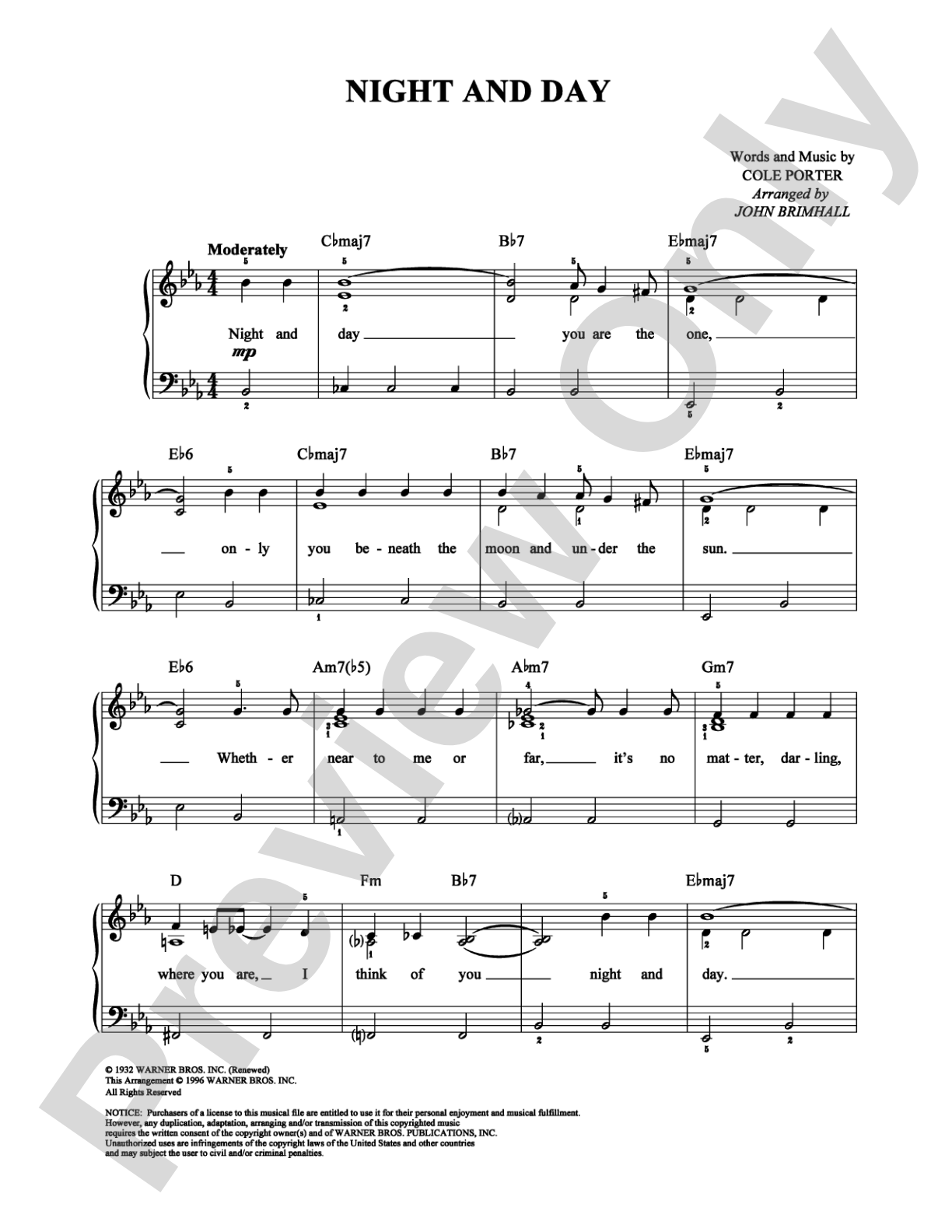
This arrangement captures one of the Great American Songbook's most elegant compositions in a form that intermediate pianists can actually play. The melody remains intact and recognizable, allowing students to connect their keyboard work directly to the sophisticated harmonies Cole Porter wrote, without requiring advanced technical facility.

What to expect

Sophisticated yet warm. The song carries the elegance of a 1930s film score, with harmonies that surprise and delight even as the melody feels immediately familiar. There's a quality of late-night reflection here—intimate even when played alone at the keyboard.

Who it's for

Pianists at the late-beginner to early-intermediate level who want to explore jazz standards and American songbook repertoire without the technical demands of a concert grand arrangement. This works equally well for students building confidence with syncopated accompaniment patterns and for adult learners returning to piano after time away.

How to get the most out of it

  • Sing the melody line internally even as you play it; Sinatra's phrasing teaches us that this tune rewards subtle timing variations and breath-like releases at the end of phrases.
  • Resist the urge to rush the bridge section. The harmonic movement there is dense enough to demand patience and clear voice leading in your left hand.
  • Listen to multiple recordings (Sinatra, Astaire, and others) to hear how different artists shape the same tune. This trains your ear for interpretive choices before you sit down to practice.
  • Pay attention to where the melody sits in the middle register. Easy arrangements sometimes bury the tune in the upper staff; make sure every note sings through.

How to use it

Include this in a student recital program that highlights American song traditions, or pair it with other jazz standards to create a thematic set. It also works as a bridge piece between classical repertoire and jazz, helping audiences (and students) understand the harmonic richness that connects these worlds.

Skills your students will build

  • Reading syncopated rhythms in the accompaniment
  • Singing melody while managing independent left-hand patterns
  • Interpreting chord symbols and jazz harmony voicings
  • Controlling dynamics and tempo flexibility within a lyrical context

You May Also Like