
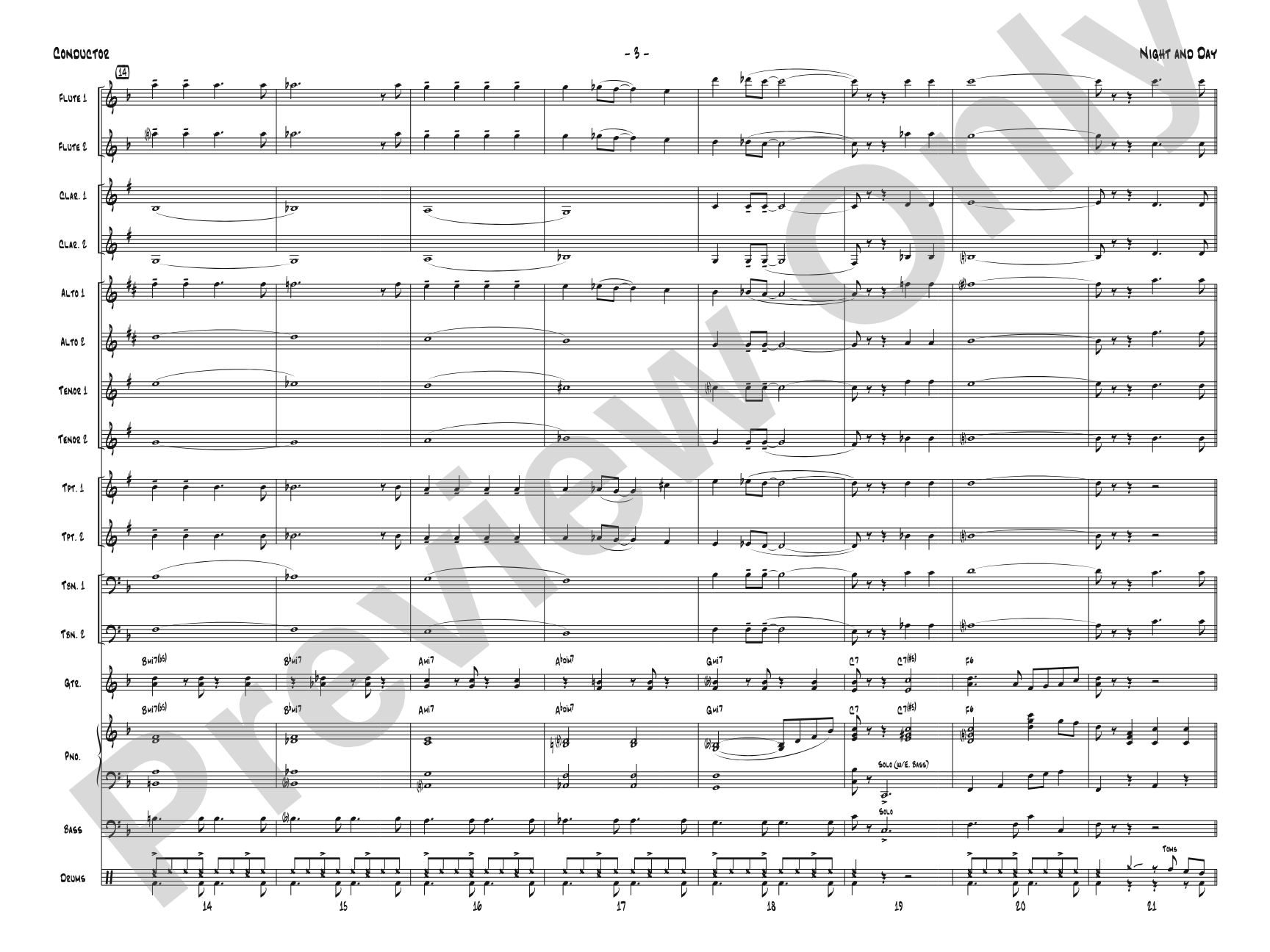
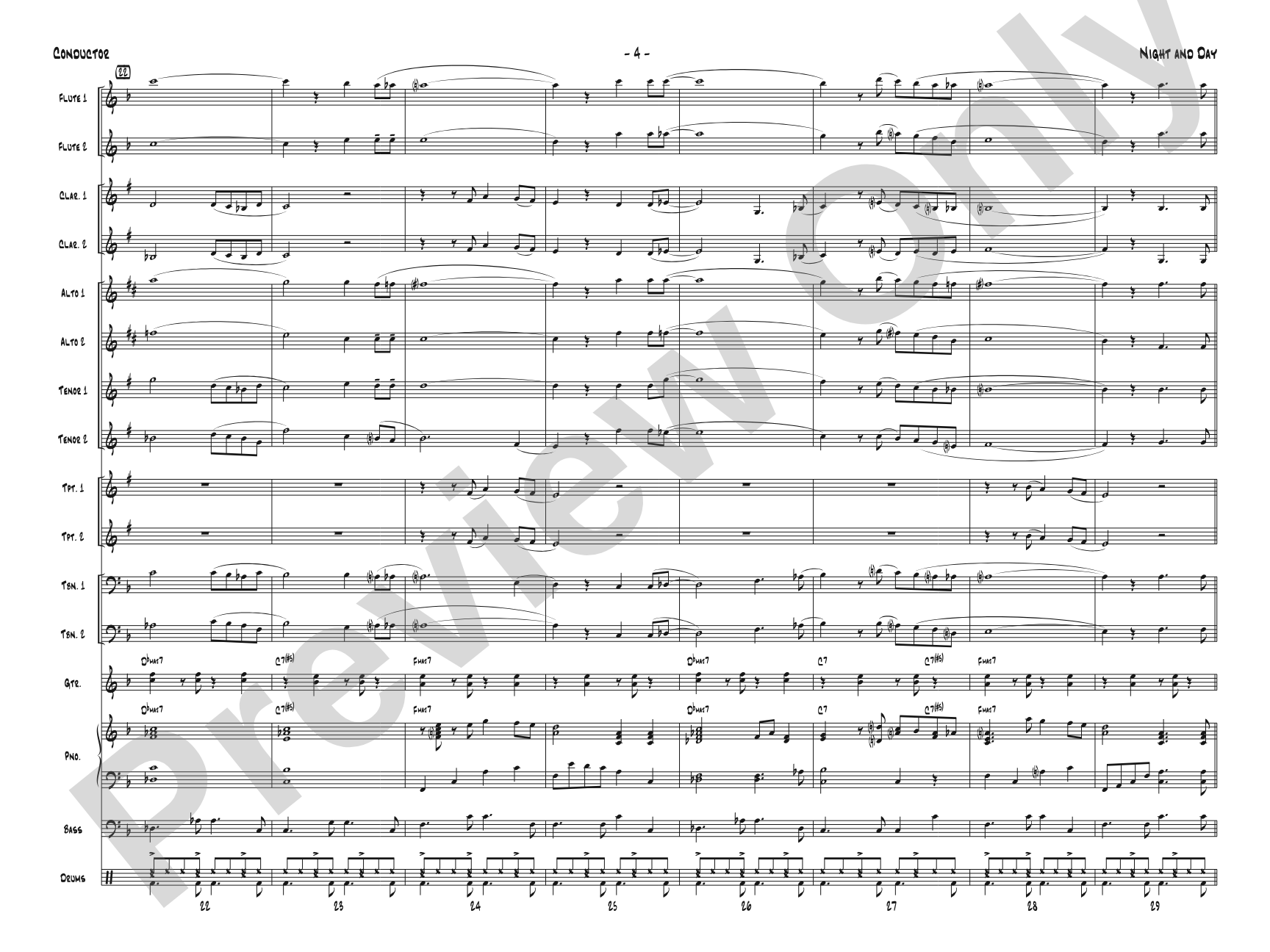
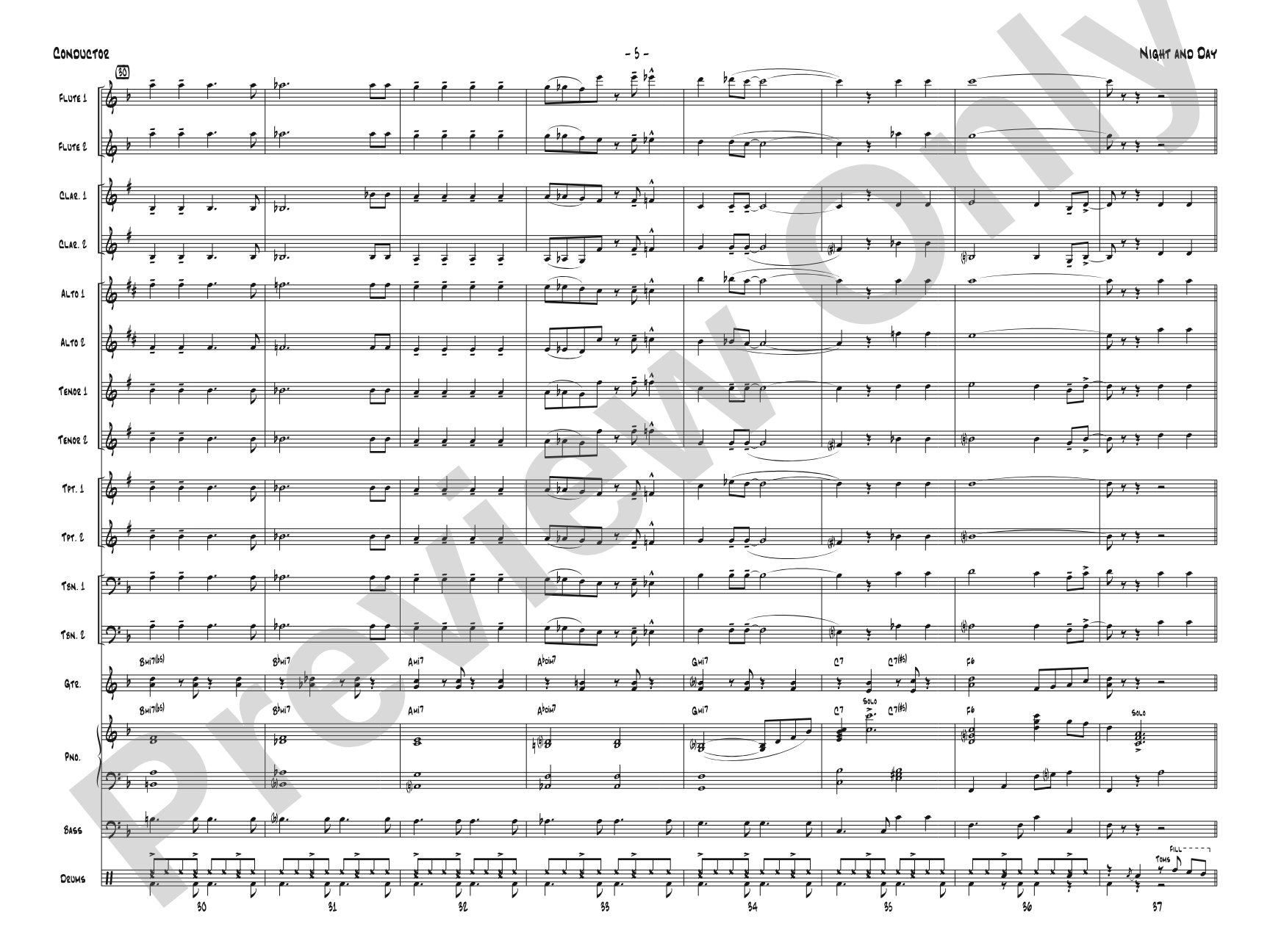
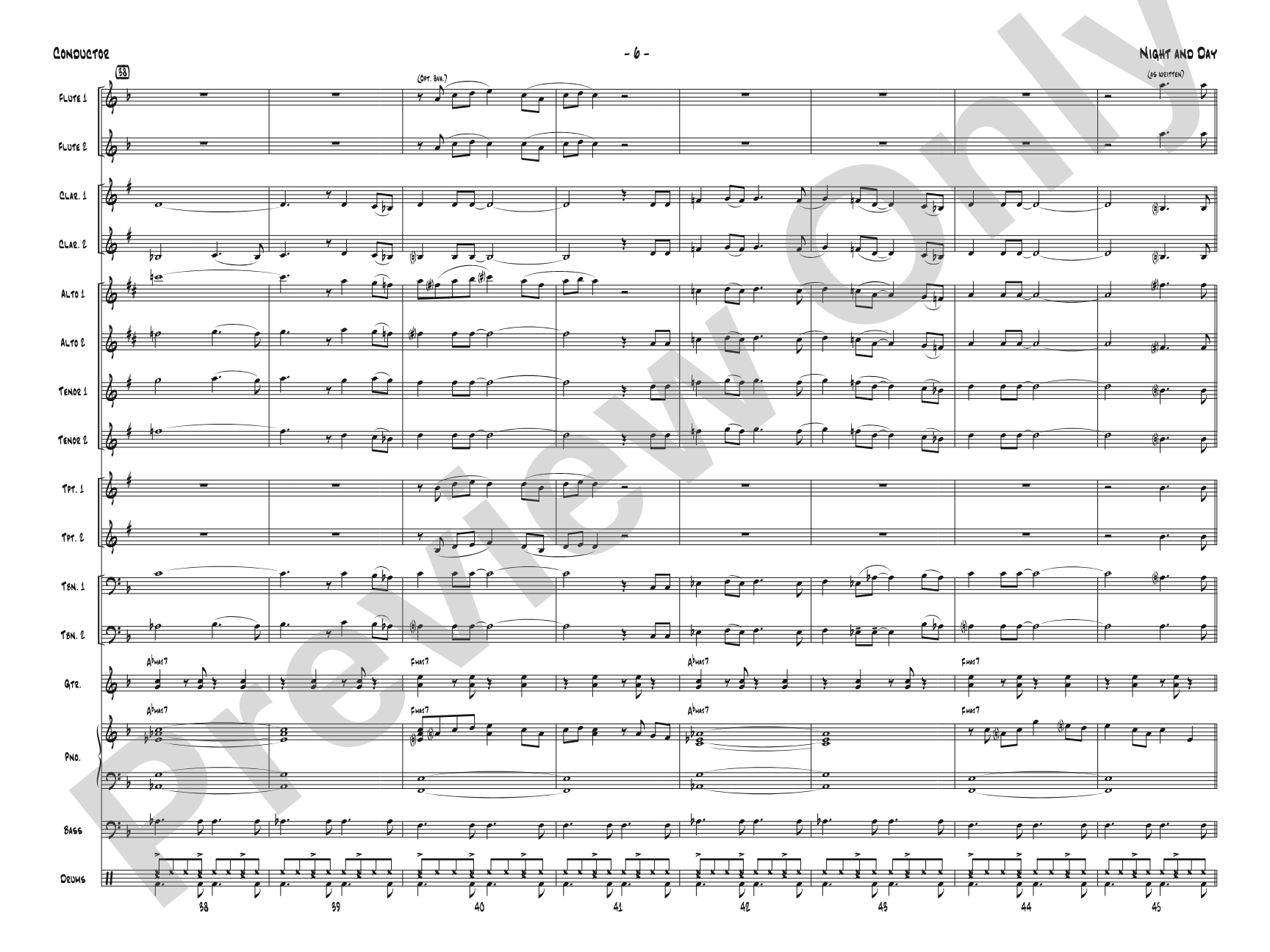
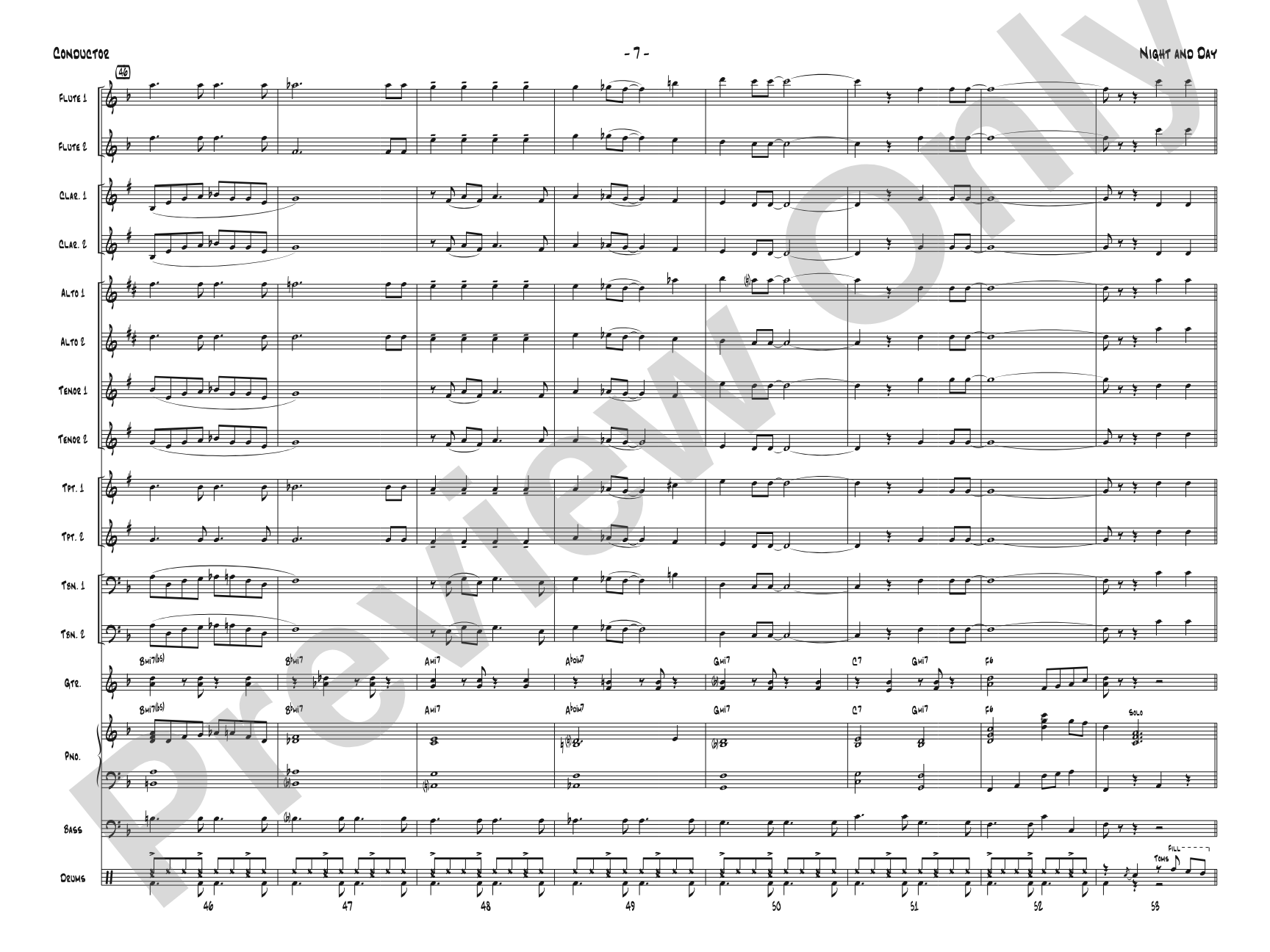
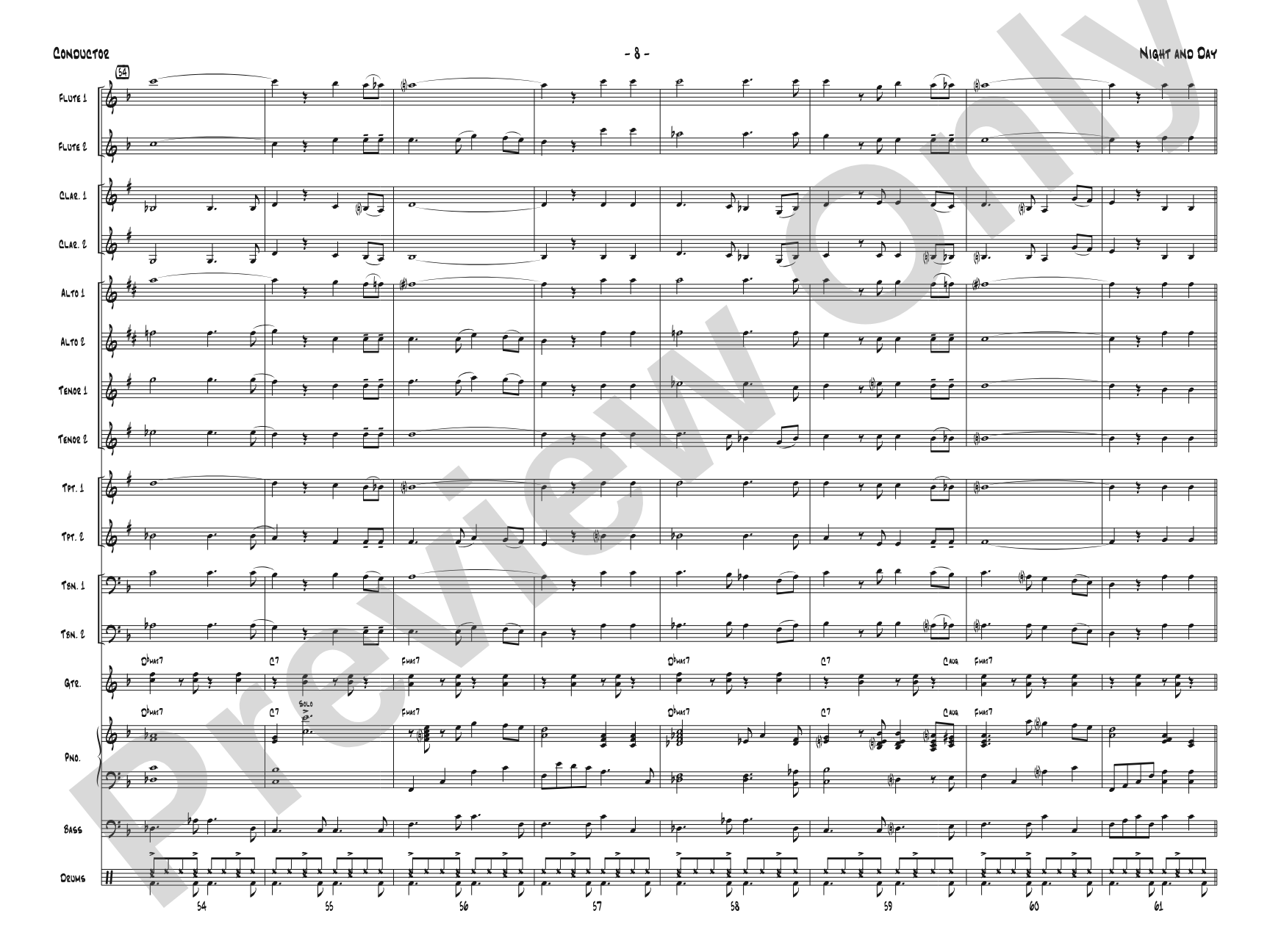
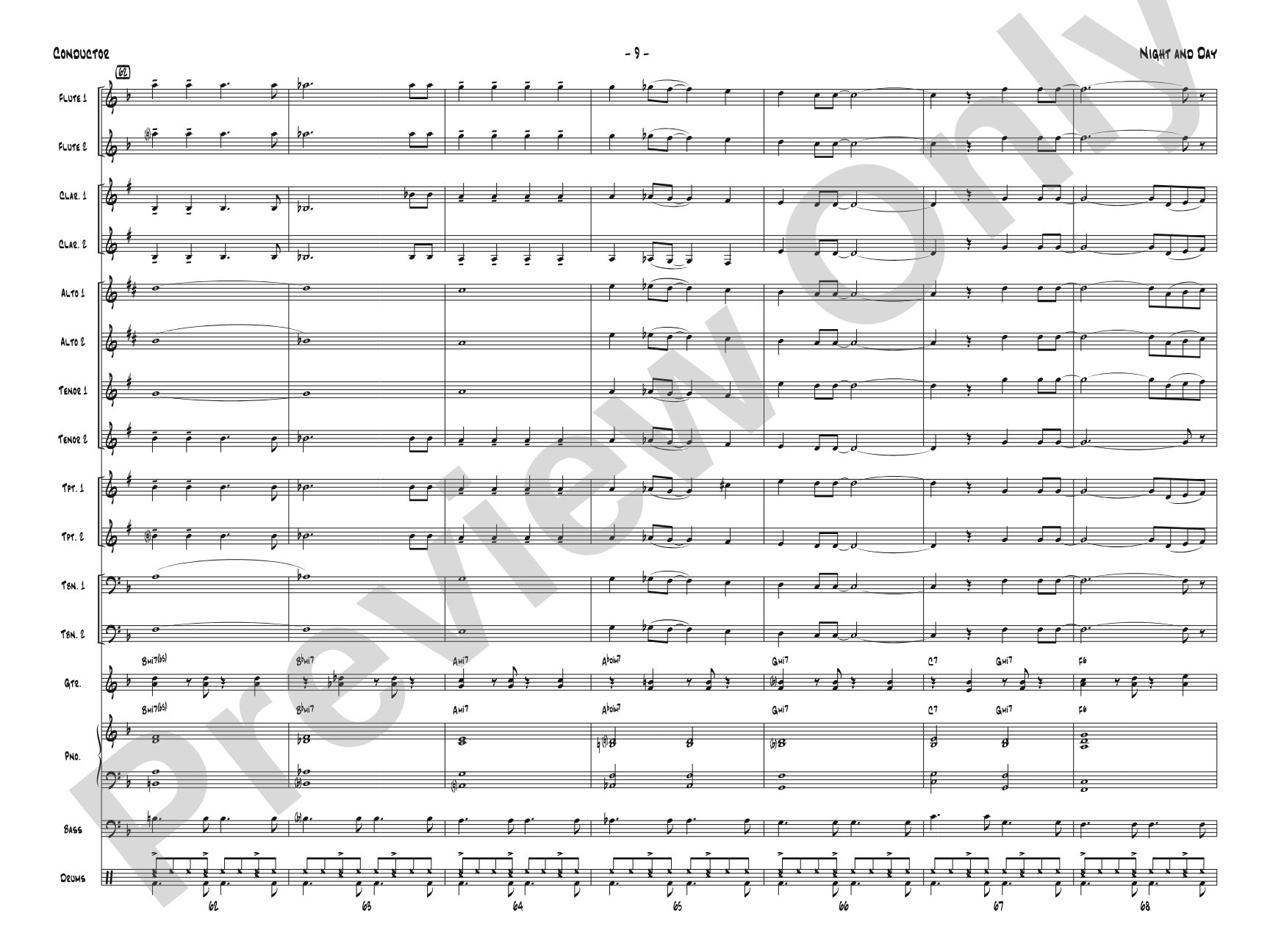
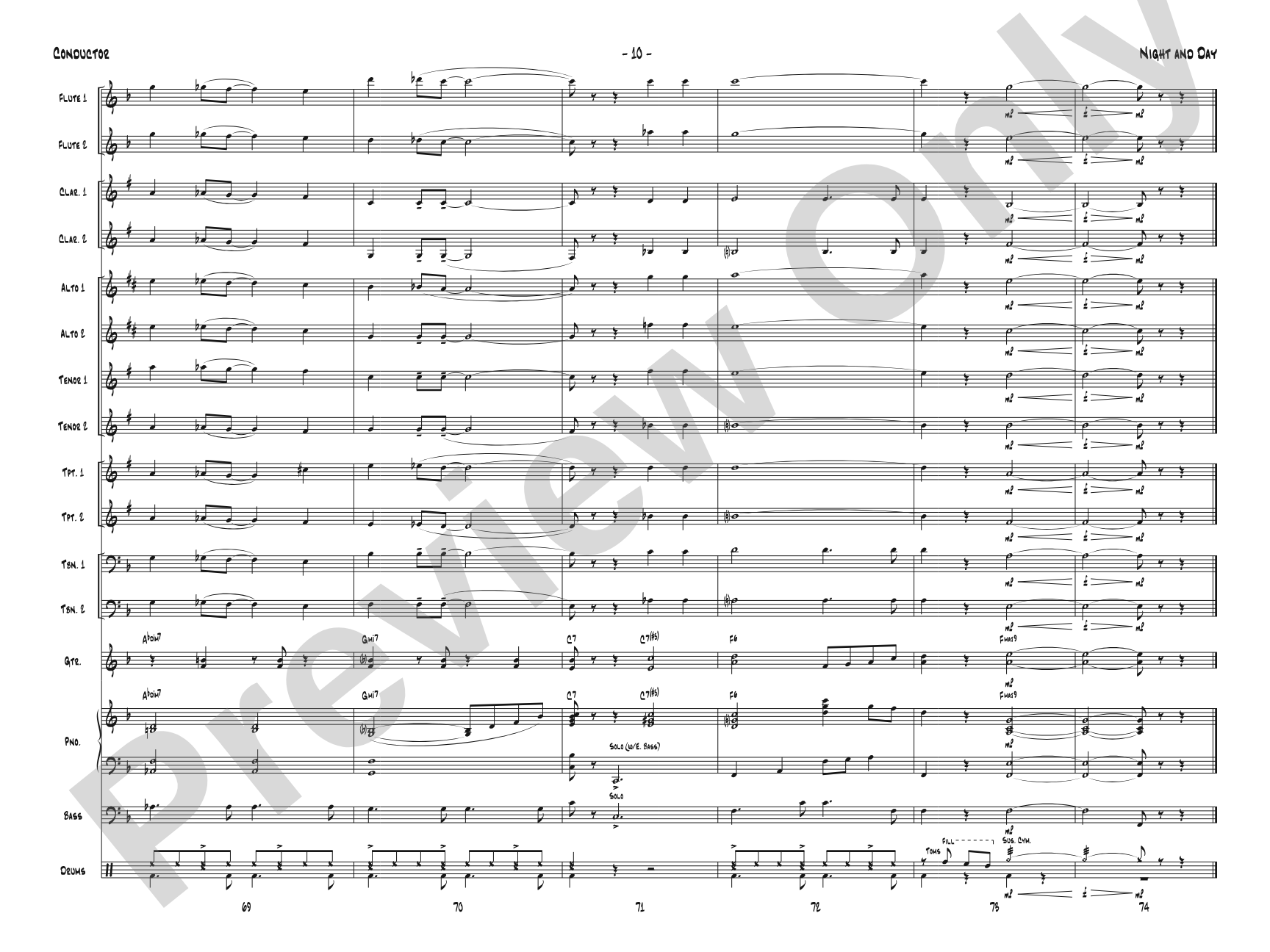

Night and Day: Jazz Ensemble Conductor Score & Parts
Words and music by Cole Porter / arr. Victor López
Grade: 1
Item: 00-PK-0008545

$40.00
One moment…
Description
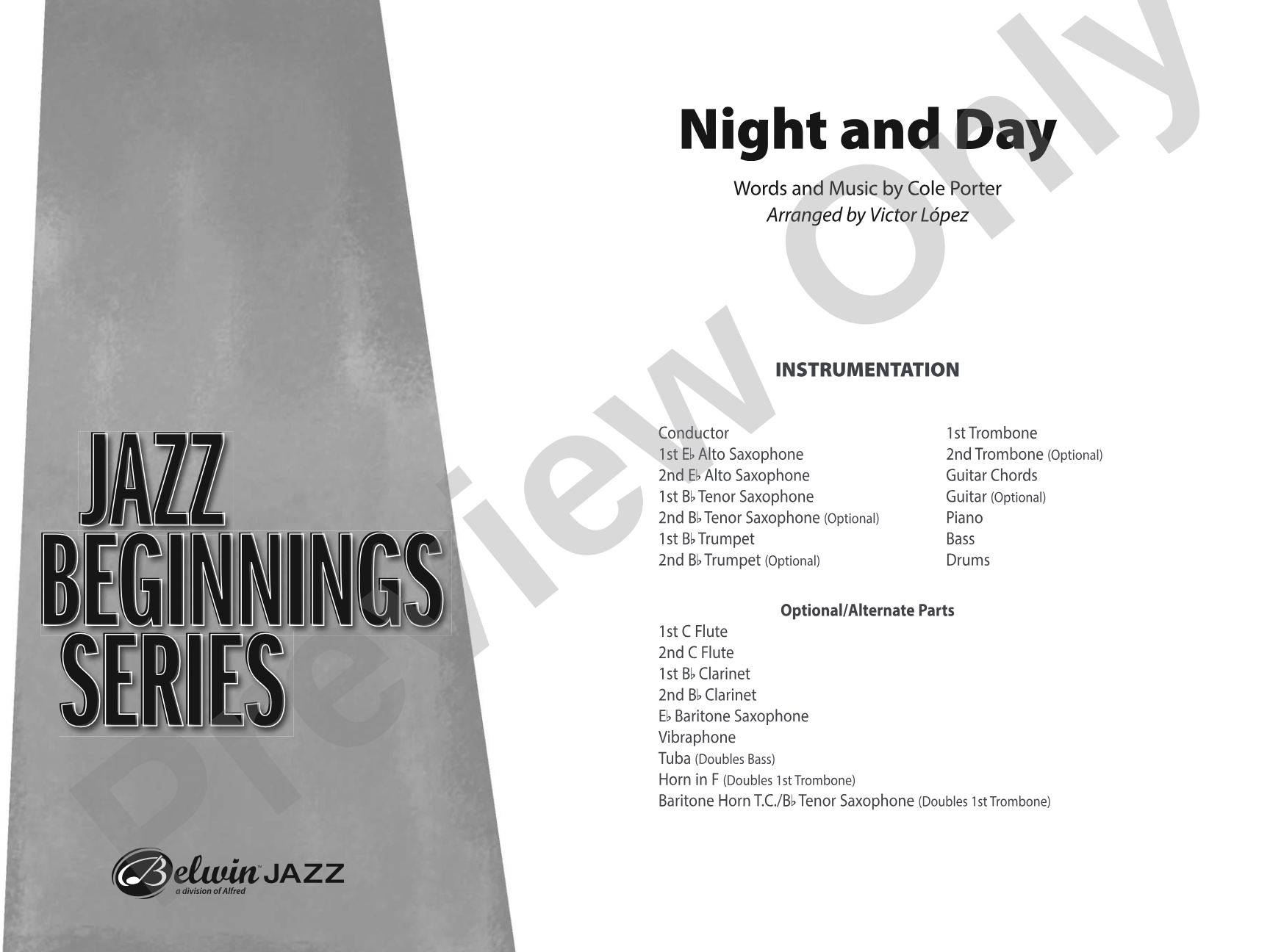
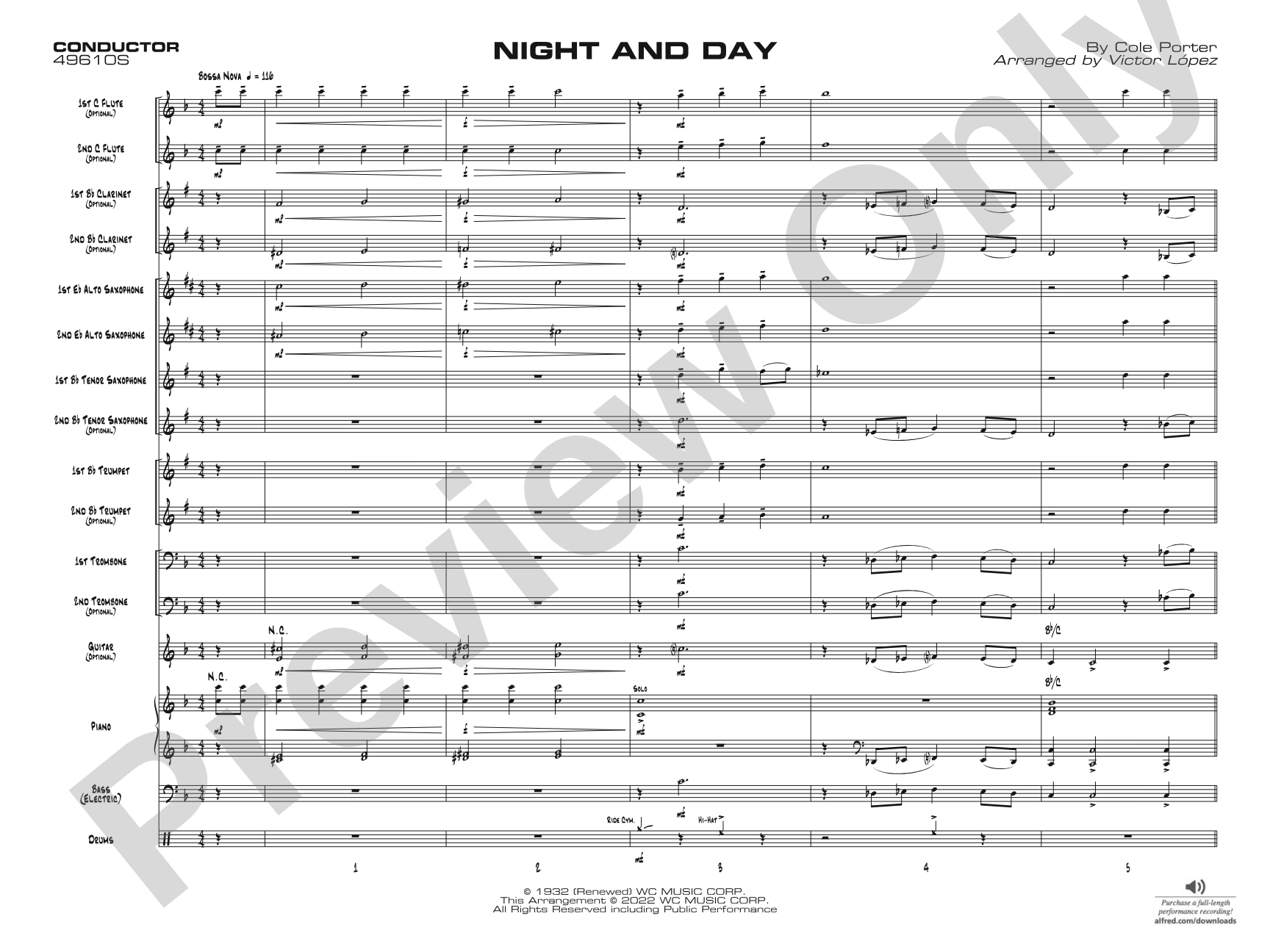
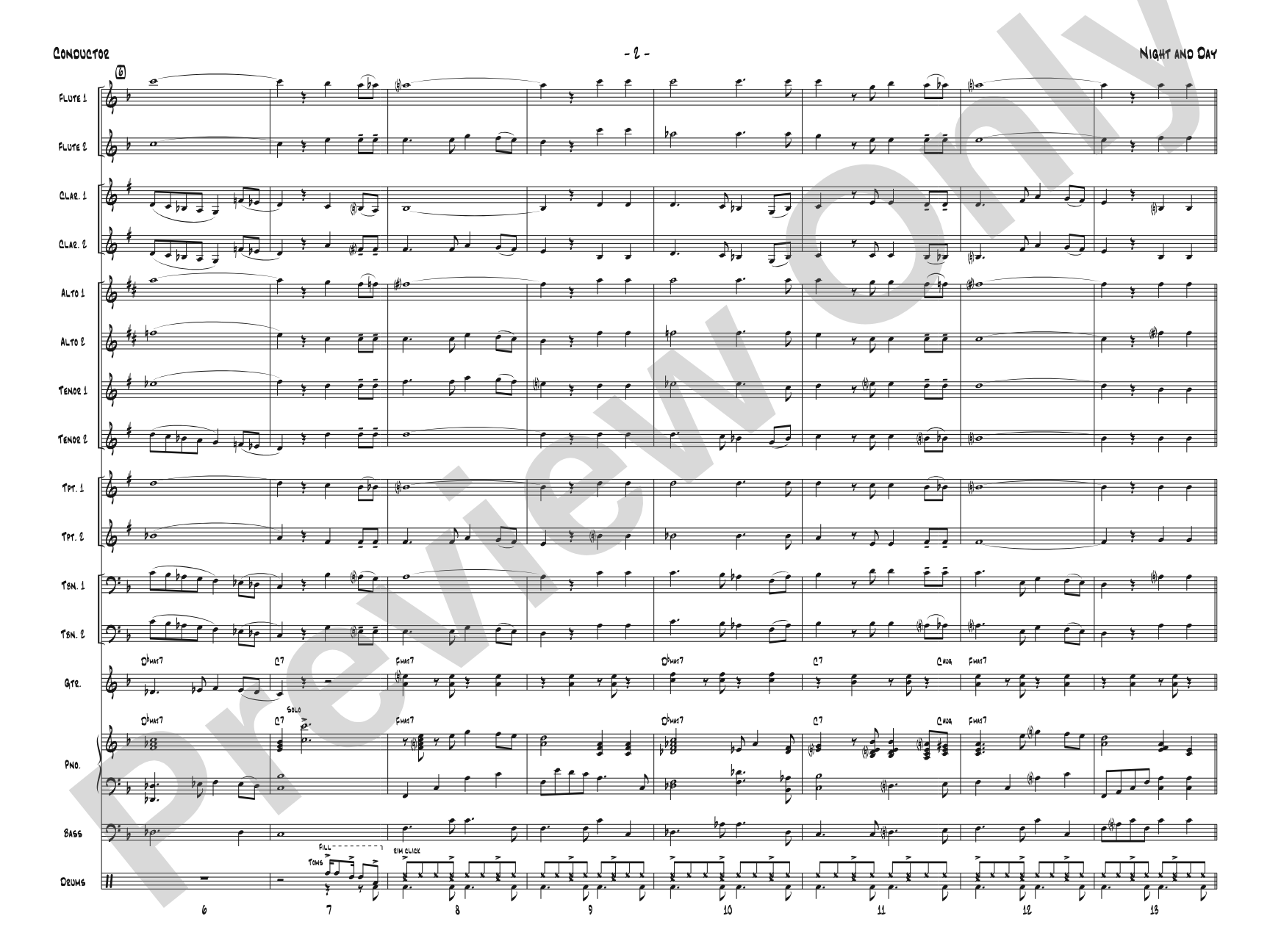
Classic Cole Porter at a very accessible level. Night and Day arranged by Victor López doesn't include any individual solos, but features easy ranges and a bossa-nova groove played around 120 BPM. Optional flutes, clarinets, vibes, and more. A great choice for your young musicians. (2:33) This title is available in MakeMusic Cloud.


Don't just read it, hear it, play along with it, and watch your students grow with it. In MakeMusic Cloud, Night and Day: Jazz Ensemble Conductor Score & Parts comes alive with professional accompaniment, adjustable tempo, and built-in practice tools that turn solo practice into real progress.
Open in the Player
Jump straight in and assign it today.
Start Your Free Trial
Open this title and explore the full library in minutes.
Sample Audio
1
Audio File
--:--
0:00
0:00
Sample Video
Additional Details
Series:
Jazz Beginnings Series
Publisher:
Alfred Music
SKU:
00-PK-0008545
More about this title
About the Composer: Cole Porter
Cole Porter (1891-1964) shaped American musical theater and popular song across five decades, writing both music and lyrics for Broadway shows and Hollywood films. His sophisticated harmonies, witty lyrics, and memorable melodies made standards like "Night and Day," "Begin the Beguine," and "Anything Goes" endure across generations. Porter's influence on jazz arrangers and ensemble musicians remains profound; his songs provide essential repertoire for musicians learning to interpret swing, swing-influenced pop, and jazz idioms.
Why we love this
Victor López's arrangement captures the sophisticated elegance of Porter's classic without overwhelming young players; the bossa-nova groove feels fresh while the lack of individual solos keeps focus on ensemble cohesion. This is the kind of standard that teaches musicians how jazz standards sit in the body, how to swing together, and why this music has lasted nearly a century. It's an accessible entry point to repertoire that serious musicians will encounter their entire careers.
What to expect
Sophisticated yet approachable, like stepping into a mid-century jazz club through a side door meant for newcomers. The bossa-nova lilt gives the piece a relaxed, conversational quality; it breathes rather than rushes, inviting players to settle into the groove and listen to each other.
Who it's for
Beginning jazz ensembles (high school or adult community groups) who want to program a recognizable standard without the technical or range demands of more complex charts. Young musicians benefit from learning a Porter tune early; it builds familiarity with the harmonic language that underpins American popular music and jazz.
How to get the most out of it
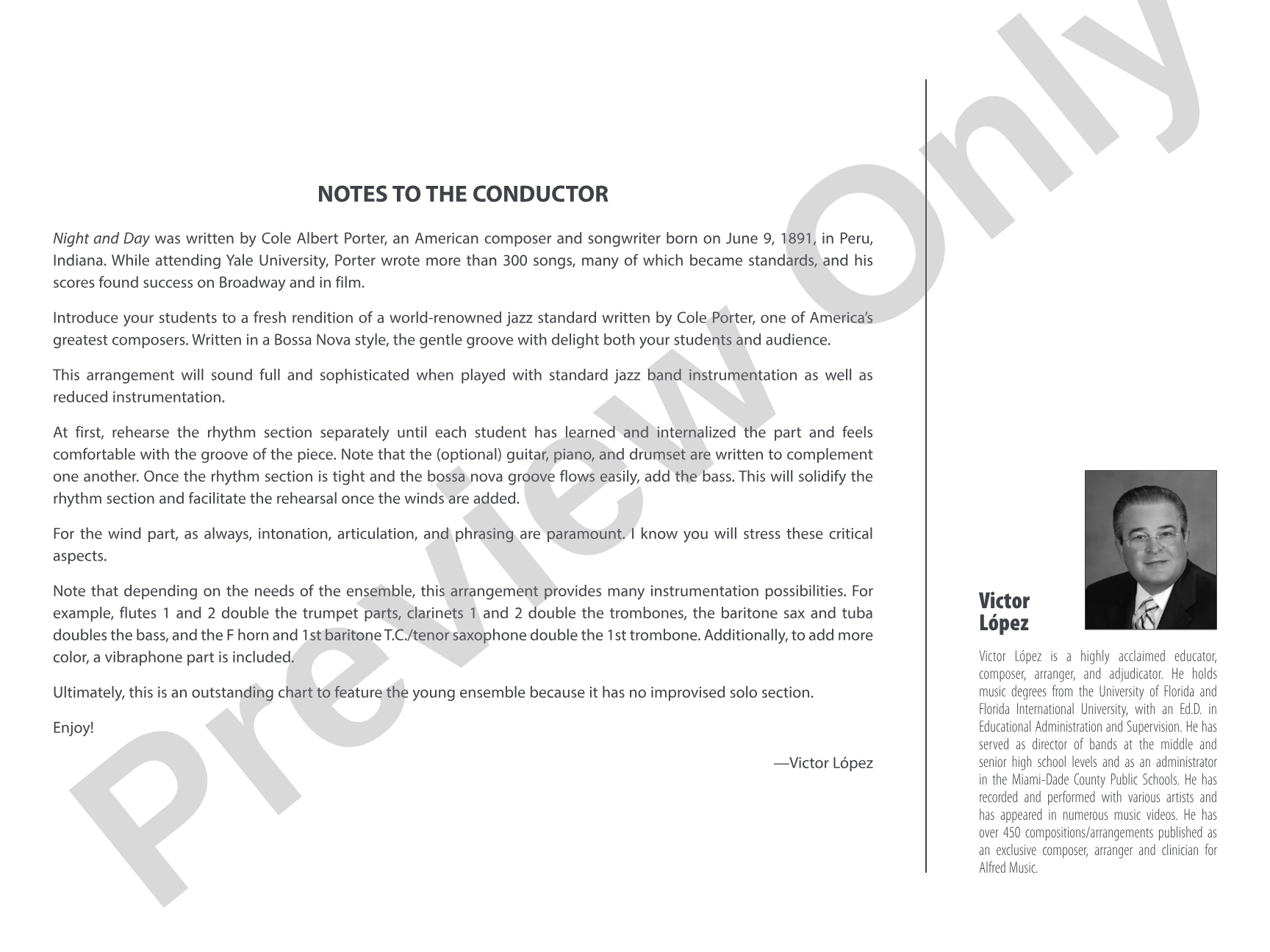
- Lock the rhythm section (bass, drums, piano) first; once the groove sits at 120 BPM, the melody parts lock in naturally.
- Shape the melody line with gentle rubato rather than strict metronomic time; this reflects how jazz musicians interpret Porter's phrasing.
- Balance the optional parts (flutes, clarinets, vibes) so they color the texture without clouding the main melodic voice.
- Emphasize the bossa-nova lilt; resist the urge to swing eighth notes heavily, as the groove relies on that steady, relaxed feel.
How to use it
Feature this as an opener or closer for a concert built around standards and jazz classics; its accessibility and 2:33 runtime make it an ideal standalone piece or a palate-cleanser between longer works. Consider pairing it with other Grade 1 jazz charts to build a full first set, or use it as an encore that audiences recognize and enjoy.
Skills your students will build
- Reading and playing jazz ensemble parts with clear voice leading
- Maintaining a steady bossa-nova groove and swing feel at moderate tempo
- Balancing melody with optional harmony parts
- Interpreting jazz phrasing and rubato in a Porter standard
- Listening for and locking with the rhythm section