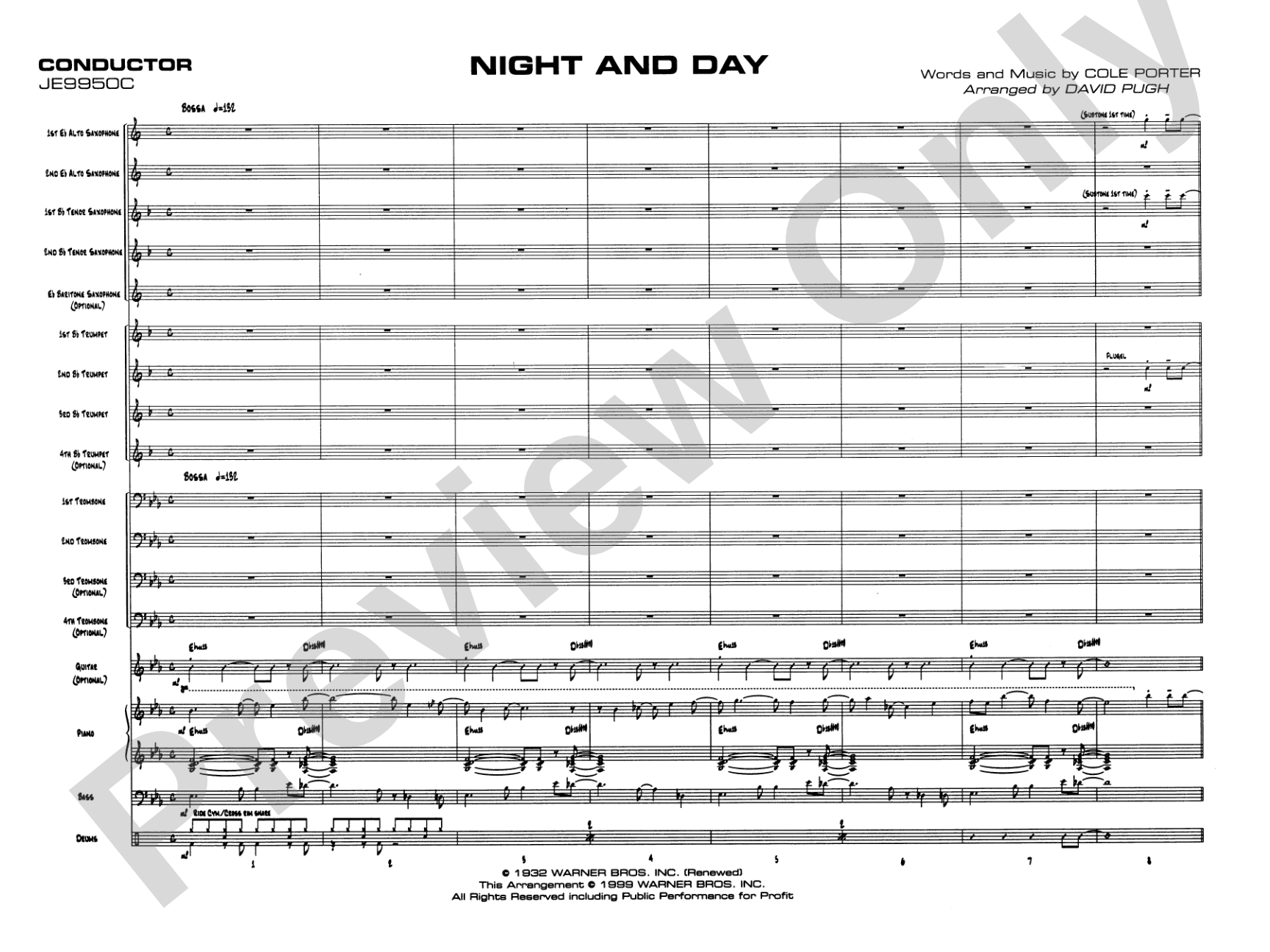
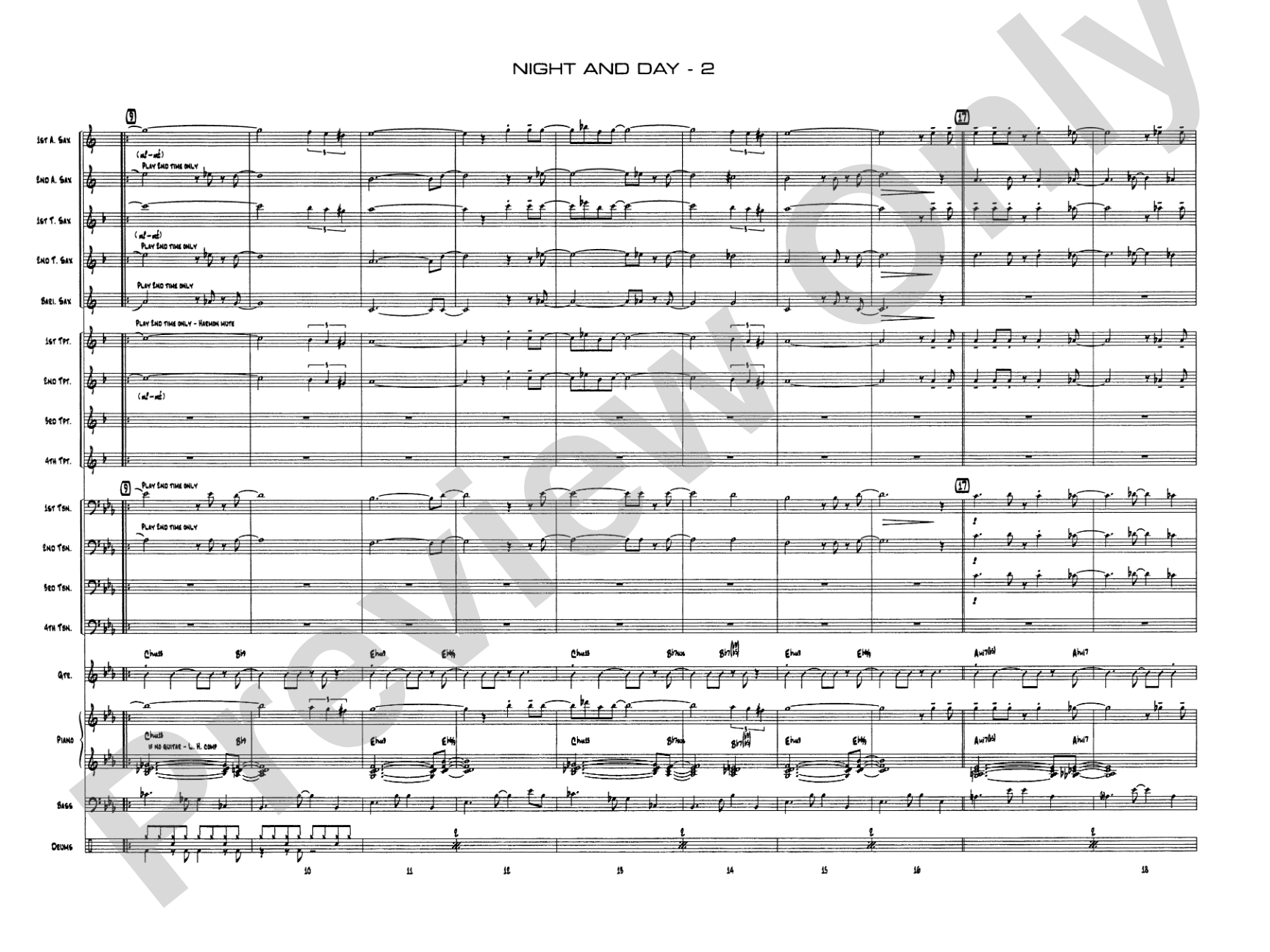
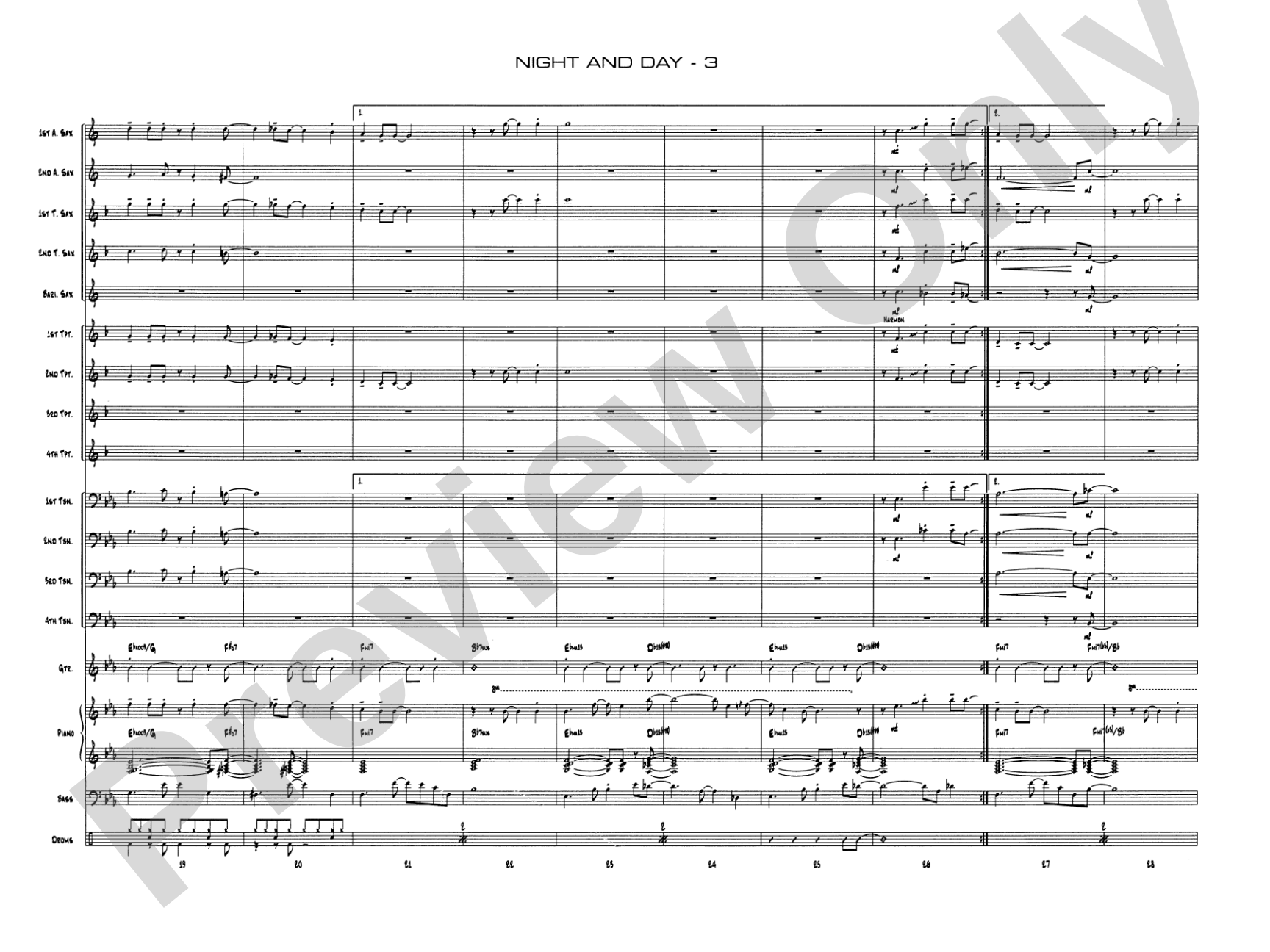
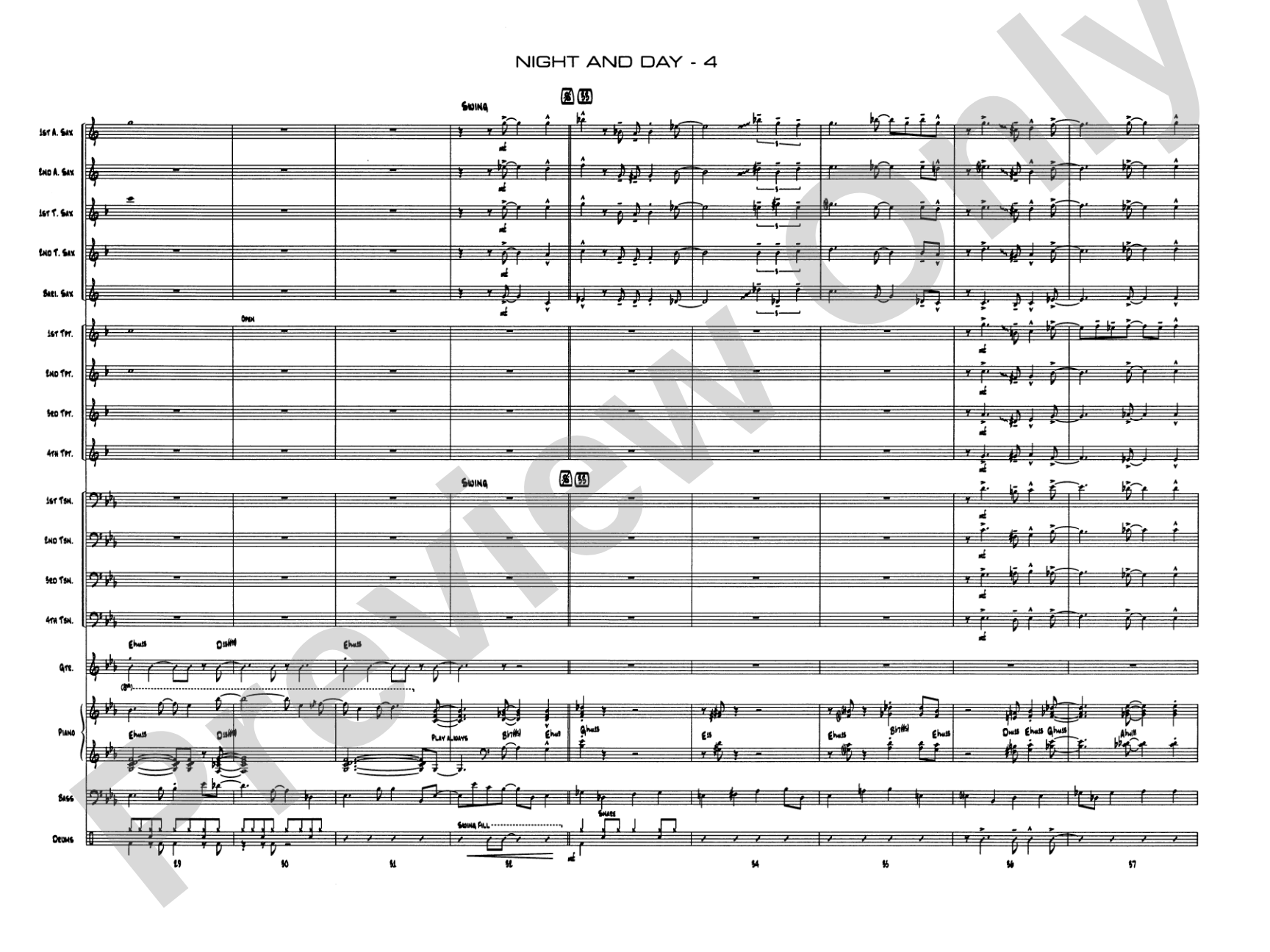
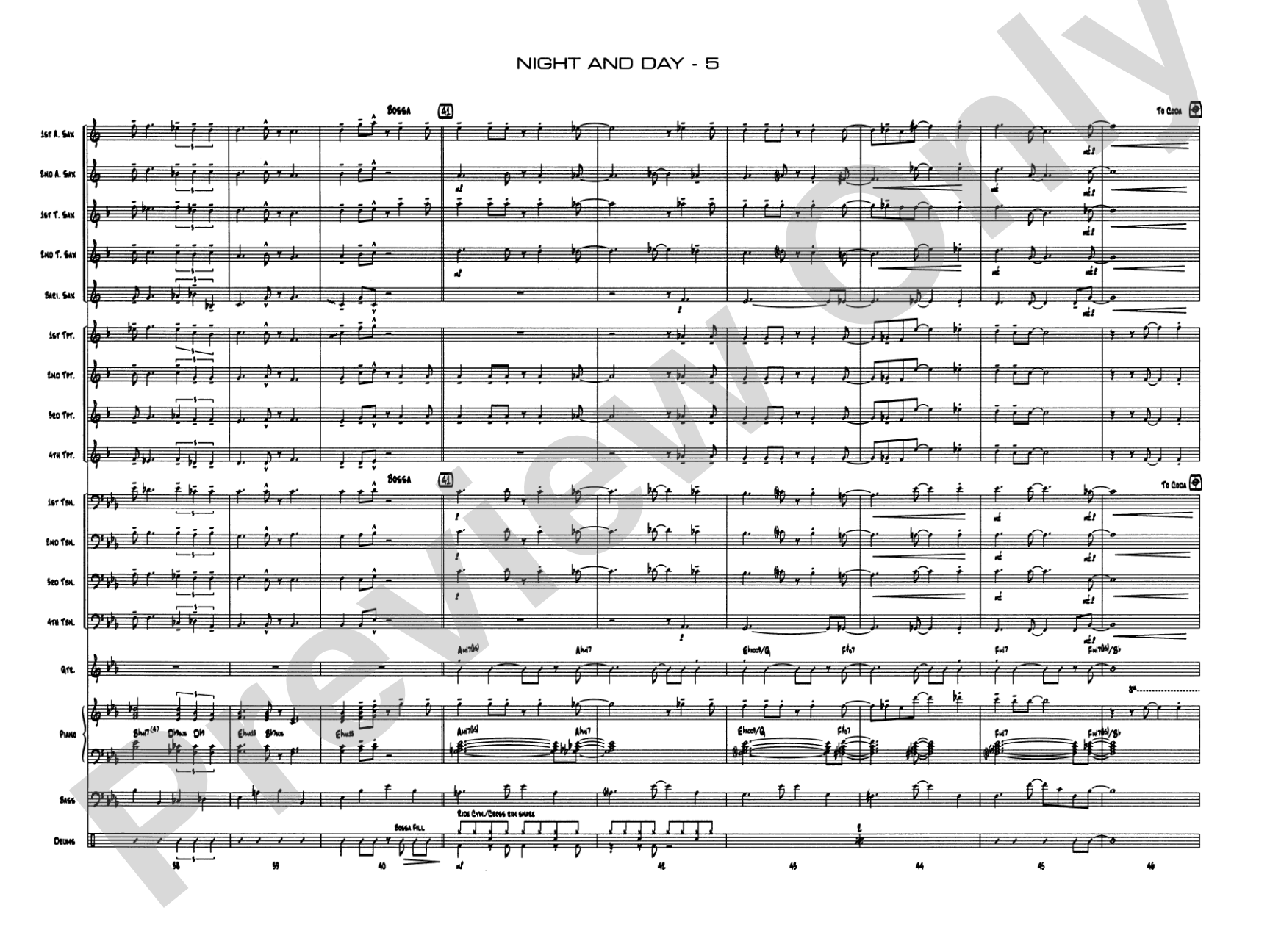
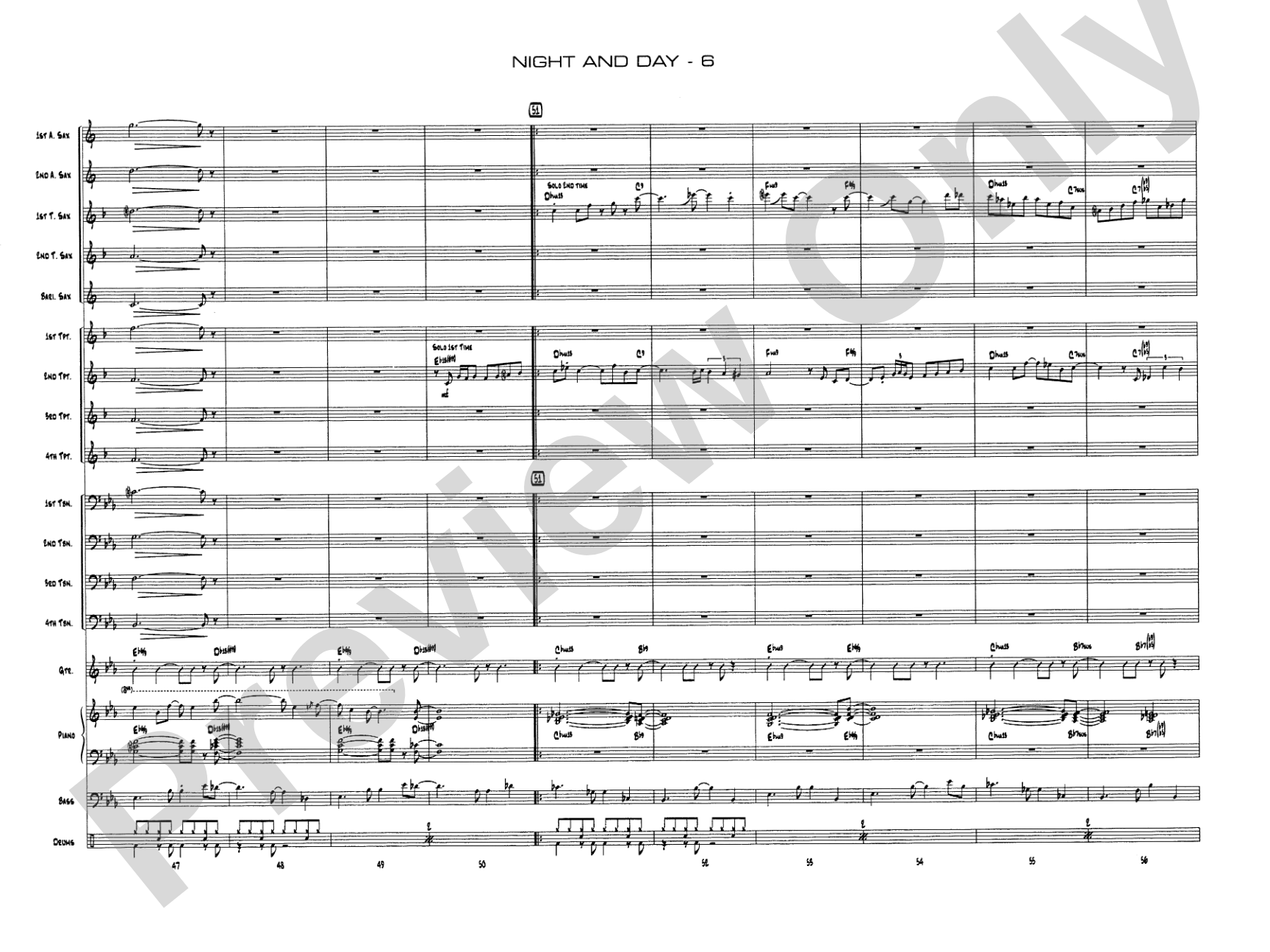
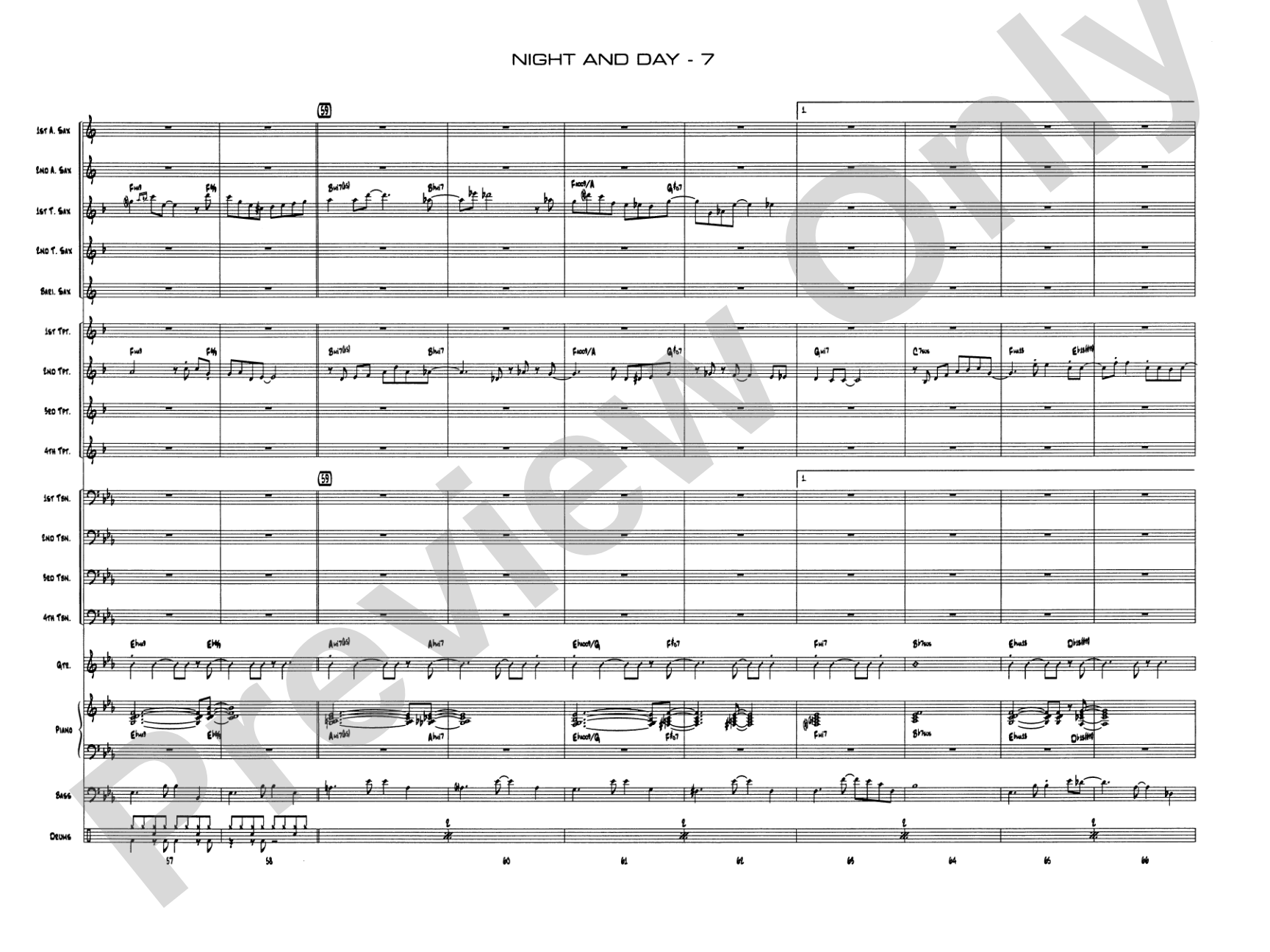
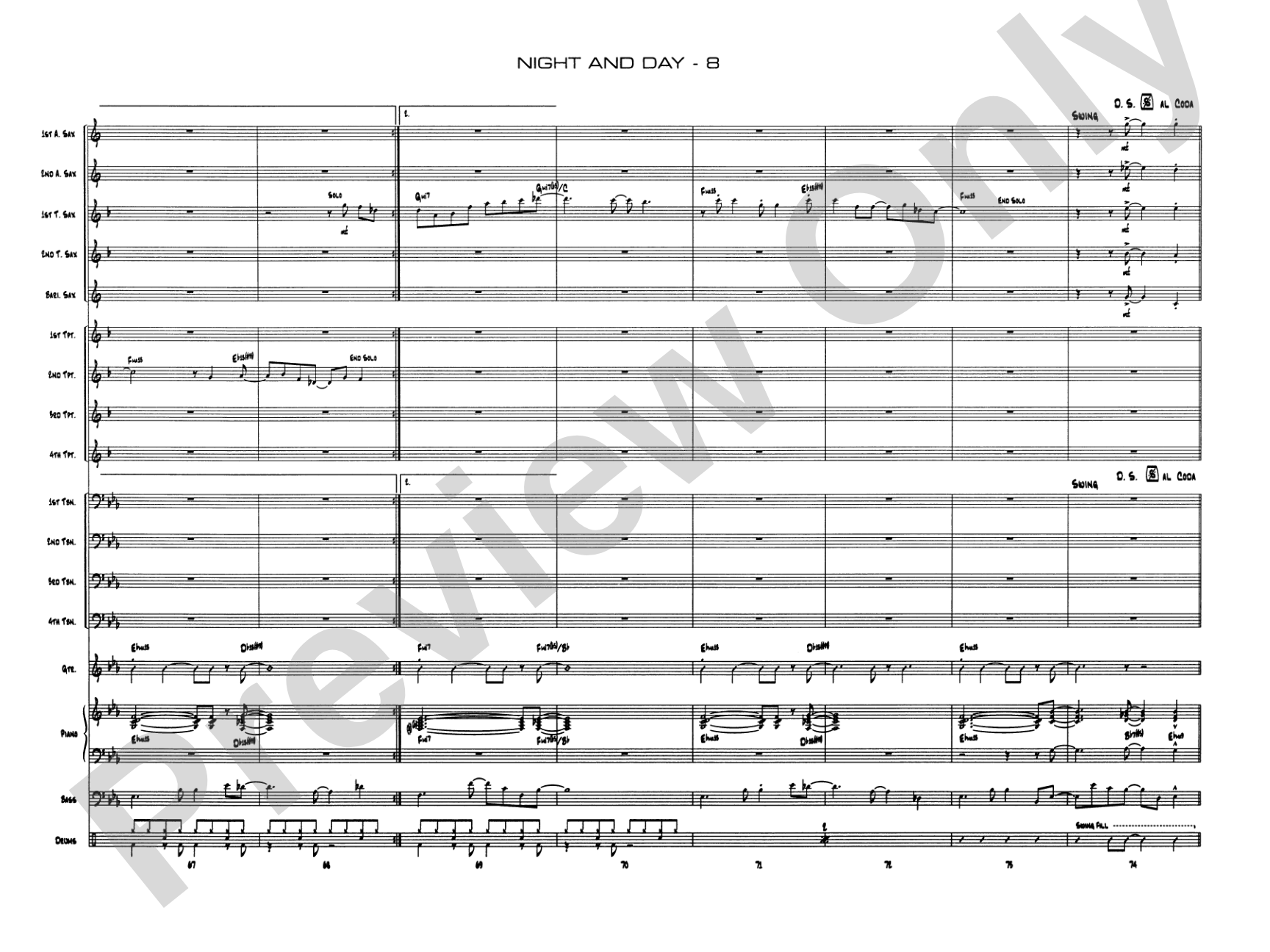
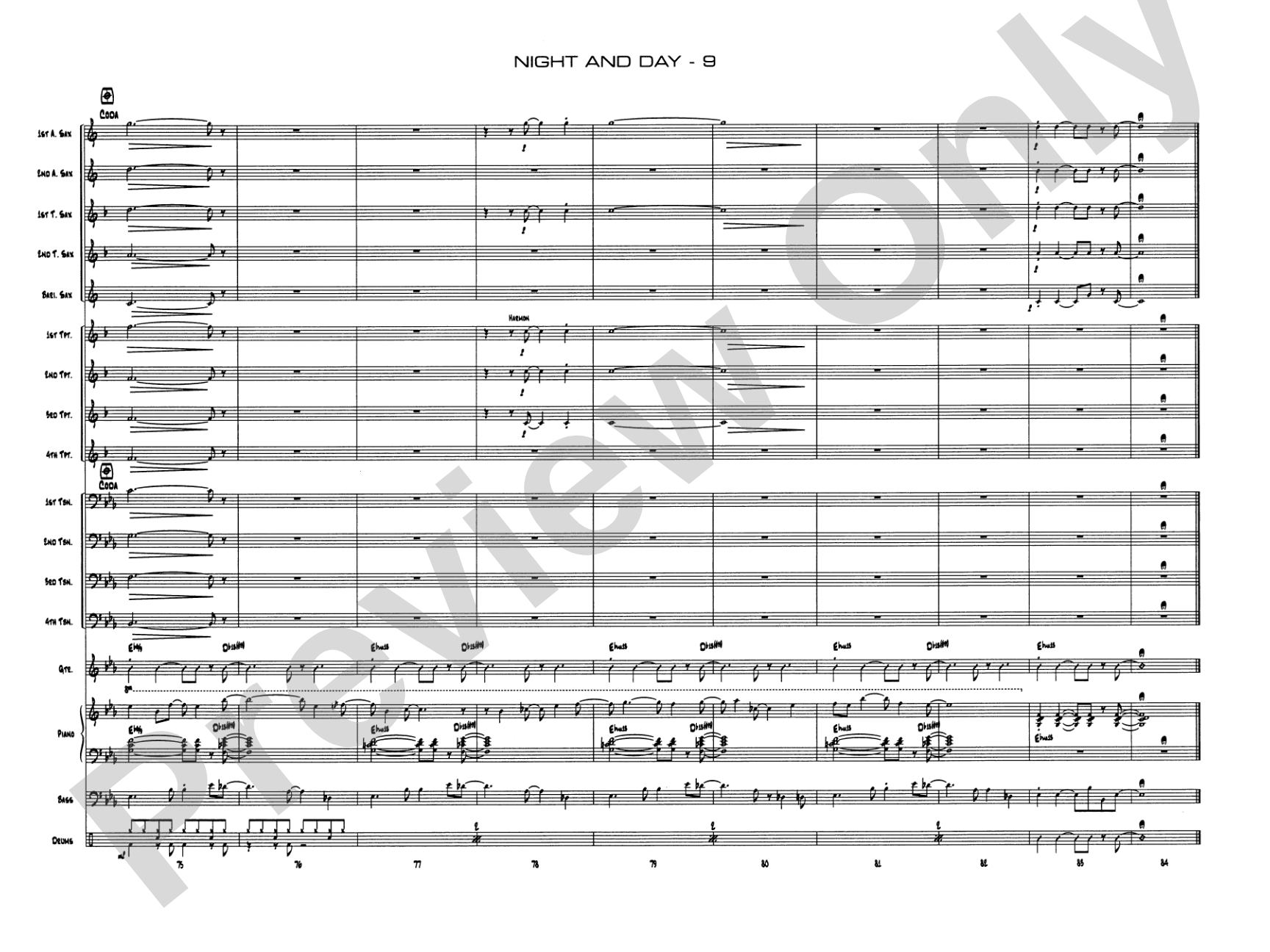
Night and Day Sheet Music Preview

Night and Day: Jazz Ensemble Conductor Score & Parts

By Cole Porter / arr. David Pugh

Grade: 2 (Medium Easy)

Item: 00-PK-0002464

Digital Download
makemusic Cloud badge
$48.00

One moment…

Description
Cole Porter is truly one of the great American songwriters, and his classic Night and Day has become a jazz standard. This David Pugh arrangement is very playable, and yet it captures all the jazz nuances of the Cole Porter era. It's a wonderful way to introduce your developing jazz ensemble to important standard repertoire. Easy (3:43)

Don't just read it, hear it, play along with it, and watch your students grow with it. In MakeMusic Cloud, Night and Day: Jazz Ensemble Conductor Score & Parts comes alive with professional accompaniment, adjustable tempo, and built-in practice tools that turn solo practice into real progress.

Sample Audio
No sample audio found.
Sample Video
Additional Details
Series: Young Jazz Ensemble
Publisher: Alfred Music
Page Count: 94
SKU: 00-PK-0002464

More about this title

About the Composer: Cole Porter

Cole Porter (1891-1964) was a composer and lyricist who crafted some of the most sophisticated and singable melodies in American musical theater. His songs combine memorable tunefulness with harmonic complexity and witty, urbane lyrics that have made them endure across jazz, pop, and classical contexts for over a century.

Why we love this

David Pugh's arrangement strips away nothing essential while remaining genuinely playable for developing ensembles. The harmonies breathe with that sophisticated Porter sensibility, and students encounter a standard that professionals still cherish, making this a bridge between student repertoire and the real jazz repertoire they'll encounter later.

What to expect

Sophisticated and urbane, with a melody that weaves through chromatic harmony in a way that sounds effortless but feels slightly mysterious. The arrangement captures the elegant restraint of the era while maintaining the forward momentum of a good jazz groove.

Who it's for

Jazz ensemble directors working with developing players who are ready to move beyond simple blues and into the harmonic territory of classic standards. Students need solid intonation and basic swing articulation, but they don't need advanced improvisational skills to perform this beautifully.

How to get the most out of it

  • Shape the melody with dynamic nuance rather than uniform volume; Porter's songwriting rewards subtle emphasis on the chromatic passing tones and unexpected harmonic turns.
  • Lock the rhythm section into a groove that feels unhurried and swinging rather than mechanical; this piece lives in the pocket.
  • Balance the horn section so the melody voice carries clearly while the inner voicings add color without muddying the texture.
  • Observe the stylistic markings around swing feel and dynamics; Pugh's arrangement indicates where to sit back and where to push forward.

How to use it

Pair this with other standards to build a concert program around American songbook classics, or use it as your ensemble's entry point into repertoire that jazz professionals actually perform. It works particularly well mid-program where you can shift from original compositions into the broader jazz tradition.

Skills your students will build

  • Chromatic voice leading and harmonic movement typical of jazz standards
  • Swing articulation and phrasing in a melody-driven context
  • Balance and blend in a four-to-five part horn section
  • Recognizing and performing the rhythmic sophistication of mid-20th century jazz arranging

You May Also Like