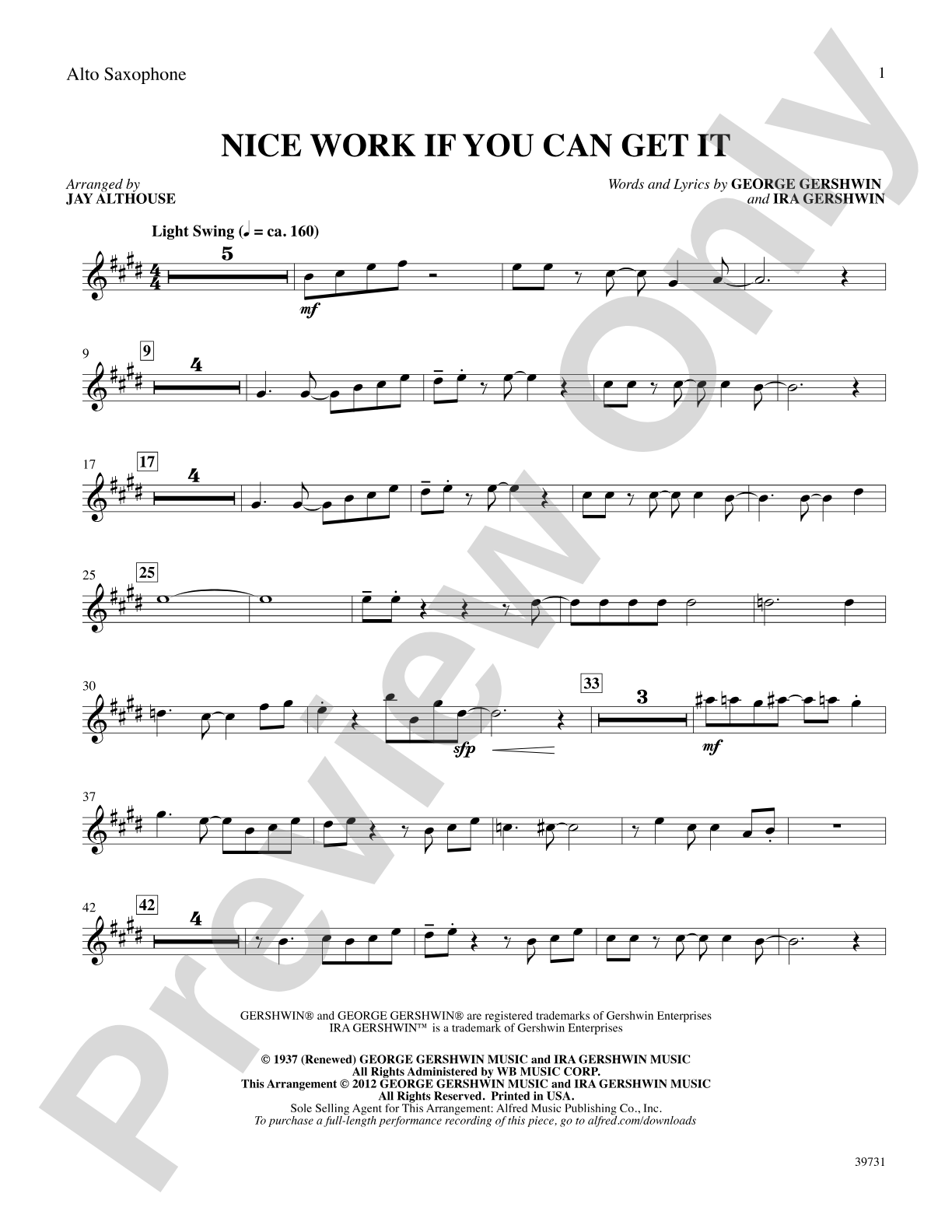
Nice Work If You Can Get It: E-flat Alto Saxophone Sheet Music Preview

Nice Work If You Can Get It: E-flat Alto Saxophone: Choral SoundPax

Music and lyrics by George Gershwin and Ira Gershwin / arr. Jay Althouse

Item: 00-PC-0015579_AX1

Digital Download
$4.00
Description
Originally written for the 1937 movie A Damsel in Distress, this Gershwin classic was featured in the 1992 Tony Award-winning musical Crazy for You and has been recently revived as the title song of the 2012 Broadway hit. Jay's swingin' arrangement features tight harmonies and two brief solos.

Don't just read it, hear it, play along with it, and watch your students grow with it. In MakeMusic Cloud, Nice Work If You Can Get It: E-flat Alto Saxophone: Choral SoundPax comes alive with professional accompaniment, adjustable tempo, and built-in practice tools that turn solo practice into real progress.

Sample Audio
0:00
0:00
Sample Video
Additional Details
Series: Alfred Pop Choral Series
Publisher: Alfred Music
Page Count: 28
SKU: 00-PC-0015579_AX1
Instrumentation: SoundPax

More about this title

About the Composer: George Gershwin

George Gershwin (1898-1937) bridged classical and popular music with a fluency that few composers have matched. His ability to weave jazz idioms, blues inflections, and sophisticated harmonies into accessible melodies made him one of the most performed American composers in music education. Gershwin's theater songs remain standards because they combine memorable hooks with genuine harmonic interest, rewarding both casual singers and musicians pursuing deeper musicality.

Written with his brother Ira (lyricist) and performed by Fred Astaire in the 1937 film A Damsel in Distress, "Nice Work If You Can Get It" exemplifies their collaborative genius. The song's effortless charm and rhythmic sophistication have kept it alive across generations, from jazz combos to Broadway revivals to choral arrangements.

Why we love this

Jay Althouse's arrangement captures the song's inherent swing without overcomplicating the voicing. The tight harmonies sit beautifully for mixed voices while the two brief solos give singers a chance to step into character, making this feel like a genuine performance opportunity rather than a novelty novelty number.

What to expect

Sophisticated and buoyant, with a playful wink built into every phrase. The song carries the elegance of a Manhattan evening and the casual confidence of a seasoned performer taking the stage.

Who it's for

This arrangement works for high school and college choirs, community choruses, and semi-professional groups comfortable with jazz inflection and rhythmic sophistication. Singers need secure musicianship and the ability to blend into close harmonies while maintaining rhythmic independence.

How to get the most out of it

  • Keep the pulse steady and slightly forward; this song breathes swing even at moderate tempos, so rhythmic precision on the eighth-note subdivisions matters more than literal speed.
  • Feature the soloists with light, conversational tone rather than belted power; the song's sophisticated lyric and Gershwin's melody deserve clarity over volume.
  • Balance the harmonies so that the top line sings through; many singers will naturally want to support lower parts, but the melody's elegance depends on hearing it clearly.
  • Use the recorded accompaniment to lock in the groove and let your singers hear how the rhythm section sits under the voices.

How to use it

Program this in a lighter concert set or as part of a Gershwin showcase; its theatrical roots make it a natural conversation starter between classical and popular repertoire. The song also pairs well with other American standards or as a finale that leaves the audience smiling.

Skills your students will build

  • Singing swing rhythms with precision (triplet subdivision against straight eighths)
  • Blending close-voiced harmonies while maintaining individual line integrity
  • Responding to jazz-inflected accompaniment and lock-step ensemble timing
  • Performing solo passages with conversational phrasing and character
  • Navigating chromatic harmony and jazz-influenced chord progressions by ear

You May Also Like