
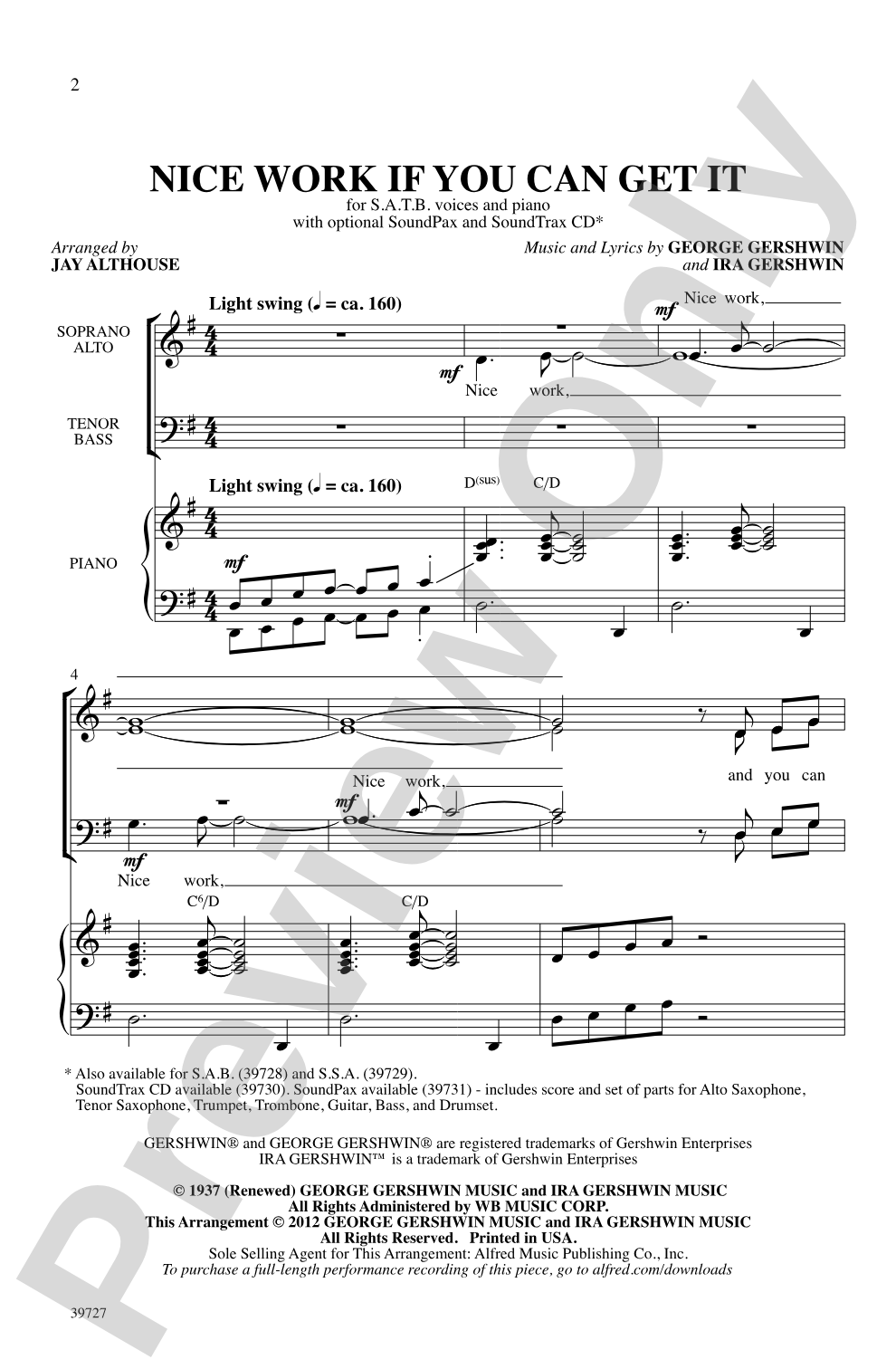
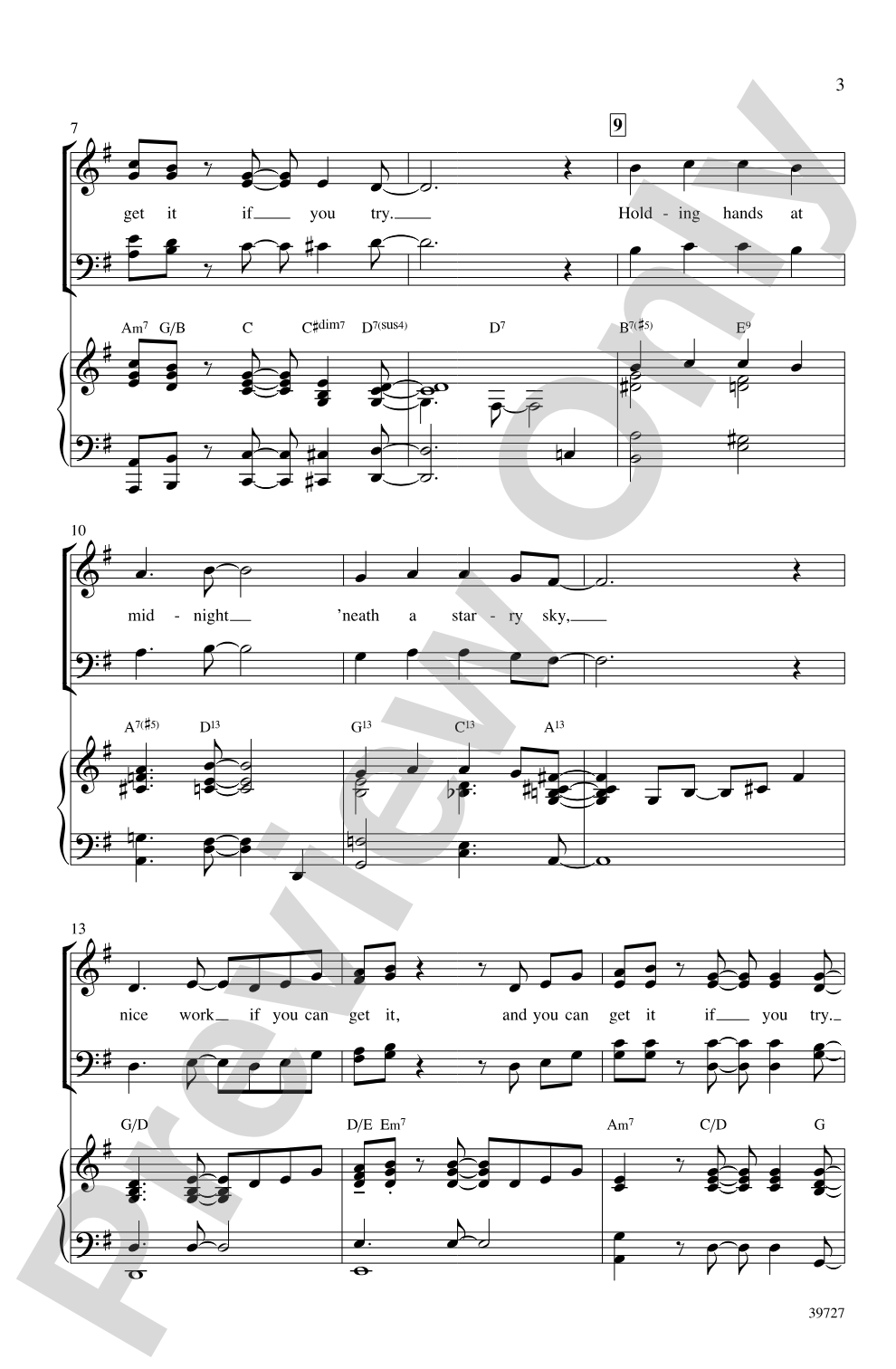
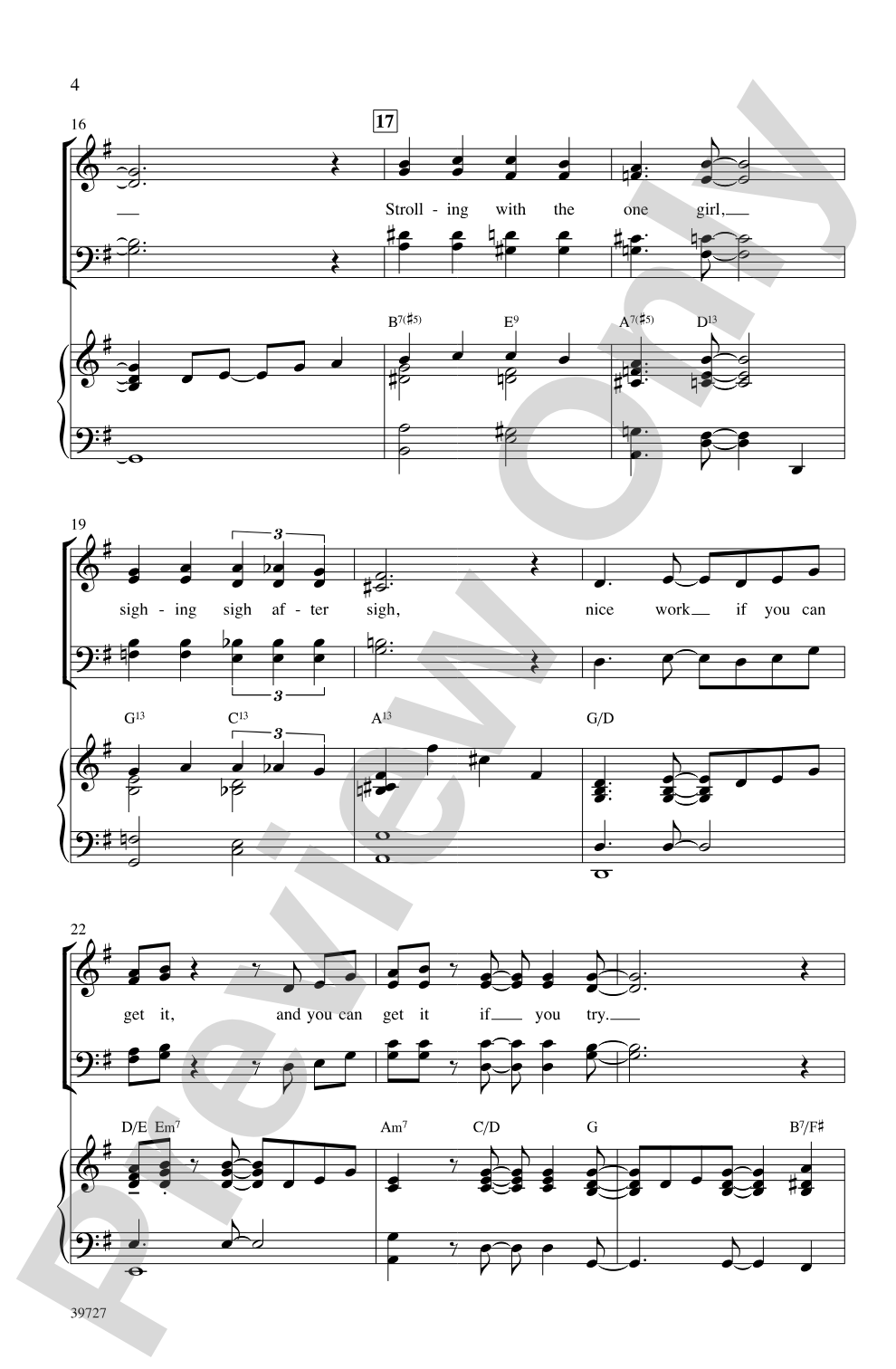

Nice Work If You Can Get It: SATB Choral Octavo
Music and lyrics by George Gershwin and Ira Gershwin / arr. Jay Althouse
Item: 00-PO-0001567
$1.90
Minimum order quantity: 20 copies
One moment…
Related Items
Nice Work If You Can Get It: SoundTrax Digital Audio Download |
$27.99
|
View | |
Nice Work If You Can Get It: SAB Choral Octavo |
$1.90
|
View | |
Nice Work If You Can Get It: SSA Choral Octavo |
$1.90
|
View | |
Nice Work If You Can Get It: Choral SoundPax |
$35.00
|
View | |
Nice Work If You Can Get It: SATB Choral Octavo |
$1.90
|
View | |
Nice Work If You Can Get It: SAB Choral Octavo |
$1.90
|
View | |
Nice Work If You Can Get It: SSA Choral Octavo |
$1.90
|
View | |
Nice Work If You Can Get It: Choral Octavo SoundTrax CD |
$27.99
|
View | |
Nice Work If You Can Get It: Choral SoundPax |
$35.00
|
View |
Description
Originally written for the 1937 movie A Damsel in Distress, this Gershwin classic was featured in the 1992 Tony Award-winning musical Crazy for You and has been recently revived as the title song of the 2012 Broadway hit. Jay's swingin' arrangement features tight harmonies and two brief solos.


Nice Work If You Can Get It: SATB Choral Octavo isn't in MakeMusic Cloud just yet...but it could be. Let us know you'd like to see it, and you'll help shape what comes next. In the meantime, start a free trial and dive into thousands of interactive titles your students can play along with today.
Request This Title
Tell us you want it.
Start Your Free Trial
Explore everything that's ready to play right now.
Sample Audio
1
Audio File
--:--
0:00
0:00
Sample Video
No sample videos found.
Additional Details
Series:
Alfred Pop Choral Series
Publisher:
Alfred Music
Page Count:
12
SKU:
00-PO-0001567
More about this title
About the Composer: George Gershwin
George Gershwin (1898-1937) bridged concert music and popular song in ways that few composers have matched. His gift for melody, harmonic sophistication, and rhythmic vitality transformed American musical theater and made classical forms accessible to mass audiences. Gershwin composed for stage, screen, and concert hall with equal fluency; his partnership with lyricist brother Ira produced some of the twentieth century's most enduring standards.
For music educators, Gershwin's catalog offers a rare opportunity: students engage with genuinely sophisticated harmony and form wrapped in immediately memorable tunes. His songs teach voice leading, jazz-influenced harmony, and the craft of melodic construction through music that students recognize and want to sing.
Why we love this
Jay Althouse's arrangement respects the song's swing DNA while keeping the voicing accessible for mixed choirs at a wide range of skill levels. The two brief solos create moments for emerging soloists to shine without demanding operatic technique, and the tight harmonies offer real harmonic substance without becoming unwieldy. Programming a Gershwin standard signals to audiences that your choir has taste and range.
What to expect
Effortless sophistication. The melody bounces with that 1930s movie musical ease, but underneath, the harmonies have real wit and warmth. It's the musical equivalent of a well-tailored suit: polished, confident, with just enough swing to keep things from feeling stiff.
Who it's for
Mixed choirs at the intermediate to advanced level who want a standard that audiences know and singers enjoy. This works equally well for high school show choirs, community theater ensembles, and college recreational choirs. The arrangement scales well; your singers will rise to the harmonic demands without feeling overextended.
How to get the most out of it
- Nail the rhythmic precision in the swing figures; this isn't a ballad. The groove lives in crisp articulation and slightly laid-back phrasing of the backbeats.
- Shape the two solo sections so they feel conversational and confident rather than spotlit or nervous. These moments anchor the piece's personality.
- Use the recorded accompaniment in early rehearsals to lock the harmonic framework, but eventually pull it back in the mix so the choir's blend becomes the feature.
How to use it
Pair this with other Gershwin material or 1930s-40s standards to build a concert around that era of American songwriting, or use it as a bridge piece between classical and contemporary pop arrangements. It works as a concert opener (immediate audience connection) or a program-closing showstopper; the piece has enough presence to anchor either position.
Skills your students will build
- Swing rhythm interpretation and articulation
- Jazz-influenced harmonic voicing and blend
- Reading syncopated melodic lines across all four parts
- Solo preparation and confident solo delivery in a choral context
- Phrasing and style specificity in a historical idiom