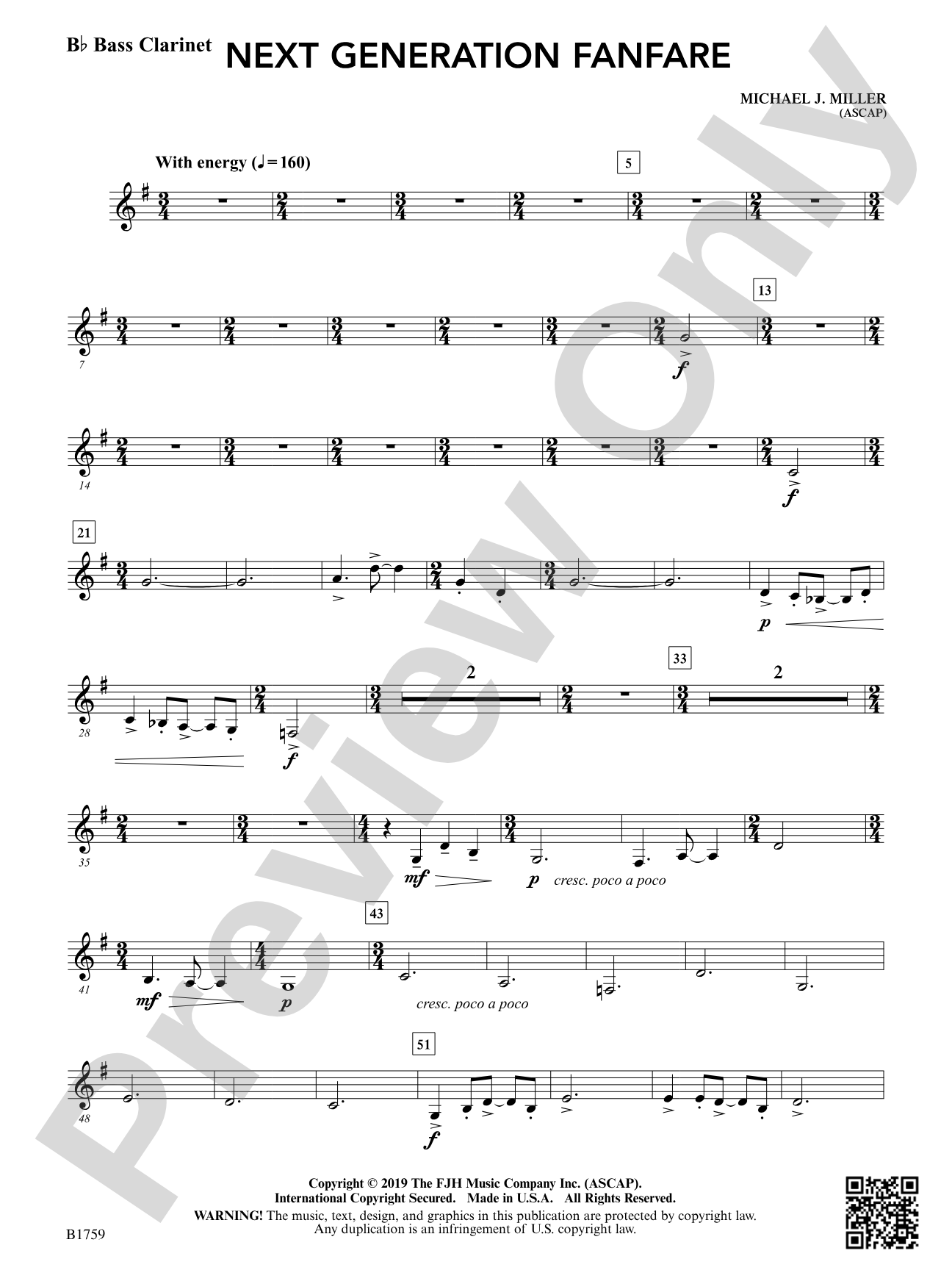
Open your concert with this short, exciting fanfare featuring a multitude of percussion and fast, asymmetrical rhythms. Sure to captivate your audience and excite your students!
Discover MakeMusic Cloud: thousands of interactive titles your students can play along with today.
Michael J. Miller brings two decades of classroom experience to his composing work. His tenure as Director of Bands at Joe E. Newsome High School in Florida resulted in consistent superior ratings across all performance assessments, culminating in the 2017 Otto Kraushaar Award and a 2015 Bands of America Regional Grand Championship title with the marching ensemble. He has also directed programs at Weeki Wachee High School and Robert Vela High School in Texas.
As a published composer and arranger, Miller's work appears with Alfred Music, Carl Fischer, F.J.H. Music Company, and other major publishers. His concert band compositions have earned J.W. Pepper Editor's Choice recognition and inclusion in Band World's Best 100 New Works for Band. The National Band Association recognized his contributions to marching excellence in 2016, and his commissioned works continue to receive performances at major venues including the Midwest Band and Orchestra Clinic.
Why we love this
Miller designed this fanfare with the Grade 3 ensemble in mind, striking a genuine balance between accessibility and genuine excitement. The percussion writing is inventive without overwhelming younger players, and those asymmetrical rhythms keep the piece from feeling predictable, making it a natural attention-grabber at the top of a concert rather than a generic opener.
What to expect
The piece radiates confidence from its first note. Layered percussion creates texture and momentum while fast, unpredictable rhythms keep players and listeners alert, building anticipation without the need for difficult passage work.
Who it's for
Grade 3 concert bands seeking a high-energy opener that showcases multiple sections without requiring advanced technical facility. Bands preparing for contests or festivals will find this particularly useful, as the piece generates genuine audience engagement and demonstrates musicianship across the ensemble.
How to get the most out of it
Lock in the percussion section before the full band rehearsal. The asymmetrical rhythms drive the piece, so rhythm section confidence sets up everything else.
Bring out the highest voices in your woodwind sections during the fastest passages. This allows the rhythmic energy to shine without relying solely on percussion.
Use a clear preparatory beat and maintain steady tempo through the syncopated figures. Grade 3 bands benefit from seeing exactly where the beat lives when the rhythms get active.
Balance the full band sound during climactic moments. Encourage brass to support the melodic content rather than overshadow the percussion colors.
How to use it
Open your concert with this piece to set an energetic tone and establish that your band is engaged and musically thoughtful. Its brevity makes it ideal as a festival warm-up selection or as a confidence-building opener before longer works that demand greater technical depth.
Skills your students will build
Reading asymmetrical rhythmic figures in a quick tempo
Playing precisely with complex percussion accompaniment patterns
Balancing full band sound while maintaining individual voice independence
Responding to conductor preparation and clear beat articulation in rhythmically active music
You May Also Like
Scan to Complete Your Purchase
Use your phone's camera to scan the code below
You'll log in on your phone and the order will be added to your account