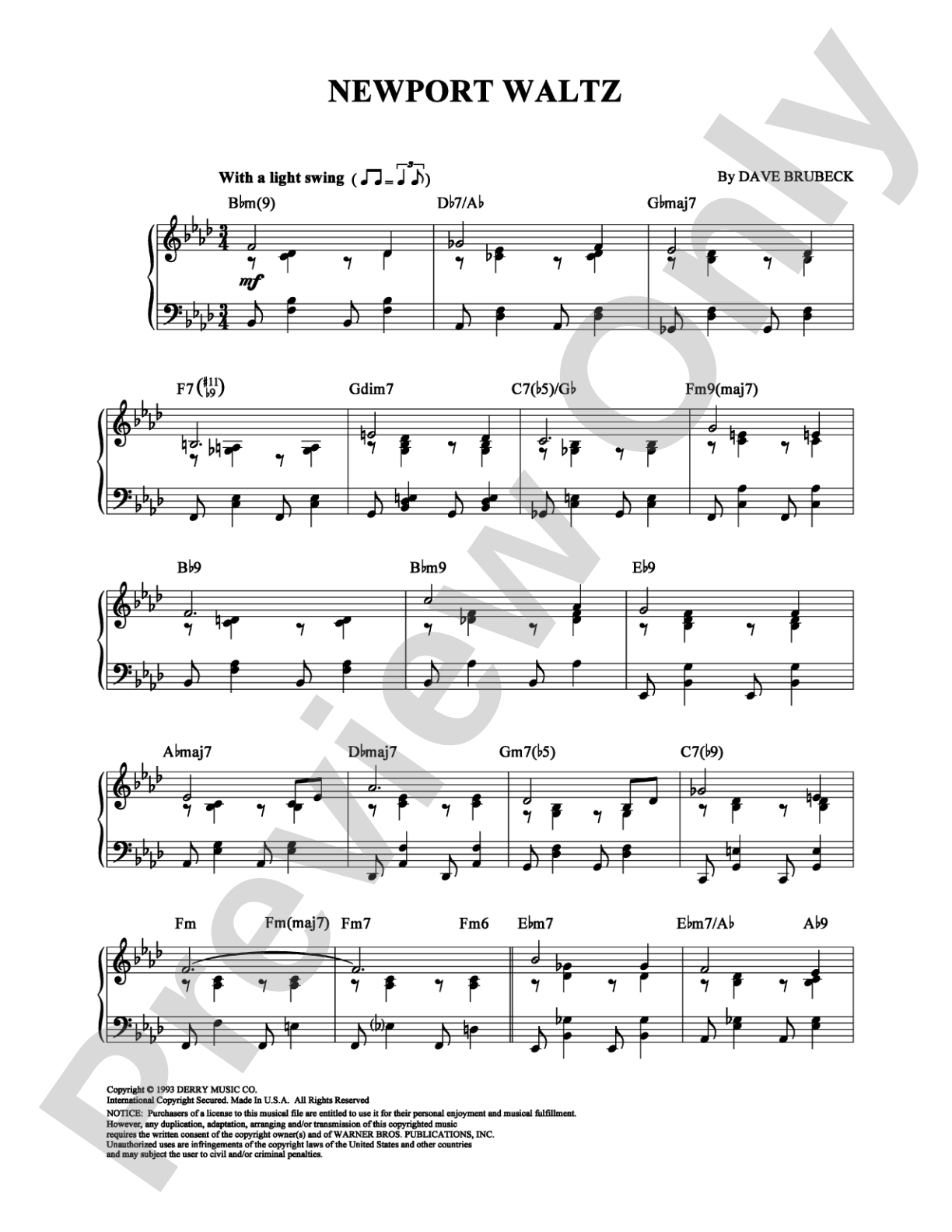
Newport Waltz: Piano Digital Sheet Music

Newport Waltz: Piano Digital Sheet Music

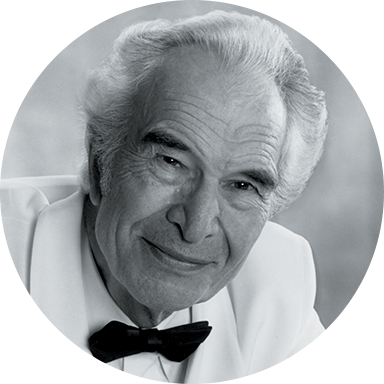
Dave Brubeck

Item: 00-PS-0000806

Digital Download
$3.99
Description

Newport Waltz: Piano Digital Sheet Music isn't in MakeMusic Cloud just yet...but it could be. Let us know you'd like to see it, and you'll help shape what comes next. In the meantime, start a free trial and dive into thousands of interactive titles your students can play along with today.

Sample Audio
No sample audio found.
Sample Video
Additional Details
SKU: 00-PS-0000806

More about this title

About the Artist: Dave Brubeck

Dave Brubeck

Dave Brubeck stands as one of jazz's most consequential figures, a pianist whose improvisational command shaped the genre while his compositional reach extended far beyond the bandstand. He studied with Darius Milhaud at Mills College after World War II, an encounter that fundamentally influenced his approach to blending jazz vernacular with classical forms. His album "Time Out" became the first jazz recording to achieve platinum sales, introducing millions to complex meters and sophisticated harmonies. Beyond his landmark recordings, Brubeck composed choral works, oratorios, chamber music, and large-scale orchestral pieces that have been performed by the London Symphony Orchestra and at major venues worldwide.

Brubeck also stands as a pioneering force for racial integration in mid-century jazz, using his platform and artistry to challenge segregation when doing so carried real consequence. His sacred works, including the mass "To Hope!" and the oratorio "The Voice of the Holy Spirit," demonstrate his commitment to music as a vehicle for spiritual and social meaning. He received the Presidential Medal of the Arts from President Clinton and was honored with a Grammy Lifetime Achievement Award and election to the American Classical Music Hall of Fame.

Why we love this

This waltz brings Brubeck's sophisticated harmonic sensibility and lyrical gift to an intimate, accessible format. A pianist working through a Brubeck composition engages directly with the compositional voice of a master, learning how melodic elegance and harmonic depth can coexist with genuine approachability. It's the kind of piece that rewards careful listening and repeated practice in equal measure.

What to expect

Newport Waltz moves with unhurried elegance, its three-beat structure carrying the listener through graceful melodic turns and warm harmonic colors. There's a conversational quality to the piece, a sense of Brubeck inviting you into a private moment of reflection rather than demanding virtuosic display.

Who it's for

This piece suits pianists with 2-3 years of study who are ready to explore jazz-influenced composition at a thoughtful pace. Intermediate players will find Brubeck's harmonic language engaging without feeling overwhelming, and the work provides genuine insight into how a master composer approaches melody and accompaniment.

How to get the most out of it

  • Honor the waltz's three-beat pulse without letting it become mechanical; Brubeck's phrasing often dances across the barline, so listen through the harmonic movement rather than subdividing metronomically.
  • The melodic line deserves prominence, but Brubeck's left-hand accompaniment contains sophisticated voicings that shouldn't disappear into the background; balance allows both hands to sing.
  • Explore rubato in the opening statement of the melody to establish the piece's character before settling into a steadier groove for the middle sections.

How to use it

Pair this with other American jazz-influenced solo works for a recital segment that showcases compositional diversity within a single tradition. It works beautifully as a contrasting element in a program mixing classical standards with 20th-century American music, offering something genuinely lyrical between weightier pieces.

Skills your students will build

  • Comping and accompaniment patterns in jazz idiom
  • Reading and executing Brubeck's sophisticated harmonic language
  • Balancing melodic and harmonic voices in two-hand texture
  • Interpreting style and rubato in jazz-influenced composition
  • Understanding waltz form and three-beat phrasing

You May Also Like