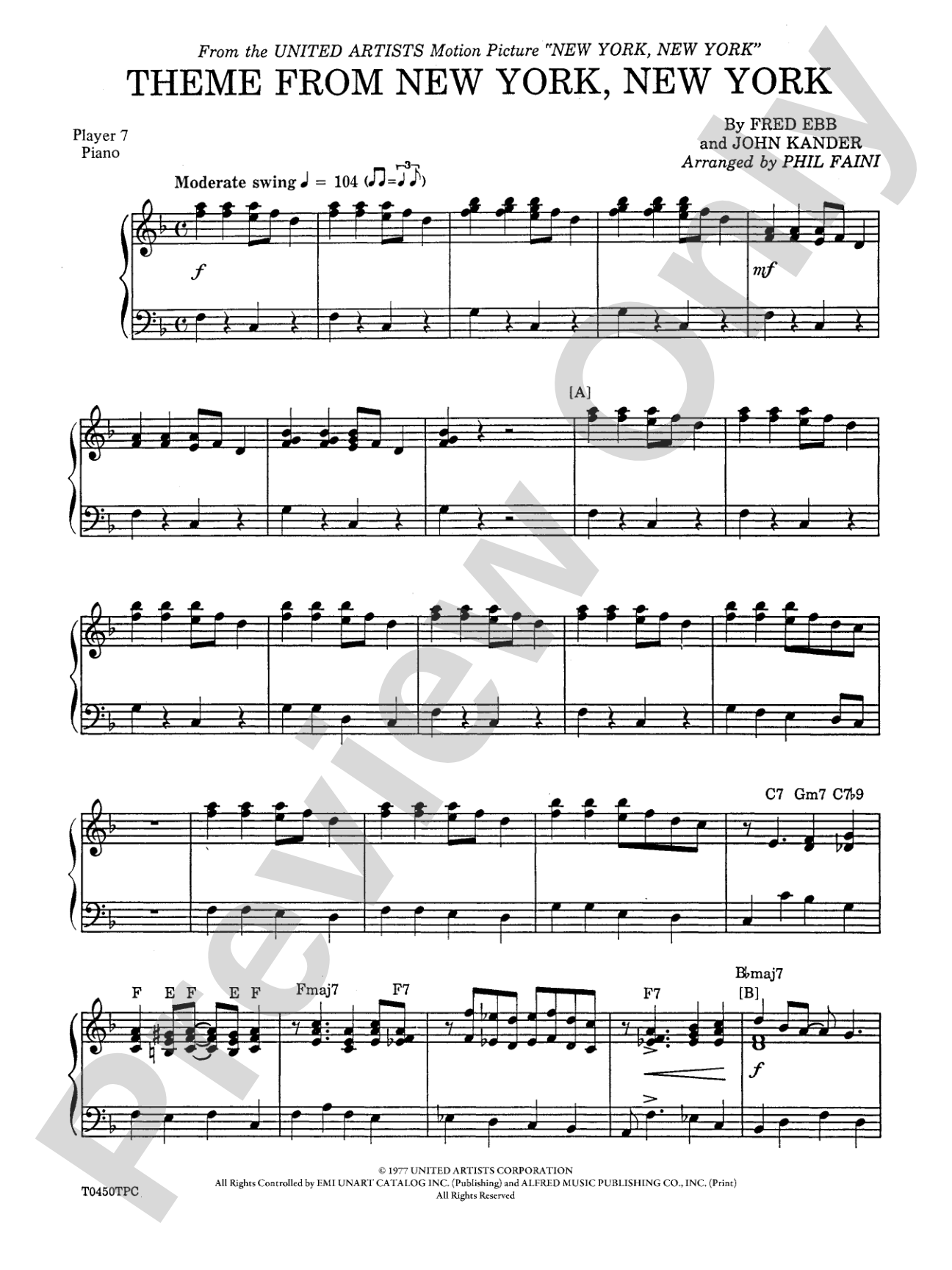
New York, New York, Theme from: Piano Accompaniment Sheet Music Preview

New York, New York, Theme from: Piano Accompaniment

For 10 Players

By John Kander / arr. Phil Faini

Level: Intermediate Plus

Item: 00-PC-0016130_K

Digital Download
$3.00
Description
For ten players. Instrumentation: bells, vibraphone, xylophone, marimbas, chimes, timpani, bass, piano, drumset.

Don't just read it, hear it, play along with it, and watch your students grow with it. In MakeMusic Cloud, New York, New York, Theme from: Piano Accompaniment comes alive with professional accompaniment, adjustable tempo, and built-in practice tools that turn solo practice into real progress.

Sample Audio
No sample audio found.
Sample Video
Additional Details
Series: Percussion Performance Series
Publisher: Alfred Music
Page Count: 44
SKU: 00-PC-0016130_K

More about this title

About the Composer: John Kander

John Kander is a Tony Award-winning composer whose theatrical works have shaped American musical theater since the 1960s. His collaborations with lyricist Fred Ebb produced some of the most enduring songs in the American songbook, including the iconic title track from the 1977 film "New York, New York." Kander's gift for crafting memorable melodies with sophisticated harmonic language makes his work accessible to audiences while offering substantial musical content for performers.

Beyond the stage and screen, Kander's compositions have become staples in music education settings. His ability to write singable, energetic material that resonates with both students and audiences has led to numerous arrangements for educational ensembles, allowing young musicians to engage with music of genuine artistic merit.

Why we love this

This arrangement captures the swagger and energy of Kander's classic without compromising the idiom or musicality. Phil Faini has written for a broad percussion color palette that keeps all ten players engaged throughout, making it an unusually rewarding piece for ensemble balance and development. The intermediate-plus level sits in that sweet spot where students must execute genuine musicianship to bring the arrangement off.

What to expect

The arrangement radiates the urban energy and optimistic swagger of the film's New York setting. Bright mallet writing in the upper register trades with warmer harmonic support below, creating a sound that feels sophisticated and celebratory at once. There's genuine joy in the orchestration without a hint of condescension.

Who it's for

Intermediate-plus percussion ensembles looking for literature that balances technical demand with genuine musical substance. This works for high school ensembles with solid mallet technique and rhythmic independence, as well as college prep groups working toward advanced repertoire.

How to get the most out of it

  • Balance the mallets carefully during the opening statement. The vibraphone and bells should cut through without overwhelming the marimbas and xylophone, which are carrying harmonic weight.
  • Work the rhythm section (bass, piano, drumset) as a locked unit from the start. This arrangement depends on the groove settling quickly so the melodic instruments can float above it.
  • Let the chimes and timpani moments breathe. These striking colors punctuate the arrangement; they lose impact if rushed or buried under other textures.
  • Use the recorded accompaniment to establish the groove, but push your ensemble to feel the underlying pulse independently rather than leaning on it throughout rehearsal.

How to use it

Program this as an opener or closer on a percussion concert; its theatrical pedigree and immediately recognizable melody make it an excellent audience connector. It also pairs well on a mixed concert where you want to demonstrate your ensemble's facility with contemporary popular music alongside classical repertoire.

Skills your students will build

  • Voice leading across multiple mallet instruments simultaneously
  • Maintaining metric clarity when melodic and harmonic materials occupy different parts of the percussion section
  • Balancing texture between pitched and unpitched percussion
  • Coordinating with a functioning rhythm section (bass, piano, drums)
  • Ensemble independence within a groove-based framework

You May Also Like