

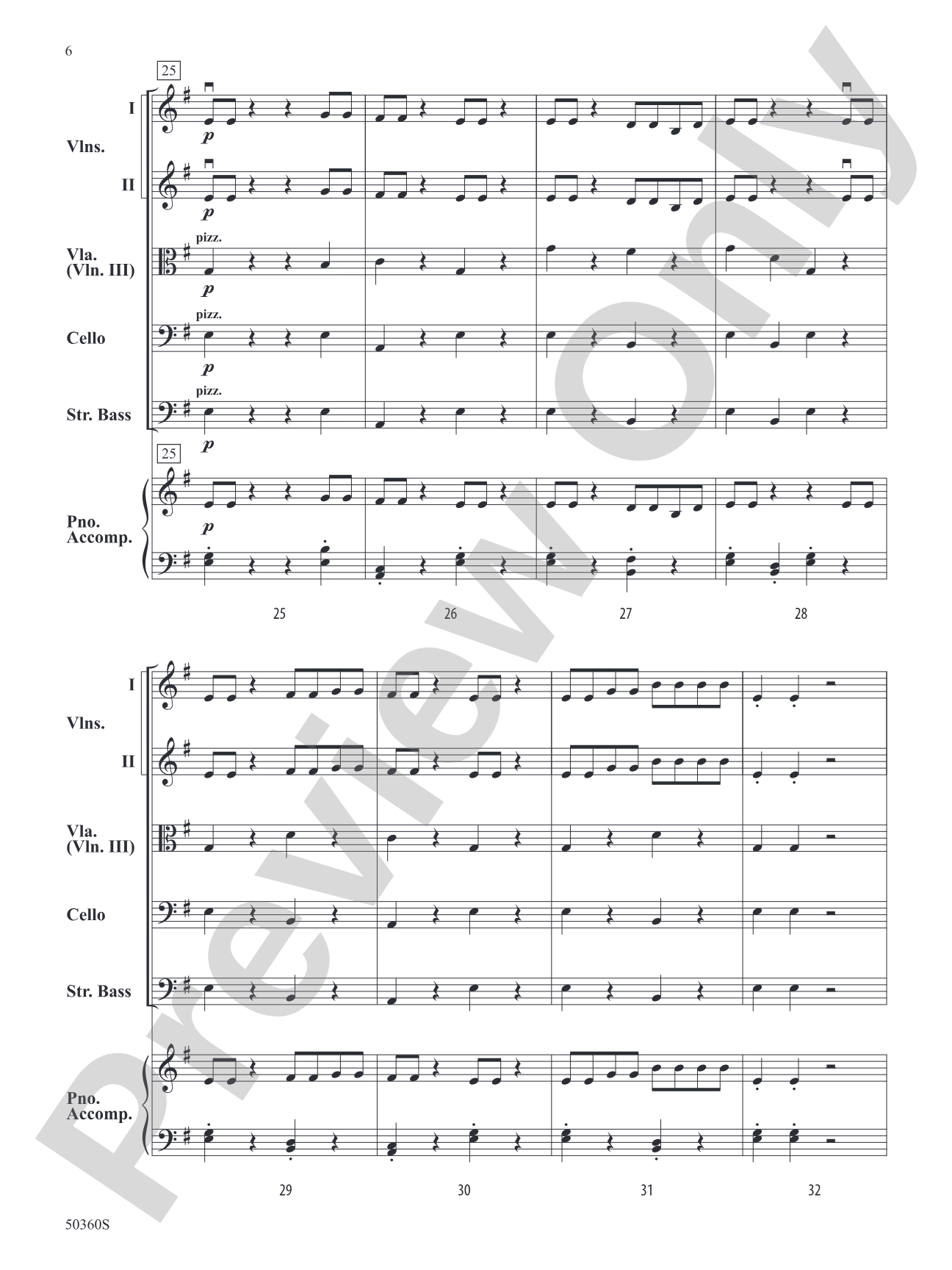
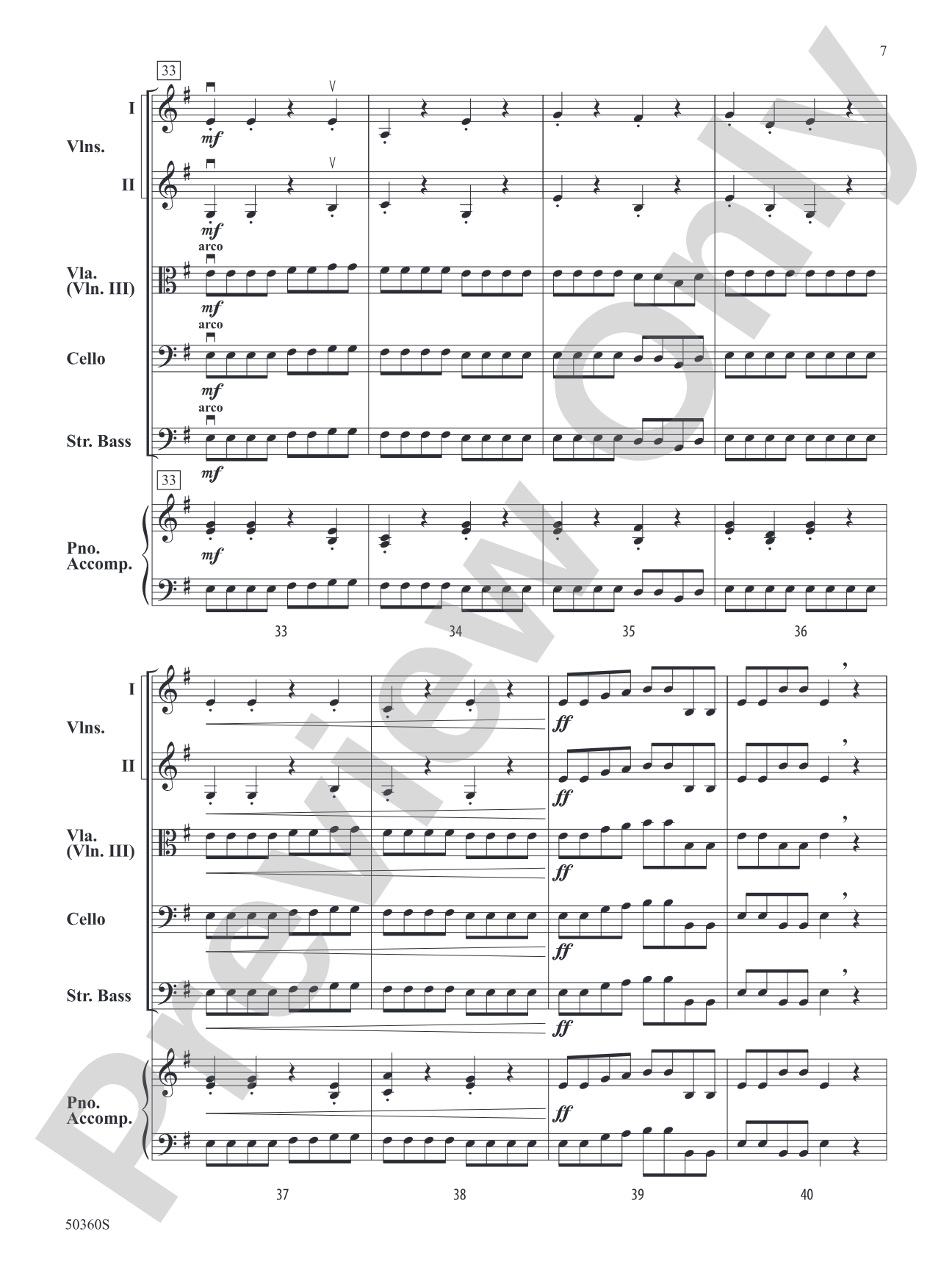
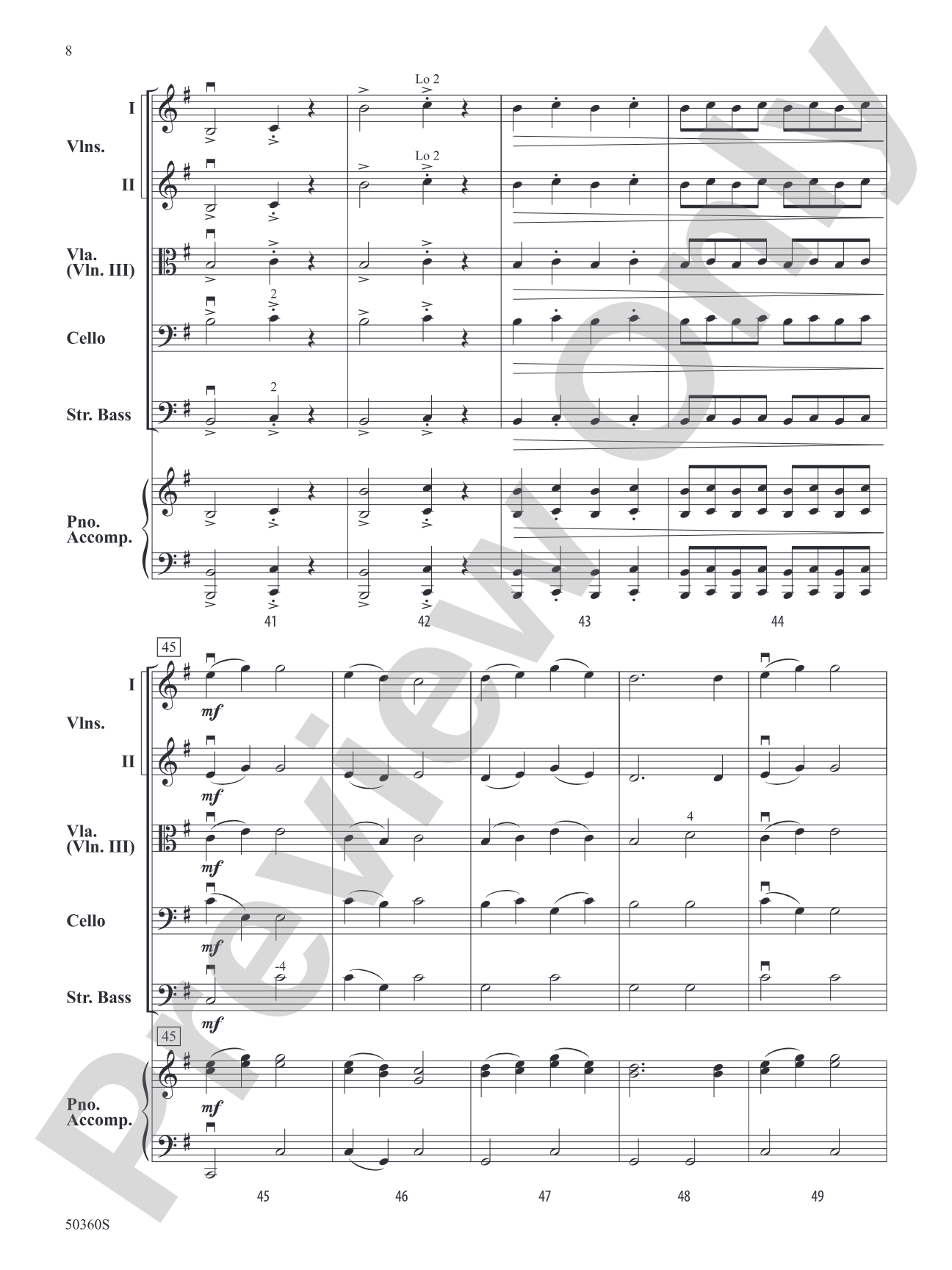
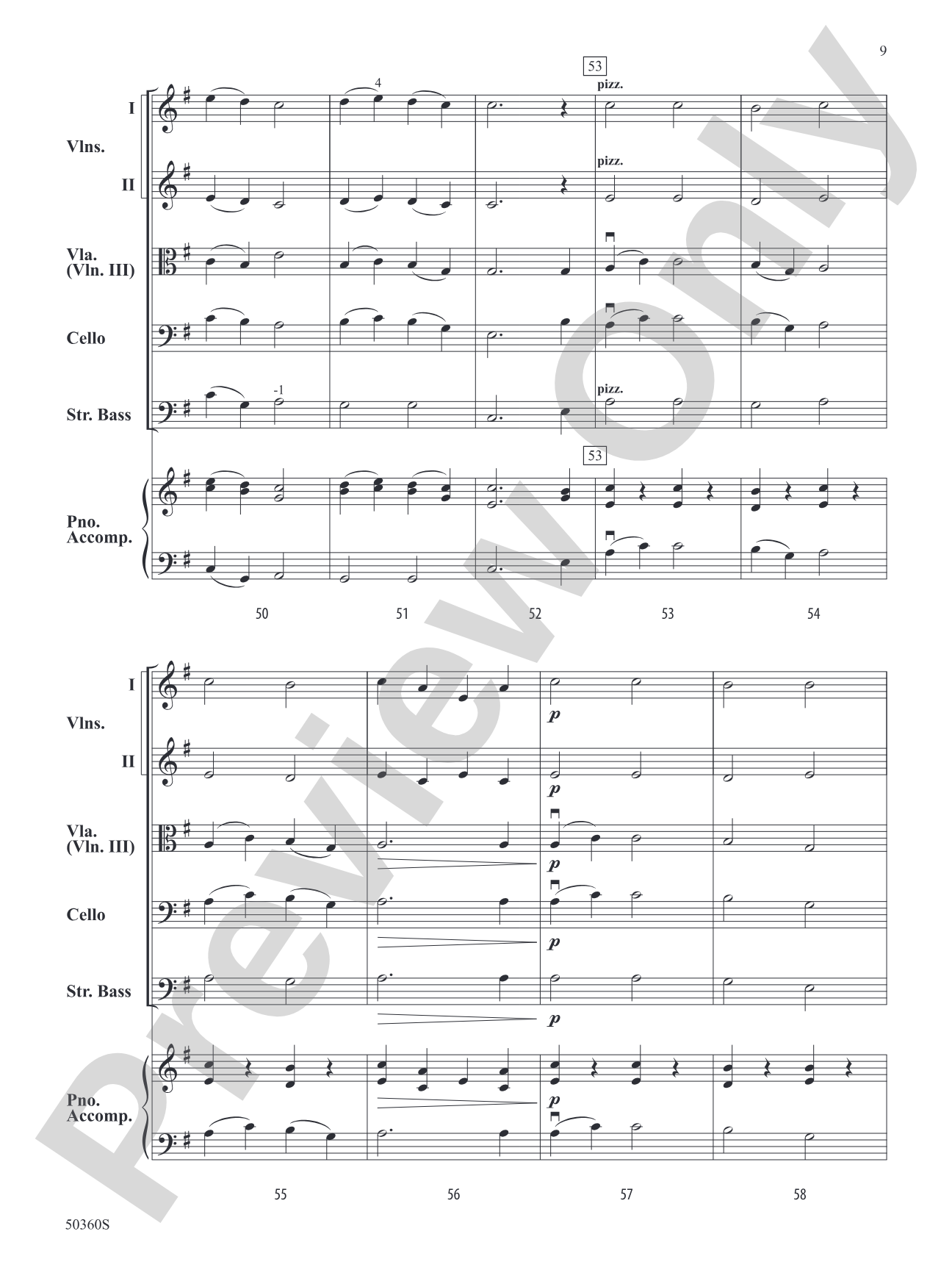

NEW WORLD VARIATIONS/SIS: String Orchestra Conductor Score & Parts
Variations on themes from Symphony No. 9
By Antonín Dvorák / arr. Jim Palmer
Grade: 1
Item: 00-PK-0009373

$60.00
Pickup currently not available
Buy Extra Parts (Digital PDF Download)
Parts Added to Cart!
Description
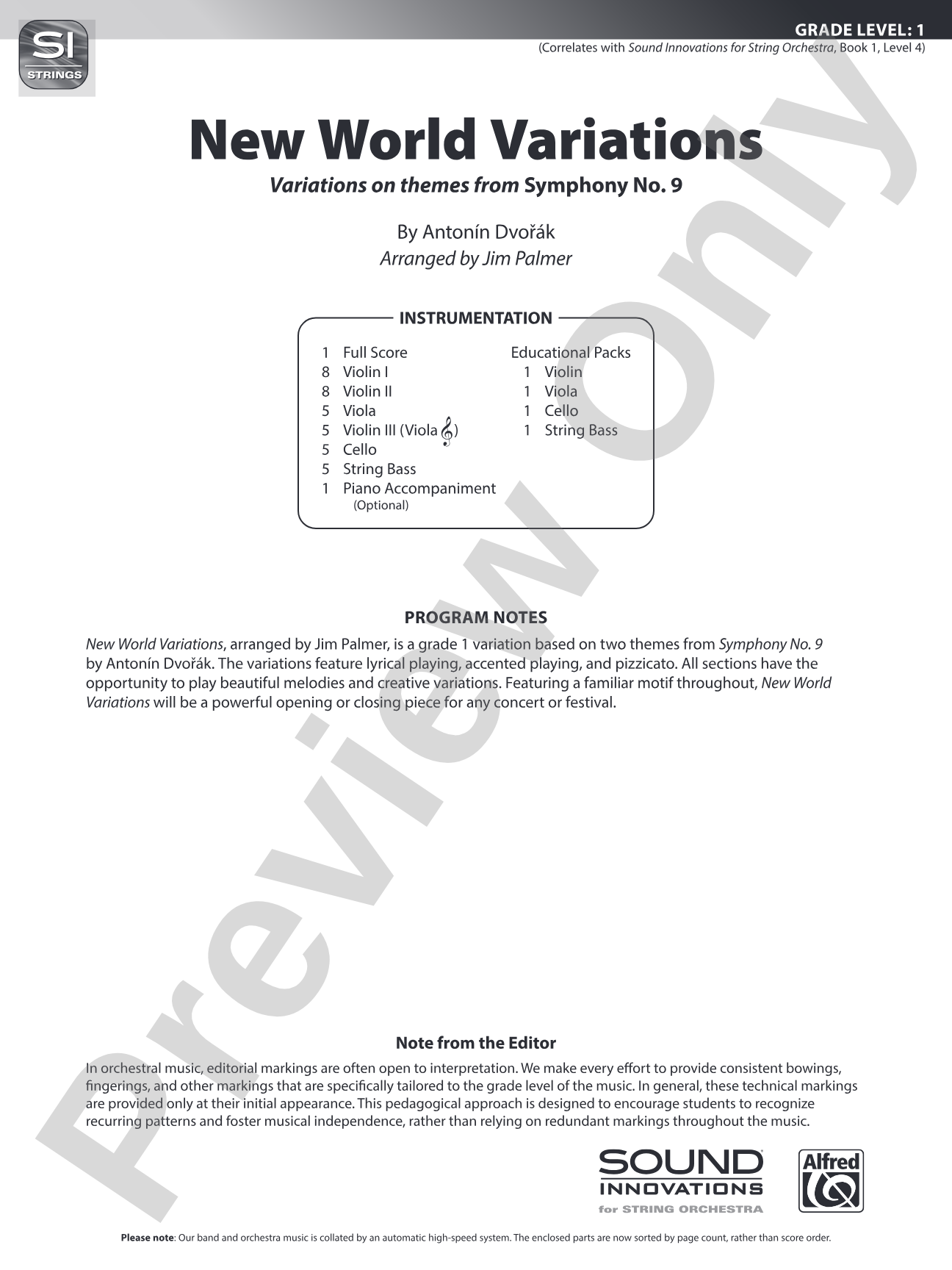
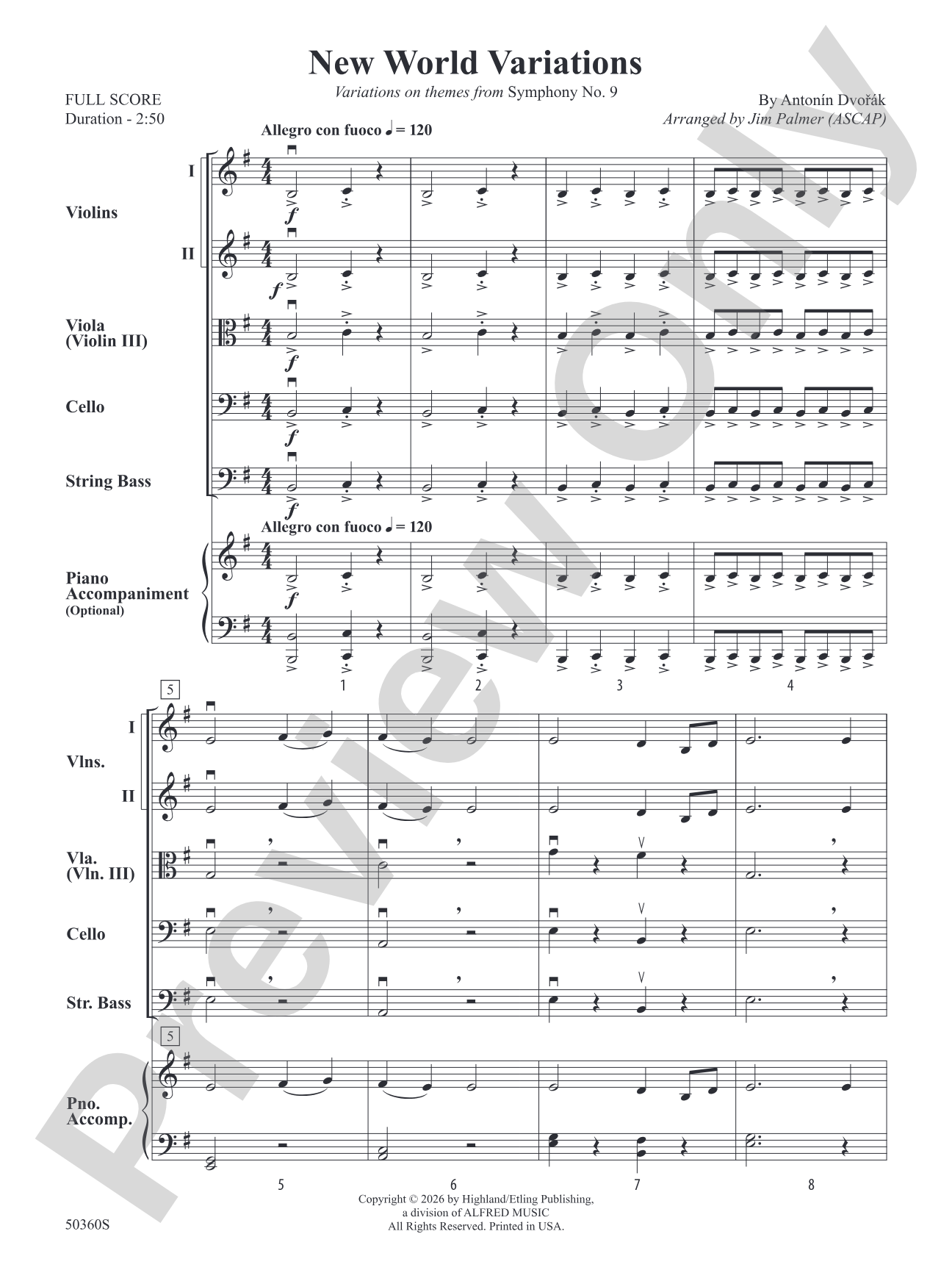
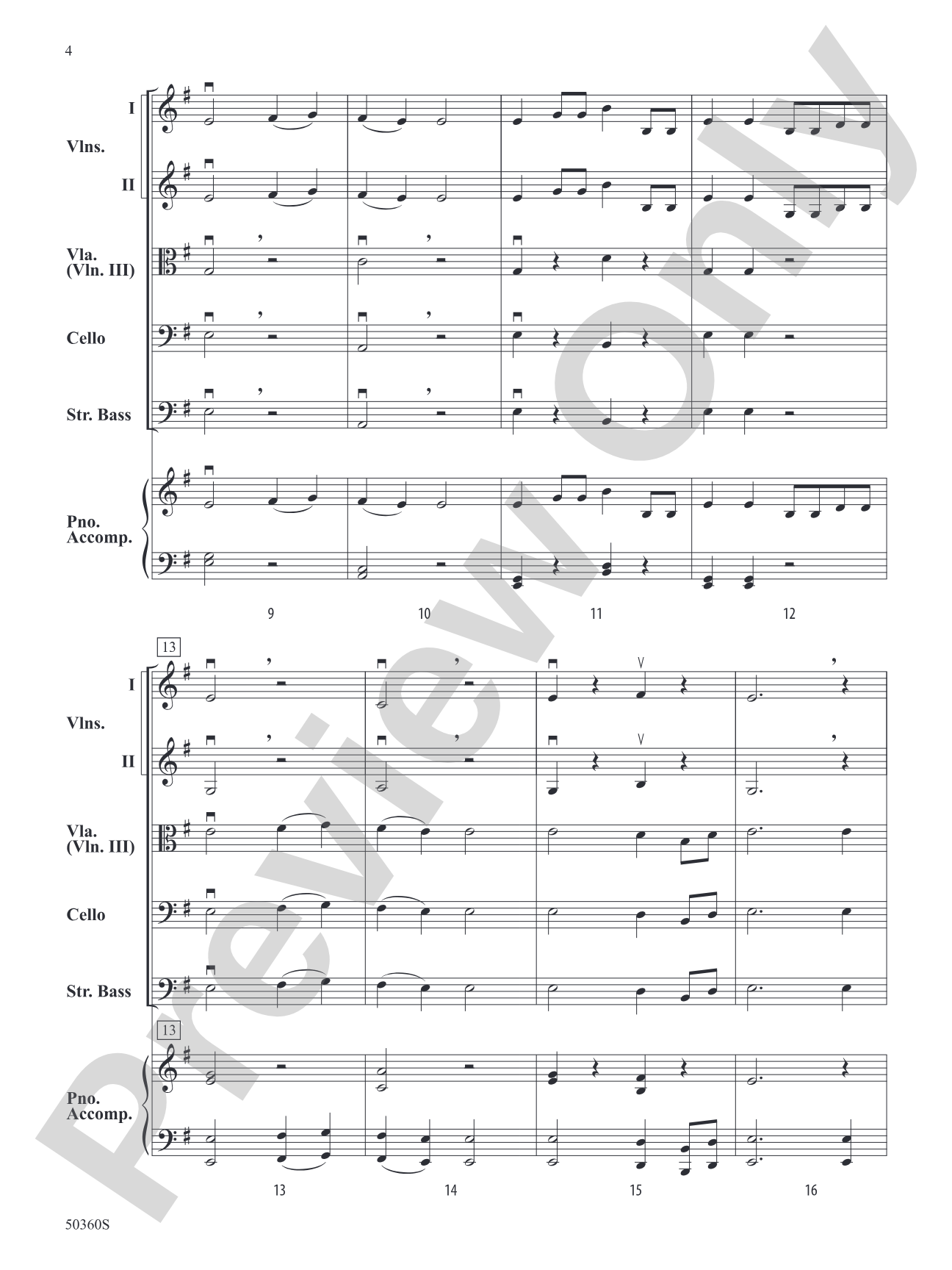
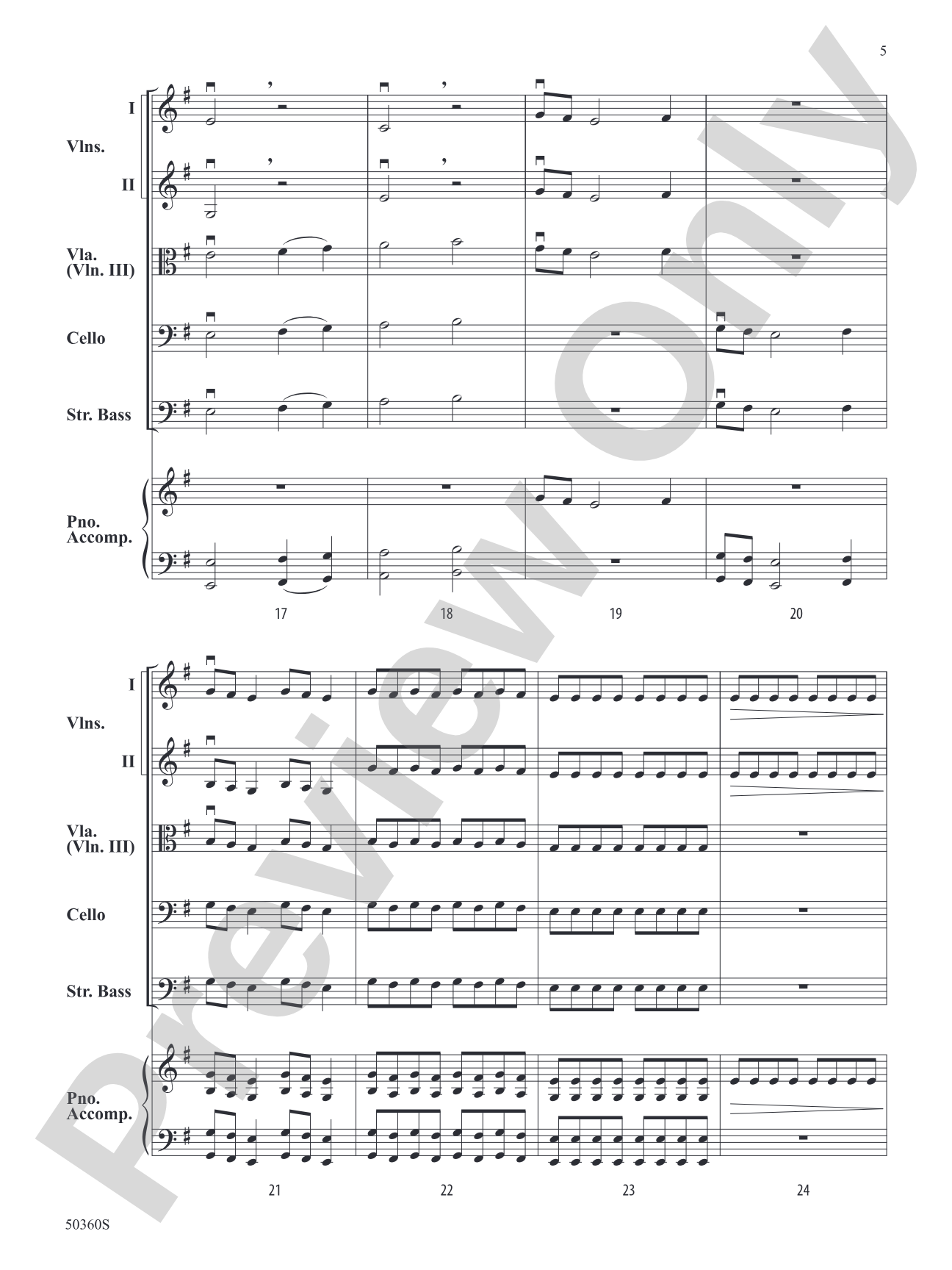
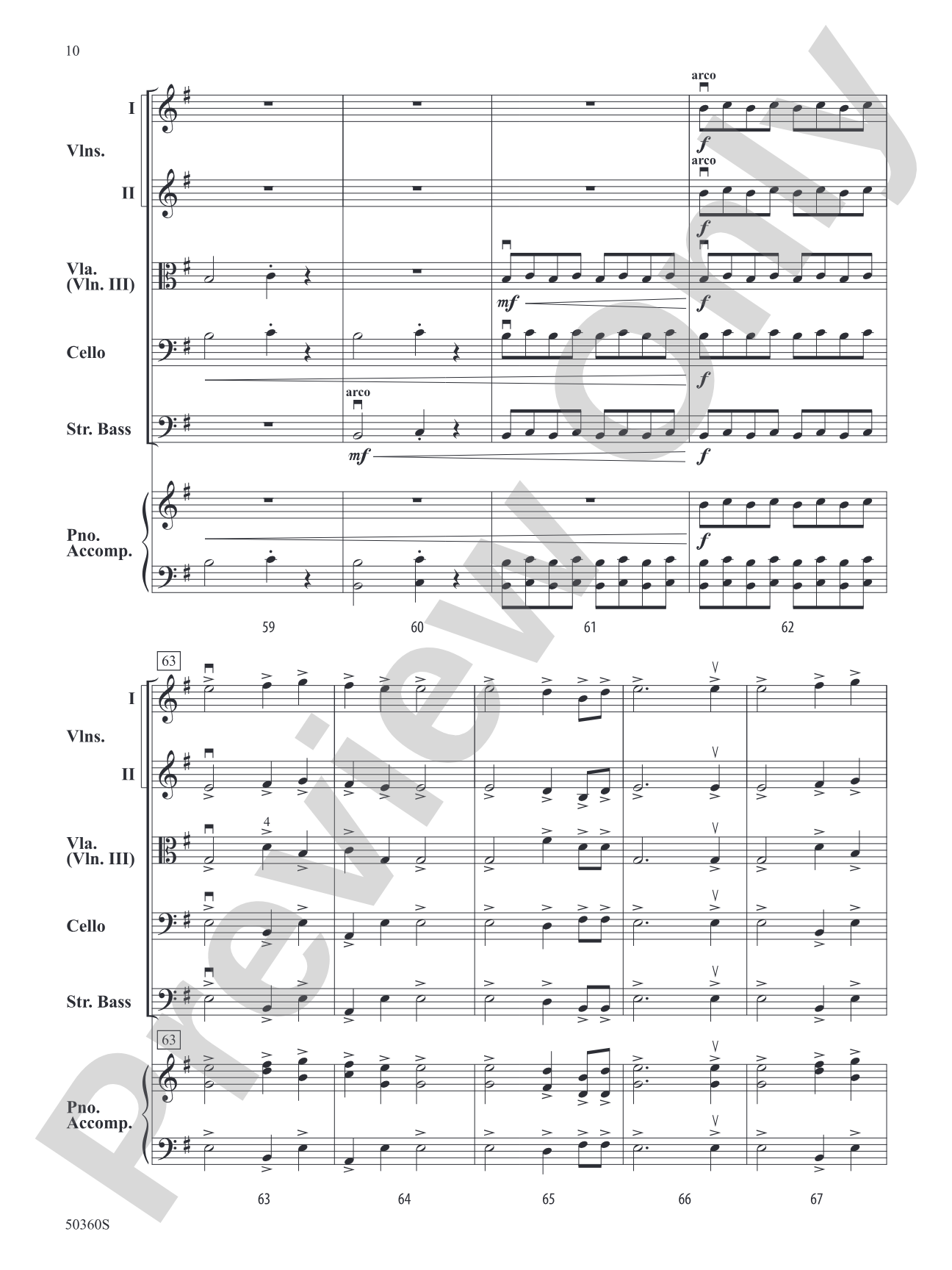
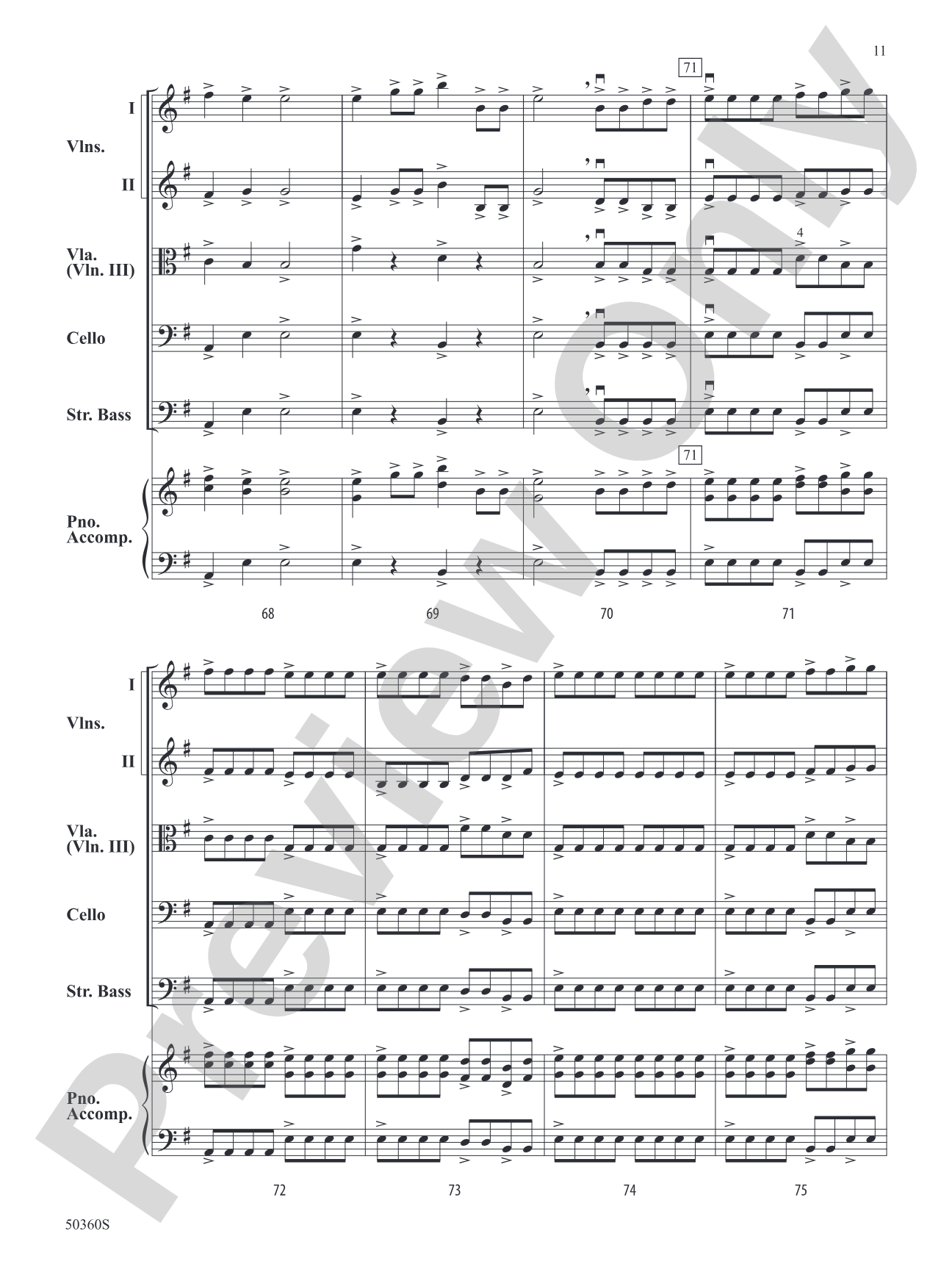
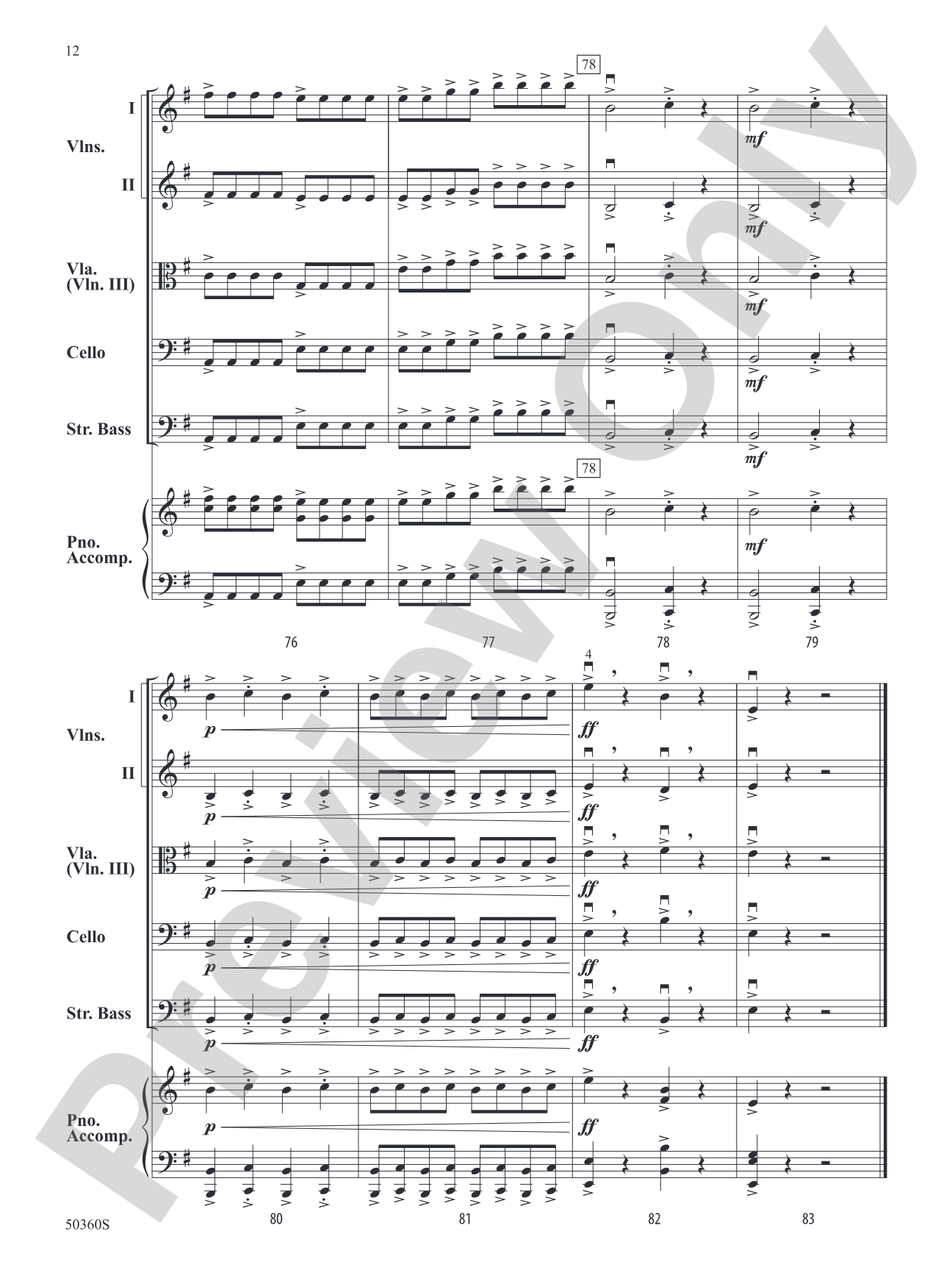
New World Variations, arranged by Jim Palmer, is a grade 1 variation based on two themes from Symphony No. 9 by Antonín Dvorák. The variations feature lyrical playing, accented playing, and pizzicato. All sections have the opportunity to play beautiful melodies and creative variations. Featuring a familiar motif throughout, New World Variations will be a powerful opening or closing piece for any concert or festival.


Don't just read it, hear it, play along with it, and watch your students grow with it. In MakeMusic Cloud, NEW WORLD VARIATIONS/SIS: String Orchestra Conductor Score & Parts comes alive with professional accompaniment, adjustable tempo, and built-in practice tools that turn solo practice into real progress.
Open in the Player
Jump straight in and assign it today.
Start Your Free Trial
Open this title and explore the full library in minutes.
Sample Audio
1
Audio File
--:--
0:00
0:00
Sample Video
Additional Details
Series:
Sound Innovations Series for Strings
Publisher:
Alfred Music
SKU:
00-PK-0009373
More about this title
About the Composer: Antonín Dvorák
Antonín Dvorák (1841, 1904) stands as one of the most performed composers in the orchestral canon, and for good reason: he possessed an instinctive gift for melody and an ear for orchestral color that made even his grandest works feel human and approachable. His time in America (1892, 1895) as director of the National Conservatory in New York profoundly shaped his compositional voice, infusing his later works with the rhythmic vitality and harmonic freshness of American and folk idioms.
The Ninth Symphony, subtitled "From the New World," remains his most celebrated work. Written during his American residency, it fuses European symphonic tradition with the musical languages he encountered in the New World, creating a work that bridges continents and still resonates with student musicians encountering orchestral repertoire for the first time.
Why we love this
This arrangement distills the emotional power of Dvorák's most recognizable symphony into a piece that Grade 1 ensembles can actually pull off with musicianship. Jim Palmer's variations create genuine interest without piling on technical complexity, giving every section a moment to carry a real melody rather than filling in texture.
What to expect
Warm and nostalgic, with moments of gentle vitality. The variations move between reflective lyricism and spirited rhythmic energy, anchored throughout by a melody your students will recognize and want to play beautifully. There's a sense of return and familiarity that makes audiences settle in, then leaves them satisfied.
Who it's for
String orchestras building their Grade 1 repertoire and seeking concert openers or closers that feel substantial without requiring advanced technical skills. This works equally well for programs mixing beginning and intermediate players, since the accessible grade level doesn't compromise musical integrity.
How to get the most out of it
- Shape the lyrical sections with a long, connected bow stroke; these melodies deserve the same singing quality you'd expect from a choir, not just accurate notes strung together.
- Emphasize the contrast between the legit passages and the pizzicato variations by changing your physical approach with each section, showing the orchestra where the character shift happens.
- Balance the familiar motif when it recurs across different instrumental groups; younger ensembles often let it fade into the background, but this theme is the glue that holds the piece together.
- Lock the rhythmic accuracy of the accented passages before pulling back to focus on phrasing; the accents are pointless if they land unevenly across the section.
How to use it
Open a concert with this to establish musicality and draw the audience into your program, or close a set with it as an encore that sends people home humming. It pairs well in a mixed orchestral program because its accessible grade level and emotional directness work as a palate cleanser between heavier contemporary pieces or as the confident final word before intermission.
Skills your students will build
- sustaining lyrical phrases over multiple measures
- executing clean articulation in accented passages
- playing pizzicato with rhythmic precision and matching tone
- tracking and maintaining a recurring motif across different instrumental combinations
- balancing dynamic contrast between variation sections