
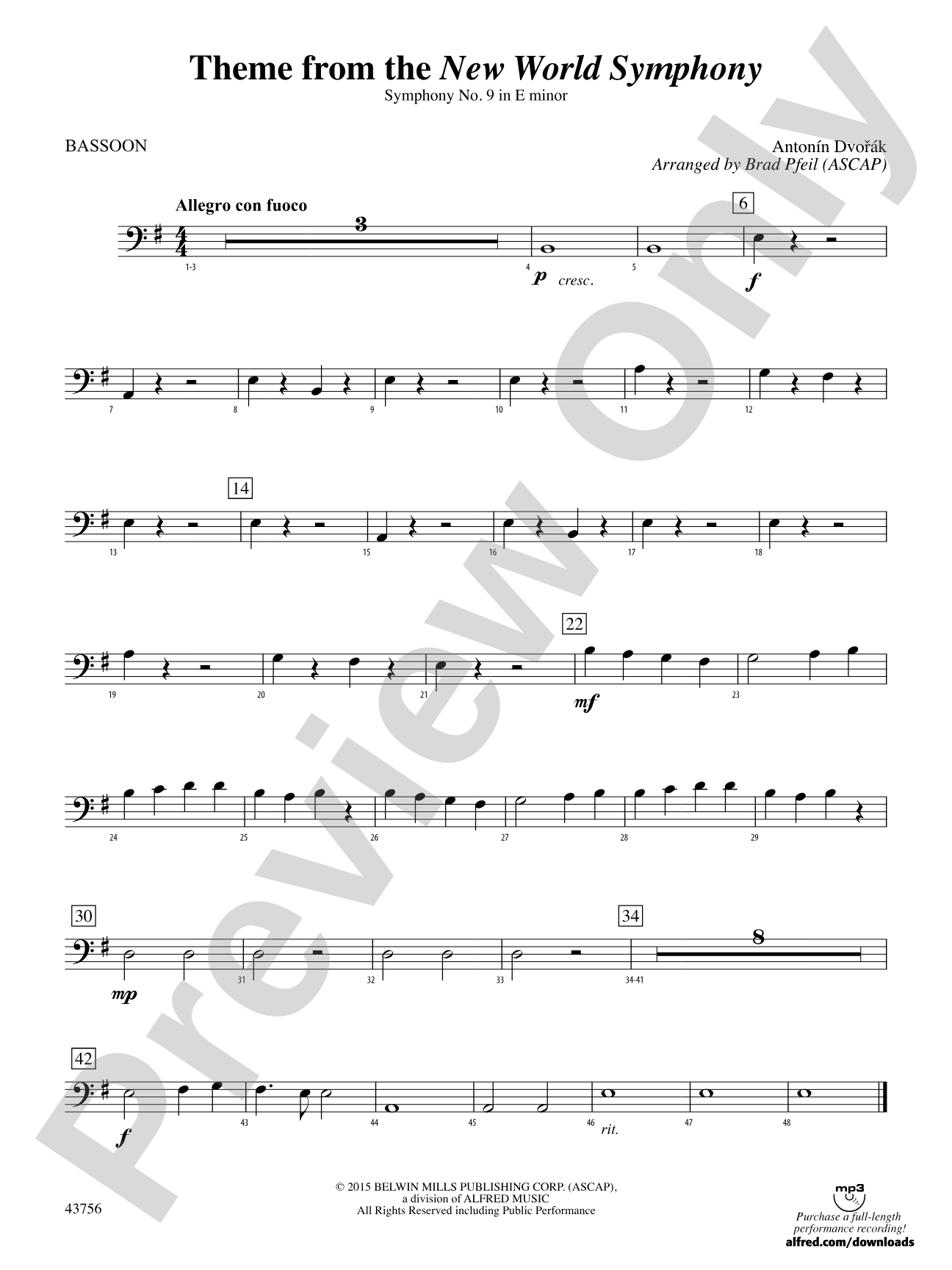

New World Symphony, Theme from the: Bassoon
Symphony No. 9 in E Minor
By Antonín Dvorák / arr. Brad Pfeil
Grade: 1.5
Item: 00-PC-0016860_B1
$3.00
Pickup currently not available
Description
What a fantastic introduction to full orchestra and to this beloved music by Dvorák! All instruments have exciting parts. The dramatic opening in the strings and the dark theme in the brass will captivate students. (2:30)


Don't just read it, hear it, play along with it, and watch your students grow with it. In MakeMusic Cloud, New World Symphony, Theme from the: Bassoon comes alive with professional accompaniment, adjustable tempo, and built-in practice tools that turn solo practice into real progress.
Open in the Player
Jump straight in and assign it today.
Start Your Free Trial
Open this title and explore the full library in minutes.
Sample Audio
1
Audio File
--:--
0:00
0:00
Sample Video
Additional Details
Series:
Belwin Beginning Full Orchestra
Publisher:
Alfred Music
Page Count:
114
SKU:
00-PC-0016860_B1
More about this title
About the Composer: Antonín Dvorák
Antonín Dvorák (1841-1904) stands among the great symphonists of the Romantic era, celebrated for melodies that seem to emerge naturally from orchestral color rather than being imposed upon it. Born in Bohemia, he drew deeply from folk music and nationalistic spirit, creating works that spoke to both universal human experience and the character of his homeland. His influence on American music is particularly significant: during his time as director of the National Conservatory in New York (1892-1895), he championed the musical voices of African American and Native American traditions, shaping how a generation of composers thought about cultural authenticity in art.
The "New World" Symphony, composed during this American period, remains his most recognizable work. Its themes are direct, memorable, and orchestrated with such clarity that even young musicians can hear themselves as essential contributors to the whole. Dvorák's gift for the ensemble is precisely what makes this theme so valuable in beginning orchestra: every section gets a moment to shine, and the emotional arc is unmistakable.
Why we love this
Brad Pfeil's arrangement preserves the grandeur and emotional weight of Dvorák's original while making it genuinely accessible to Grade 1.5 orchestras. Every instrumental section carries a real melodic or harmonic responsibility, so students feel the power of ensemble playing rather than just filling in block chords. The dramatic string opening and darkly lyrical brass theme are exactly the kind of memorable, singable material that makes early orchestra students fall in love with the medium.
What to expect
Yearning and introspective at the outset, with the string opening feeling almost intimate before the brass brings weight and inevitability. There's a quality of forward motion and emotional searching that draws listeners in, neither bombastic nor timid. The darker orchestral color gives it substance that students can sink their teeth into.
Who it's for
Beginning orchestra directors looking for a work that proves young musicians can handle real repertoire and feel the satisfaction of ensemble sound. This arrangement serves students in Grades 4-7 who are ready for something beyond unison melodies and simple accompaniment patterns but need clear, supportive orchestration throughout.
How to get the most out of it
- Shape the opening string phrase with a clear crescendo and release; this quiet but insistent foundation sets the mood for the brass entrance that follows.
- Balance the brass theme so it sits warmly above the harmonic support from winds and lower strings, rather than overwhelming them.
- Maintain steady pulse in the accompaniment figures, especially in woodwinds and violas; small rhythmic wavering will blur the emotional focus.
- Use the full dynamic range available at this level. The contrast between the softer, pensive sections and fuller orchestral moments is what gives this arrangement its dramatic impact.
How to use it
Program this as a concert opener or centerpiece to demonstrate your ensemble's growth mid-year; the 2:30 duration fits comfortably within any program structure. It also makes an excellent festival or contest selection, as judges recognize both the integrity of the source material and the craft of an arrangement that refuses to condescend to young musicians.
Skills your students will build
- Balancing a singable melody line against moving harmonic accompaniment
- Reading and executing dynamic shaping across a full instrumental texture
- Sustaining focus through sectional entries and transitions
- Contributing to a unified orchestral sound while maintaining individual part clarity
- Interpreting a Romantic-era work with expressive control rather than mechanical precision