New World Symphony (Fourth Movement): Flute Sheet Music Preview

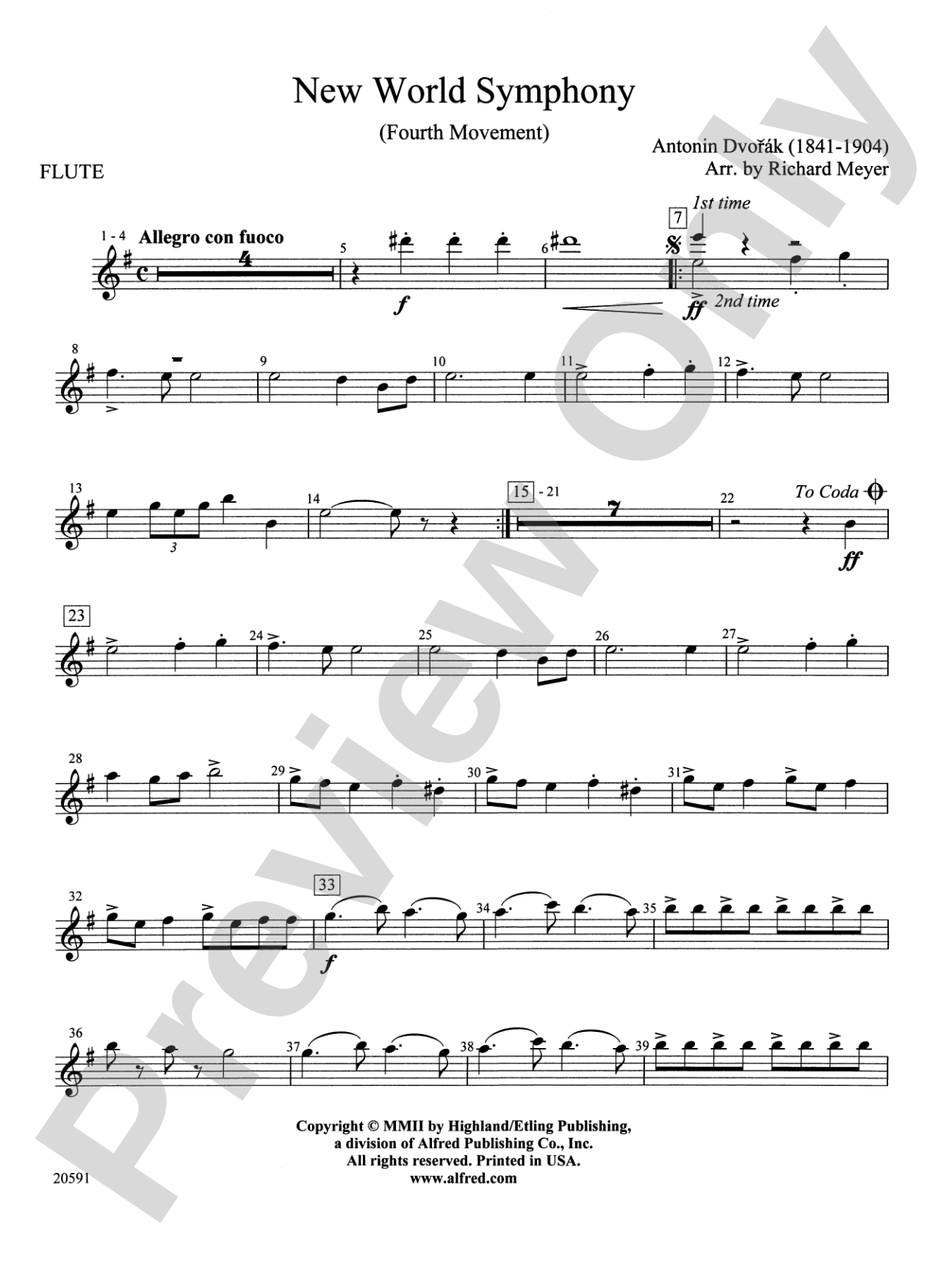
New World Symphony (Fourth Movement): Flute

By Antonín Dvorák / arr. Richard Meyer

Grade: 2

Item: 00-PC-0000418_F1

Digital Download
$3.00
Description
The excitement of Antonín Dvorák's most famous orchestral work is now within reach of the young full orchestra. With string parts remaining in first position throughout, this great-sounding arrangement features simplified range and rhythm without sacrificing the intended spirit and sound of the original. The result is a very playable version of this popular movement. Bass clarinet, alto saxophone and third violin parts are included. (3:40)

Don't just read it, hear it, play along with it, and watch your students grow with it. In MakeMusic Cloud, New World Symphony (Fourth Movement): Flute comes alive with professional accompaniment, adjustable tempo, and built-in practice tools that turn solo practice into real progress.

Sample Audio
No sample audio found.
Sample Video
Additional Details
Series: Highland/Etling First Philharmonic
Publisher: Alfred Music
Page Count: 200
SKU: 00-PC-0000418_F1

More about this title

About the Composer: Antonin Dvorák

Antonín Dvořák (1841-1904) was a Czech composer who elevated his nation's musical identity on the world stage during the Romantic era. He drew deeply from folk melodies and rhythms while mastering the symphonic forms of Brahms and Beethoven, creating works that feel both intimate and grandly orchestral. His influence on American composers during his time as director of the National Conservatory in New York (1892-1895) left a lasting mark on the musical landscape of two continents.

Why we love this

Richard Meyer's arrangement preserves every ounce of the fourth movement's infectious energy and soaring lyricism while keeping the technical demands reasonable for young orchestras. The Grade 2 scoring frees your ensemble from position shifts and extreme ranges, letting musicians focus on phrasing and ensemble balance rather than wrestling with notation. You're offering your students an arrangement that sounds substantial and rewarding without requiring advanced technique.

What to expect

This movement pulses with optimism and forward drive. The melody soars with a folk-like warmth and directness, supported by rhythmic vitality that propels the piece from introspection into exuberance. Even in its simplified form, you hear the heart of Dvořák's genius: music that speaks directly to the player and the listener alike.

Who it's for

Young full orchestra programs in Grades 2-4 that want to perform a genuine masterwork without extensive technical preparation. Directors seeking a concert piece that builds ensemble cohesion, teaches basic orchestral balance, and delivers genuine musical satisfaction.

How to get the most out of it

  • Allow the opening melody to breathe naturally in the strings; this arrangement keeps the contour clear and singable, so lean into its lyrical quality even as the tempo builds.
  • Balance the transition into the faster section by bringing out the accompaniment figures in second violins and violas so the main themes don't get buried under rhythmic texture.
  • Use the included bass clarinet and alto saxophone parts to add color and support to the lower voices; they're voiced specifically to reinforce the arrangement's orchestration.
  • Conduct the climactic passages with clarity and forward momentum; the simplified rhythms here benefit from confident pacing rather than pulling back.

How to use it

Program this as a centerpiece for a concert celebrating orchestral masterworks or American cultural history (Dvořák wrote the New World Symphony during his years in New York). The 3:40 duration and strong closing make it ideal for opening a second half or standing alone as a featured work alongside lighter pops or contemporary pieces.

Skills your students will build

  • Reading multiple dynamic and articulation markings across all parts
  • Balancing melody and accompaniment within a full ensemble texture
  • Sustaining lyrical phrasing across longer melodic lines
  • Responding to conductor tempo and expression changes in a large group
  • Understanding orchestral voicing and timbre blending

You May Also Like