
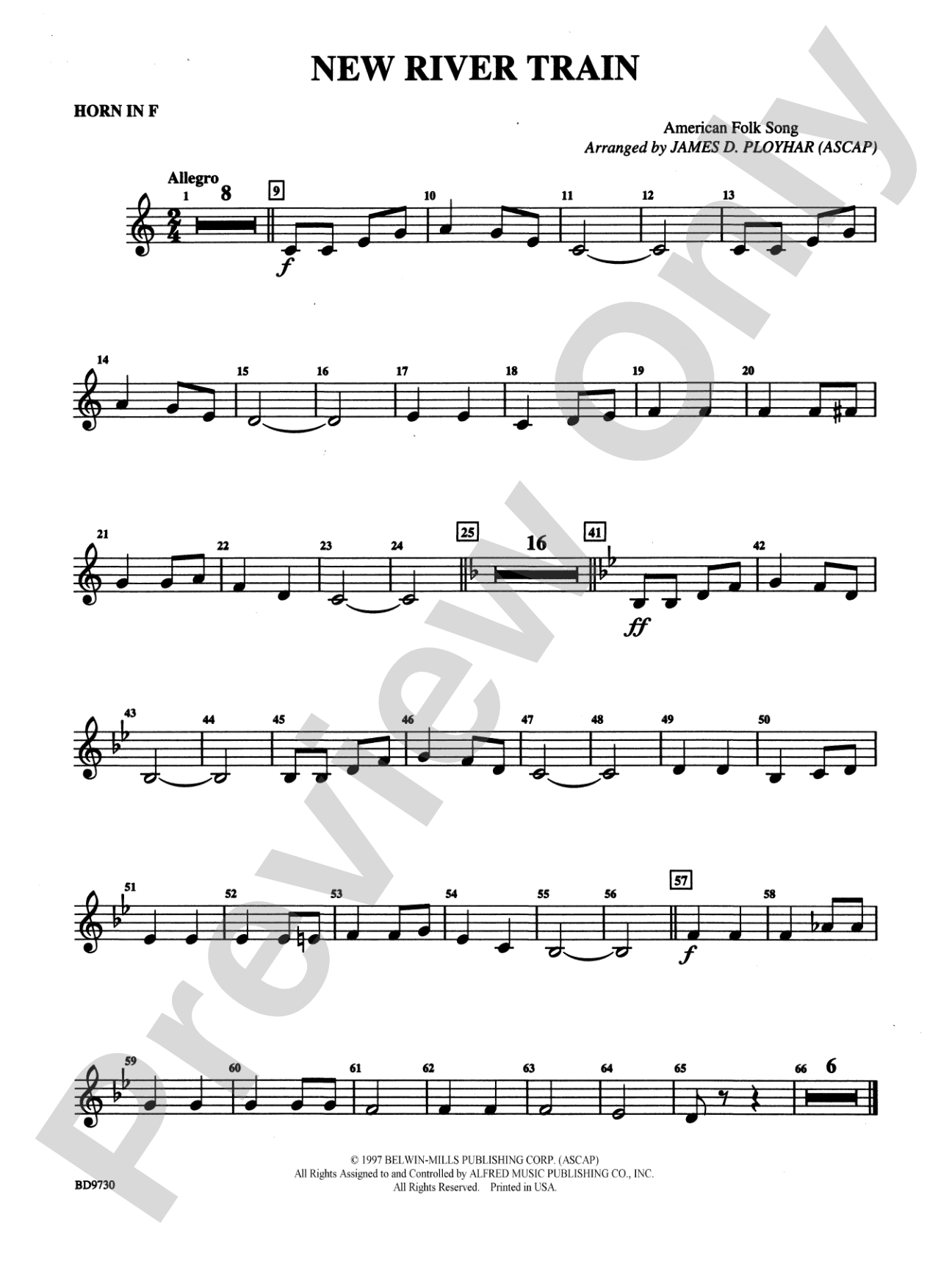

New River Train (American Folk Song): 1st F Horn
Arr. James D. Ployhar
Grade: 1 (Very Easy)
Item: 00-PC-0015191_H1
$3.00
Pickup currently not available
Description
In this age of space travel and jet aircraft flying faster than sound, it's just plain fun to get a bit nostalgic and think back to the days when travel meant steam engines and clickety-clacking railroad cars. Trains are a romantic link to a colorful period of our history, and James Ployhar brings this vision to your concert stage with no danger of flying soot, just good memories. Your audience and your percussion section will get lots of mileage out of the train whistle. Smile! (duration 1:14)


Don't just read it, hear it, play along with it, and watch your students grow with it. In MakeMusic Cloud, New River Train (American Folk Song): 1st F Horn comes alive with professional accompaniment, adjustable tempo, and built-in practice tools that turn solo practice into real progress.
Open in the Player
Jump straight in and assign it today.
Start Your Free Trial
Open this title and explore the full library in minutes.
Sample Audio
1
Audio File
--:--
0:00
0:00
Sample Video
No sample videos found.
Additional Details
Series:
Belwin Beginning Band
Publisher:
Alfred Music
Page Count:
124
SKU:
00-PC-0015191_H1
More about this title
About the Arranger: James D. Ployhar
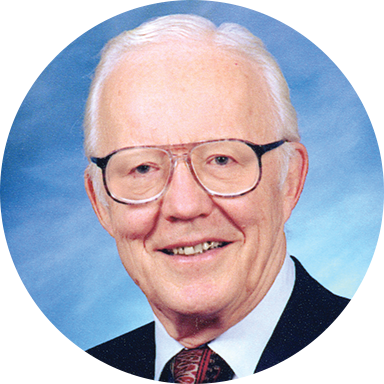
James D. Ployhar has shaped music education through over 800 published compositions and arrangements, earning recognition as one of the field's most prolific and respected voices. His Contemporary Band Course, now published by Alfred Music, has been adopted internationally and translated into French and Norwegian, reflecting the durability of his pedagogical vision. Ployhar studied composition at California State University-Long Beach under Morris Hutchings Ruger and trained in orchestration with Knud Havalde of the Danish Royal Philharmonic Orchestra, grounding his work in both classical technique and ensemble expertise.
Beyond the page, Ployhar spent over 19 years in the public school classroom and has served extensively as a clinician and conductor at the college and university levels. His music has been performed internationally across Europe, Japan, and the Pacific Rim and has aired on network television. The National Band Association honored him with the Citation of Excellence for his contributions to bands and band music, and he received the Distinguished Alumnus Award from Valley City State University.
Why we love this
Ployhar captures the romance of the railroad era without sentimentality, giving a beginning band something genuinely fun to play and an audience something instantly recognizable. The arrangement keeps technical demands minimal while letting every section participate in the storytelling, especially the percussion section, which gets to shine with authentic train whistle effects. At just over a minute, it's the perfect opener or closer that builds energy and personality without wearing out young players.
What to expect
Steam and nostalgia. The arrangement conjures a specific moment in American history with warmth and gentle humor, inviting listeners to share in the romance of rail travel. You hear the rhythmic pulse of the engine, the whistle calling across the landscape, and the honest, tuneful voice of a traditional song that has carried meaning for generations.
Who it's for
Beginning concert bands (Grade 1) ready to step beyond pure technique and play something with character and narrative. Students benefit from the straightforward parts, while conductors gain a piece that teaches musical intention without requiring advanced technical skills.
How to get the most out of it
- Have your percussion section practice the train whistle cue independently before full rehearsals; clarity and timing here set the entire mood of the piece.
- Keep the rhythmic pulse steady and slightly deliberate to evoke the clickety-clack of wheels on track rather than rushing through the tempo.
- Balance the melody voices so that the folk tune stays singing above the supporting harmonies; beginning bands often bury the tune unintentionally.
- Use the conductor score to shape the dynamics around the train whistle entrances; let those moments breathe and command attention.
How to use it
Open a concert with this to set a lighter, more approachable tone, or use it as a closing encore when audiences are ready to smile and applaud something unpretentious. It pairs well in a program that mixes folk traditions with contemporary education literature, and it works beautifully in family concerts or school assemblies where accessibility matters as much as musicality.
Skills your students will build
- Sustaining a steady tempo in 2/4 time
- Balancing melody and accompaniment within ensemble contexts
- Responding to conductor cues for percussion entrances
- Phrase shaping and dynamic control in simple harmonic structures
- Reading multiple parts and following full score layouts