New Rhumba: 2nd E-flat Alto Saxophone Sheet Music Preview

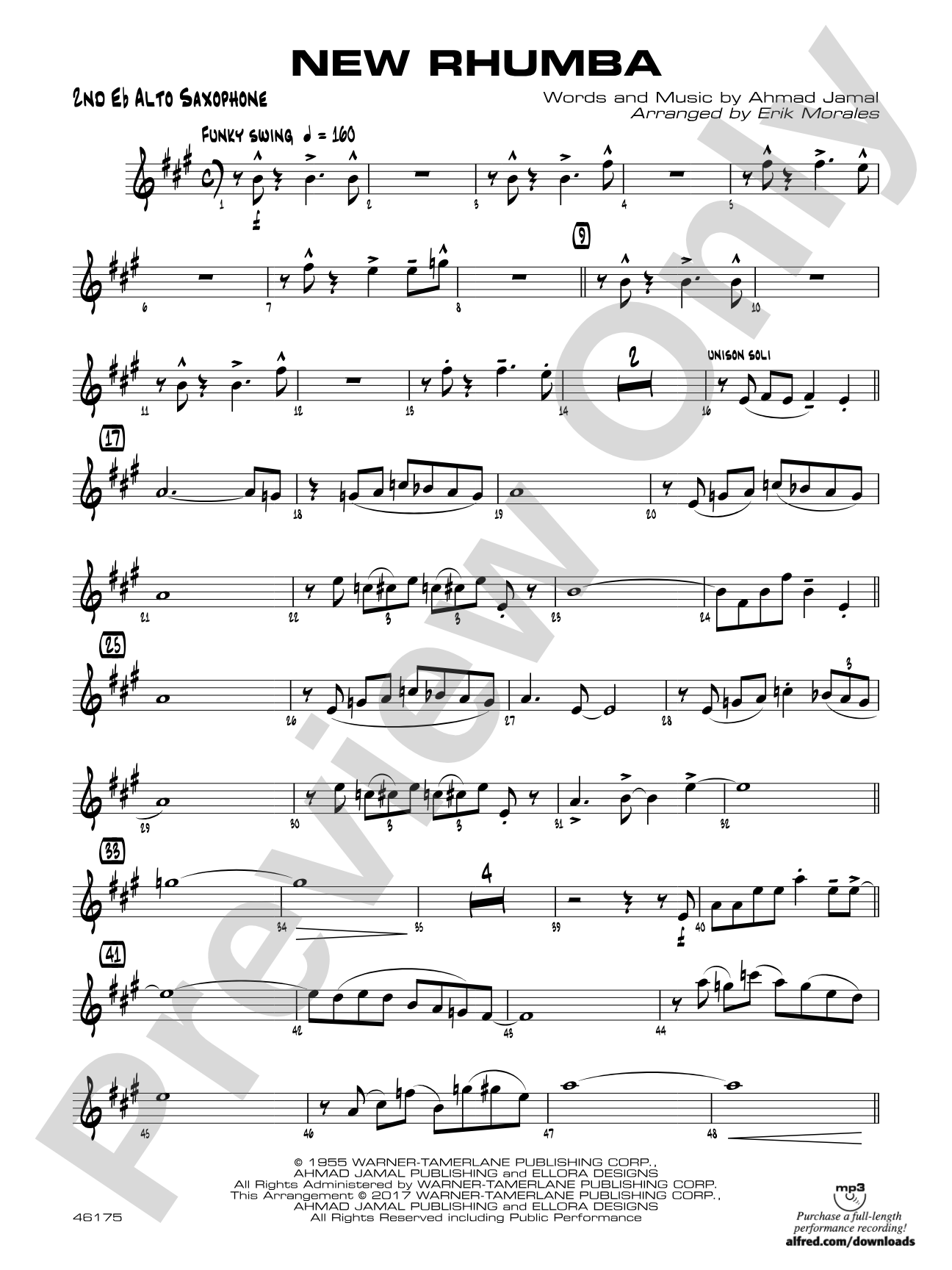
New Rhumba: 2nd E-flat Alto Saxophone

By Ahmad Jamal / arr. Erik Morales

Grade: 3.5 (Medium)

Item: 00-PC-0017764_AX2

Digital Download
$3.00
Description
Played around 160 BPM, this jazz standard , "New Rhumba," was originally recorded by Miles Davis and has now been arranged by Erik Morales. This superb chart is a funky-swing version to provide a contemporary flavor. Solos are provided for tenor and trumpet 2. Brass ranges are accessible with some great sax section solis. Wonderful chart. (4:05)

Don't just read it, hear it, play along with it, and watch your students grow with it. In MakeMusic Cloud, New Rhumba: 2nd E-flat Alto Saxophone comes alive with professional accompaniment, adjustable tempo, and built-in practice tools that turn solo practice into real progress.

Sample Audio
0:00
0:00
Sample Video
Additional Details
Series: Jazz Band Series
Publisher: Alfred Music
Page Count: 102
SKU: 00-PC-0017764_AX2

More about this title

About the Composer: Ahmad Jamal

Ahmad Jamal stands among jazz piano's most influential voices, known for his spare, elegant approach to the instrument and his gift for composing memorable melodies. His work shaped the sound of modern jazz through carefully crafted arrangements that prioritize clarity and compositional sophistication over virtuosic display, influencing generations of musicians across multiple ensembles and settings.

Why we love this

Erik Morales brings fresh energy to a Jamal classic without losing the melody's inherent sophistication. The arrangement sits squarely in the sweet spot for Grade 3.5 ensembles: accessible brass ranges, clear sectional writing, and genuine solo opportunities mean your rhythm section and featured players stay engaged while the full ensemble has real material to sink their teeth into.

What to expect

Cool, grounded, and propulsive. The funky-swing treatment gives the piece a modern edge while Jamal's melodic core keeps it accessible; it feels less like a show-off chart and more like a working jazz ensemble doing what they do best, with style and intention.

Who it's for

Jazz ensembles at the intermediate level who want a contemporary-sounding chart that respects both ensemble voice and individual soloists. Directors programming contests or festivals will find material that engages students without requiring virtuosic chops, while still sounding thoroughly professional on stage.

How to get the most out of it

  • Lock the ride cymbal and walking bass together as your foundational groove; the funk pocket depends on their conversation staying tight and relaxed rather than pushed.
  • Shape the sax section solis with dynamics that let each player breathe; these moments are chances for the section to sound like a cohesive voice, not competing individuals.
  • Build the tenor solo with the rhythm section, letting them respond to the soloist's phrasing rather than plowing ahead mechanically at 160 BPM.
  • Balance the trumpet 2 solo so it sits inside the ensemble sound; this isn't a feature moment pulled away from the arrangement, but a conversation within it.

How to use it

Pair this with other standard arrangements at your level to build a cohesive jazz set, or use it as a centerpiece for a concert that balances older repertoire with contemporary interpretations. The four-minute runtime and festival-ready quality make it ideal for mixed-program concerts where jazz sits alongside other genres.

Skills your students will build

  • Comping changes and swing feel at medium tempo (160 BPM)
  • Solo construction over jazz blues or standard changes
  • Ensemble blend and balance in contemporary funk-swing style
  • Reading sectional soli writing with independence from the ensemble
  • Rhythm section groove and interaction

You May Also Like