New Orleans Nocturne Sheet Music Preview

New Orleans Nocturne: Piano

By Elizabeth W. Greenleaf

Item: 98-DW9095

Digital Download
$2.50
Description
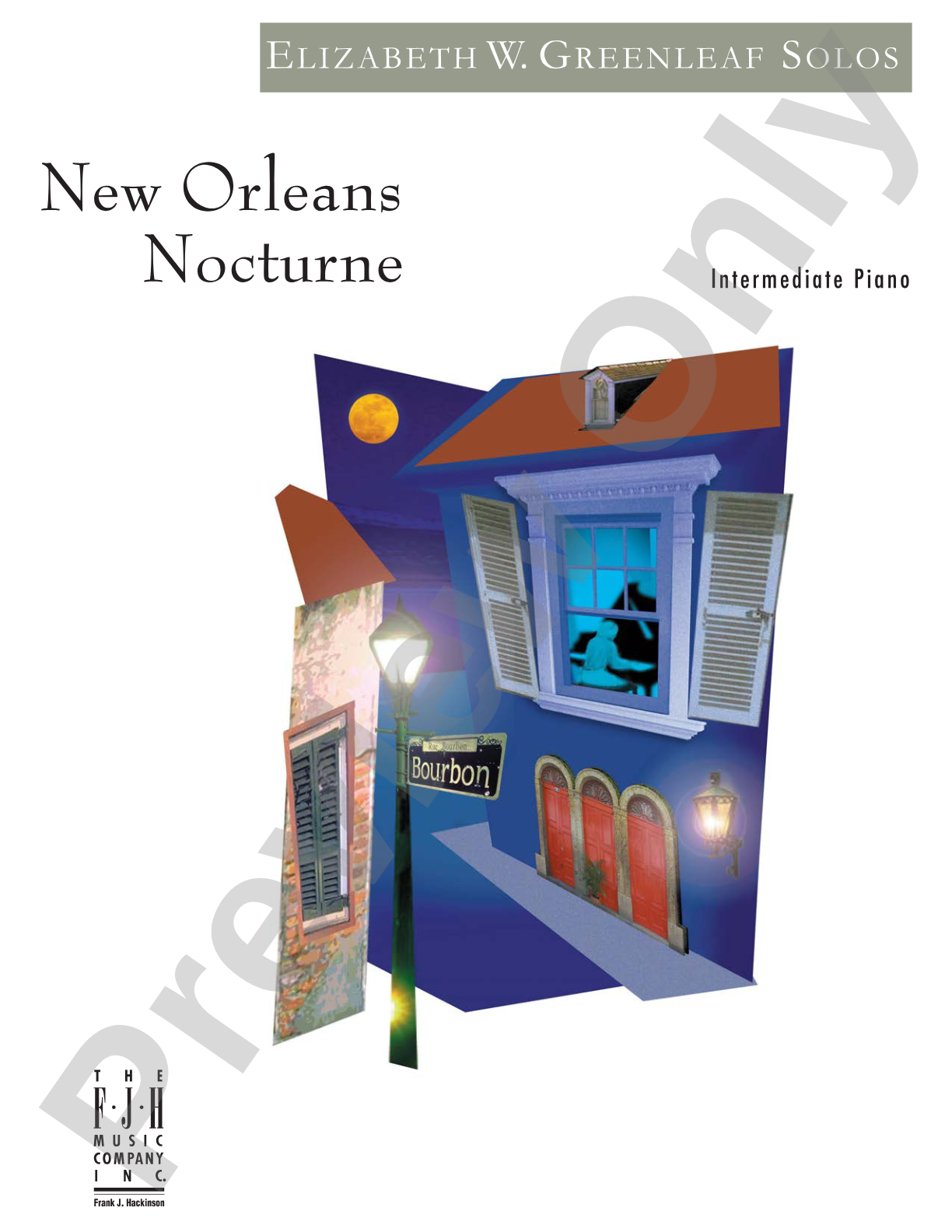
This sultry and expressive melody captures the essence of the classic New Orleans blues sound. It features the key of C minor, swing rhythm, triplets, and 7th chords in the left hand.

New Orleans Nocturne: Piano isn't in MakeMusic Cloud just yet...but it could be. Let us know you'd like to see it, and you'll help shape what comes next. In the meantime, start a free trial and dive into thousands of interactive titles your students can play along with today.

Sample Audio
No sample audio found.
Sample Video
Additional Details
Series: Written For You
Publisher: The FJH Music Company, Inc.
SKU: 98-DW9095

More about this title

Why we love this

Greenleaf captures authentic New Orleans blues vocabulary without oversimplifying it. The combination of swing rhythm, 7th chords, and triplet figures demands real musicality from intermediate pianists rather than just technical accuracy, and that's what makes it rewarding to hear students finally nail the groove.

What to expect

Warm and moody, like stepping into a dimly lit jazz club where the piano player knows exactly how much space to leave between phrases. The C minor tonality grounds the piece in something introspective, while the swing rhythm keeps it alive and conversational.

Who it's for

Intermediate pianists ready to explore jazz harmony and blues idioms within a classical solo context. This piece works well for students who have solid technique but need guidance interpreting swing rhythm and understanding chord function beyond major and minor triads.

How to get the most out of it

  • Anchor the left hand's 7th chords early in rehearsal. These voicings define the blues color, so spend time getting comfortable with their feel before layering in the melody.
  • Approach the triplets as a rhythmic conversation between hands rather than a mechanical subdivision. The right hand should breathe with the left hand's swing feel.
  • Balance expression with restraint. The sultry character comes from subtle dynamic shaping and slight tempo breathing, not broad rubato.

How to use it

Include this in a recital set exploring American songwriting traditions, or pair it with classical nocturnes to show students how the nocturne form appears across musical genres. It also serves as an engaging bridge piece for concert programs where you want to shift mood without leaving the keyboard entirely.

Skills your students will build

  • Reading and executing swing rhythm with triplet subdivisions
  • Voicing and performing 7th chords in a blues harmonic context
  • Balancing melody and accompaniment in the left hand while maintaining groove
  • Interpreting jazz expression and phrasing within written notation
  • Understanding C minor tonality in a contemporary rather than classical context

You May Also Like