New Orleans Low Down: Piano Digital Sheet Music

New Orleans Low Down: Piano Digital Sheet Music

Duke Ellington

Item: 00-PS-0004942

Digital Download
$3.99
Description

New Orleans Low Down: Piano Digital Sheet Music isn't in MakeMusic Cloud just yet...but it could be. Let us know you'd like to see it, and you'll help shape what comes next. In the meantime, start a free trial and dive into thousands of interactive titles your students can play along with today.

Sample Audio
No sample audio found.
Sample Video
Additional Details
SKU: 00-PS-0004942

More about this title

About the Artist: Duke Ellington

Duke Ellington (1899-1974) reshaped American music by elevating jazz from dance hall novelty to concert art. His compositions blend complex harmonies, subtle orchestration, and blues sensibility into works that satisfy both the ear seeking immediate pleasure and the mind seeking harmonic depth. Ellington's output spanned five decades and included hundreds of compositions, many of which have become standards taught in jazz curricula worldwide.

Why we love this

Ellington's stride piano writing sits in that rare middle ground where it sounds effortless but demands genuine technique. The New Orleans reference anchors the piece in jazz tradition while the harmonic language keeps ears engaged, making it equally rewarding for students exploring jazz vocabulary and pianists looking for sophisticated repertoire with character.

What to expect

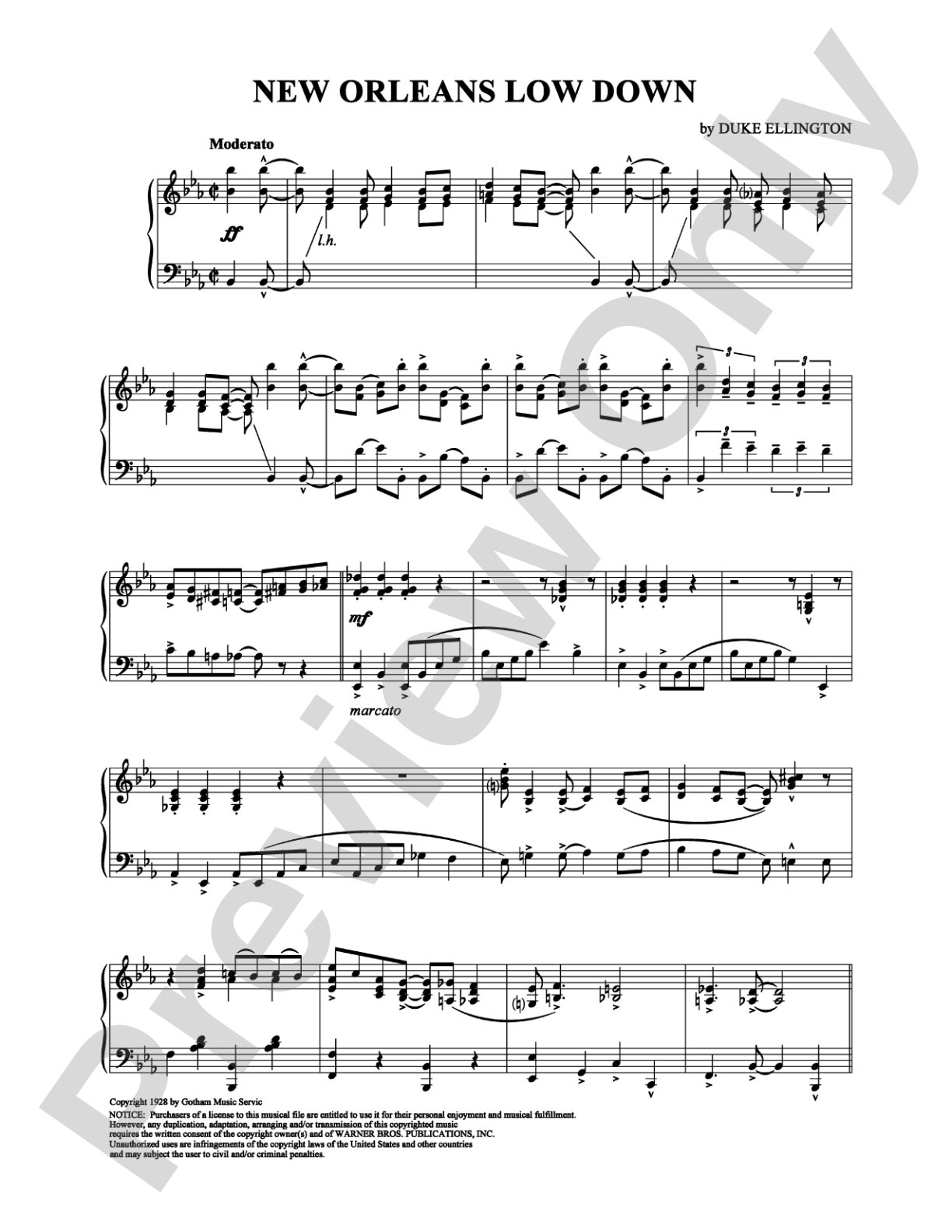
The piece evokes the gritty, swaying atmosphere of early New Orleans jazz slowed to a contemplative tempo. You feel the weight and warmth of the stride pattern, the bluesy bent notes, and Ellington's signature chromatic voice-leading that makes simple chord changes feel endlessly sophisticated.

Who it's for

This digital score serves pianists exploring jazz standards and stride technique, from advanced secondary students to adult learners and performers preparing recital material. It also works for students in jazz history or theory classes seeking a famous example of Ellington's harmonic sophistication and keyboard writing.

How to get the most out of it

  • Shape the left hand stride pattern with rhythmic clarity; let the bass note land ahead of the chord slightly so the pulse stays forward and conversational rather than mechanical.
  • Honor the blues inflections and chromatic passing tones without over-sweetening them; Ellington's harmonies work best when the touch remains direct.
  • Balance accompaniment and melody by keeping the stride pattern in the background even when it covers a wide range; the right-hand voice should always read as primary.
  • Explore dynamics within the accompaniment figures themselves; subtle swells and leans in the left hand add the swagger the title promises.

How to use it

Feature this as a solo recital piece for an advanced pianist, or pair it with other Ellington compositions to build a set exploring his piano writing across different eras. It also serves jazz history courses as a primary source for discussing stride piano and jazz harmony.

Skills your students will build

  • Stride piano technique and left-hand independence
  • Jazz harmonic language and chromatic voice-leading
  • Blues phrasing and articulation in a written context
  • Balancing accompaniment texture with melodic prominence
  • Reading and performing jazz notation and inflections

You May Also Like