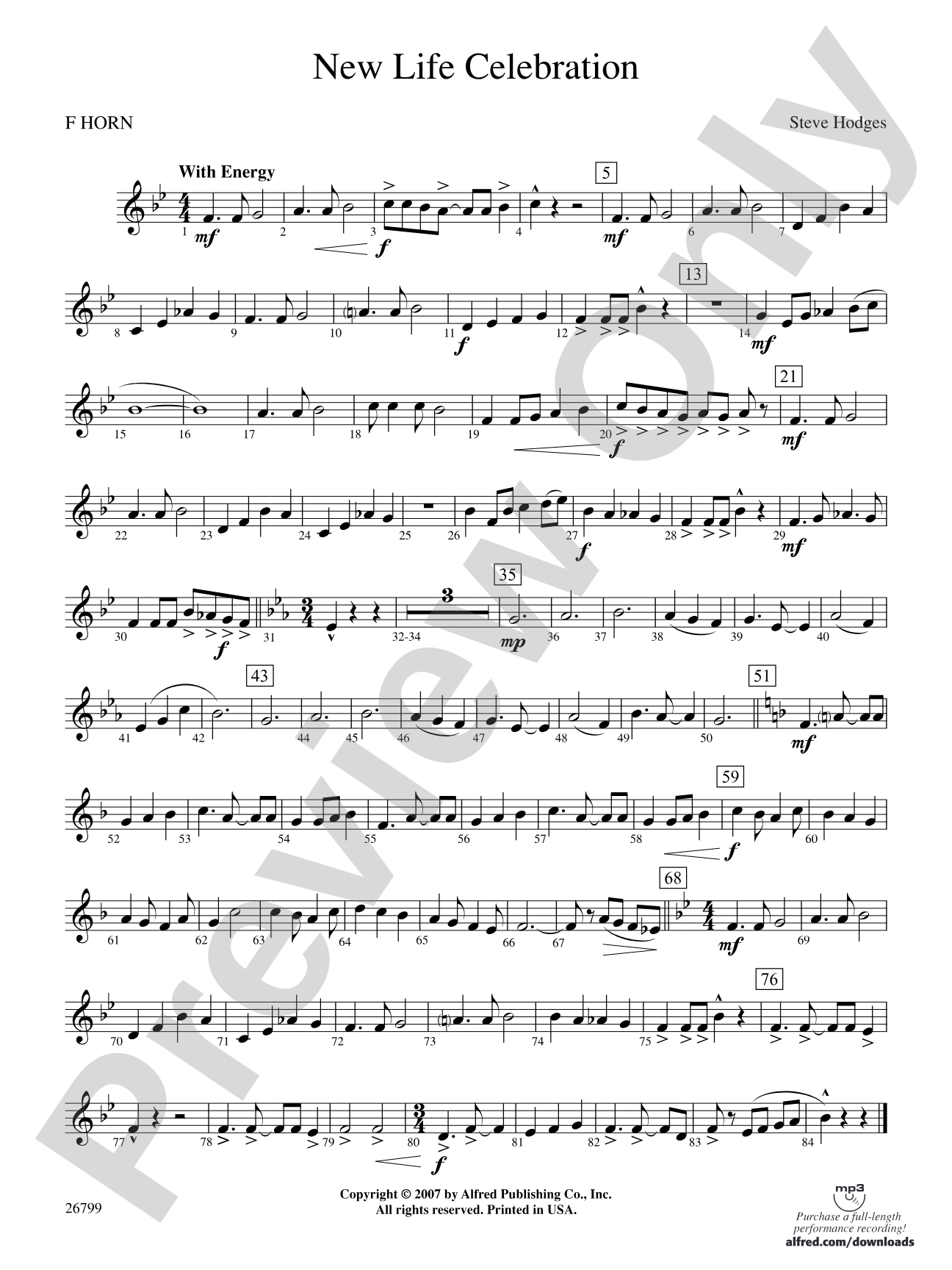
New Life Celebration: 1st F Horn Sheet Music Preview

New Life Celebration: 1st F Horn

By Steve Hodges

Grade: 1.5 (Easy)

Item: 00-PC-0001237_H1

Digital Download
$3.00
Description
Here is an exciting composition celebrating the joy and promise of new life. All sections of the band will enjoy the opportunity to present the melodic and harmonic material throughout. This piece is full of energy from beginning to end! This title is available in MakeMusic Cloud.

Don't just read it, hear it, play along with it, and watch your students grow with it. In MakeMusic Cloud, New Life Celebration: 1st F Horn comes alive with professional accompaniment, adjustable tempo, and built-in practice tools that turn solo practice into real progress.

Sample Audio
0:00
0:00
Sample Video
Additional Details
Series: Challenger Band Series
Publisher: Alfred Music
Page Count: 67
SKU: 00-PC-0001237_H1

More about this title

About the Composer: Steve Hodges

Steve Hodges

Steve Hodges holds degrees from Western Oregon University (Bachelor of Science) and Central Washington University (Master of Music Education). Over four decades in public school music education, he directed concert and marching bands, choirs, and chamber ensembles across multiple grade levels before retiring from full-time teaching.

Since 1986, Hodges has composed and published more than 120 concert band works through Alfred Music, along with choral arrangements through Staff Music and Shawnee Press. His music has appeared at festivals and state conventions worldwide and been commissioned by honor bands and schools in Virginia, Iowa, Winnipeg, British Columbia, Oregon, Washington, and North Carolina. His compositions have also been featured on TBS and ESPN programming. As an ASCAP member, Hodges continues to enjoy watching his grandchildren perform his works in their school bands from his home in The Dalles, Oregon.

Why we love this

Hodges writes with the practical confidence of someone who spent forty years on the podium, and it shows here. Every section gets substantial melodic material, which means your students feel like they're playing something real, not just supporting harmonies. The energy never flags, making this a perfect opener or closer when you need immediate engagement.

What to expect

From the opening note, this piece radiates brightness and forward momentum. The melodies are singable and memorable, buoyed by harmonic support that shifts between sections, creating texture without complexity. The overall effect is celebratory and uplifting, the kind of music that leaves an audience smiling.

Who it's for

This Grade 1.5 piece serves developing bands that are ready for more rhythmic and harmonic sophistication than beginner literature but still need accessible ranges and straightforward techniques. It works equally well for honor bands, festival performances, and concert programs where you want repertoire that energizes both players and audience.

How to get the most out of it

  • Keep the tempo steady and buoyant; resist the urge to drag or rush in moments of harmonic density. A metronome or click track during rehearsals pays dividends.
  • Balance the melodic line as it passes between woodwinds, brass, and lower voices. Mark exposed passages in rehearsal so players know when they're carrying the tune.
  • Emphasize rhythmic precision in tutti moments. Crisp articulation across all sections prevents the texture from becoming muddy despite the energy.
  • Give attention to the harmonic resolutions and cadences; even at this grade level, clean voicing makes the celebratory character land with more impact.

How to use it

Open a concert with this piece to establish an optimistic mood and showcase your band's ensemble control at an accessible level. It pairs well with more introspective or technically demanding works later in the program, providing contrast and relief. Consider it for spring or end-of-year celebrations where the thematic content aligns with program themes of growth and renewal.

Skills your students will build

  • Reading and executing sustained harmonic progressions across multiple voices
  • Balancing sectional melodies within a full ensemble texture
  • Maintaining steady tempo and rhythmic precision during energetic, sustained passages
  • Responding to dynamic and articulation changes that shape melodic phrasing

You May Also Like