Never Let Go of Your Dream Cover Image

Never Let Go of Your Dream: 3-Part Mixed Choral Octavo

$1.60 USD
Sale price  $1.60 USD Regular price 
Skip to product information
Never Let Go of Your Dream Cover Image

Never Let Go of Your Dream: 3-Part Mixed Choral Octavo

Words and music by Mary Donnelly and George L. O. Strid

Level: Moderate

Item: 00-SVM04068

$1.60
Shipped

One moment…

Description
Inspiring lyrics combined with a singable melody make this Donnelly and Strid original offering a sure-fire hit with your younger choirs. "Keep your eye on the rainbow and watch your dreams come true" is the recurring message.

Never Let Go of Your Dream: 3-Part Mixed Choral Octavo isn't in MakeMusic Cloud just yet...but it could be. Let us know you'd like to see it, and you'll help shape what comes next. In the meantime, start a free trial and dive into thousands of interactive titles your students can play along with today.

Sample Pages

No sample pages found.

Sample Audio
No sample audio found.
Sample Video
Additional Details
Publisher: Alfred Music
UPC: 654979079507
SKU: 00-SVM04068

More about this title

About the Composer: Mary Donnelly
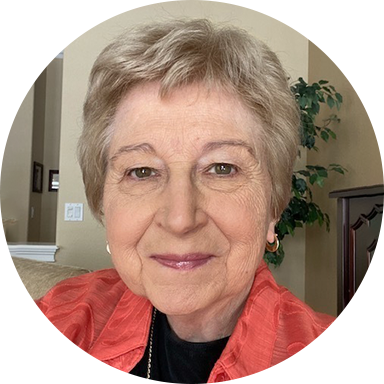
Mary Donnelly

Mary Donnelly grew up in Reno, Nevada, and studied English and French at the University of Nevada, Reno. While still an undergraduate, she founded two children's choruses, an experience that redirected her toward music education. She earned a Master's Degree in Education from Lesley College in Cambridge, Massachusetts, where she focused on integrating the arts across the curriculum.

Donnelly spent thirty years teaching general music and choir in the Washoe County schools, retiring as an active educator and member of ACDA, NEA, and ASCAP. In 1985, while team-teaching with George L. O. Strid, she began a prolific songwriting partnership that has produced over two hundred songs and twenty-five musicals. She and her husband Rich remain based in Reno.

Why we love this

Donnelly and Strid write with middle school choirs in mind, and it shows. The melody sits comfortably in the range of developing singers while the three-part writing stays transparent enough that students can hear their own part without drowning out the ensemble. The text delivers genuine encouragement without resorting to saccharine language, giving singers something meaningful to perform rather than sing along with.

What to expect

Bright and optimistic without being artificial. The melody has shape and purpose, moving the text forward naturally while keeping the harmonic language accessible. Singing this piece should feel like a collective pep talk, energizing rather than exhausting.

Who it's for

Middle school choirs looking for repertoire that builds confidence and ensemble cohesion. The moderate difficulty level and uplifting message work well for groups with mixed experience levels, including some singers encountering three-part harmony for the first time.

How to get the most out of it

  • Emphasize the recurring lyrical hook (Keep your eye on the rainbow) by having singers connect emotionally to the message rather than rushing through the text. Slower, more deliberate phrasing lets younger singers own the meaning.
  • Balance the three parts equally during sectional work. Middle schoolers often underestimate the importance of the middle voice; isolate the SAB parts and have students listen to how each line supports the whole.
  • If using the recorded accompaniment, have singers practice without it first so they develop independence and understand the harmonic structure before relying on the track.

How to use it

This works beautifully as a concert opener or closer, especially at spring programs when you want to send families out uplifted. It also pairs well alongside other secular selections in a middle school concert set or serves as an affirming piece during back-to-school season.

Skills your students will build

  • Singing in three-part SAB voicing with rhythmic and melodic independence
  • Sustaining legato phrasing while maintaining text clarity
  • Listening to and balancing multiple vocal lines in an ensemble setting
  • Connecting emotional content to vocal performance

You May Also Like