
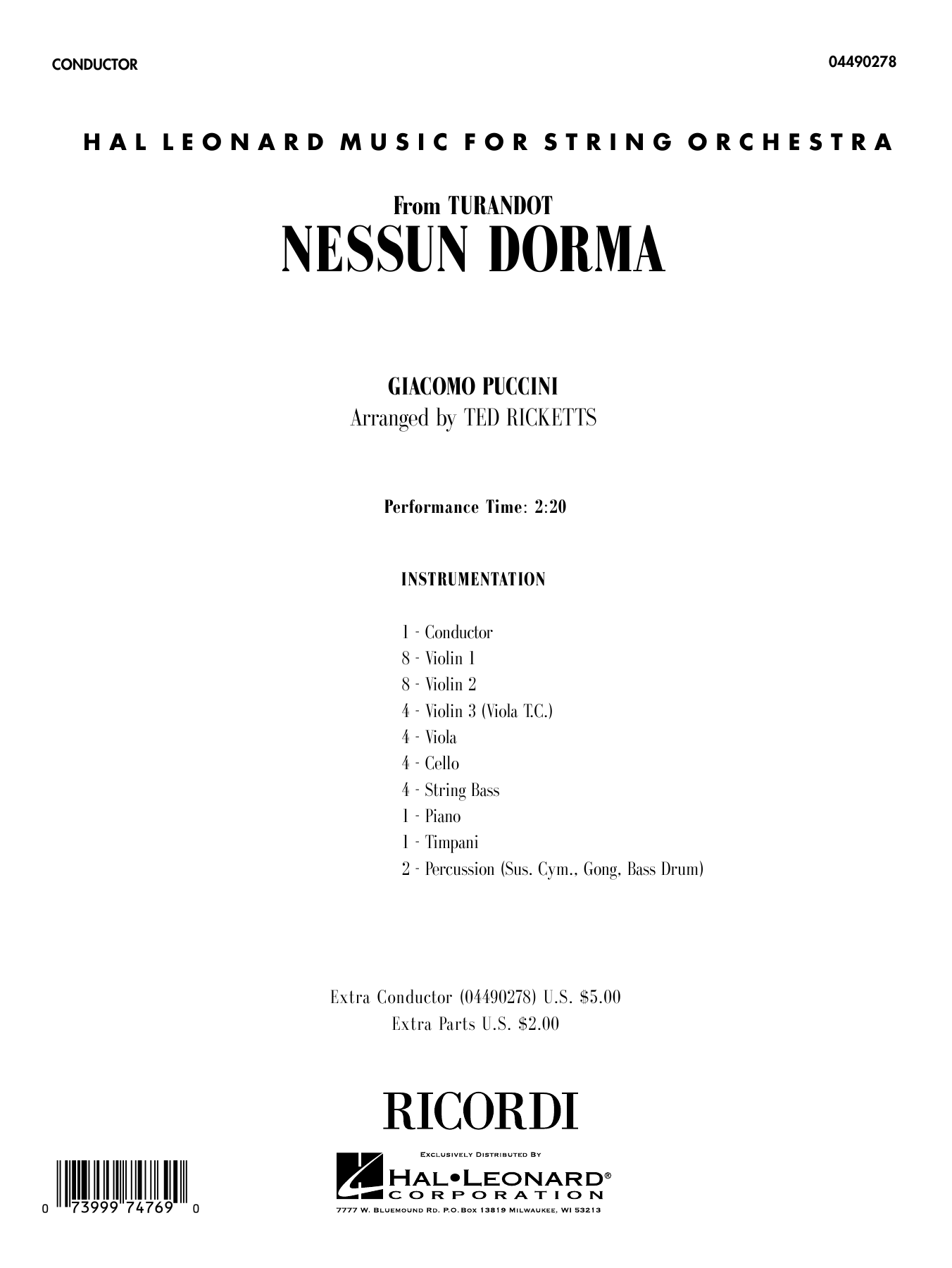

Nessun Dorma (from Turandot) (arr. Ted Ricketts): String Orchestra Conductor Score & Parts
Arranged by Ted Ricketts
Grade: 3-4
Item: 35-PK01412733
$45.00
Pickup currently not available
Buy Extra Parts (Digital PDF Download)
Parts Added to Cart!
Description
The singing style of Puccini's most famous aria translates wonderfully for string orchestra with this new arrangement by Ted Ricketts. This edition provides ample opportunity to teach both sensitive, expressive playing as well as powerful, dramatic style.


Nessun Dorma (from Turandot) (arr. Ted Ricketts): String Orchestra Conductor Score & Parts isn't in MakeMusic Cloud just yet...but it could be. Let us know you'd like to see it, and you'll help shape what comes next. In the meantime, start a free trial and dive into thousands of interactive titles your students can play along with today.
Request This Title
Tell us you want it.
Start Your Free Trial
Explore everything that's ready to play right now.
Sample Audio
No sample audio found.
Sample Video
No sample videos found.
Additional Details
Publisher:
Hal Leonard
SKU:
35-PK01412733
More about this title
About the Arranger: Ted Ricketts
Ted Ricketts is an accomplished arranger whose work spans multiple genres and ensemble configurations. His arrangements are known for their musicality and pedagogical sensitivity, maintaining the integrity of original compositions while adapting them thoughtfully for student performers.
Why we love this
Ricketts captures the vocal lyricism of Puccini's masterpiece without oversimplifying the harmonic language or emotional arc. The arrangement honors both the intimate vulnerability and soaring passion of the original, giving string players a chance to inhabit the dramatic storytelling that makes this aria so compelling.
What to expect
Romantic, urgent, and deeply human. The arrangement preserves Puccini's gift for sweeping melody and harmonic color, wrapping listeners in the tension between longing and resolution that defines this aria. String tone carries the emotional weight with directness and warmth.
Who it's for
String orchestras at the upper intermediate level who are ready to tackle expressive, character-driven repertoire with harmonic sophistication. This works equally well for ensembles building toward more advanced opera arrangements or for programs seeking substantial concert pieces beyond simple classical compilations.
How to get the most out of it
- Shape the opening melody with rubato, allowing breaths between phrases as if the strings are singing the text. This prevents the line from feeling mechanical despite instrumental delivery.
- Differentiate dynamics across the ensemble carefully in passages where accompaniment figures support the melody. Supporting instruments should recede without losing their harmonic support.
- Locate the climactic moment and build toward it with intentional intensity, marking where the drama peaks and then subsides. This prevents energy from plateauing across the whole piece.
- Balance vibrato and tone quality between sections so that sustained notes don't overwhelm the moving parts that carry harmonic interest.
How to use it
Pair this with lighter classical works to anchor a concert's emotional center, or position it as a bridge between pure orchestral repertoire and full operatic works. It also serves beautifully as a centerpiece for a concert exploring opera and opera arrangement, demonstrating how vocal music translates to instrumental ensembles.
Skills your students will build
- Sustaining long, expressive phrases without breaking musical line
- Balancing homophonic textures with singing melody and supporting accompaniment
- Controlling vibrato and tone color to convey emotional intent
- Responding to rubato and conducting with sensitivity to phrase shape
- Executing dramatic dynamic contrast across extended passages