Nessun Dorma Sheet Music Preview

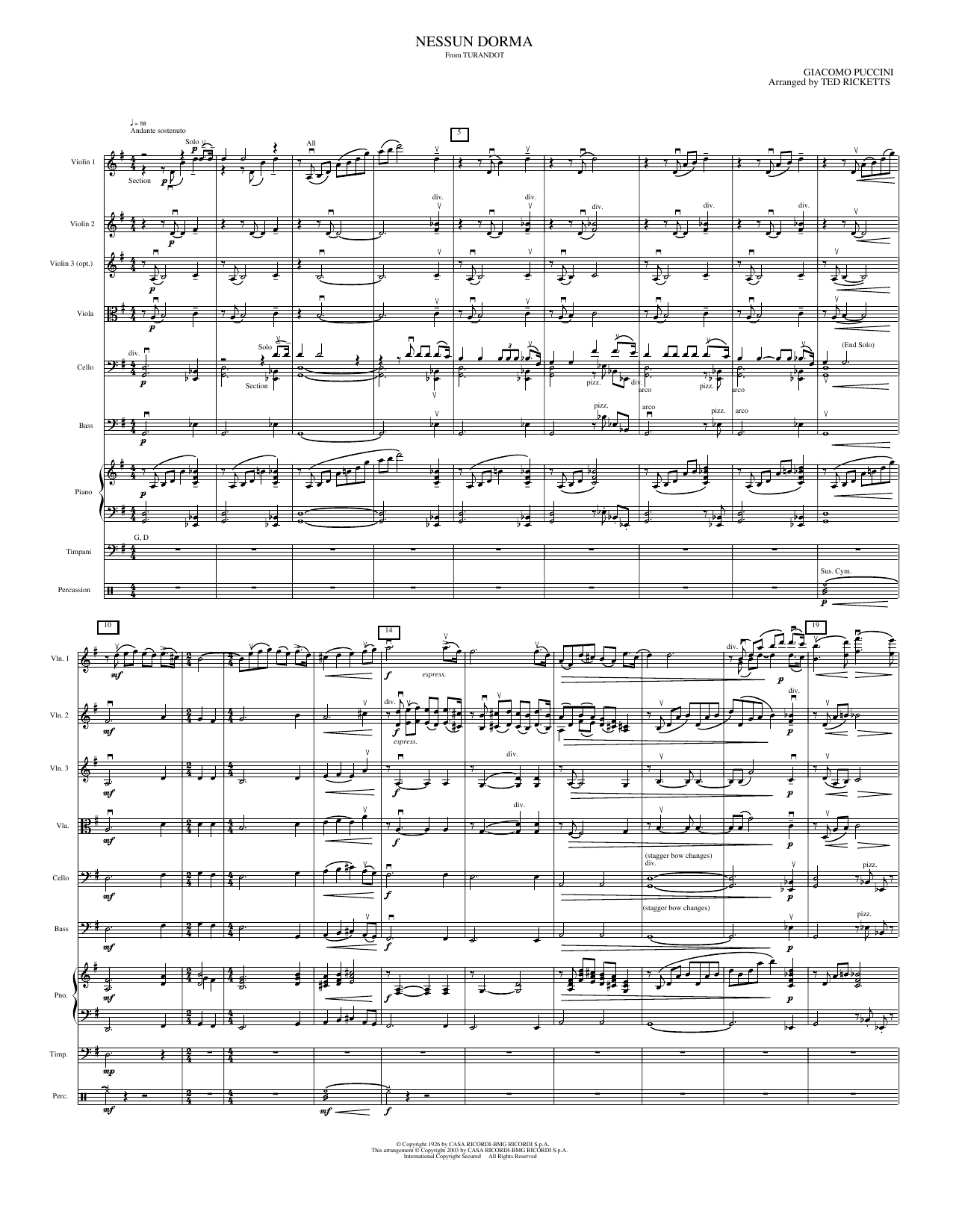
Nessun Dorma: String Orchestra Conductor Score & Parts

By Giacomo Puccini / Arranged by Ted Ricketts

Grade: 3-4

Item: 35-PK00426659

Digital Download
$45.00

Buy Extra Parts (Digital PDF Download)

Product Price Quantity
Nessun Dorma - Full Score $45.00

Parts Added to Cart!

Description
Nessun Dorma

Nessun Dorma: String Orchestra Conductor Score & Parts isn't in MakeMusic Cloud just yet...but it could be. Let us know you'd like to see it, and you'll help shape what comes next. In the meantime, start a free trial and dive into thousands of interactive titles your students can play along with today.

Sample Audio
No sample audio found.
Sample Video
Additional Details
Publisher: Hal Leonard
SKU: 35-PK00426659

More about this title

About the Composer: Giacomo Puccini

Giacomo Puccini (1858-1924) stands as one of the most performed operatic composers in the world, known for his gift for melody and his ability to craft deeply human dramatic moments. His operas dominated the late 19th and early 20th century stages, and his influence on musical theater remains unmatched. For string orchestra players, Puccini's work offers direct access to the soaring melodic lines and rich harmonic language that define his compositional genius.

Turandot, from which Nessun Dorma originates, represents Puccini at the height of his powers. The opera showcases his mastery of orchestration and his understanding of how to build emotional intensity through repetition, harmonic tension, and instrumental color. This aria has transcended its operatic origins to become a cornerstone of concert repertoire across ensembles of all kinds.

Why we love this

Puccini wrote melodies that lodge themselves in the listener's mind immediately, and Nessun Dorma is perhaps his most iconic creation. This arrangement gives your string orchestra a chance to claim one of opera's greatest moments without requiring singers, and the Grade 3-4 scoring makes it accessible without sacrificing the emotional weight that makes this aria so universally beloved.

What to expect

Hope breaking through darkness. The opening unfolds like a secret being whispered in the night, then grows into a declaration of absolute certainty and love. There's urgency beneath the lyricism, a sense that everything depends on this moment, and the melody itself carries an almost spiritual quality that transcends its origin as a man's prayer for his beloved.

Who it's for

String orchestra directors working at the intermediate level who want to program a piece that connects students to genuine operatic repertoire. This works equally well for groups seeking a showstopper concert piece or a meaningful encounter with one of music history's most important melodic voices.

How to get the most out of it

  • Shape the opening statement generously; this melody demands space and breath, even in a purely instrumental setting. Resist the urge to rush into the first phrase.
  • Balance the inner voices carefully during the restatements of the theme. The magic of this music lives partly in how Puccini layers the melody against supporting harmonies, so ensure second violins and violas have clarity.
  • Build the climax by deepening your sound rather than forcing faster tempo. Puccini's original orchestration gains power through harmonic richness and full ensemble engagement, not acceleration.
  • Sustain the final cadence fully. This is Calaf's moment of triumph, and your orchestra should ring with confidence through the final resolution.

How to use it

Position this as a centerpiece work in a concert showcasing classical and operatic favorites, or pair it with other transcriptions of famous operatic moments to build a thematic program around opera for non-opera audiences. It also serves beautifully as a spring concert opener that immediately signals to your audience that something special is about to unfold.

Skills your students will build

  • Sustaining long, singing lines with consistent tone and intonation across entire phrases
  • Balancing melody against harmonic accompaniment without allowing inner voices to disappear
  • Building emotional intensity through dynamics and harmonic depth rather than tempo changes
  • Playing with vibrato control to match the operatic character of the writing
  • Coordinating ensemble entries and exits when the melody passes between sections

You May Also Like