Words and music by Giacomo Puccini / arr., with English lyrics, by Douglas E. Wagner
Item: 00-PO-0007005
Digital Download
$2.05
Minimum order quantity: 10 copies
Please note: Under U.S. copyright law, you must purchase the exact number of copies needed for your ensemble. Printing, duplicating or sharing additional copies is strictly prohibited.
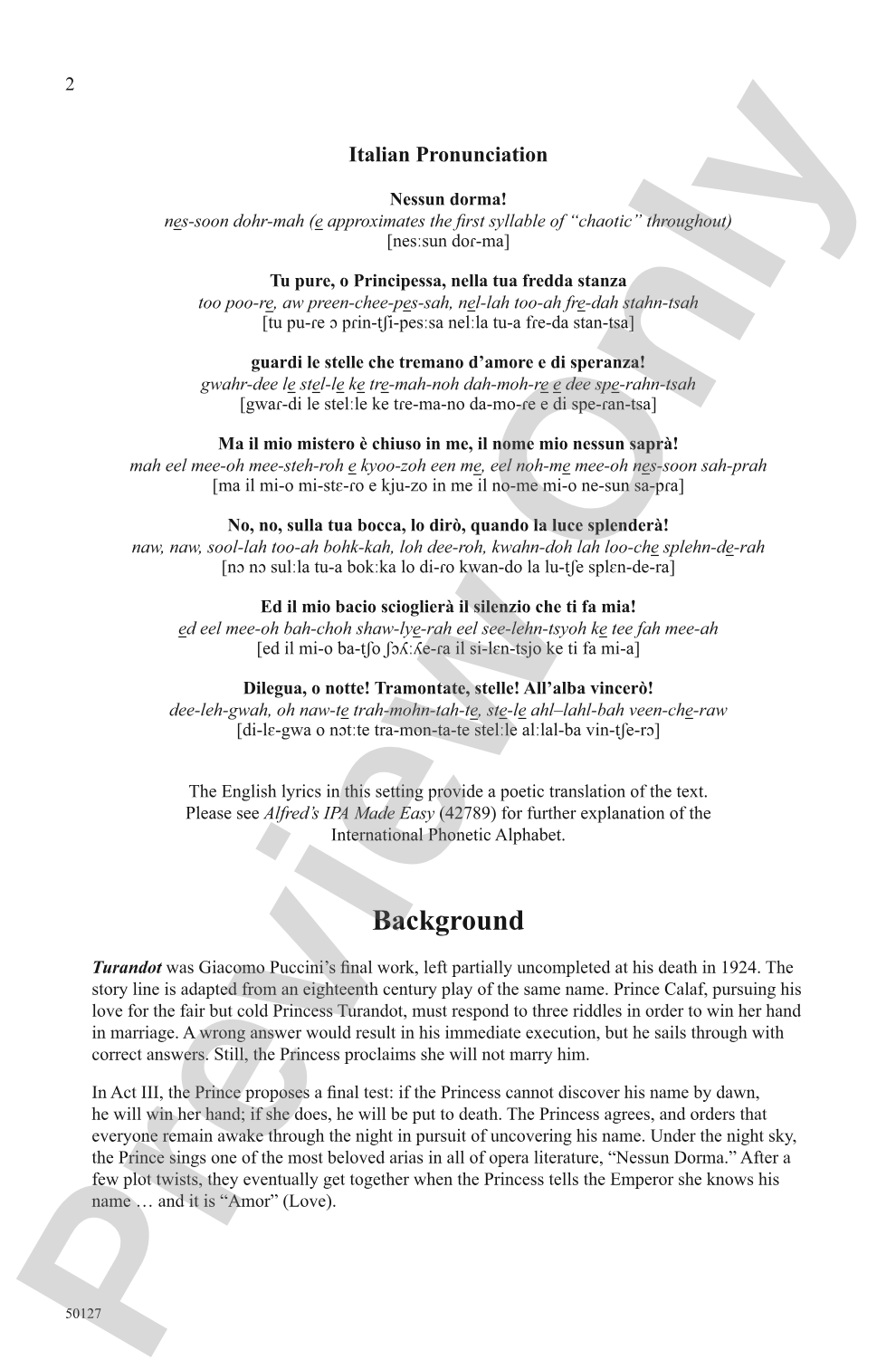
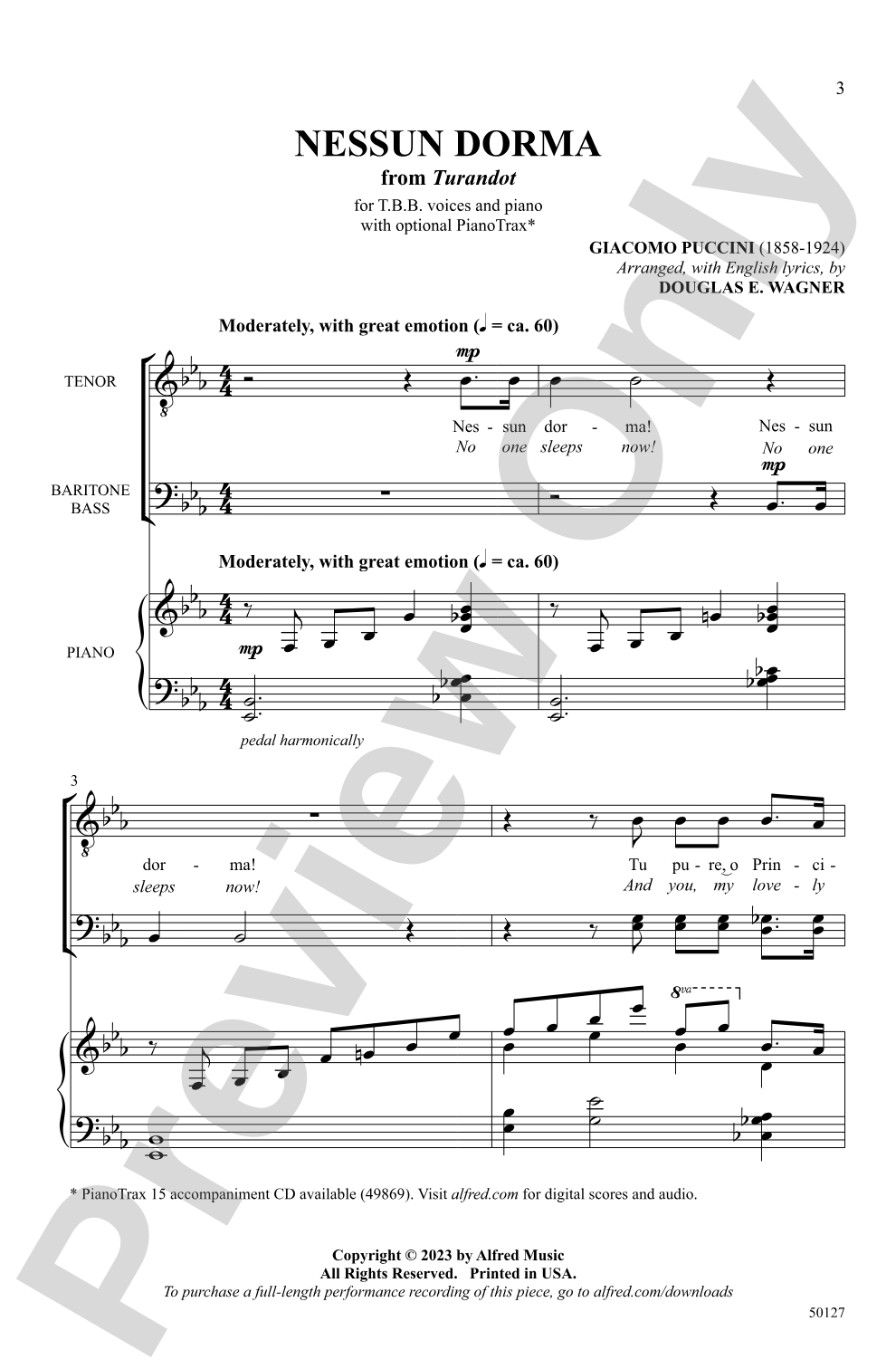
Looking for that ultimate finale, encore, or jaw-dropper? Don't miss this iconic Italian operatic theme, smartly arranged for TBB choirs. With carefully constructed voice parts, an appropriate choral key, and an optional English text, this setting is well-suited for changed voices of any age. The included IPA, phonetic pronunciation guide, and background information will assist in telling a classic love story from Puccini's Turandot.
Discover MakeMusic Cloud: thousands of interactive titles your students can play along with today.
Giacomo Puccini (1858-1924) stands as one of the most performed opera composers in the world, and his gift for melody remains unmatched in the operatic repertoire. His works center on human emotion and dramatic storytelling, qualities that have made his operas enduring fixtures of concert halls and recital stages alike. Puccini's influence extends far beyond the opera house; his themes have become accessible entry points for singers and musicians at all levels to experience the richness of Italian opera.
Why we love this
Wagner's arrangement captures the soaring lyricism and emotional weight of this Puccini classic while making it genuinely singable for unchanged and newly changed voices. The inclusion of IPA, phonetic guides, and optional English text removes barriers to performance without sacrificing the authenticity of this beloved aria. Few pieces deliver such immediate impact and audience recognition at the concert finale.
What to expect
Nessun Dorma radiates passionate declaration and romantic urgency. The melody soars with dignity and warmth, inviting singers to inhabit the character of Calaf as he declares his love and stakes his life on his identity remaining secret. This is music that demands emotional commitment and rewards singers with one of opera's most iconic, unforgettable themes.
Who it's for
This octavo works beautifully for TBB choirs with mixed maturity levels, from high school groups with newly changed voices to community and adult choirs. Directors seeking a showstopping finale or concert encore will find this arrangement delivers immediate impact without requiring extreme vocal range or technical complexity from any voice part.
How to get the most out of it
Shape the melodic line with breath control in mind; frame the most expansive phrases where your singers can sustain comfortably without strain, and let diction serve the storytelling rather than fight against the melody.
Lean into the rubato inherent in this Italian idiom. This is not a piece that benefits from metronomic precision; allow your choir the freedom to breathe with the text and respond to the emotional arc of Calaf's declaration.
If using the recorded accompaniment, rehearse several times with it to let singers internalize the harmonic support and build confidence with the orchestral texture before performing.
Balance the upper and lower voice parts carefully in rehearsal; the arrangement requires both sections to carry significant melodic material, so neither should be buried beneath the other.
How to use it
Reserve this for a concert-closing moment when you want the audience to leave with the resonance of a major operatic statement. It also stands out as a standout festival or competition selection, offering the combination of recognizable melody, solid choral writing, and the prestige of Puccini. Consider pairing it with other art song arrangements or lighter contemporary works earlier in the program to create dramatic contrast.
Skills your students will build
Singing Italian text with authentic vowels using IPA and phonetic guides
Shaping long, sustained melodic lines with proper breath management
Balancing individual voice parts when both carry significant thematic material
Interpreting rubato and expressive timing within an operatic idiom
Understanding and performing music from the Romantic opera tradition
You May Also Like
Scan to Complete Your Purchase
Use your phone's camera to scan the code below
You'll log in on your phone and the order will be added to your account