
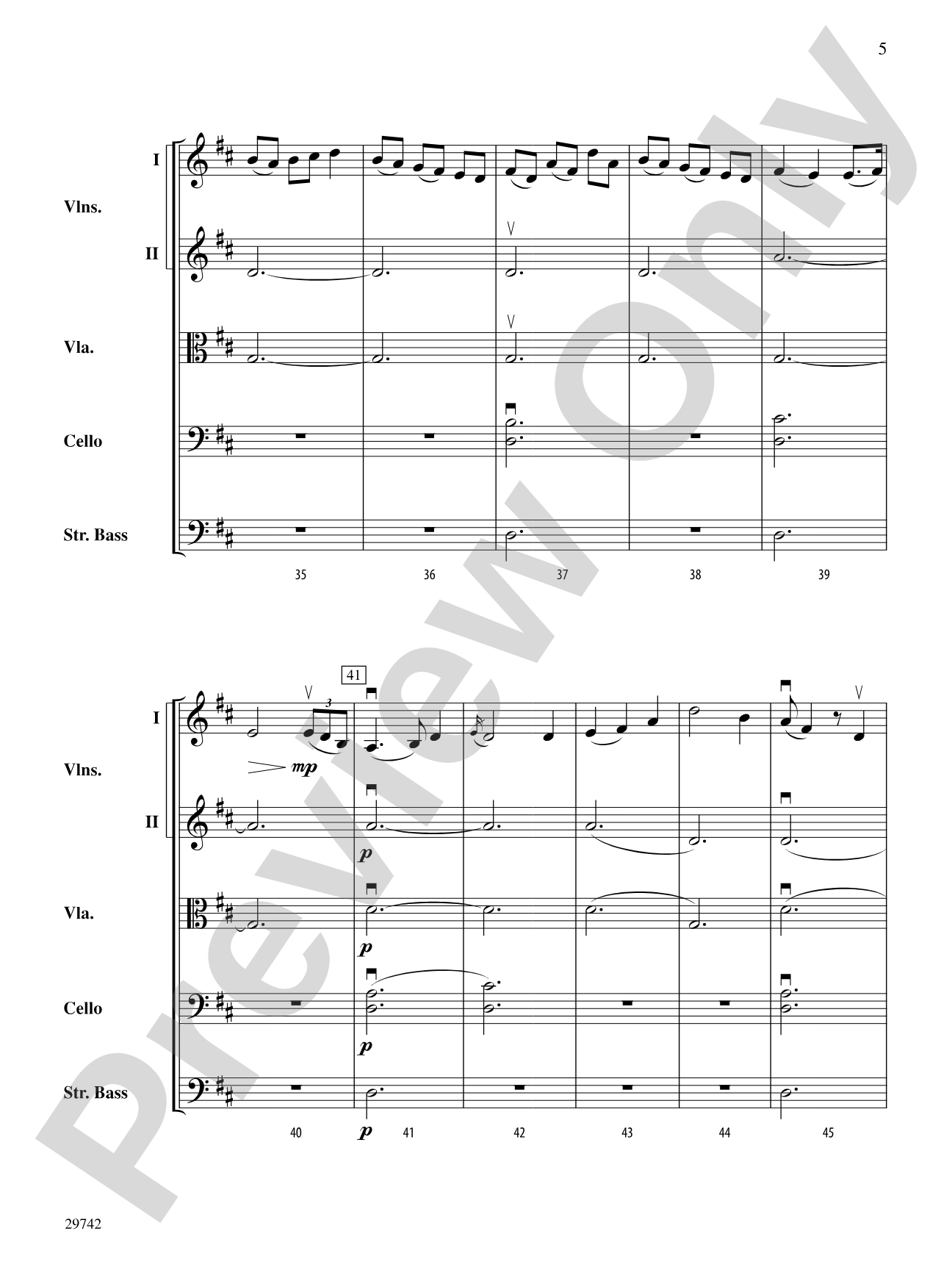
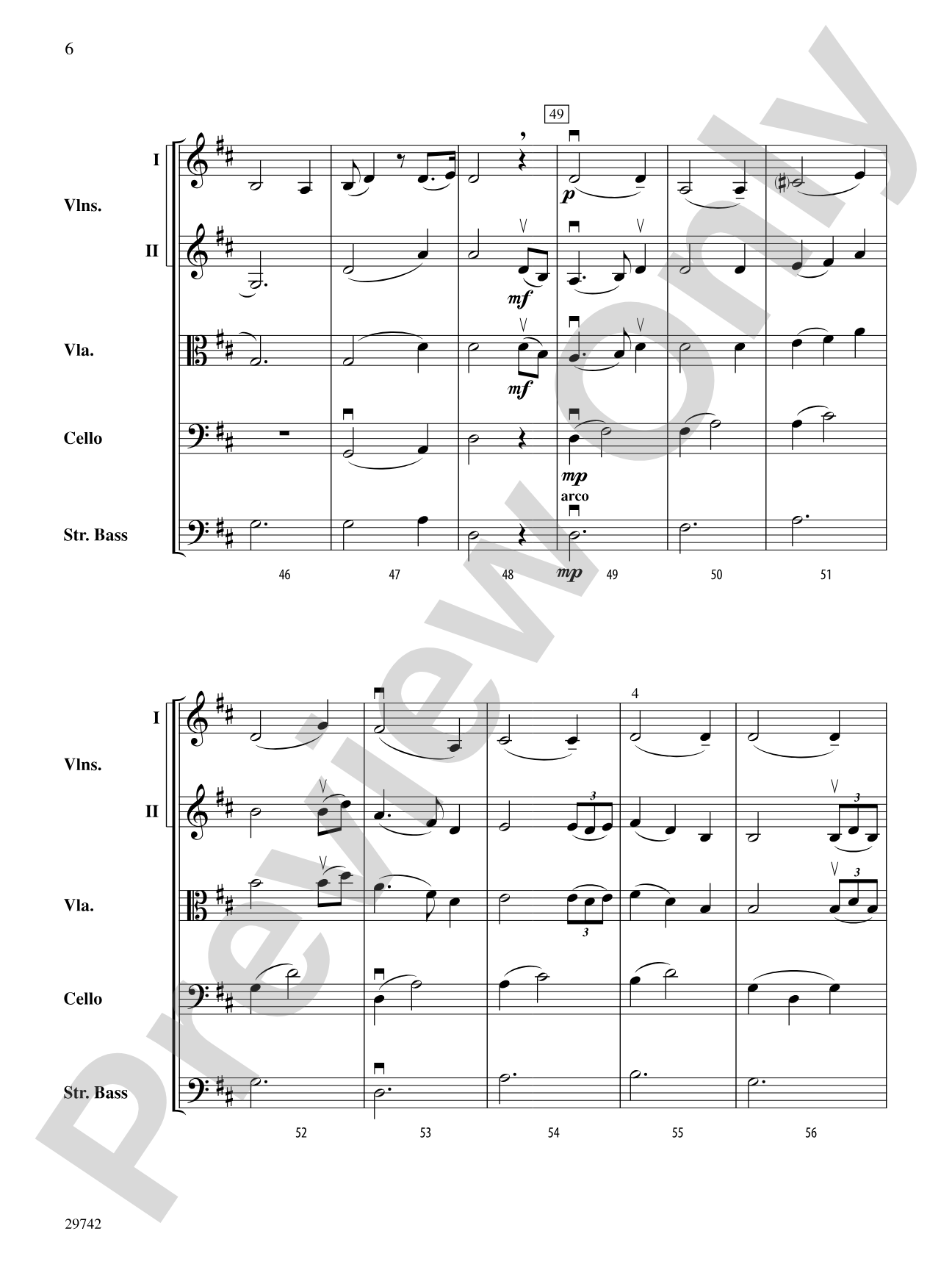
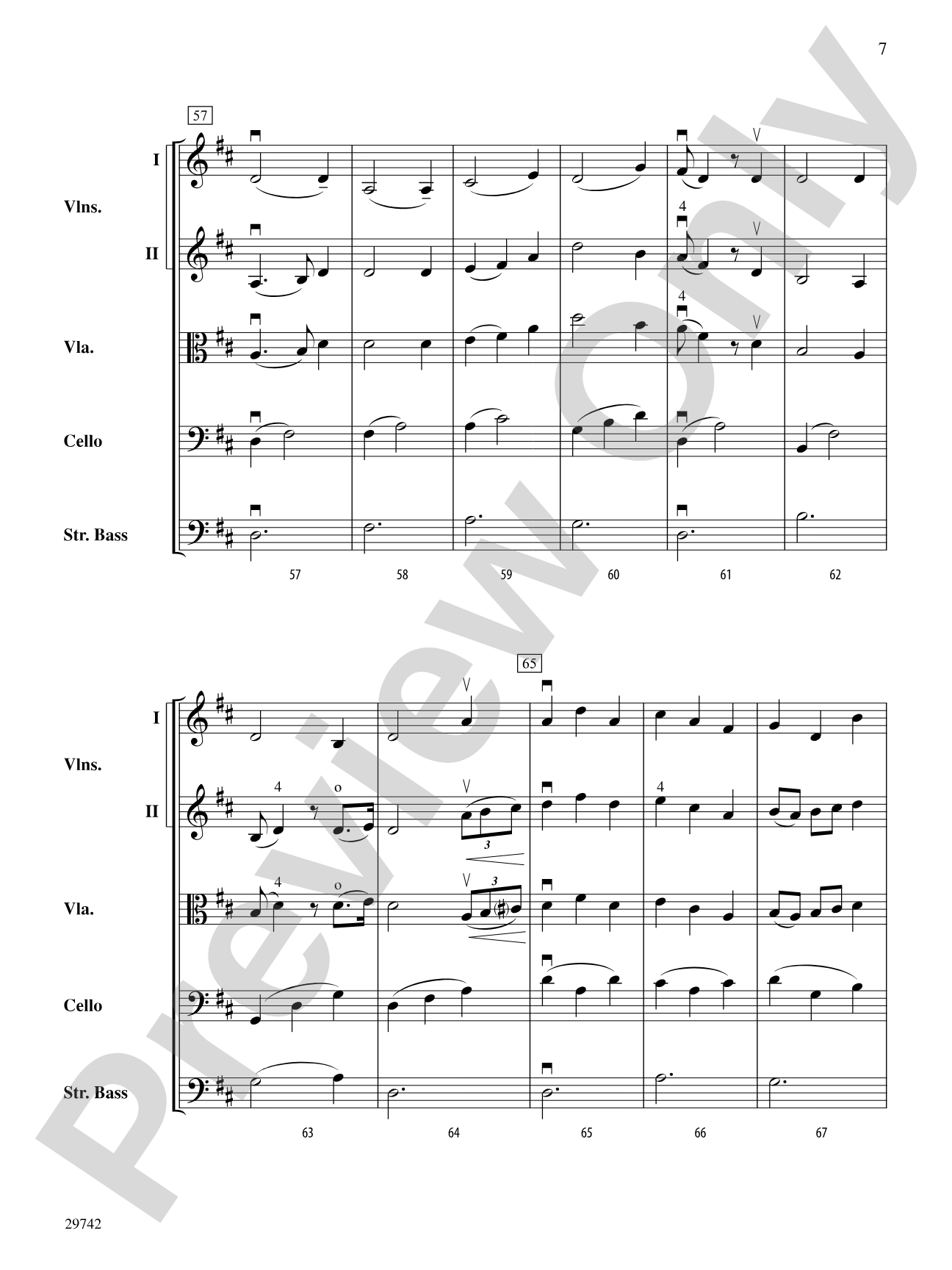
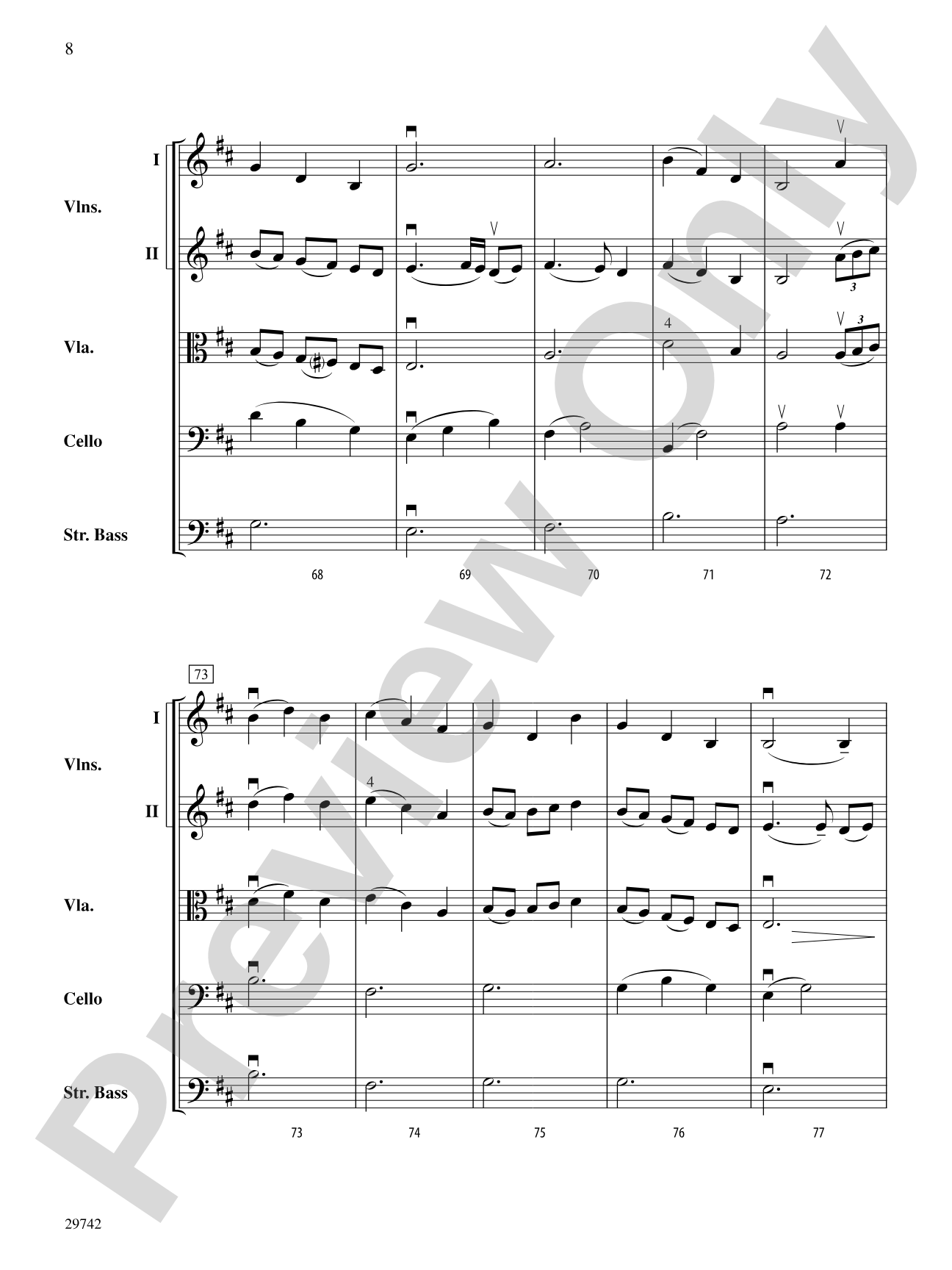
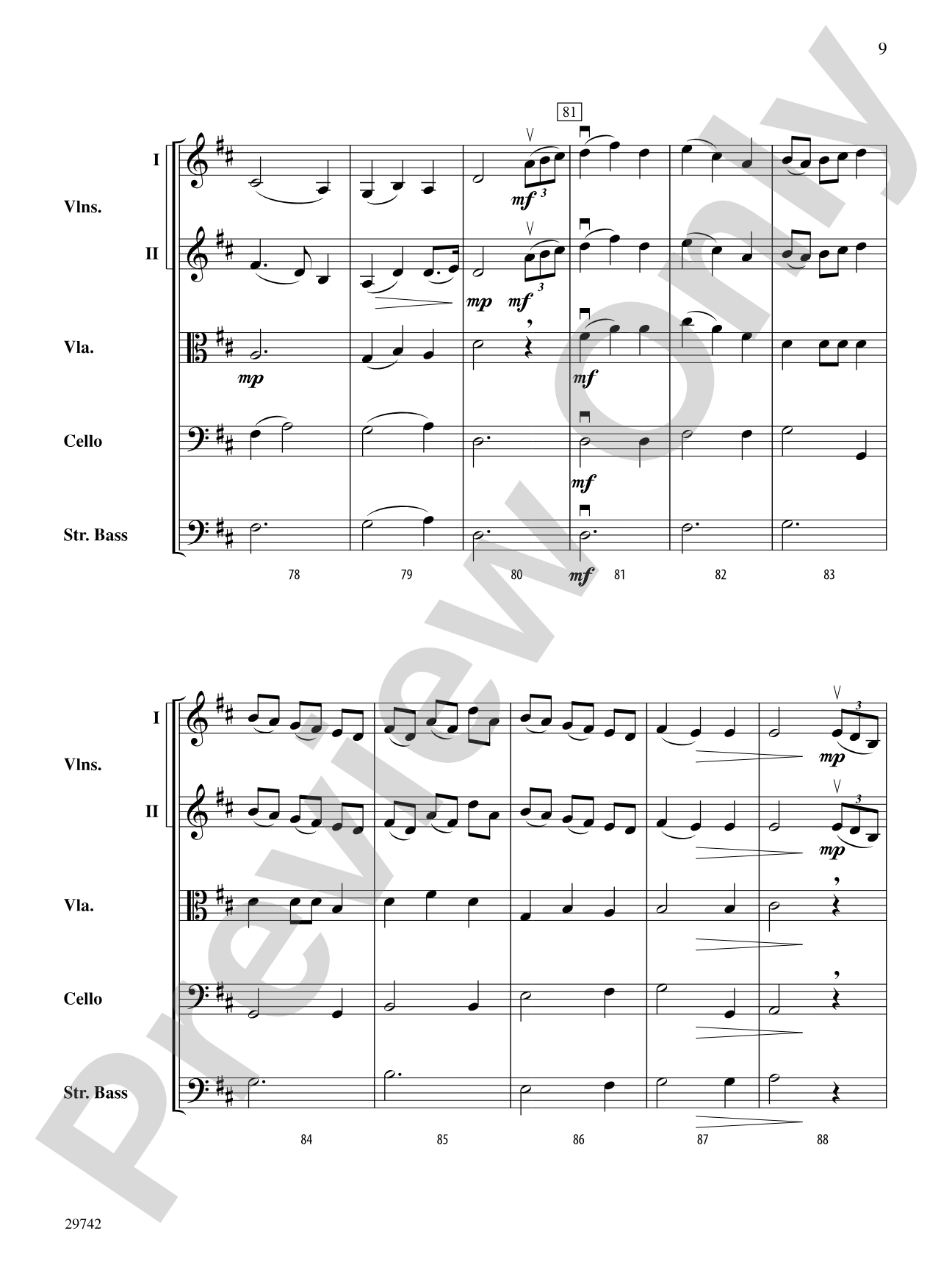
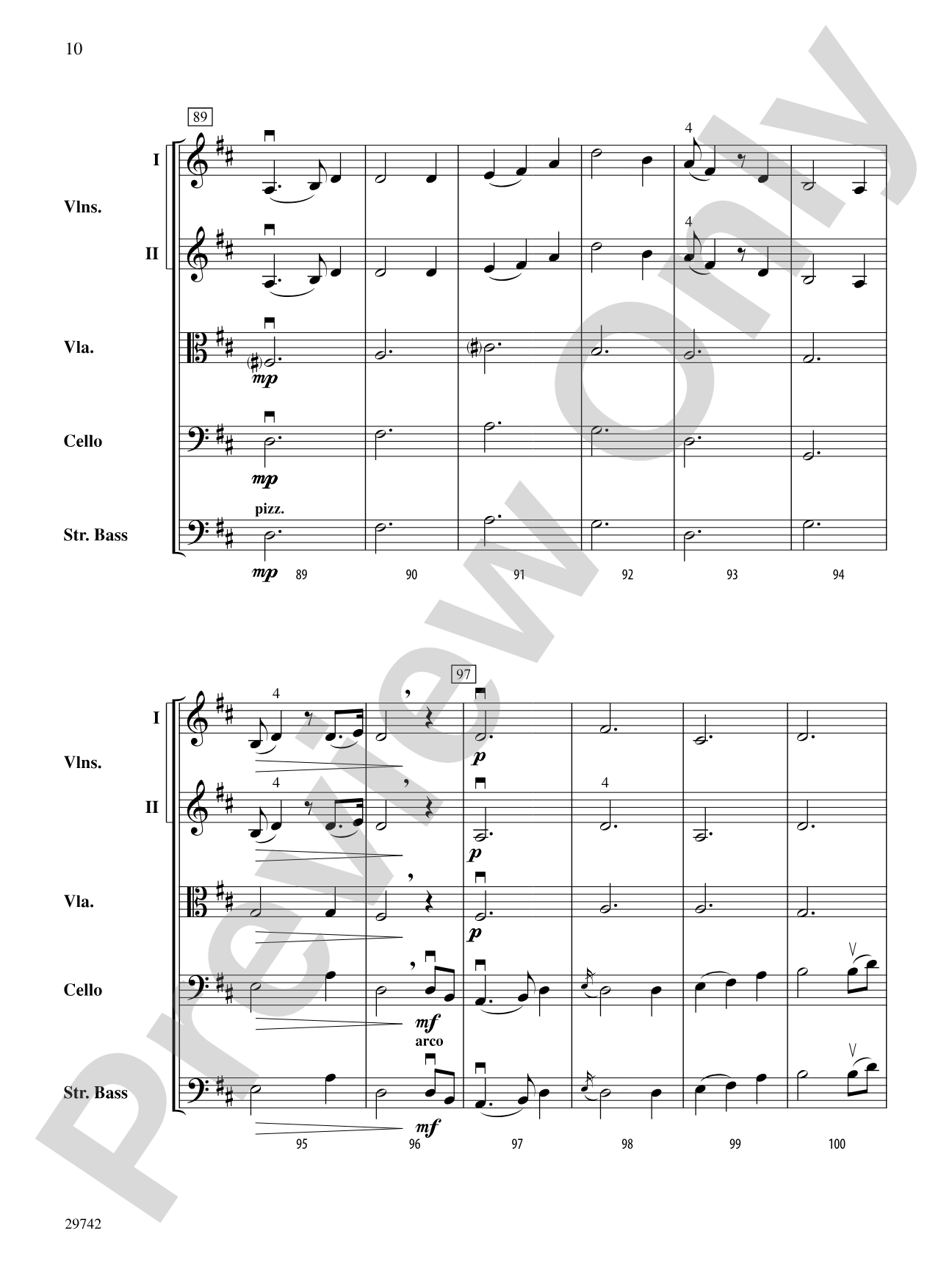
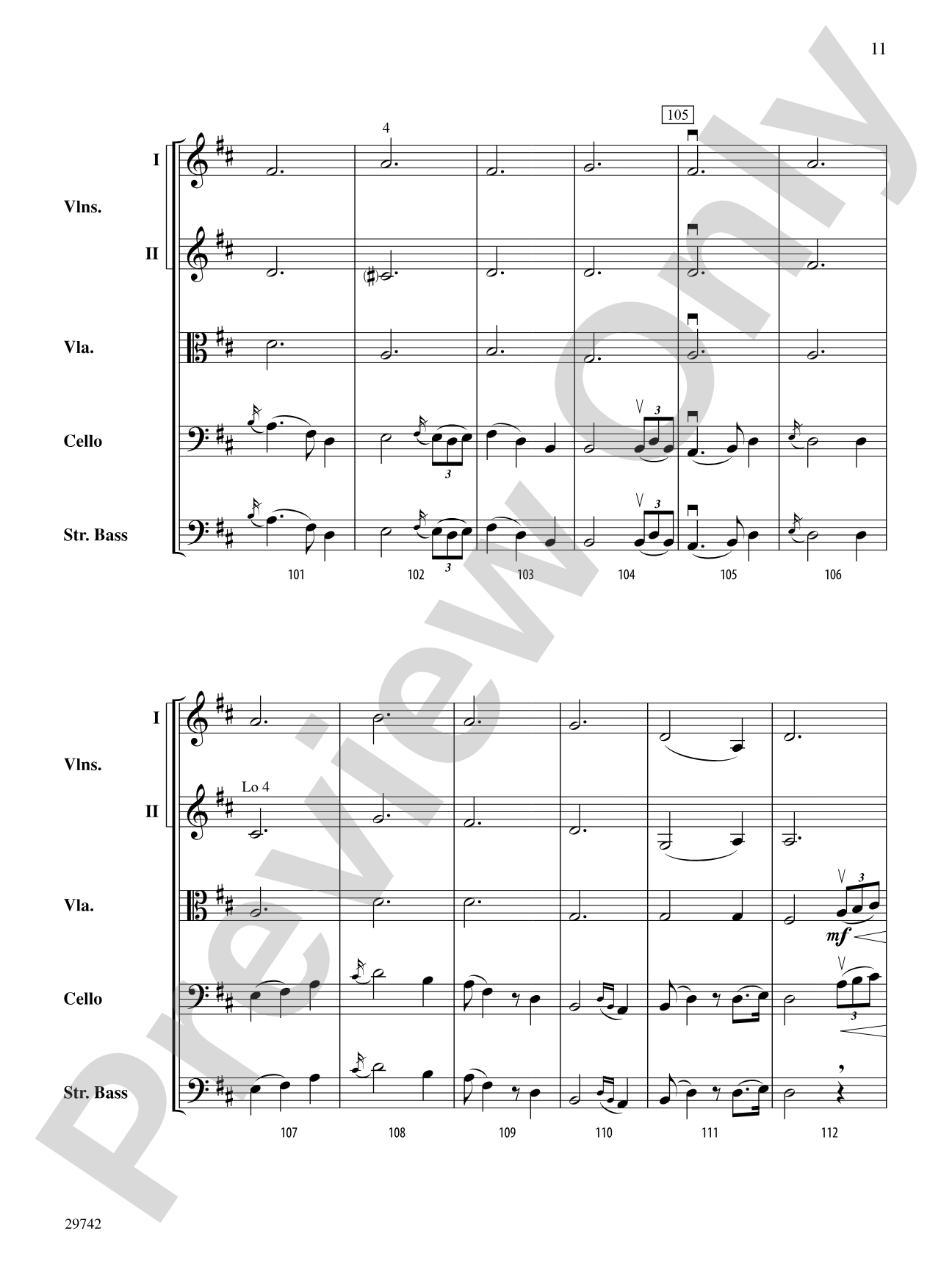
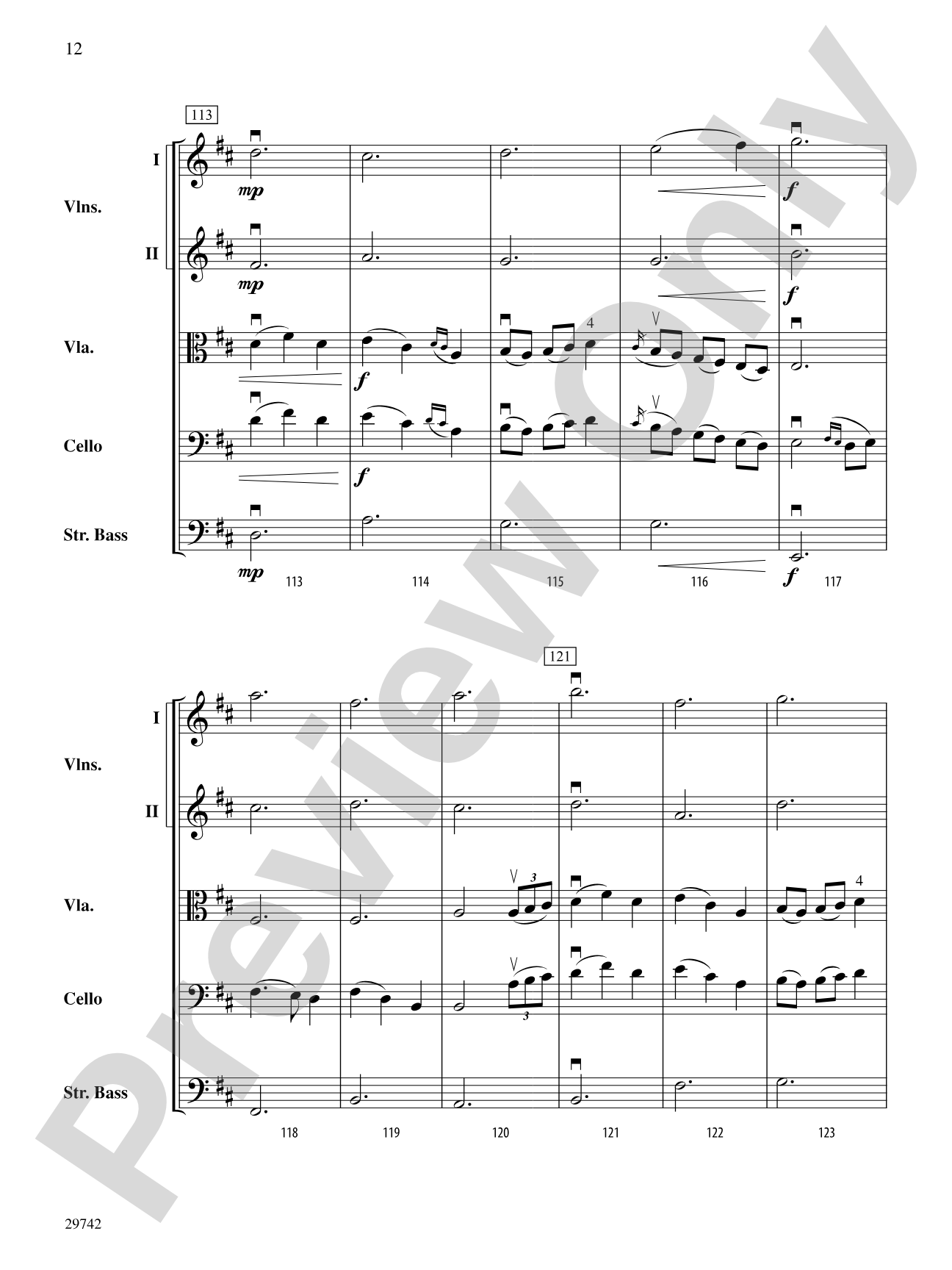
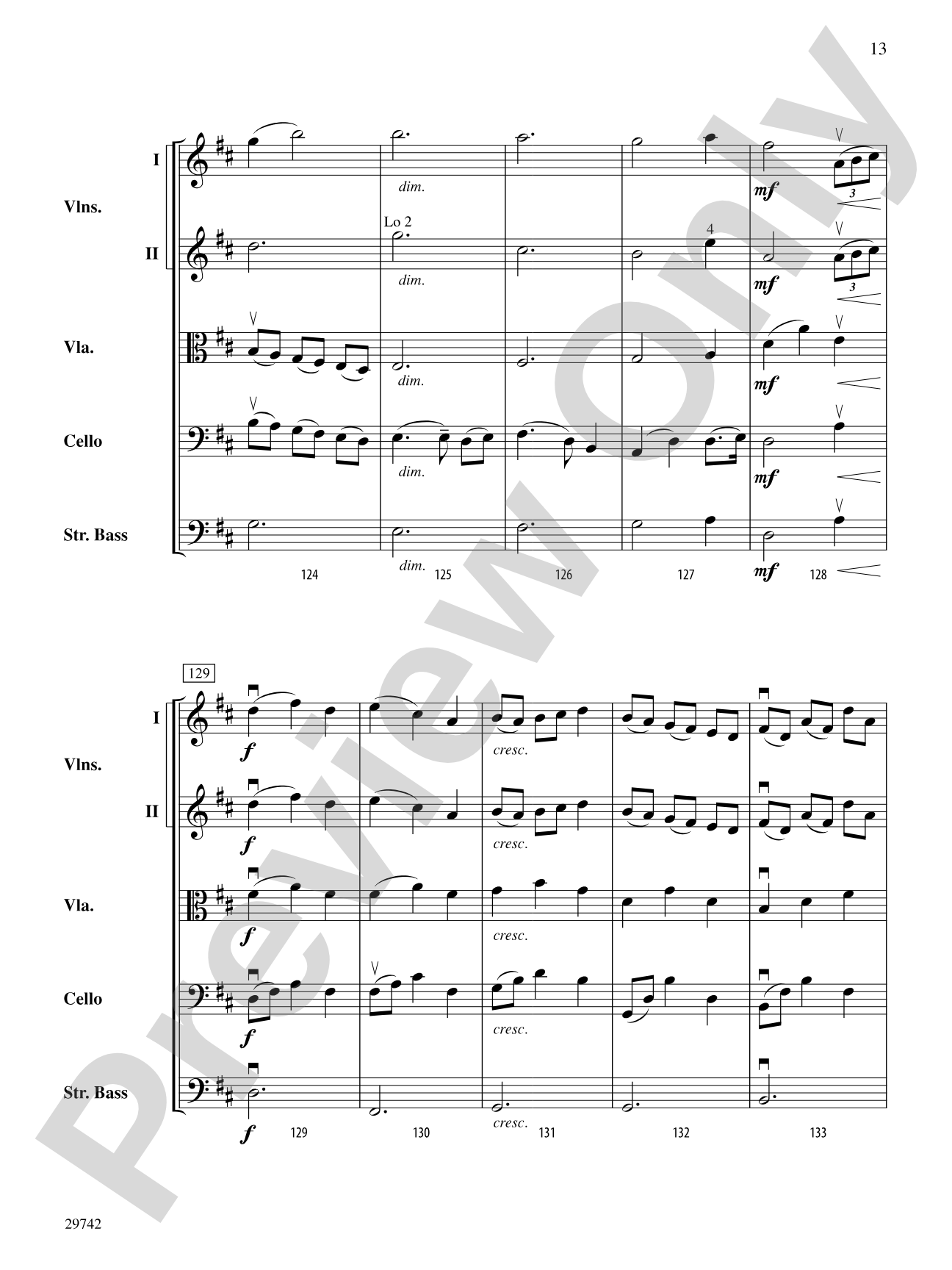
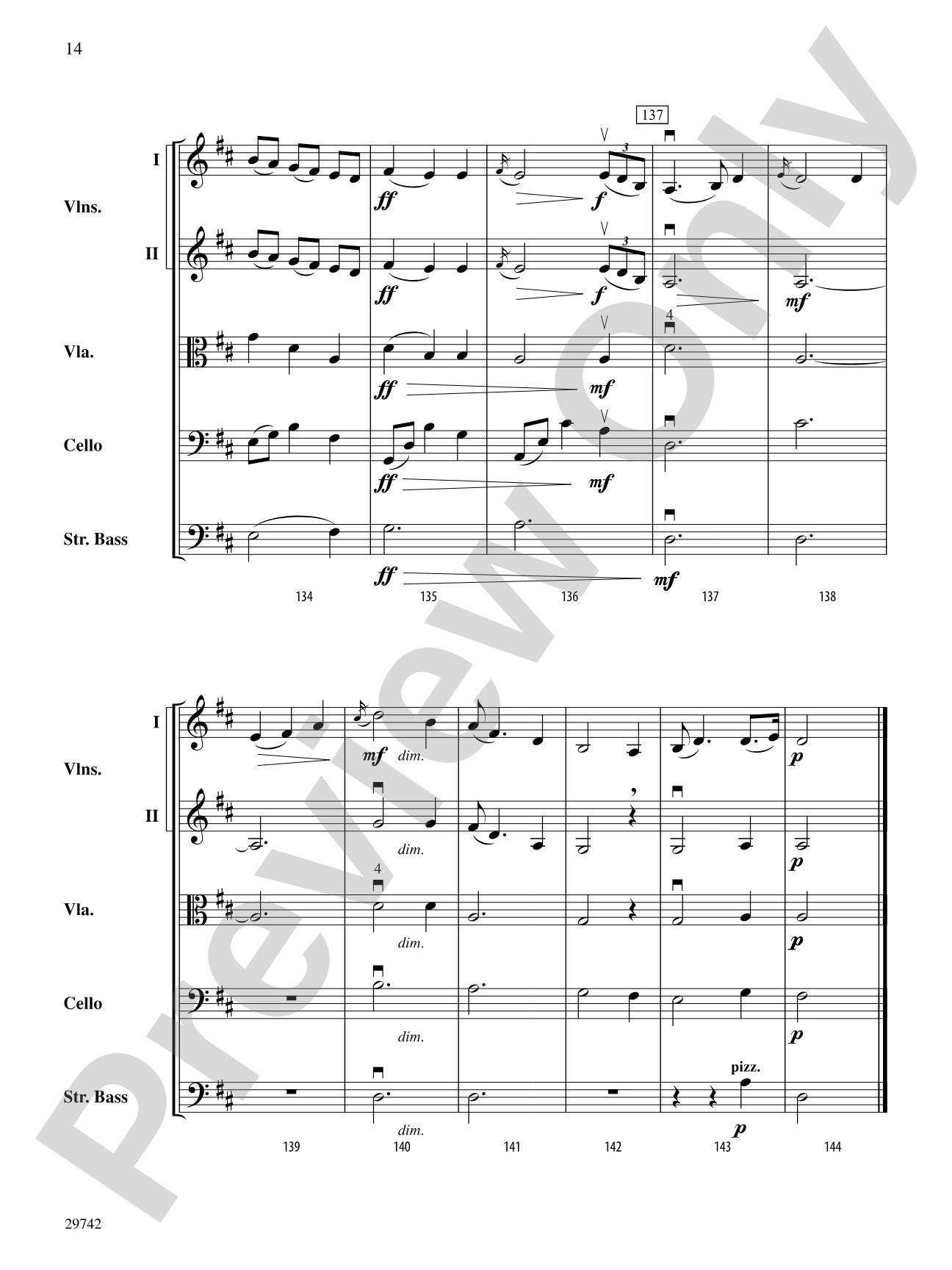



Neil Gow's Lament: String Orchestra Conductor Score & Parts
By Neil Gow / arr. Deborah Baker Monday
Grade: 2.5
Item: 00-PK-0001602

$49.00
Pickup currently not available
Buy Extra Parts (Digital PDF Download)
| Product | Price | Quantity |
|---|---|---|
| Neil Gow's Lament: Score | $9.00 | |
| Neil Gow's Lament: 1st Violin | $5.99 | |
| Neil Gow's Lament: 2nd Violin | $5.99 | |
| Neil Gow's Lament: Viola | $5.99 | |
| Neil Gow's Lament: Cello | $5.99 | |
| Neil Gow's Lament: String Bass | $5.99 |
Parts Added to Cart!
Related Items
Neil Gow's Lament: String Orchestra Conductor Score |
$7.00
|
View |
Description
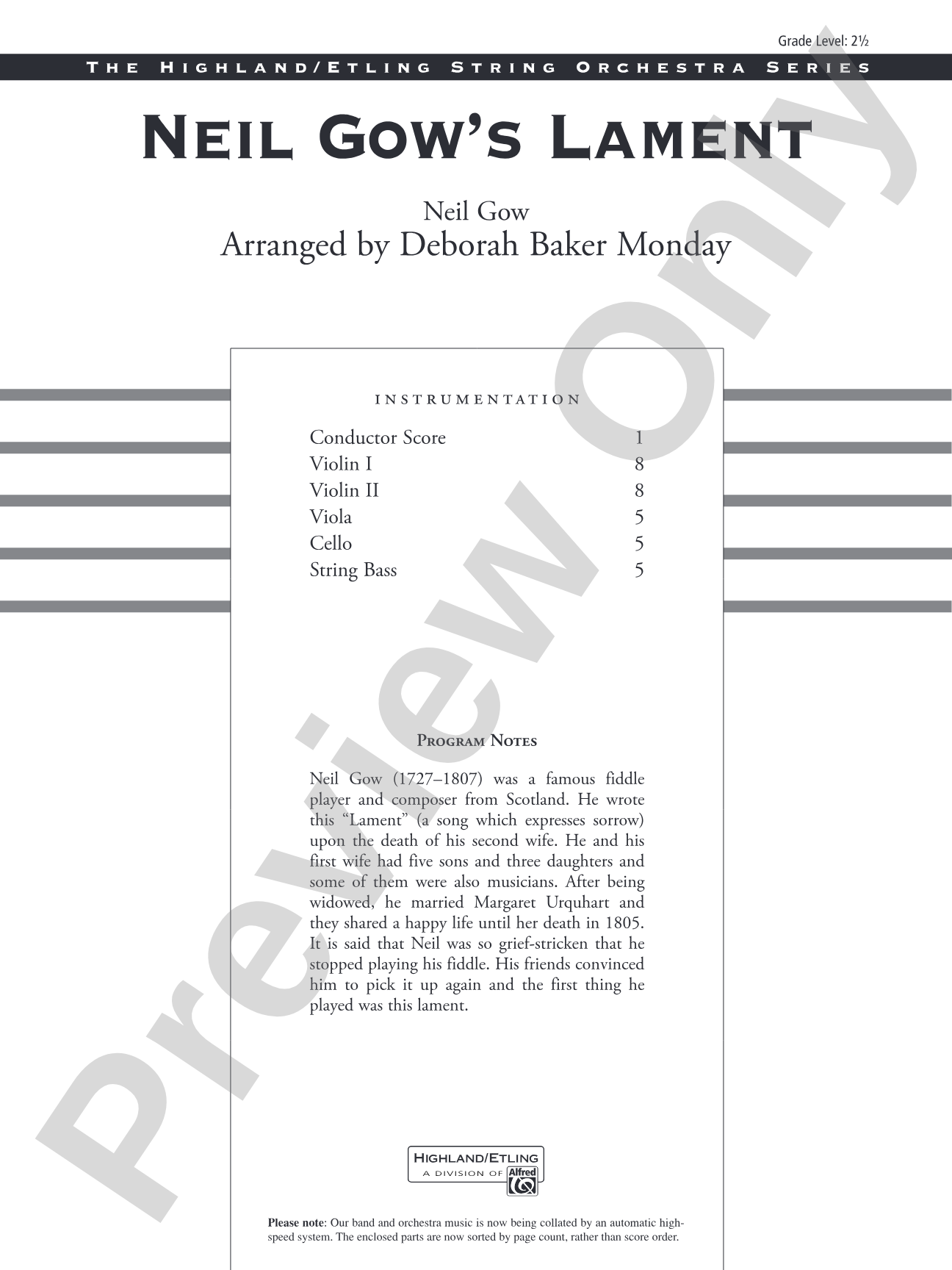
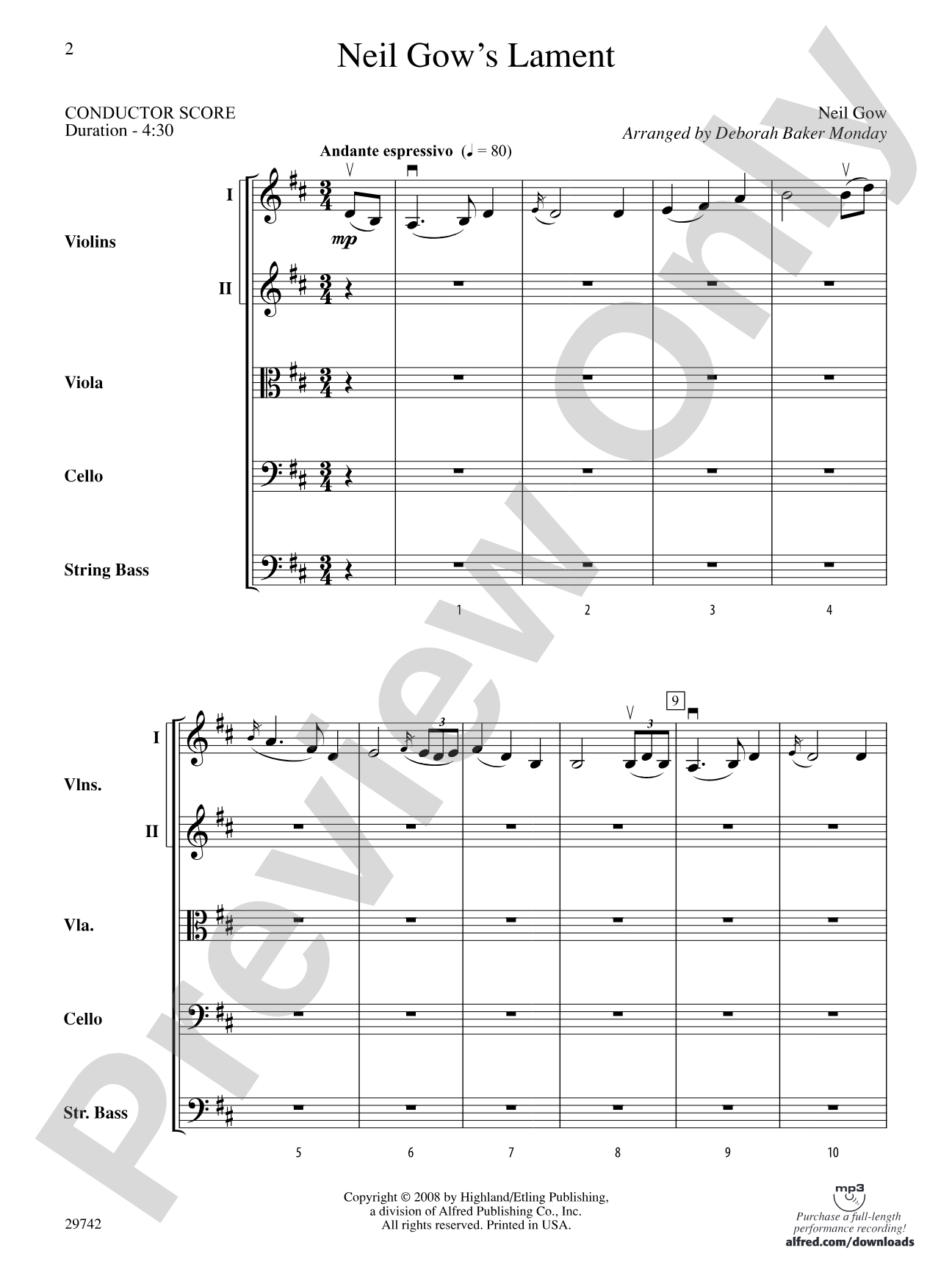
Neil Gow (1727-1807) was a famous fiddle player and composer from Scotland. He wrote this lament (a song which expresses sorrow) upon the death of his second wife. He and his first wife had 5 sons and 3 daughters and some of them were also musicians. After being widowed he married Margaret Urquhart and they shared a happy life until her death in 1805. It is said that Neil was so grief stricken that he stopped playing his fiddle. His friends convinced him to pick it up again and the first thing he played was this lament. (4:30)


Don't just read it, hear it, play along with it, and watch your students grow with it. In MakeMusic Cloud, Neil Gow's Lament: String Orchestra Conductor Score & Parts comes alive with professional accompaniment, adjustable tempo, and built-in practice tools that turn solo practice into real progress.
Open in the Player
Jump straight in and assign it today.
Start Your Free Trial
Open this title and explore the full library in minutes.
Sample Audio
1
Audio File
--:--
0:00
0:00
Sample Video
No sample videos found.
Additional Details
Series:
Highland/Etling String Orchestra
Publisher:
Alfred Music
Page Count:
124
SKU:
00-PK-0001602
More about this title
About the Composer: Neil Gow
Neil Gow (1727, 1807) stands as one of Scotland's most influential fiddle players and composers, a figure who bridged traditional Scottish folk music with the concert hall. His prolific output of strathspeys, reels, and laments made him an essential voice in the preservation and elevation of Highland musical culture during the late 18th century.
Gow's life was marked by both artistic achievement and personal tragedy. After the death of his second wife, Margaret Urquhart, in 1805, he reportedly abandoned his instrument entirely, overcome by grief. Only through the encouragement of friends did he return to playing, and this lament became his first work upon that return, a deeply personal expression of loss that resonates with performers and audiences more than two centuries later.
Why we love this
Deborah Baker Monday's arrangement honors the intimacy of Gow's original while creating a fully realized string sound that Grade 2-3 orchestras can execute with dignity. The lament's straightforward emotional arc avoids melodramatic gesturing, instead trusting the tune itself to convey its meaning. This is the kind of piece that reminds young musicians why they chose strings in the first place.
What to expect
A quiet, sustained meditation on loss. The lament unfolds with the unhurried dignity of a funeral march reimagined in Scottish voice, spare and affecting without sentimentality. Listeners experience genuine sorrow expressed through straightforward melody and harmonic restraint.
Who it's for
String orchestra directors looking for repertoire that builds musicianship while honoring cultural tradition. Middle school and early high school orchestras with solid fundamentals will find an accessible but artistically substantial piece that teaches ensemble balance and expressive playing without excessive technical demands.
How to get the most out of it
- Shape the melodic line with gentle, singing bow strokes rather than forcing vibrato; let the tune's natural contour do the expressive work.
- Balance the first violins against the harmonic foundation so the melody emerges clearly without sounding isolated.
- Maintain a steady, unhurried tempo throughout; Scottish laments benefit from breathing room, not forward momentum.
- Attend to dynamic transitions between phrases; subtle shifts in volume create narrative continuity without abrupt changes.
How to use it
Program this early on a concert to establish an intimate mood and demonstrate your orchestra's range beyond technically showy material. It pairs naturally with other folk-influenced string repertoire or stands alone as a concert opener that signals serious artistic intent. Consider pairing it with contemporary arrangements or works that explore cultural traditions in different ways.
Skills your students will build
- Ensemble balance in four-part string writing
- Expressive phrasing without vibrato dependency
- Sustaining uniform tone at soft dynamic levels
- Interpreting folk melody within a classical ensemble context
- Building narrative arc across a single musical idea