Need You Now: Timpani Sheet Music Preview

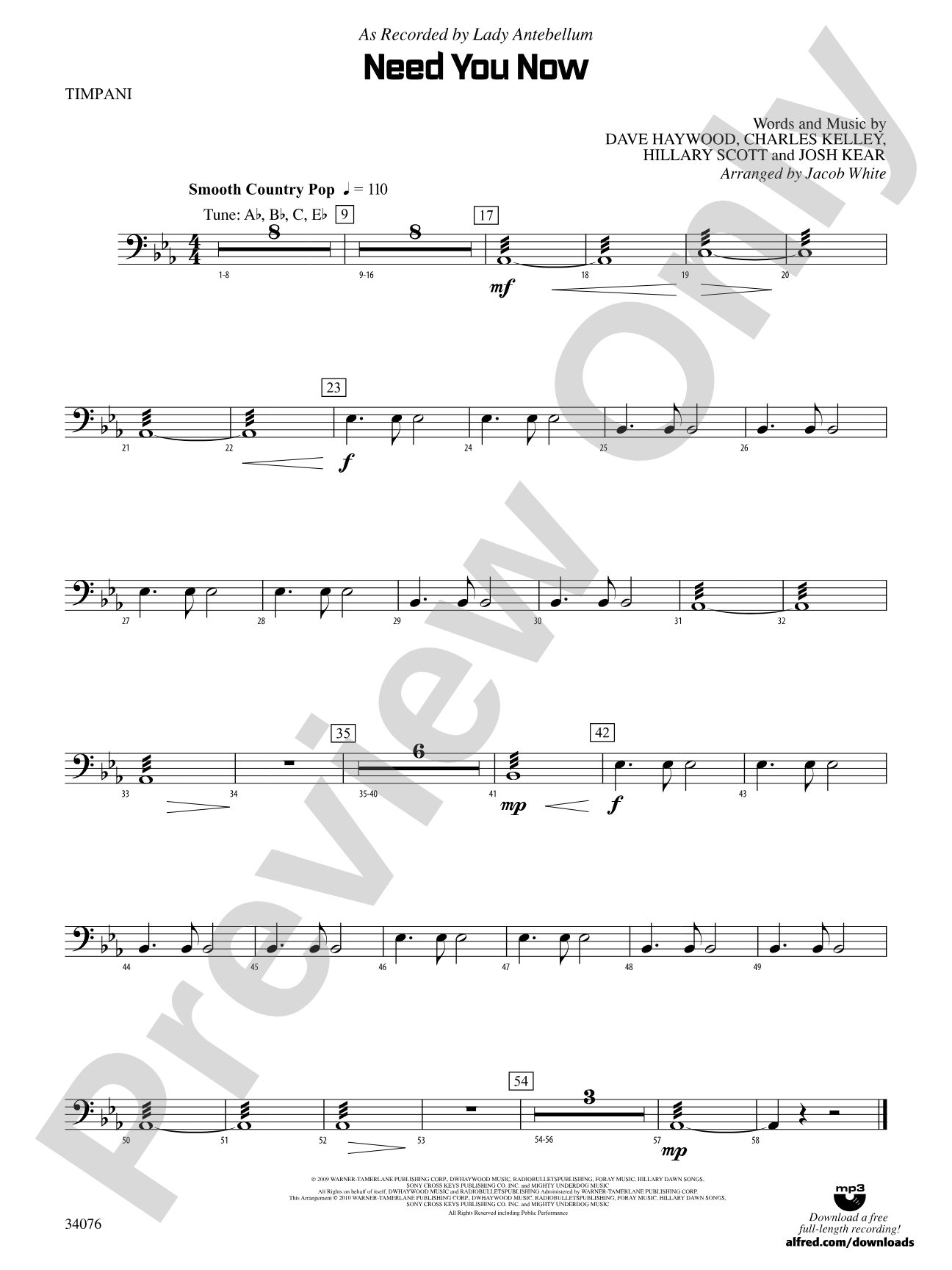
Need You Now: Timpani

As recorded by Lady Antebellum

Words and music by Dave Haywood, Charles Kelley, Hillary Scott, and Josh Kear [Lady Antebellum] / arr. Jacob White

Grade: 2 (Easy)

Item: 00-PC-0014616_TMP

Digital Download
$3.00
Description
Need You Now was the lead-off single and title track to Lady Antebellum's second studio album. The song spent five weeks at number one on the U.S. country chart in late 2009. Need You Now has also reached a peak of #2 on the "Billboard Hot 100," making it their highest charting single on that list and their first in the Top 5. Smooth melodies and friendly harmonies make this a sure hit with your concert ensemble!

Don't just read it, hear it, play along with it, and watch your students grow with it. In MakeMusic Cloud, Need You Now: Timpani comes alive with professional accompaniment, adjustable tempo, and built-in practice tools that turn solo practice into real progress.

Sample Audio
0:00
0:00
Sample Video
Additional Details
Series: Hot Pop Band
Publisher: Alfred Music
Page Count: 124
SKU: 00-PC-0014616_TMP

More about this title

About the Composer: Dave Haywood

Dave Haywood is a founding member of Lady Antebellum, the country trio that dominated the charts throughout the 2000s and 2010s. As composer and multi-instrumentalist, Haywood helped shape the band's signature sound, which blends country sensibilities with pop accessibility and sophisticated vocal arrangements.

Haywood's work on "Need You Now" exemplifies his gift for crafting melodies that resonate across genre boundaries. The song's success on both country and mainstream pop charts demonstrates his ability to write material that connects with diverse audiences, a skill that translates directly to concert band settings where reaching student performers and listeners alike matters.

Why we love this

This arrangement captures everything that made "Need You Now" a crossover hit: accessible melodies, emotional directness, and genuine appeal to young musicians. At Grade 2, the writing remains playable without sacrificing the song's character, making it a rare instance where a contemporary hit feels earned rather than simplified.

What to expect

The arrangement preserves the intimate, yearning quality of the original while giving it ensemble weight. Smooth harmonic progressions and carefully voiced parts create a polished, accessible sound that feels both professional and achievable for younger musicians.

Who it's for

Concert bands at the Grade 2 level looking to program music that engages students through recognizable, contemporary material. Directors seeking repertoire that bridges classical concert traditions and students' own musical lives will find this particularly valuable.

How to get the most out of it

  • Balance the lyrical melodic material across sections; this piece depends on warm, singing tone quality rather than technical display. Adjust dynamics carefully so the melody always projects clearly.
  • Pay attention to the harmonic movement underneath the main theme. The supporting voices create the song's emotional foundation, so blend those parts with the same care you give the lead line.
  • Shape phrases with natural breathing points that mirror vocal phrasing from the original recording. This helps the band internalize the song's character and gives the arrangement coherence.
  • Use the recorded accompaniment during early rehearsals to help students internalize the original groove and tempo, but gradually build independence so the band's own sense of pulse strengthens.

How to use it

This works especially well as an encore or lighter concert piece that showcases student musicianship without technical demands. Consider programming it alongside more traditional concert fare to demonstrate the range of music that concert bands can beautifully perform.

Skills your students will build

  • Balanced blending across sections in a pop/country idiom
  • Phrase shaping that follows vocal rather than purely instrumental conventions
  • Harmonic awareness and voice leading independence
  • Tone control in the middle-to-upper register
  • Interpreting contemporary music with musical sophistication

You May Also Like