Nebula: B-flat Clarinet 2 Sheet Music Preview

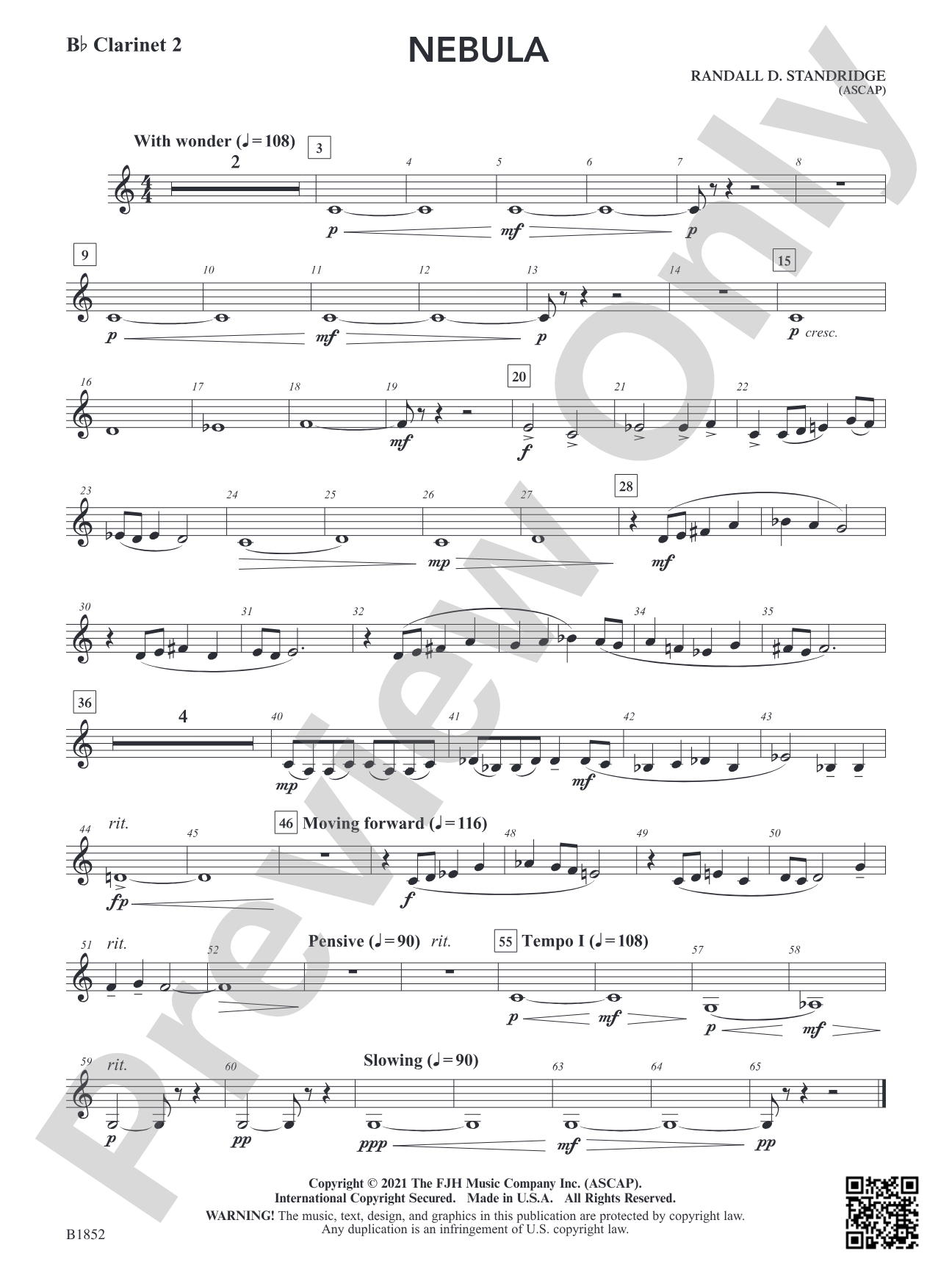
Nebula: B-flat Clarinet 2

By Randall D. Standridge

Grade: 1.5;2

Item: 98-PC-DB1852_C2

Digital Download
$7.00
Description
The vastness and mysteries of space are illustrated in this colorful work for young band. Lyrical melodies, expansive harmonies, and colorful orchestration are carefully balanced with achievability to create a piece that stands apart from the standard young band repertoire. (2:30)

Don't just read it, hear it, play along with it, and watch your students grow with it. In MakeMusic Cloud, Nebula: B-flat Clarinet 2 comes alive with professional accompaniment, adjustable tempo, and built-in practice tools that turn solo practice into real progress.

Sample Audio
0:00
0:00
Sample Video
Additional Details
Series: FJH Developing Band
Publisher: The FJH Music Company, Inc.
SKU: 98-PC-DB1852_C2

More about this title

About the Composer: Randall D. Standridge

Randall D. Standridge is a prolific composer and arranger whose work for young and developing ensembles has become standard repertoire in American schools. His compositions balance musical substance with practical accessibility, allowing students to engage with colorful harmonies, sophisticated orchestration, and meaningful melodic content without overwhelming technical demands.

Standridge's output spans concert band, wind ensemble, orchestra, and choral genres. His pieces for younger ensembles are particularly valued for their ability to sound mature and polished while remaining teachable at entry and early-intermediate levels.

Why we love this

Standridge refuses to write down to young bands. The harmonic language and orchestration in Nebula feel genuinely sophisticated, yet every voice part remains playable for students at Grade 1.5-2. The program note concept (space, vastness, mystery) gives students something to visualize and interpret, which matters more than abstract musicianship at this level.

What to expect

Nebula unfolds like a slow journey through a starlit landscape. The writing creates moments of stillness alongside sweeping harmonic motion, and the orchestration shifts color without jarring the listener. It's contemplative and spacious rather than bombastic, rewarding attentive listening.

Who it's for

Young concert bands working at Grade 1.5 to early Grade 2 who want to perform something that sounds and feels significant without requiring advanced technique. Students should have solid fundamentals in tone production, basic articulation, and ensemble balance.

How to get the most out of it

  • Balance the lyrical melodic lines against the fuller harmonic backdrop; young players tend to overblow the harmony parts and bury the tune.
  • Use the recorded accompaniment (if available) in sectional rehearsals to help players lock their parts into the overall texture before full ensemble playing.
  • Shape phrases with dynamic contour rather than holding steady dynamics; the 'expansive harmonies' need gentle swell and release to avoid sounding static.
  • Let the piece breathe at cadence points; resist the temptation to cut off sustained chords early, which erases the sense of space the title evokes.

How to use it

Program this as an opening or closing piece on a concert where you want to establish a reflective tone, or pair it with a contrasting energetic work to show your band's range. At 2:30, it fits comfortably into full concert programs and works particularly well in festival settings where students benefit from performing something with artistic depth.

Skills your students will build

  • Sustaining lyrical lines without overblowing or wavering
  • Blending into fuller harmonic textures while maintaining individual part integrity
  • Controlling dynamic shape and phrasing across longer musical phrases
  • Balancing melody and accompaniment awareness within the ensemble

You May Also Like