Nassau Bound Sheet Music Preview

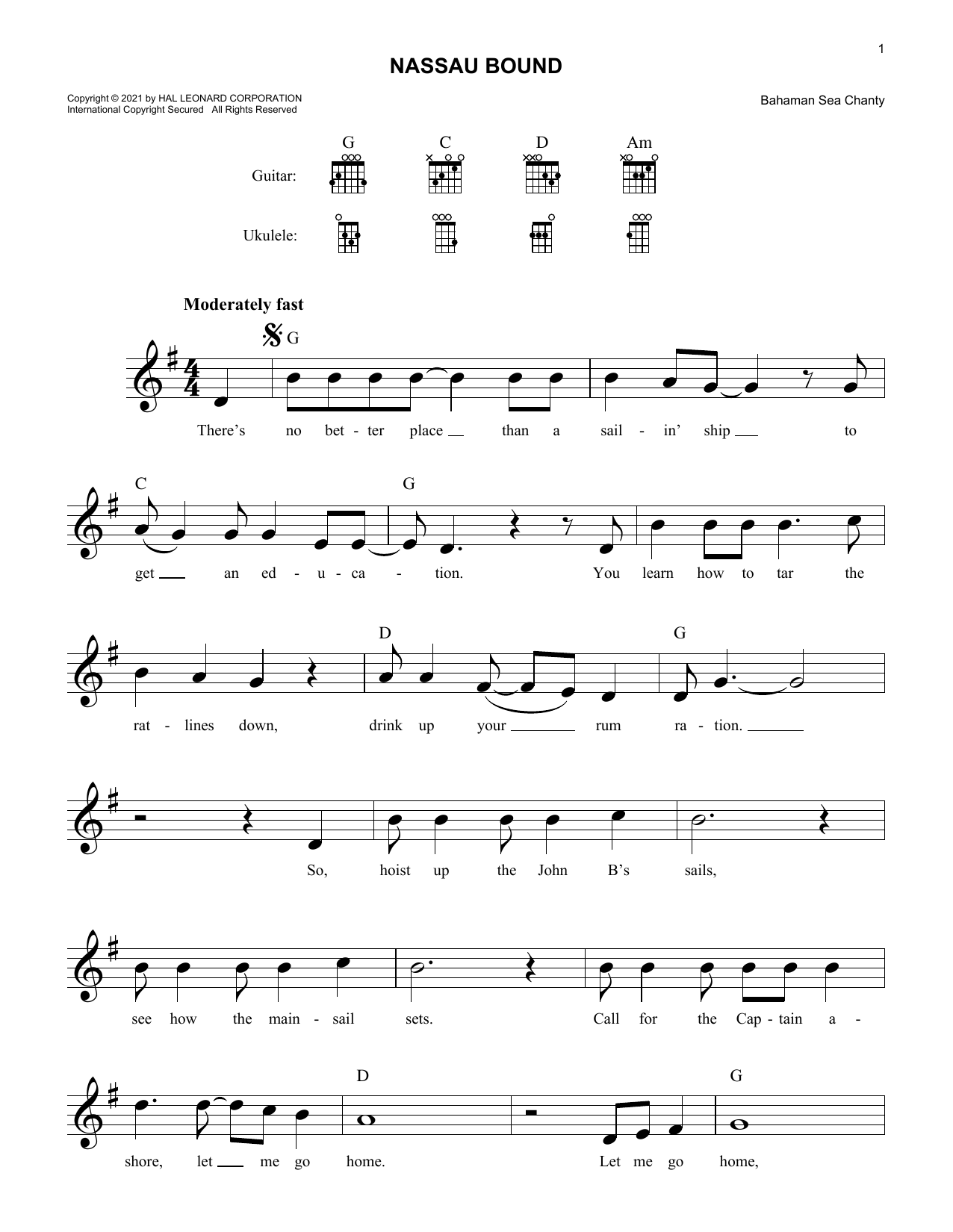
Nassau Bound: Lead Sheet / Fake Book

Item: 35-DS00477735

Digital Download
$3.99
Description

Nassau Bound: Lead Sheet / Fake Book isn't in MakeMusic Cloud just yet...but it could be. Let us know you'd like to see it, and you'll help shape what comes next. In the meantime, start a free trial and dive into thousands of interactive titles your students can play along with today.

Sample Audio
No sample audio found.
Sample Video
Additional Details
Publisher: Hal Leonard
Page Count: 3
SKU: 35-DS00477735

More about this title

Why we love this

Lead sheets preserve the melodic and harmonic DNA of traditional sea chanteys while giving players room to interpret and arrange on the fly. This format transforms a folk tune into a vehicle for improvisation and personal musicianship, which makes it especially valuable when you want singers and instrumentalists learning the same material to sound fresh and individual rather than locked into a single arrangement.

What to expect

Salt spray and timber creaking. The melody carries the swagger of sailors who knew these waters and sang to keep rhythm during long work shifts. There's a directness to it, honest and unsentimental, with enough harmonic simplicity that the tune itself becomes unforgettable.

Who it's for

Pianists and keyboardists comfortable reading chord symbols and building arrangements from a skeleton; singers who want to explore folk literature beyond fully arranged scores; music teachers introducing students to the jazz and pop tradition of lead sheet reading.

How to get the most out of it

  • Treat the melody as a starting point, not a ceiling. The lead sheet format invites you to add passing tones, adjust phrasing, and play with rhythmic space in ways a fully notated arrangement wouldn't.
  • Pay attention to the harmonic rhythm beneath the changes. Sea chanteys often sit comfortably on fewer chord movements than contemporary pop tunes, so resist the urge to fill every beat. Let silence breathe.
  • If pairing this with singers, use the fake book voicings as your foundation but listen for how the voice moves through the melody. Adjust comping density to support rather than compete with the lyrical line.

How to use it

Use this in a folk or world music unit where students encounter the same melody in multiple contexts and arrangements. It works equally well as a sightreading exercise for intermediate keyboardists or as the foundation for a small ensemble piece blending voices, guitar, and piano.

Skills your students will build

  • Reading and realizing chord symbols on keyboard
  • Arranging from a lead sheet melody
  • Comping choices that support a vocal line
  • Understanding harmonic rhythm in traditional folk melody
  • Sight-reading unfamiliar repertoire from minimal notation

You May Also Like