
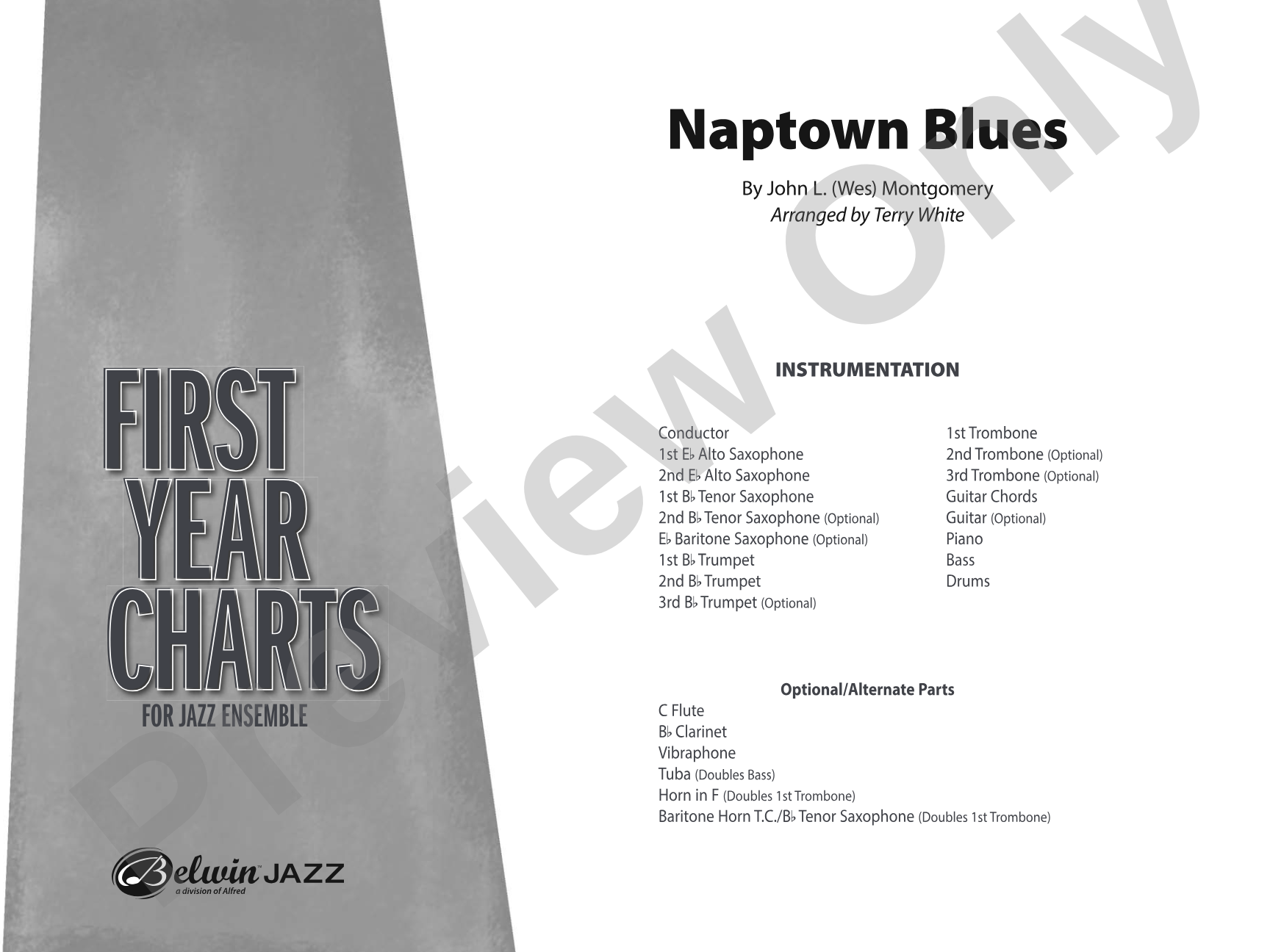
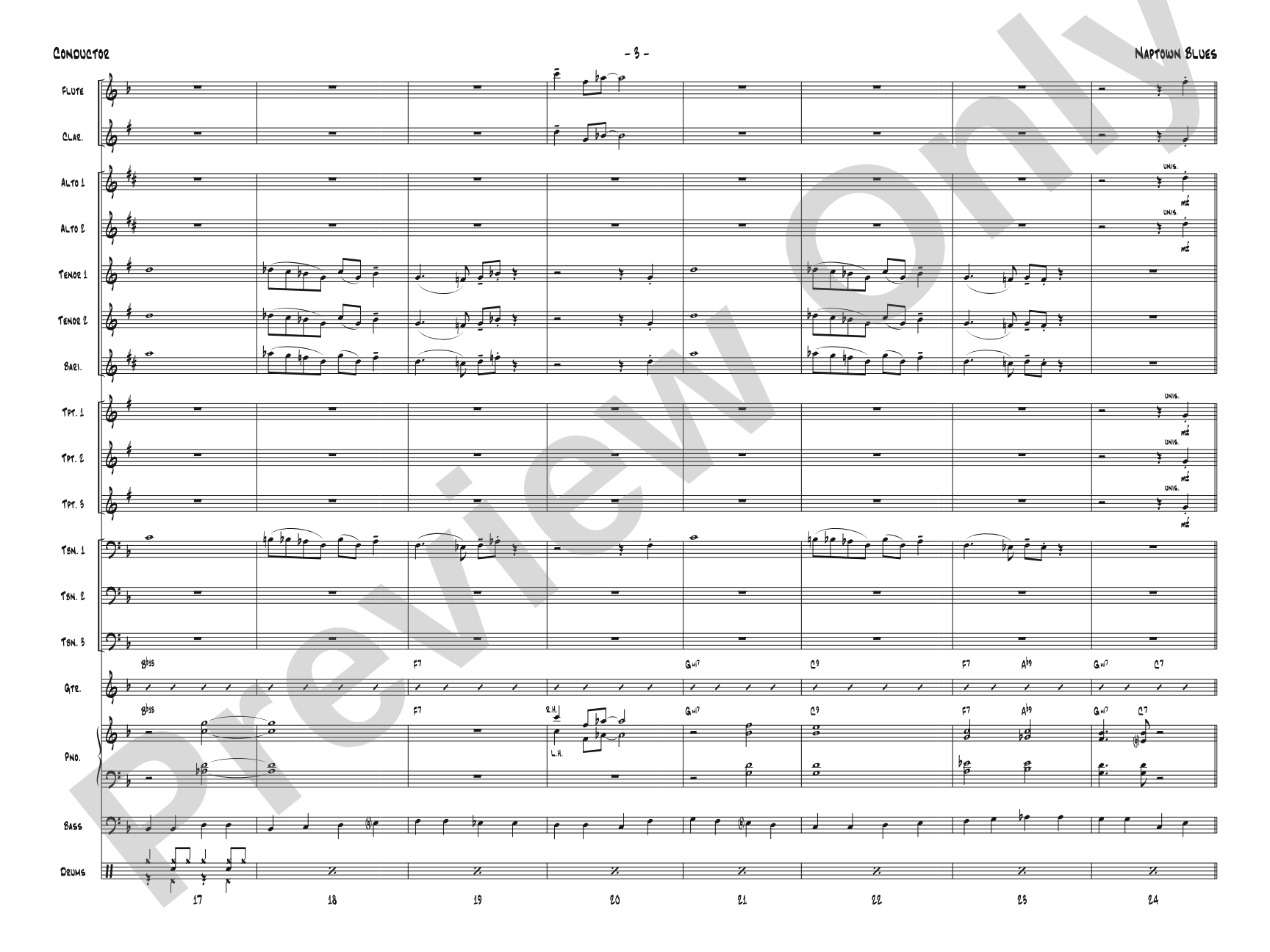
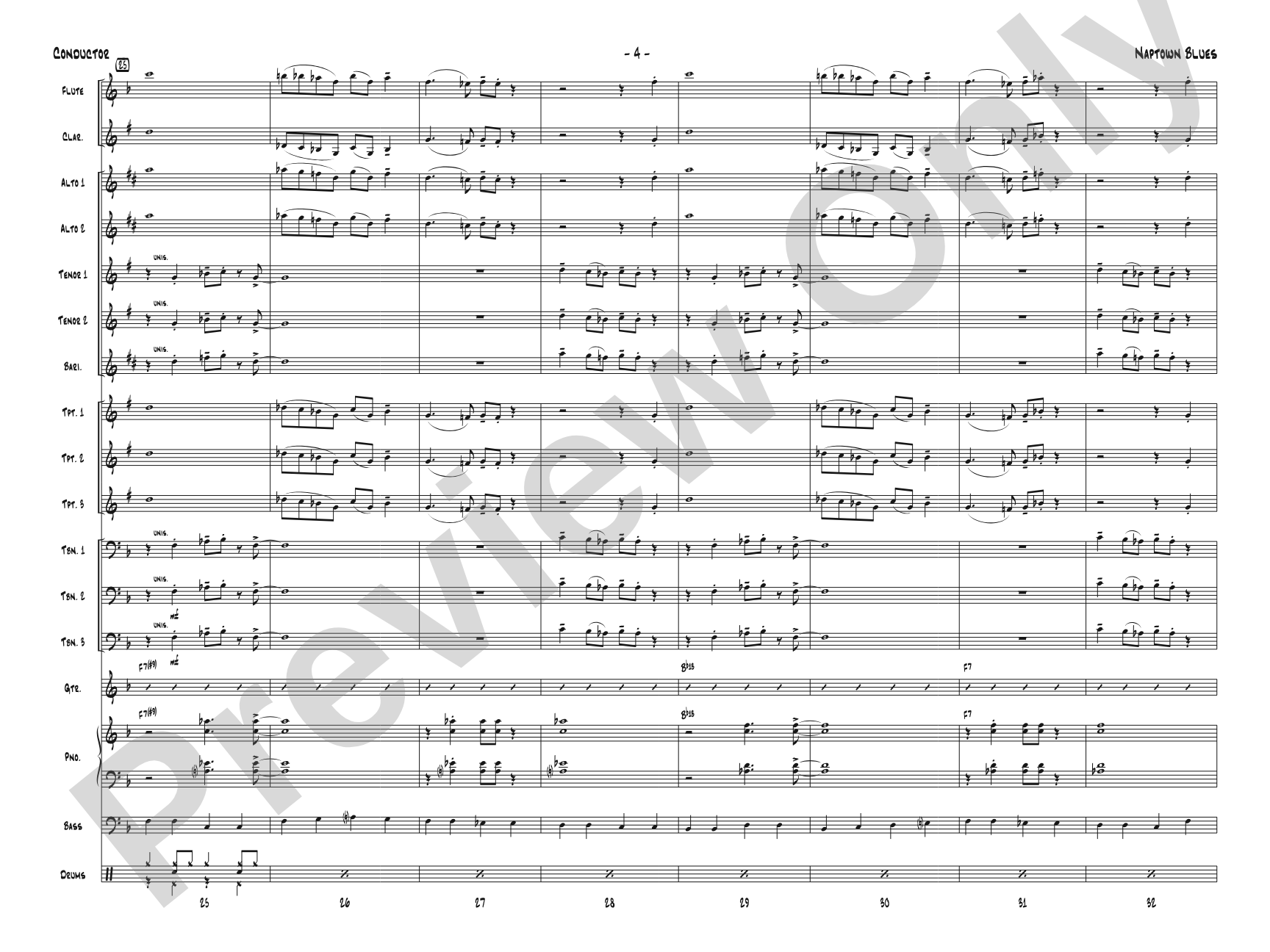
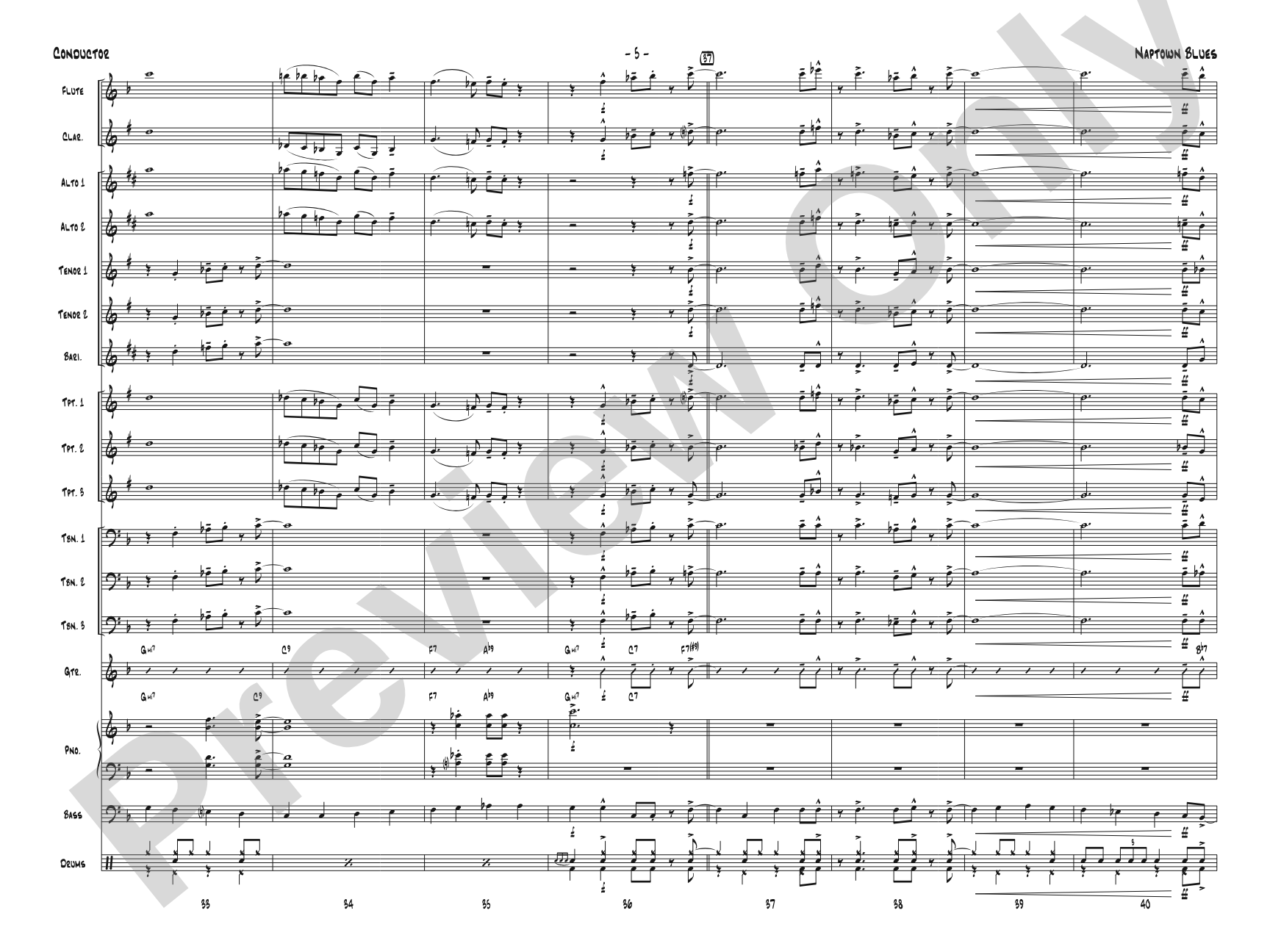
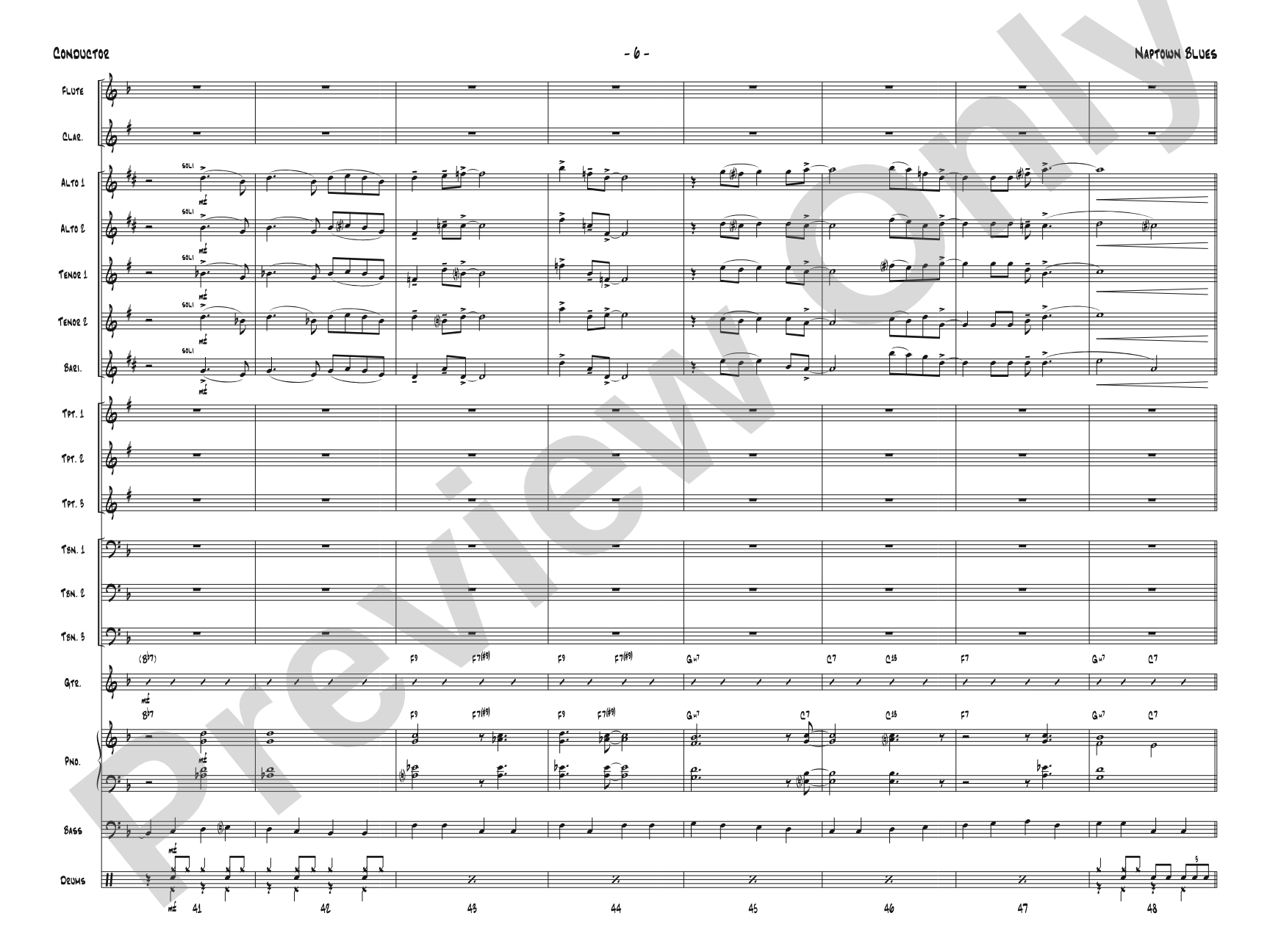
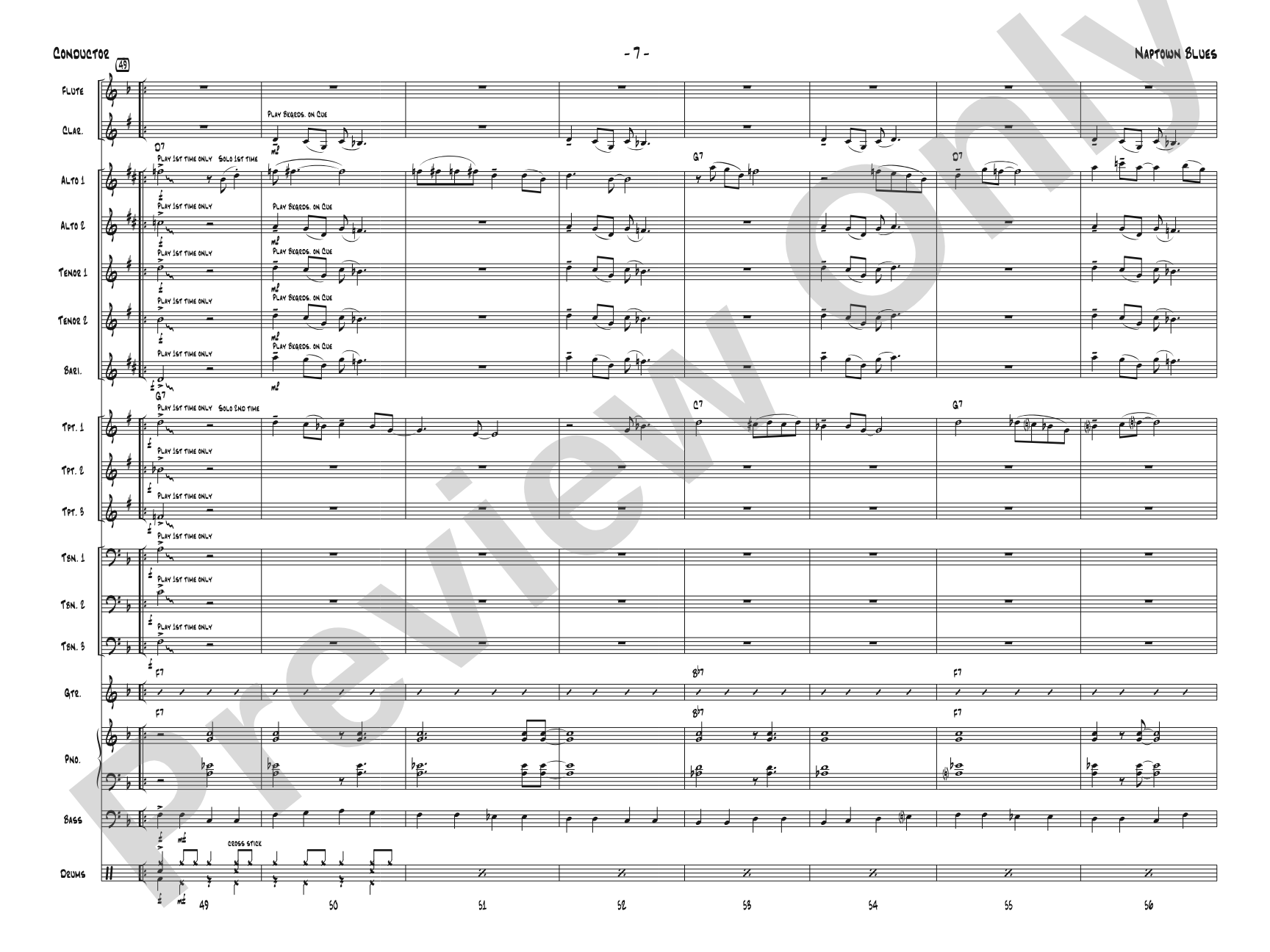
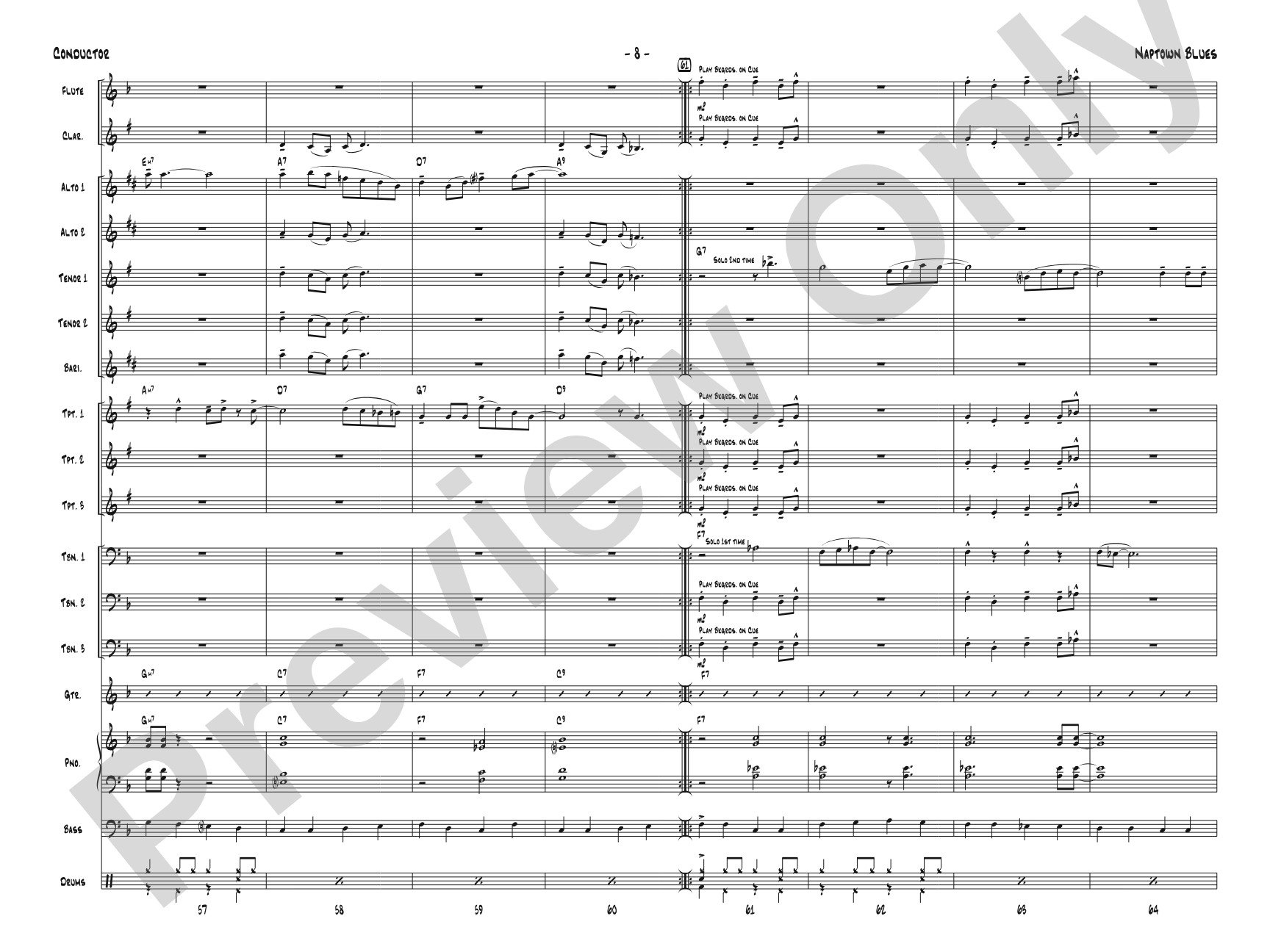
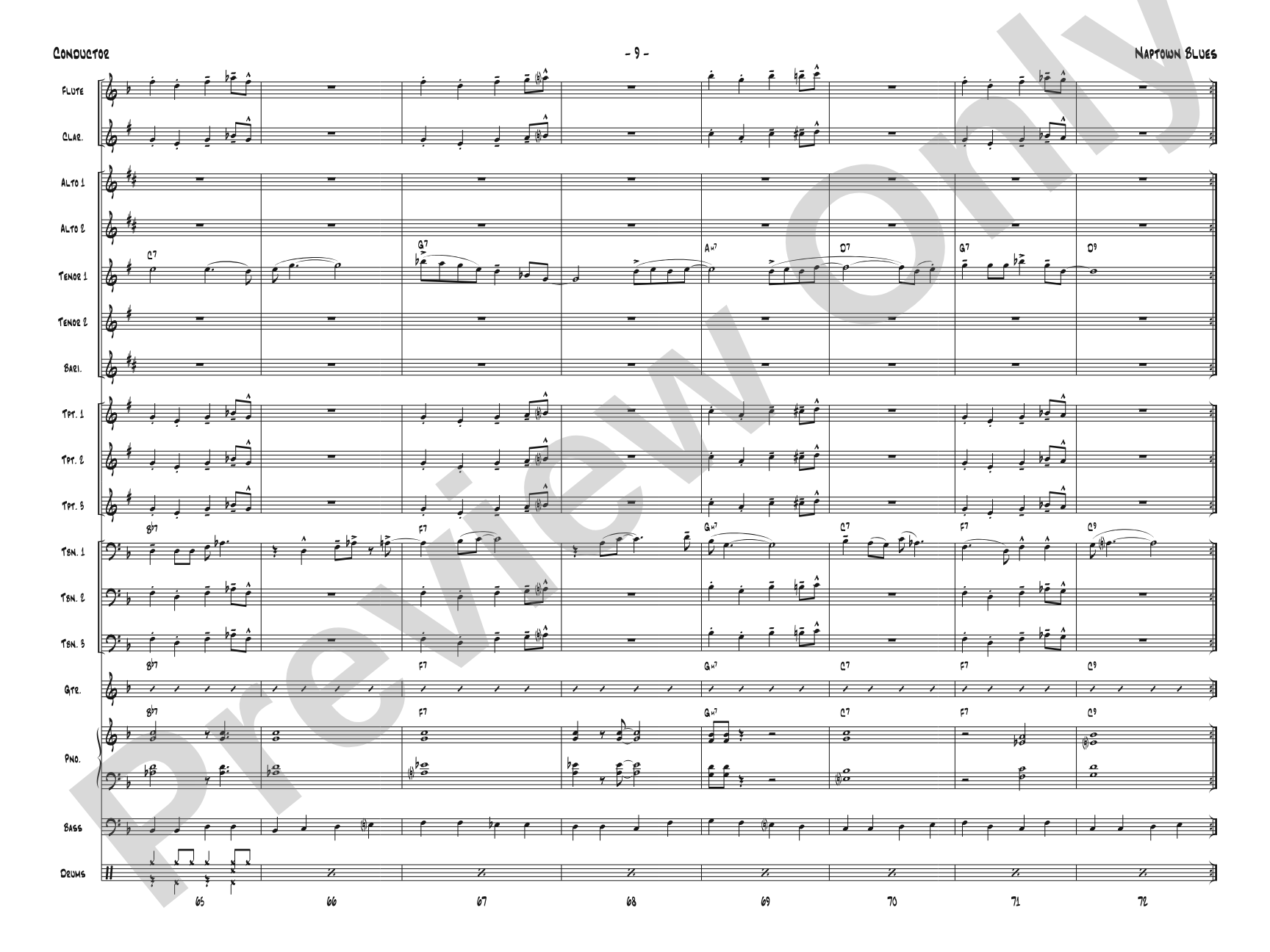
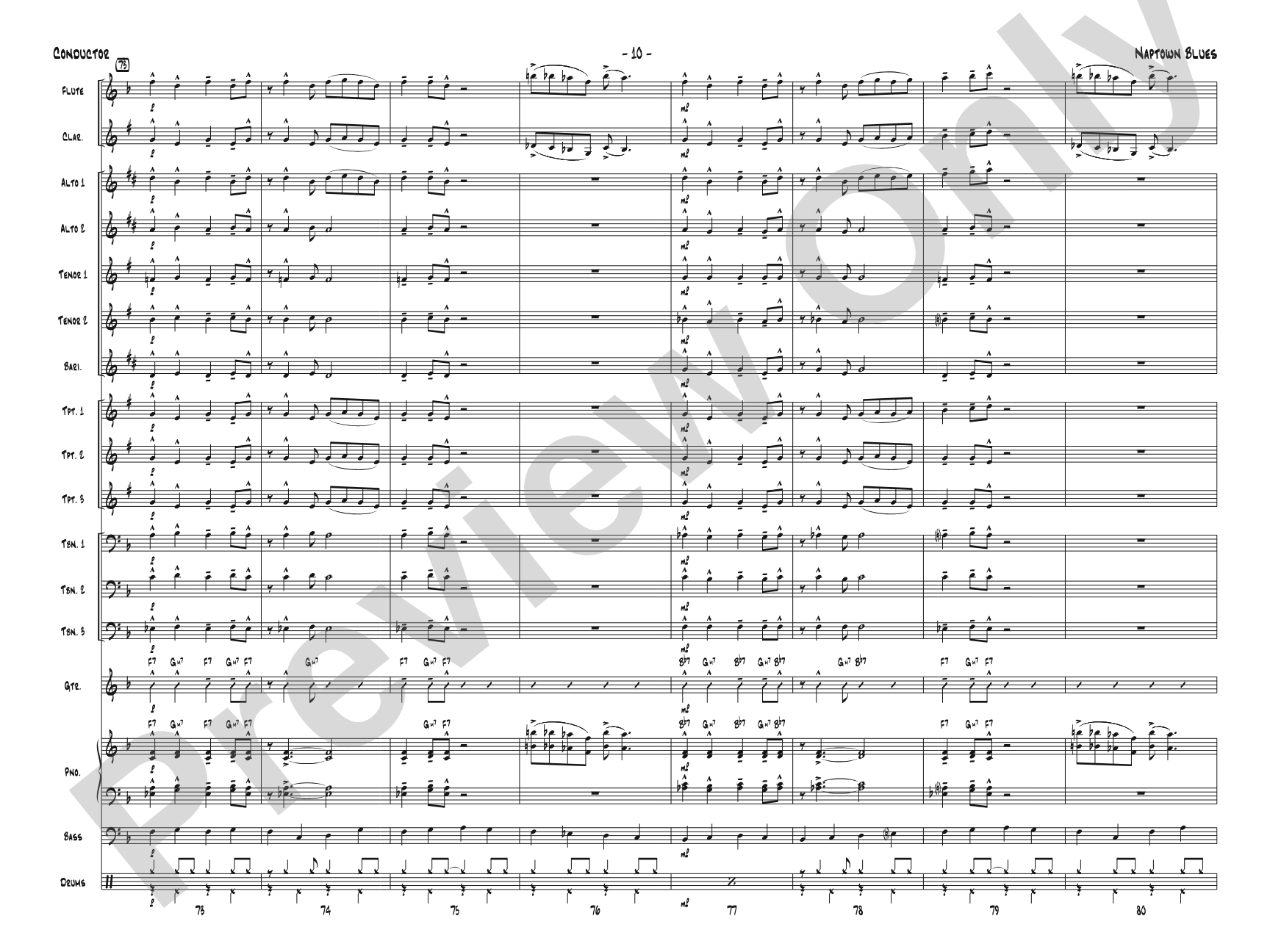
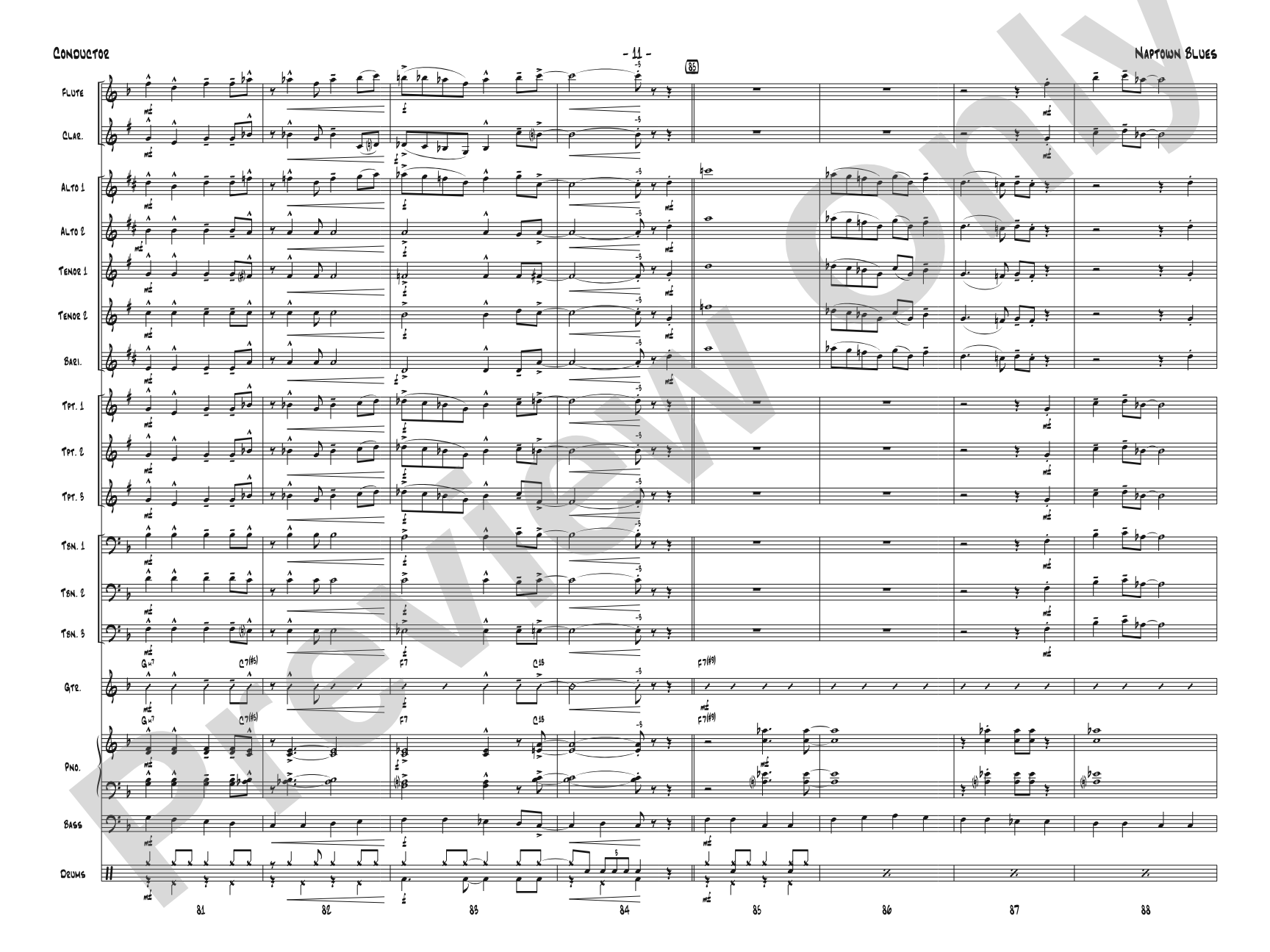
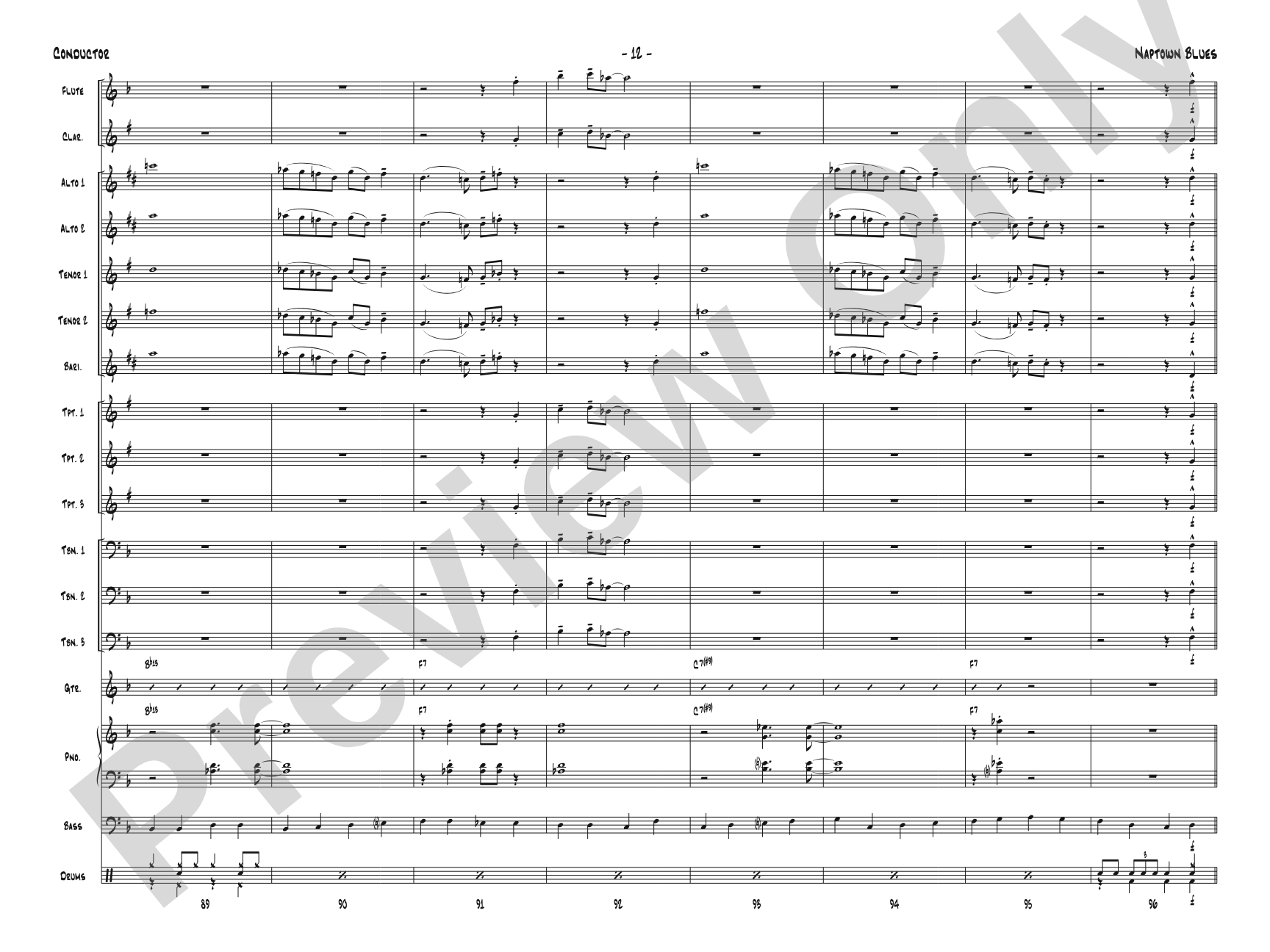
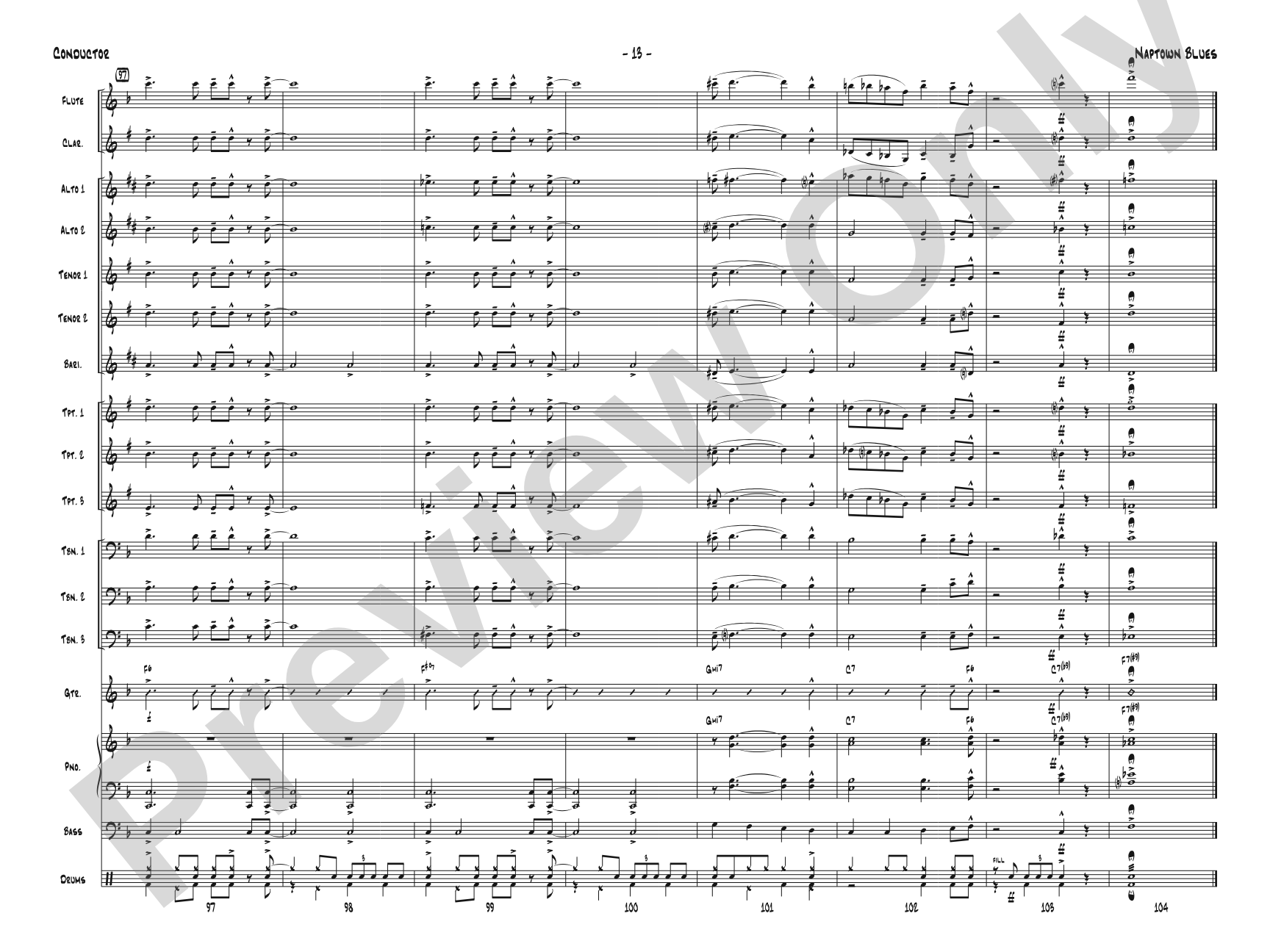

Naptown Blues: Jazz Ensemble Conductor Score & Parts
By John L. (Wes) Montgomery / arr. Terry White
Grade: 1
Item: 00-PK-0008547

$47.00
Pickup currently not available
Buy Extra Parts (Digital PDF Download)
| Product | Price | Quantity |
|---|---|---|
| Naptown Blues: Score | $8.00 | |
| Naptown Blues: E-flat Alto Saxophone | $3.00 | |
| Naptown Blues: 2nd E-flat Alto Saxophone | $3.00 | |
| Naptown Blues: B-flat Tenor Saxophone | $3.00 | |
| Naptown Blues: 2nd B-flat Tenor Saxophone | $3.00 | |
| Naptown Blues: E-flat Baritone Saxophone | $3.00 | |
| Naptown Blues: 1st B-flat Trumpet | $3.00 | |
| Naptown Blues: 2nd B-flat Trumpet | $3.00 | |
| Naptown Blues: 3rd B-flat Trumpet | $3.00 | |
| Naptown Blues: 1st Trombone | $3.00 | |
| Naptown Blues: 2nd Trombone | $3.00 | |
| Naptown Blues: 3rd Trombone | $3.00 | |
| Naptown Blues: Guitar Chords | $3.00 | |
| Naptown Blues: Guitar | $3.00 | |
| Naptown Blues: Piano Accompaniment | $3.00 | |
| Naptown Blues: String Bass | $3.00 | |
| Naptown Blues: Drums | $3.00 | |
| Naptown Blues: Flute | $3.00 | |
| Naptown Blues: 1st B-flat Clarinet | $3.00 | |
| Naptown Blues: Vibraphone | $3.00 | |
| Naptown Blues: Tuba | $3.00 | |
| Naptown Blues: 1st F Horn | $3.00 | |
| Naptown Blues: Baritone T.C. | $3.00 |
Parts Added to Cart!
Description
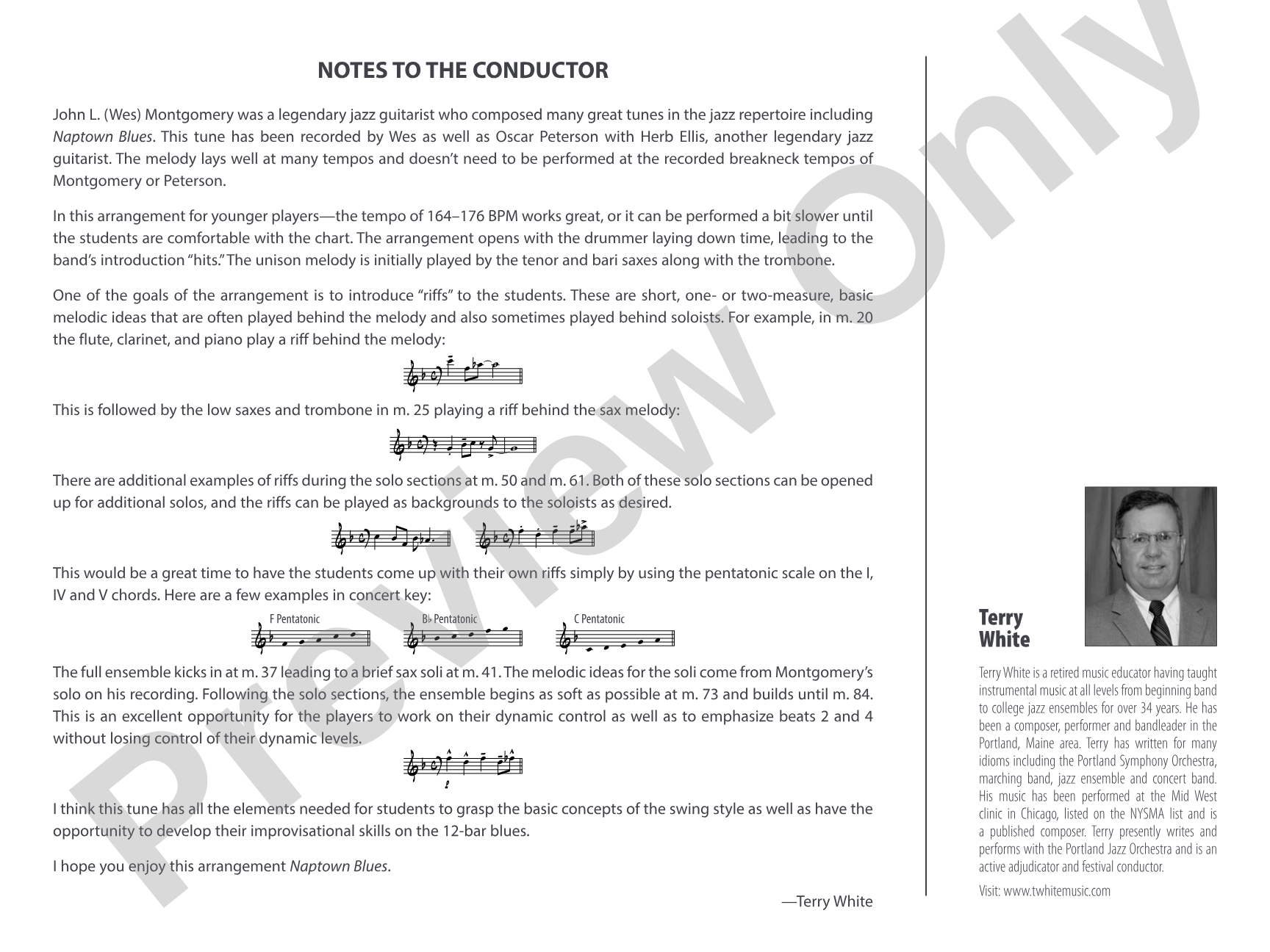
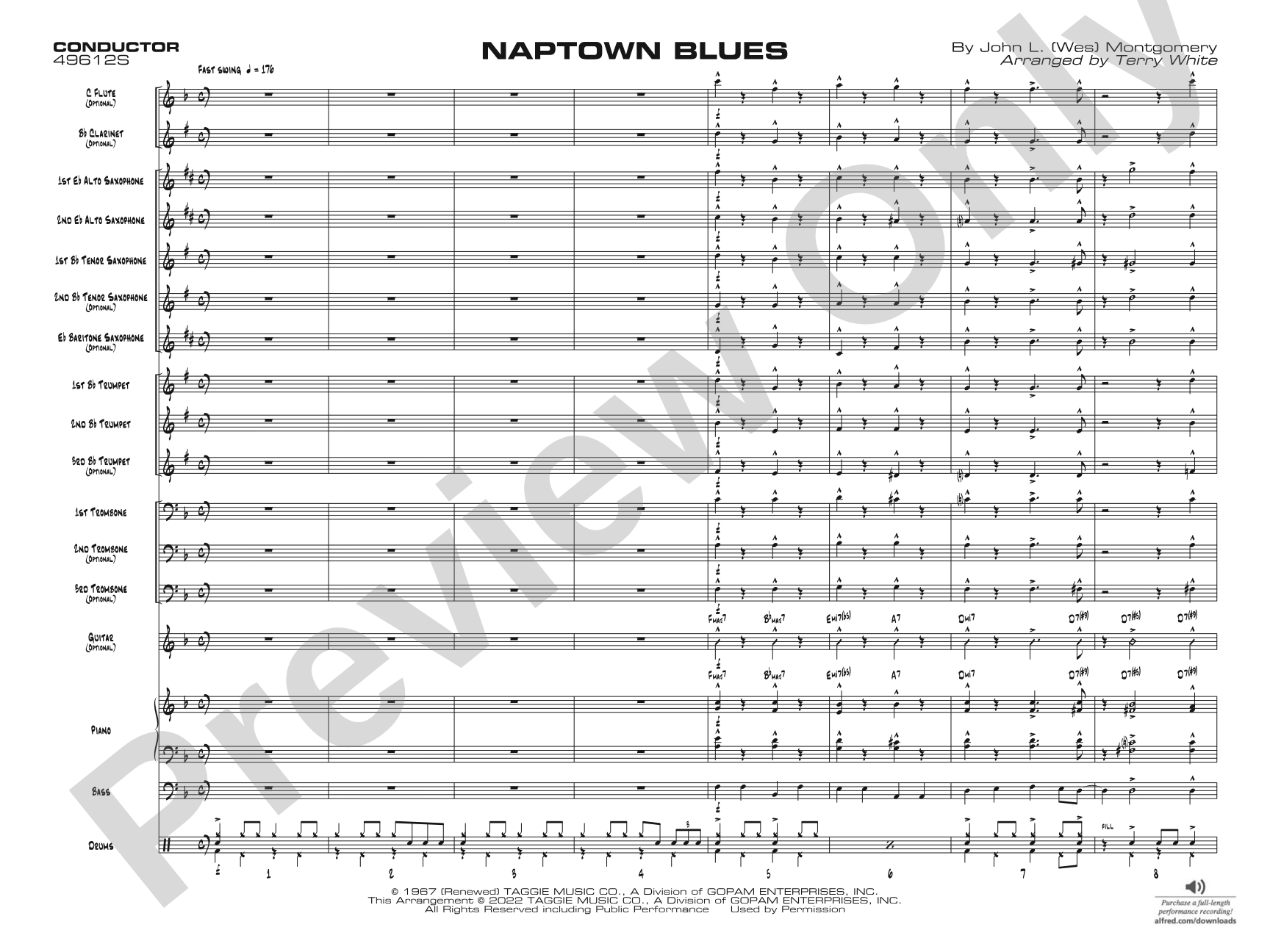
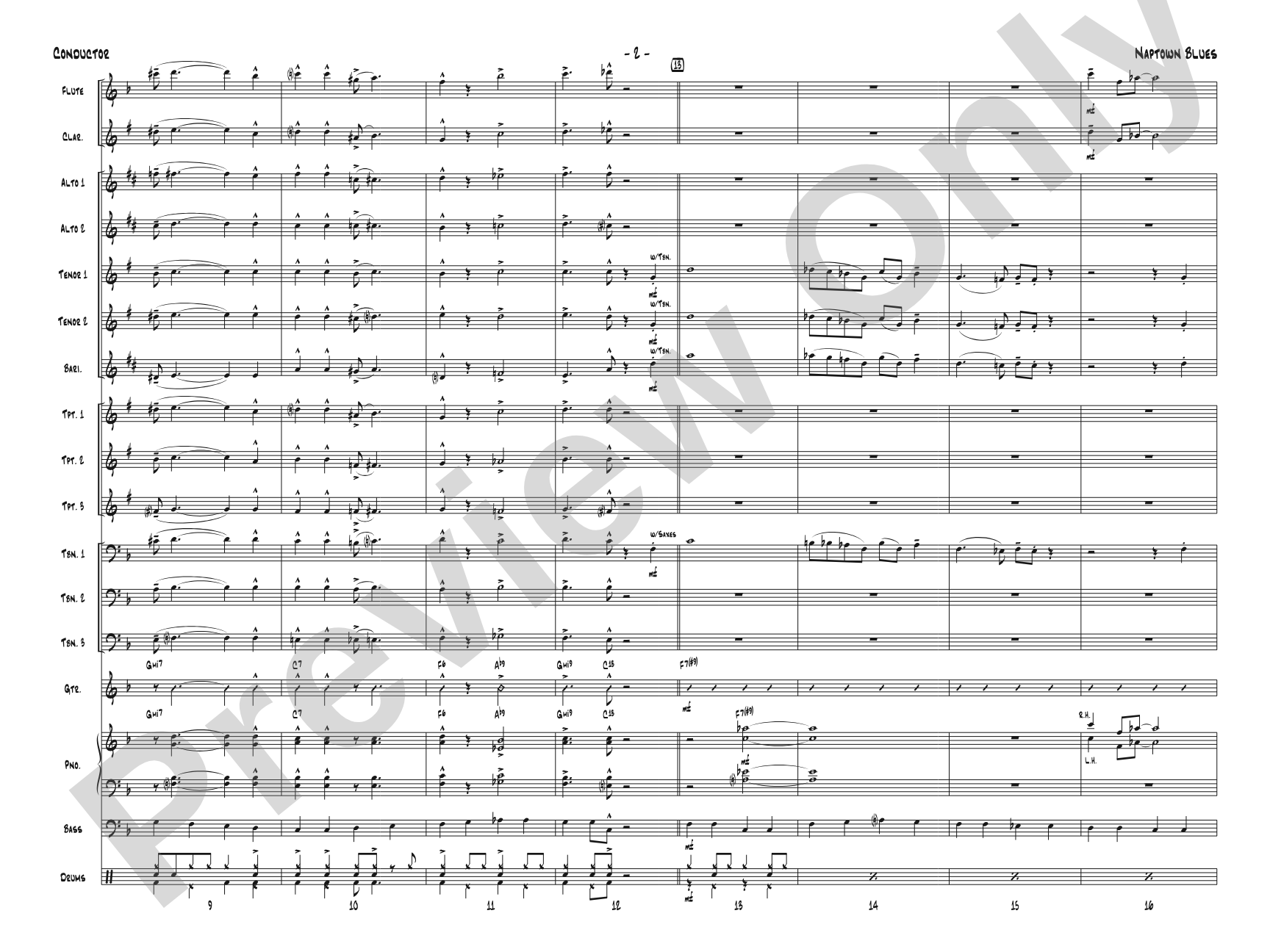
Naptown Blues arranged by Terry White is an accessible straight-ahead swinger played around 150 BPM, with a nice sax soli, written-out solos for alto 1, tenor 1, trumpet 1, and trombone 1. Trumpet 1 range is to written E top space with optional G, plus check out the hot shout chorus. Plenty of optional instruments plus vibes. Everything you need to succeed! (3:16) This title is available in MakeMusic Cloud.


Don't just read it, hear it, play along with it, and watch your students grow with it. In MakeMusic Cloud, Naptown Blues: Jazz Ensemble Conductor Score & Parts comes alive with professional accompaniment, adjustable tempo, and built-in practice tools that turn solo practice into real progress.
Open in the Player
Jump straight in and assign it today.
Start Your Free Trial
Open this title and explore the full library in minutes.
Sample Audio
1
Audio File
--:--
0:00
0:00
Sample Video
Additional Details
Series:
First Year Charts for Jazz Ensemble
Publisher:
Alfred Music
SKU:
00-PK-0008547
More about this title
About the Composer: John (Wes) L. Montgomery
Wes Montgomery stands as one of jazz's most influential guitarists, a self-taught musician who revolutionized the instrument by playing single-note lines with his thumb instead of a pick. His warm tone, harmonic sophistication, and accessible melodies made him one of the few jazz musicians to achieve genuine mainstream popularity during the 1960s. Montgomery's compositions have become standards in both the jazz and educational repertoires, prized for their musicality and their ability to work across different skill levels.
Why we love this
Terry White's arrangement distills what makes Naptown Blues so effective as a teaching vehicle: a steady, grooving tempo that feels good immediately, individual soloing opportunities that build chops without overwhelming students, and a shout chorus that gives the band a moment to shine together. The Grade 1 designation doesn't mean simplistic; it means the parts are written thoughtfully for developing players who are ready to handle real jazz vocabulary.
What to expect
Naptown Blues swings with the kind of natural groove that makes students want to play it again. There's no academic heaviness here; instead, you get a straightforward, infectious blues sensibility that feels both accessible and genuinely musical. The solos invite individual expression, and the collective moments give everyone a sense of ensemble purpose.
Who it's for
First-year jazz ensemble students and directors building repertoire for groups transitioning from basic techniques to genuine jazz playing. The part writing accommodates developing musicianship while the solos and ensemble passages demand authentic jazz articulation and phrasing.
How to get the most out of it
- Keep the swing eighth notes relaxed and bouncy rather than mechanical. The rhythm section sets the pocket early; once it locks in, the soloists will find their natural phrasing against that foundation.
- Balance the sax soli so the melody sings above the ensemble texture without forcing volume. These passages work best when they feel inevitable rather than featured.
- Give the written solos breathing room. The alto 1, tenor 1, trumpet 1, and trombone 1 solos are opportunities for students to develop their own sound within a structured framework; let them own these moments.
- Shape the shout chorus as a true climax. The ensemble needs to lock in rhythmically and dynamically build toward this peak, which rewards crisp articulation and unified phrasing.
How to use it
This works beautifully as a festival or contest selection for newer jazz ensembles, offering visibility without the technical demands of more complex charts. It also makes an excellent program opener or closer when you want to establish the band's swing foundation before moving into more adventurous repertoire.
Skills your students will build
- Straight-ahead jazz articulation and phrasing at medium tempo
- Blues tonality and blues form navigation
- Solo line construction with written frameworks as models
- Ensemble lock and rhythmic precision in swing style
- Saxophone section blend and solo integration
- Trumpet range extension with optional upper register options