

Nanie-Nenia: Choir
By Johannes Brahms
Item: 00-PB-0001158
$6.99
Pickup currently not available
Related Items
Nanie-Nenia: SATB Choral Book |
$6.99
|
View |
Description
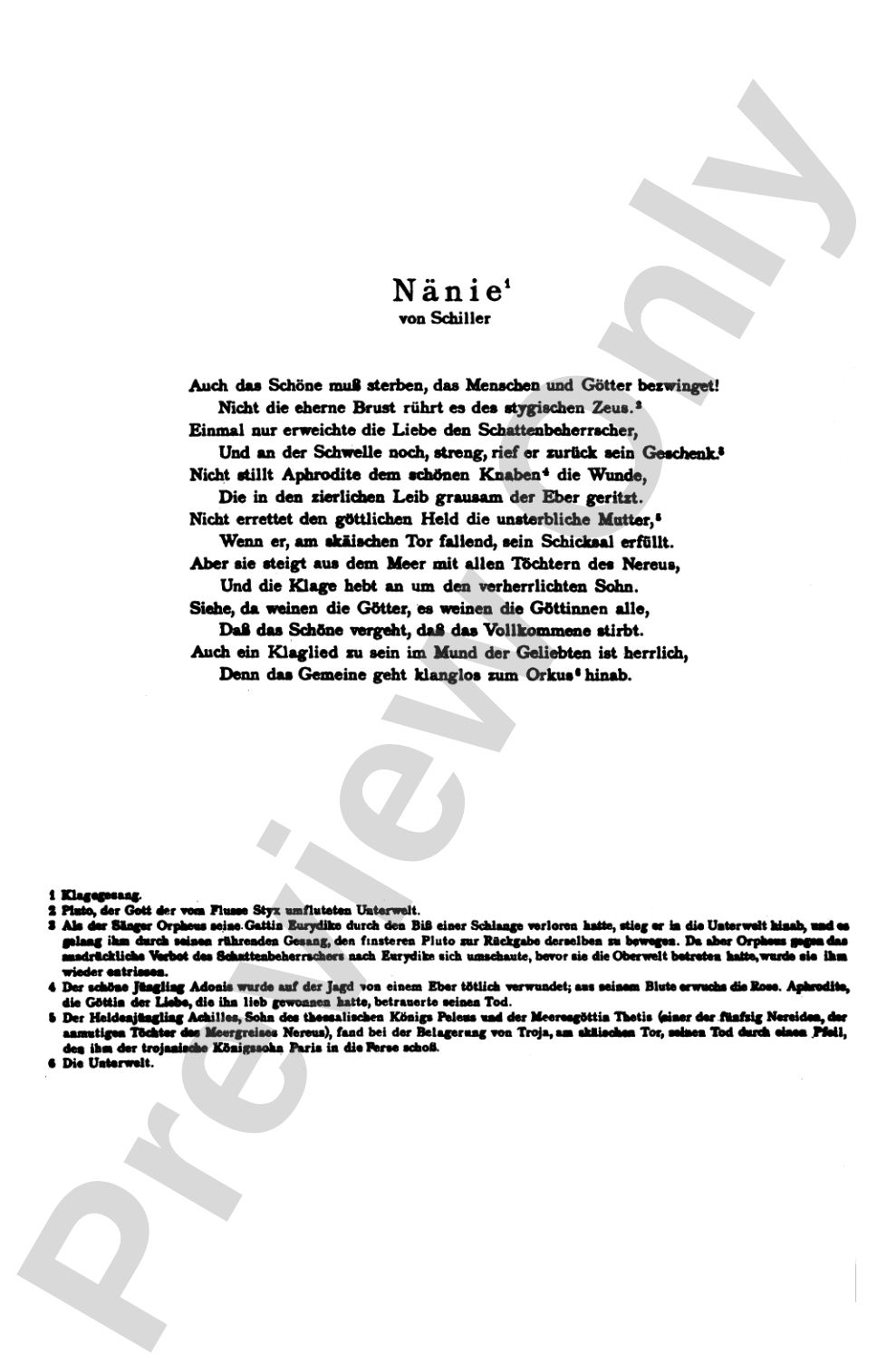
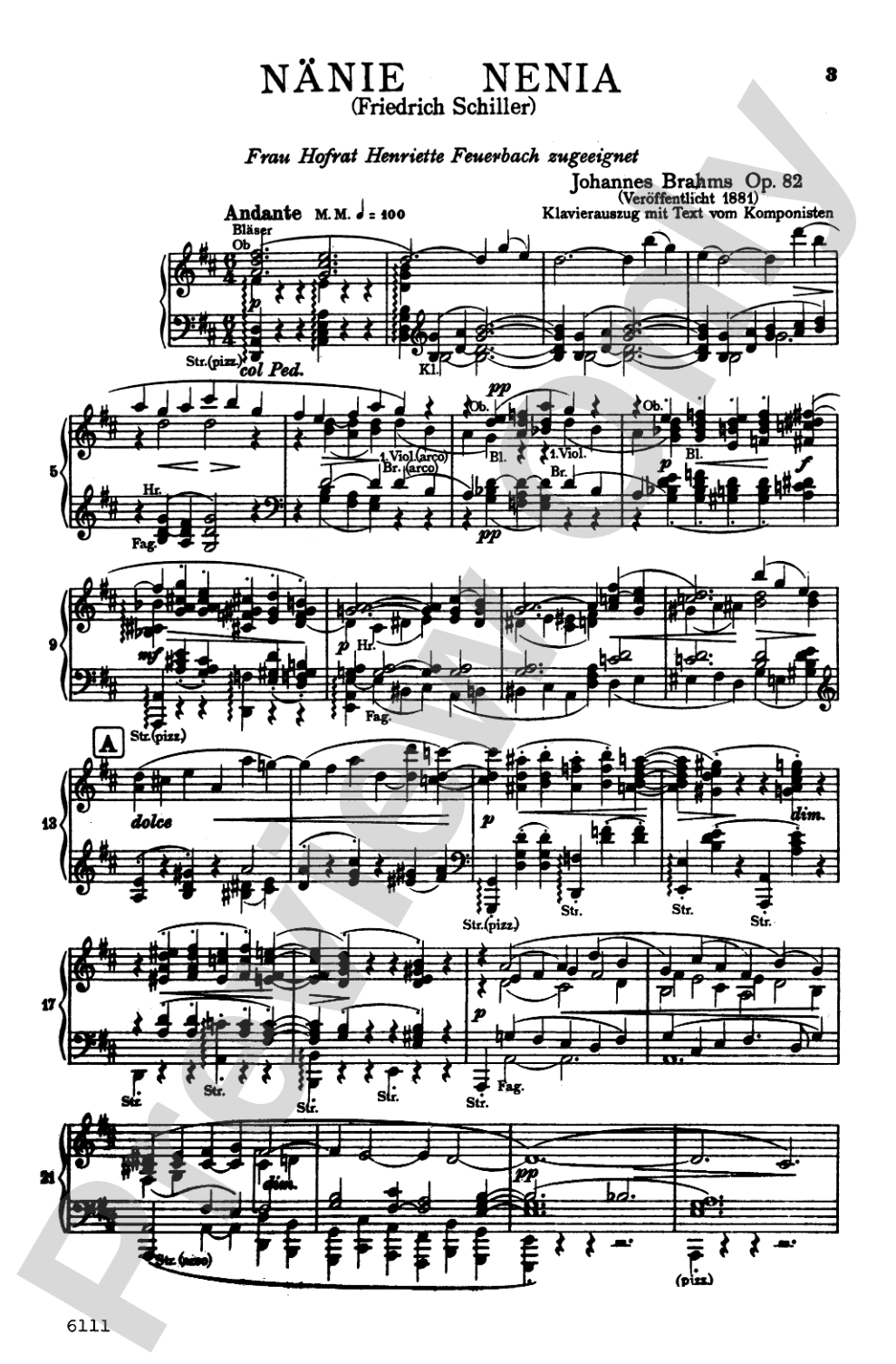
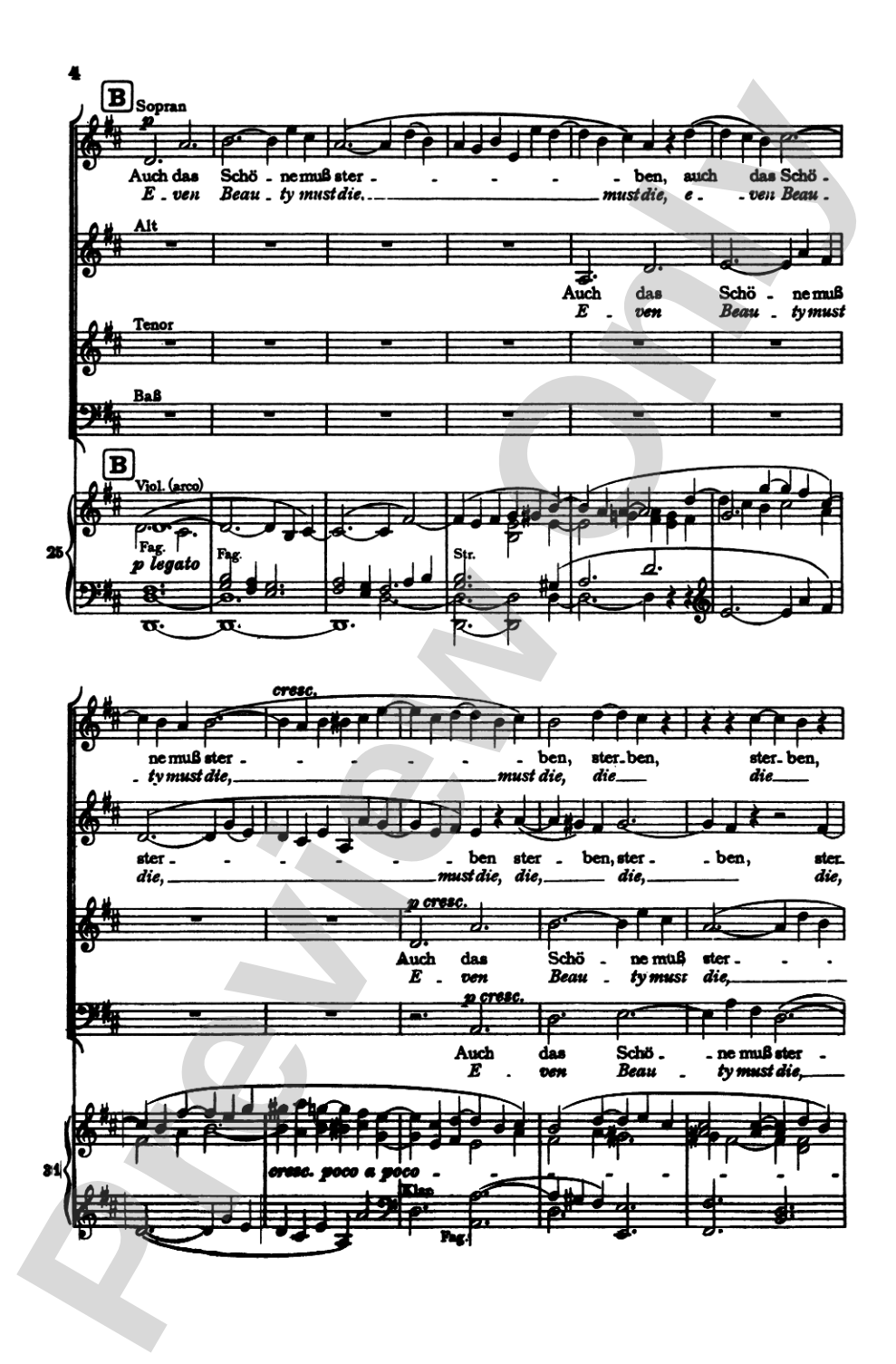
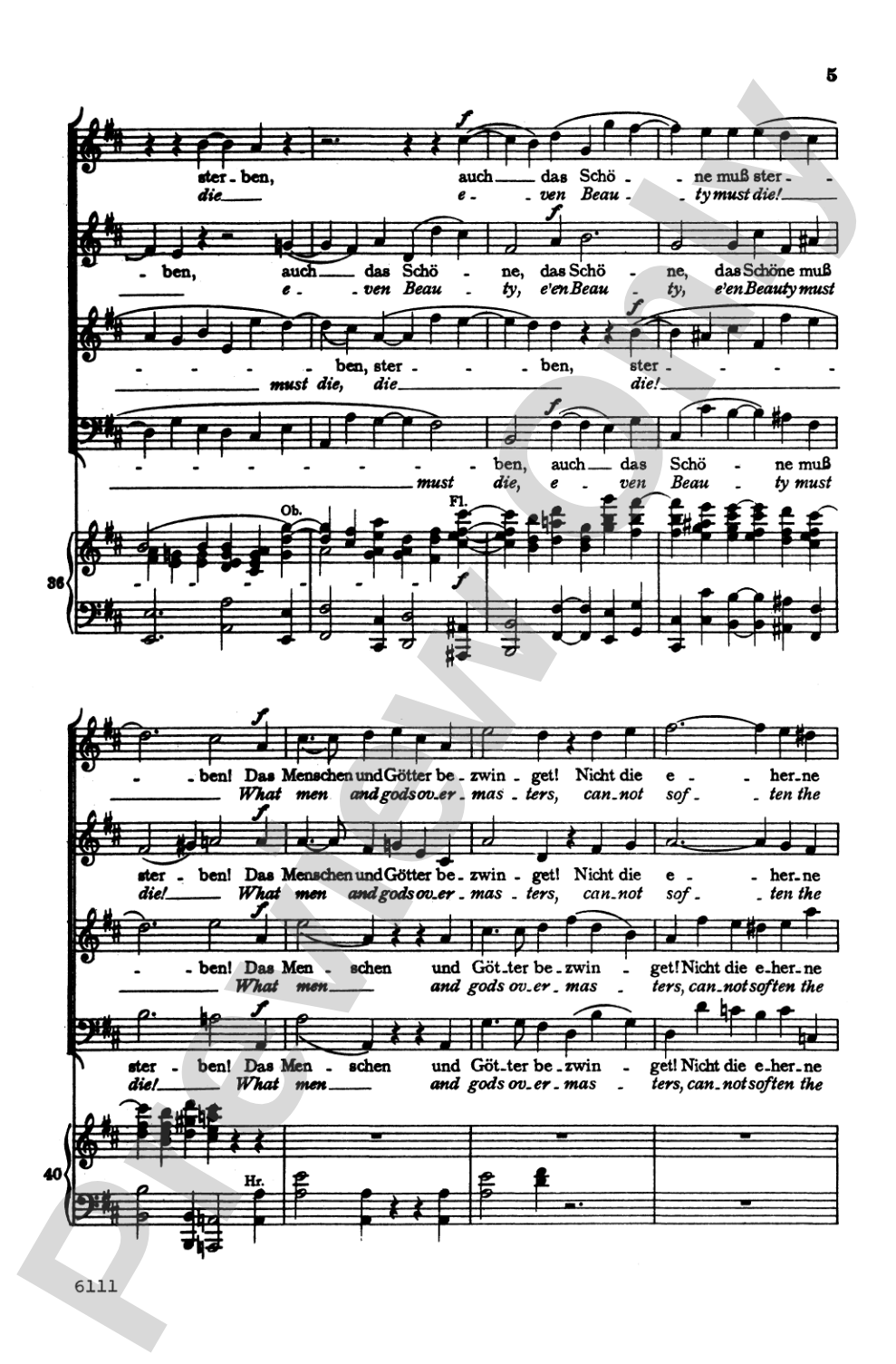
Brahms' Opus 82, for chorus and orchestra, titled "Nänie" (the German form of the Latin word "nenia," meaning "a funeral song") sets to music a poem by Friedrich Schiller. Brahms composed the piece in 1881, in memory of his deceased friend, Anselm Feuerbach. Choral score with piano accompaniment. Text in German and English.


Nanie-Nenia: Choir isn't in MakeMusic Cloud just yet...but it could be. Let us know you'd like to see it, and you'll help shape what comes next. In the meantime, start a free trial and dive into thousands of interactive titles your students can play along with today.
Request This Title
Tell us you want it.
Start Your Free Trial
Explore everything that's ready to play right now.
Sample Audio
No sample audio found.
Sample Video
No sample videos found.
Additional Details
Series:
Kalmus Edition
Publisher:
Alfred Music
Page Count:
24
SKU:
00-PB-0001158
More about this title
About the Composer: Johannes Brahms
Johannes Brahms (1833-1897) shaped the trajectory of Romantic music by reconciling the formal structures of the Classical tradition with the expressive possibilities of his era. His deep knowledge of music history informed every composition, and he brought that scholarly rigor to works across all genres. Brahms was celebrated during his lifetime for symphonies, concertos, and chamber music that combined intellectual architecture with profound emotional depth.
Brahms' choral writing occupied a special place in his output. He approached the human voice with the same care he devoted to orchestration and harmonic innovation, creating works that challenged singers while remaining deeply human in their expression. His secular choral masterworks stand alongside his German Requiem as evidence that the choral form could engage the most serious artistic questions of the age.
Why we love this
Nänie represents Brahms at his most formally ambitious and emotionally unguarded. The piece demands mature singers who can sustain long phrases and navigate chromatic harmony with conviction, making it an ideal capstone work for an experienced ensemble. Programming this Romantic meditation on mortality creates a profound concert moment that audiences remember long after the final chord.
What to expect
Brahms paints an elegiac landscape where grief finds expression through lyrical beauty rather than dramatic outburst. The harmonic language shimmers with unexpected colors, and the long, arcing phrases create moments of transcendent stillness broken by passages of searching intensity. This is intimate music on a grand scale, personal mourning given monumental form.
Who it's for
This work suits advanced SATB ensembles with strong soprano and alto sections and singers who read accidentals and shifting harmonic centers fluently. Conductors seeking substantial secular choral repertoire for concert programming or festival performance will find in Nänie a piece that commands respect from both performers and audiences.
How to get the most out of it
- Shape the opening unison passage with clear diction while maintaining the legato line; the words carry as much weight as the melody itself.
- Balance the orchestral accompaniment so that instrumental color supports rather than overshadows the choral sound; this is ultimately about the text.
- Attend to the German text pronunciation before English translation work begins; Schiller's language contains the emotional specificity Brahms responded to.
- Build cumulative intensity through the middle sections by tracking dynamic shifts across all four voices rather than treating each section independently.
How to use it
Nänie works powerfully as a centerpiece for a concert devoted to Romantic choral masters or as a thematic anchor for a program exploring mortality and memorial in music. Its modest duration (approximately 12 minutes) makes it substantial without overwhelming a concert structure, and its introspective character gains resonance when paired with other mid-19th-century works or earlier sacred settings.
Skills your students will build
- reading chromatically altered chords and harmonic ambiguity in Romantic idiom
- sustaining long legato phrases across extended range
- balancing text intelligibility in German with musical phrasing
- ensemble blend and balance across four voices with complex counterpoint
- interpreting conductor's shape and timing in passages without regular metric pulse