Mystic Prelude Sheet Music Preview

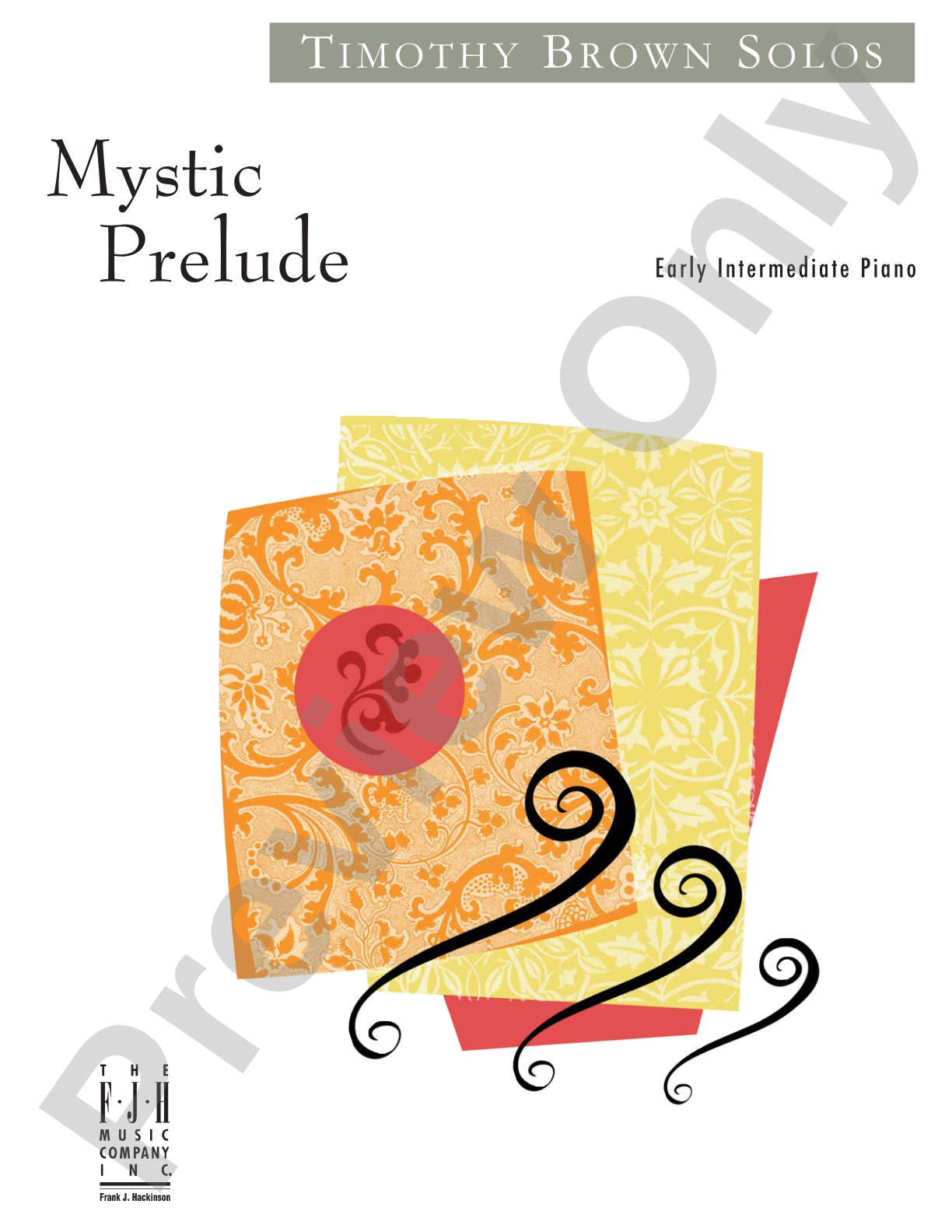
Mystic Prelude: Piano

By Timothy Brown

Item: 98-DW9090

Digital Download
$4.95
Description
A stirring composition that calls for an expressive, legato touch. Written in E minor, this haunting prelude features broken chords in 6/8 time.

Mystic Prelude: Piano isn't in MakeMusic Cloud just yet...but it could be. Let us know you'd like to see it, and you'll help shape what comes next. In the meantime, start a free trial and dive into thousands of interactive titles your students can play along with today.

Sample Audio
No sample audio found.
Sample Video
Additional Details
Series: Written For You
Publisher: The FJH Music Company, Inc.
SKU: 98-DW9090

More about this title

Why we love this

This prelude achieves something difficult: it sounds substantial and emotionally mature without demanding virtuosic technique. The broken chord accompaniment in 6/8 time creates motion and atmosphere simultaneously, giving students real interpretive work to do within an accessible range.

What to expect

Hushed and inward. The E minor tonality carries a contemplative weight while the broken chords provide gentle ripples beneath the surface, creating a sense of stillness with subtle movement. The 6/8 time gives it a rocking, almost meditative quality.

Who it's for

Intermediate pianists and early intermediate students ready to explore interpretive legato playing and work with 6/8 meter. This piece suits those developing emotional nuance and comfort sustaining a single musical idea across longer phrases.

How to get the most out of it

  • Shape the broken chord patterns with gentle dynamic swells rather than playing them at a consistent level. Let the hand follow the natural arc of the broken figures to create forward momentum.
  • Experiment with sustain pedal carefully in the E minor context. Change it with harmonic movement rather than holding it through entire measures, which can blur the legato line.
  • Approach the legato marking as a singing quality rather than a technical exercise. Ask yourself what the melody would sound like if sung with a warm, connected voice, then aim for that sonority at the keyboard.
  • Take time with tempo decisions in rehearsal. The contemplative character supports a moderate pace that allows the broken chords to settle and breathe rather than rushing.

How to use it

Place this as a solo recital opener to set an intimate tone, or pair it with more rhythmically active pieces to showcase contrasting character. Its moderate length and reflective mood make it effective for early season student recitals or showcases emphasizing interpretive growth.

Skills your students will build

  • Sustaining legato touch across broken chord accompaniment patterns
  • Reading and performing in 6/8 meter
  • Pedal control and harmonic awareness
  • Expressive phrasing and dynamic shaping without technical pyrotechnics

You May Also Like