Mystic Legend Sheet Music Preview

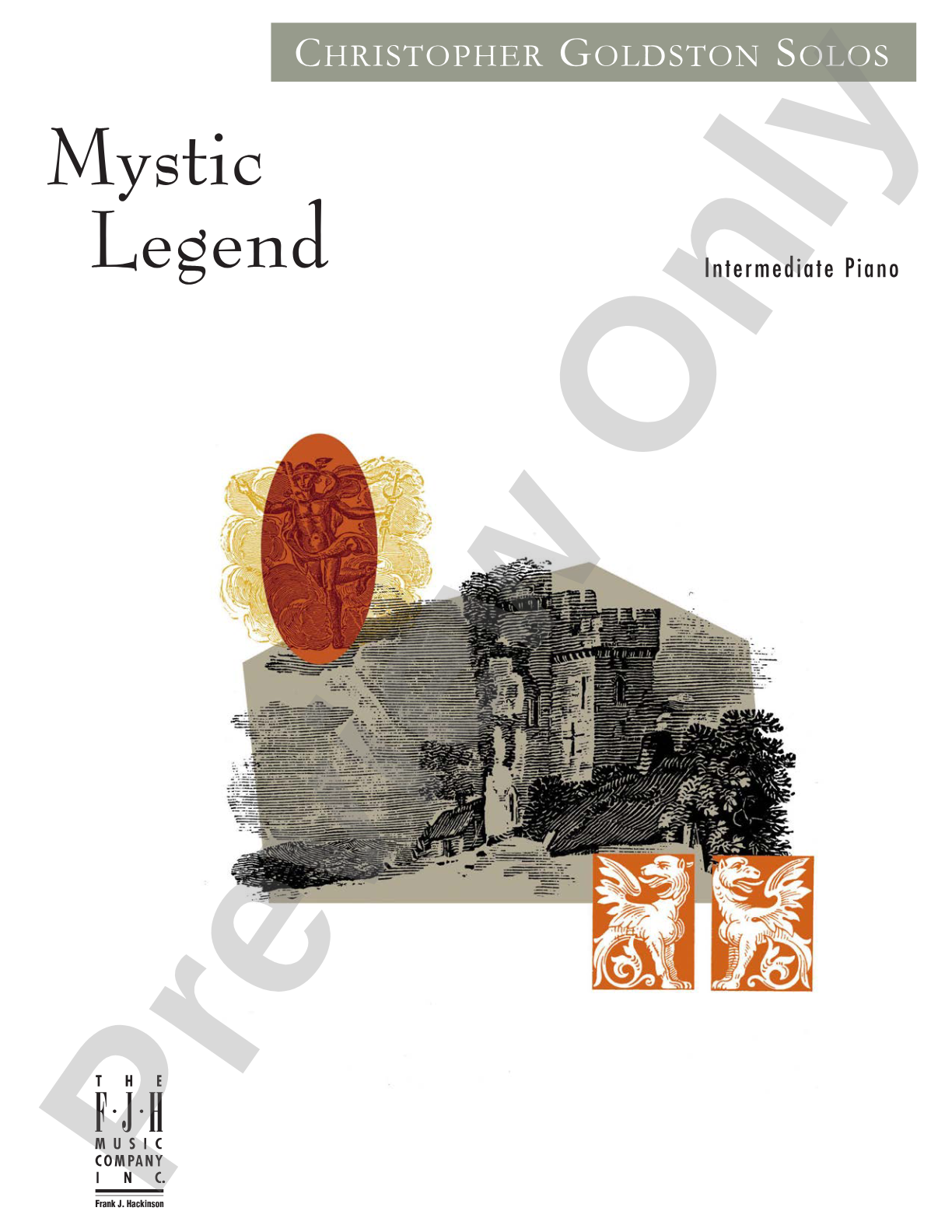
Mystic Legend: Piano

By Christopher Goldston

Item: 98-DW9052

Digital Download
$1.95
Description
Contemporary-sounding and pianistic. This haunting solo features an arpeggiated accompaniment in the left hand, and a singing right-hand melody.

Mystic Legend: Piano isn't in MakeMusic Cloud just yet...but it could be. Let us know you'd like to see it, and you'll help shape what comes next. In the meantime, start a free trial and dive into thousands of interactive titles your students can play along with today.

Sample Audio
No sample audio found.
Sample Video
Additional Details
Series: Written For You
Publisher: The FJH Music Company, Inc.
SKU: 98-DW9052

More about this title

About the Composer: Christopher Goldston

Christopher Goldston

Christopher Goldston earned his Master of Music in piano performance and pedagogy from Northwestern University and his Bachelor of Music degree in piano performance from the University of North Carolina-Greensboro. He has held faculty positions at Columbia College Chicago, Roosevelt University, and Sherwood Conservatory of Music, and continues to teach private students both in his Chicago studio and online.

Goldston's compositions have earned national recognition, including the Lynn Freeman Olson Composition Award from the National Federation of Music Clubs in 1991 for his work Night Train. As national coordinator of the MTNA Composition Competition since 2010, he has shaped the landscape of contemporary music education. In 2022, MTNA commissioned him to compose Four Virtues for oboe, violin, and piano, which premiered at the national conference. He served as MTNA National Secretary-Treasurer from 2021-2023 and was named an MTNA Foundation Fellow in 2020.

Why we love this

Goldston writes with a keen ear for what sounds beautiful under the hands. The arpeggiated left-hand accompaniment is pianistic without being fussy, and it sits naturally across the middle and lower registers, allowing the right hand to sing without competition. This piece proves that contemporary music for intermediate pianists doesn't have to choose between musical substance and player satisfaction.

What to expect

Mystic Legend creates an atmosphere of quiet mystery and intrigue. The arpeggiated foundation suggests movement and searching, while the singing melody emerges with a sense of yearning and beauty, as if telling a story half-remembered. The overall effect is atmospheric and contemplative, drawing the listener into a private moment.

Who it's for

Intermediate pianists seeking a contemporary solo with genuine musicality and modern sensibility. This piece works for recital repertoire, festival performances, or students developing their ability to balance accompaniment texture with lyrical melody.

How to get the most out of it

  • Shape the right-hand melody with the same care you'd give a vocal line; resist the urge to let accompaniment patterns pull focus from the singing voice.
  • Find the sweet spot with the arpeggios: they should shimmer and float, not race or drag. Consistency in evenness will let the melody breathe.
  • Pedal mindfully through the arpeggiated passages to create harmonic resonance without muddying the texture. Change with harmonic shifts, not predictably.
  • Explore the full dynamic range the piece allows. The haunting quality depends on contrasts between quieter introspective moments and fuller, more confident passages.

How to use it

Pair this with other contemporary character pieces to showcase modern approaches to piano writing, or use it as a bridge between classical and contemporary repertoire in a recital. Its compact length and immediate appeal make it suitable for festival play, while its musical depth rewards careful study in private lessons.

Skills your students will build

  • Independent voice management between hands, sustaining melody while maintaining rhythmic clarity in accompaniment
  • Arpeggiation technique with evenness and control across varying registers
  • Pedal technique for harmonic color without loss of clarity
  • Phrasing and shaping in contemporary music with minimal textural cues
  • Interpretive choices in dynamics and tempo flexibility to convey emotional narrative

You May Also Like