
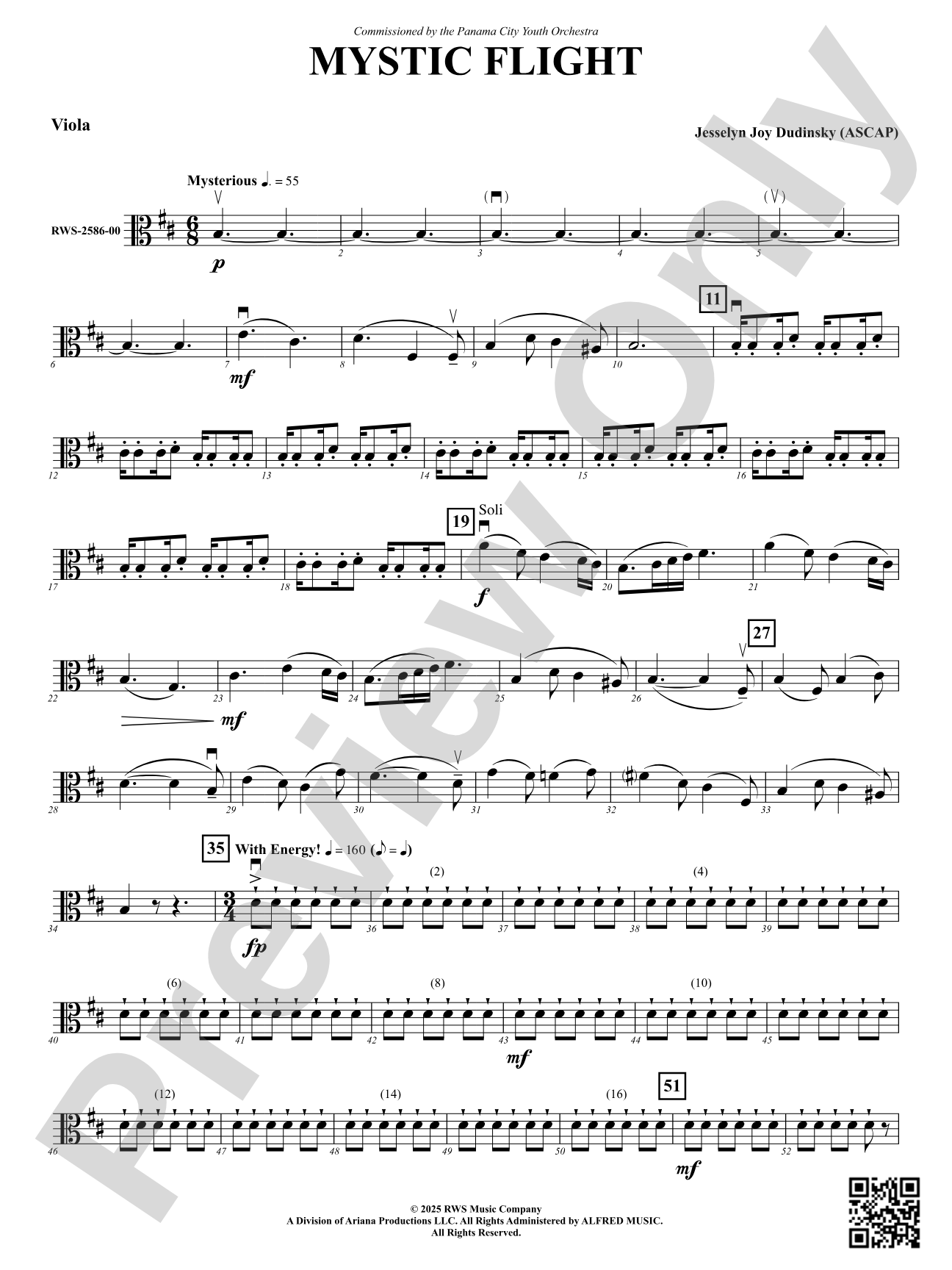

Mystic Flight: Viola
By Jesselyn Joy Dudinsky
Grade: 3
Item: 98-PC-RWS2586_VA1
$5.99
Pickup currently not available
Description
Take your string ensemble on a whimsical and adventurous journey with this imaginative piece by Jesselyn Joy Ddudinsky! Mystic Flight sharpens intonation and section unity, featuring unison passages. The playful main theme with accidentals challenges young musicians, while the rhythmic secondary theme highlights violas and supports soaring violin lines. Expressive dynamics bring the lively opening, whimsical passages, and thrilling middle section to life, evoking the excitement of flying over majestic landscapes. This piece promises both musical growth and unforgettable moments for your ensemble.


Mystic Flight: Viola isn't in MakeMusic Cloud just yet...but it could be. Let us know you'd like to see it, and you'll help shape what comes next. In the meantime, start a free trial and dive into thousands of interactive titles your students can play along with today.
Request This Title
Tell us you want it.
Start Your Free Trial
Explore everything that's ready to play right now.
Sample Audio
1
Audio File
--:--
0:00
0:00
Sample Video
Additional Details
Series:
RWS - Concert Strings
Publisher:
RWS Music Company
SKU:
98-PC-RWS2586_VA1
More about this title
Why we love this
Dudinsky writes with a clear sense of what young string players need: passages that build ensemble cohesion alongside moments that let individual sections shine. The rhythmic dialogue between violas and violins adds texture without overwhelming younger musicians, and the playful use of accidentals in the main theme gives everyone something genuine to work toward rather than a piece that simply sits on one harmonic level.
What to expect
Soaring and inventive, like watching a bird navigate mountain peaks and sudden drops. The opening dances with playful mischief; the middle section builds urgency and excitement; throughout, the orchestration sparkles because every section has a moment to participate in the storytelling rather than simply fill harmony.
Who it's for
String orchestras in grades 3-4, particularly groups working toward festivals or looking for a piece that serves both as a musical showcase and a technical checkpoint for intonation and rhythmic independence. The scoring suits ensembles with solid section leaders and players who can handle multiple rhythmic ideas happening simultaneously.
How to get the most out of it
- Isolate the unison passages in sectional rehearsals first, then bring sections together to lock intonation before tackling the full ensemble sound.
- Mark the accidentals in the main theme during a slow, deliberate read-through; these won't feel natural at first, so naming each one aloud helps prevent autopilot mistakes.
- Let the secondary theme breathe in the violas. Many young directors rush the rhythm section, but when violas sit solidly, the violin lines above them soar instead of scramble.
- Shape the dynamic contrasts explicitly. Young ensembles often play one volume throughout; marking specifically where the lively opening peaks, where whimsy softens, and where the middle section ignites gives musicians a roadmap.
How to use it
This works beautifully as a festival or concert opener that energizes an audience while showcasing your ensemble's growth in precision and expressivity. It also pairs well on a program with a baroque arrangement or a calmer piece that follows; the contrast lets audiences appreciate both the whimsy here and the restraint elsewhere.
Skills your students will build
- Intonation accuracy across unison passages and shifting harmonic contexts
- Rhythmic independence and ensemble unity when multiple sections carry different figures simultaneously
- Reading and executing accidentals within a diatonic context
- Dynamic shaping and articulation as narrative tools
- Viola independence and confidence as a supporting voice