
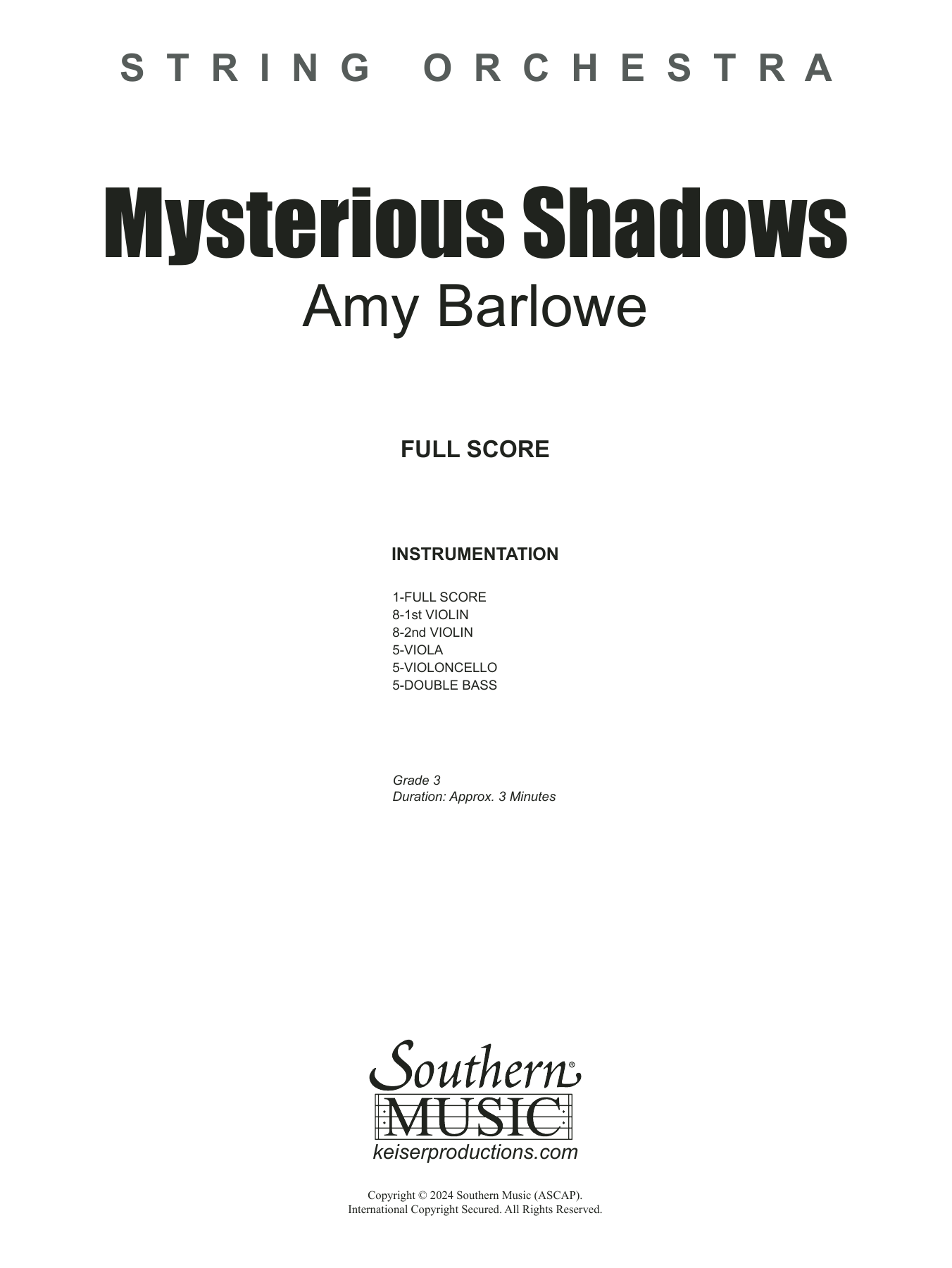

Mysterious Shadows: String Orchestra Conductor Score & Parts
By Amy Barlowe
Grade: 3
Item: 35-PK01511452
$50.00
Pickup currently not available
Buy Extra Parts (Digital PDF Download)
| Product | Price | Quantity |
|---|---|---|
| Mysterious Shadows - Full Score | $6.00 | |
| Mysterious Shadows - Violin 1 | $2.50 | |
| Mysterious Shadows - Violin 2 | $2.50 | |
| Mysterious Shadows - Viola | $2.50 | |
| Mysterious Shadows - Cello | $2.50 | |
| Mysterious Shadows - Bass | $2.50 |
Parts Added to Cart!
Description
This haunted dance in G minor will capture the hearts and souls of your students and their audiences. From its hypnotic opening to its swaying sicilienne rhythms, MYSTERIOUS SHADOWS has the power to transport its performers and listeners to mystical realms, while encouraging the kind of communication among players that heightens musical awareness and strengthens ties between instrumental sections. Imagination, as a key component of musical interpretation, can give practice, rehearsals, and every performance a new life. MYSTERIOUS SHADOWS will encourage your students imaginations to thrive while enabling the shadows lurking within this enchanting piece to shapeshift with every performance.


Discover MakeMusic Cloud: thousands of interactive titles your students can play along with today.
Sample Audio
No sample audio found.
Sample Video
Additional Details
Publisher:
Hal Leonard
SKU:
35-PK01511452
More about this title
About the Composer: Amy Barlowe
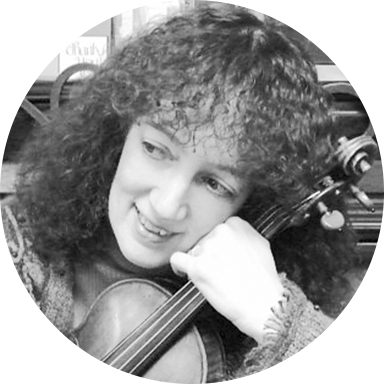
Amy Barlowe studied violin at Juilliard under Ivan Galamian and Margaret Pardee, earning both her B.M. and M.M. degrees before establishing herself as a soloist and chamber musician across North America and beyond. Her career includes teaching positions at prestigious institutions such as Juilliard Pre-College, Willamette University, and the Meadowmount School of Music, alongside performances and recordings that have earned critical acclaim for their musicianship and tonal refinement.
Beyond her work as a violinist, Barlowe has composed and arranged extensively for chamber and orchestral settings, including works for strings, vocal music, and her celebrated arrangement of Schindler's List endorsed by John Williams. Her contributions to string education reflect a deep understanding of instrumental writing and a commitment to creating repertoire that challenges and inspires young musicians.
Why we love this
String orchestras at this level rarely get music this theatrically confident. Barlowe crafts something genuinely atmospheric without demanding impossible technical feats, which means your students can focus entirely on communication and tone color rather than panic. The sicilienne rhythms provide the kind of textural anchor that makes rehearsals productive, while the G minor tonality gives the piece immediate character and psychological weight that audiences respond to immediately.
What to expect
The piece wraps itself around you like cool silk. It moves with the deliberate, almost hypnotic sway of a dance seen through fog, where each melodic thread emerges from shadow only to dissolve back into it. The overall effect is mysterious without being unsettling, inviting rather than haunting.
Who it's for
Grade 3 string orchestras ready to explore musical storytelling without strings falling apart technically. Directors seeking a showpiece that demands artistry rather than acrobatics will find Barlowe's writing speaks directly to young musicians' capacity for interpretation.
How to get the most out of it
- Establish the hypnotic quality of the opening by asking your violas and cellos to shape their entrances as if drawing a slow breath. This sets the piece's meditative foundation before other voices emerge.
- Balance the middle section by treating it as a gradual brightening rather than a sudden shift in mood. Light should seem to leak in through the shadows.
- Let your concertmaster lead the phrasing in the swaying sections with a clear, unhurried bow. The rest of the ensemble will follow naturally once they sense that confidence.
- Record a rehearsal and listen back as a section. Hearing themselves together often clarifies the ensemble blend far better than verbal feedback alone.
How to use it
Position this as an encore or the final work on a concert devoted to mood and color rather than virtuosity. It pairs beautifully with other atmospheric pieces or can anchor a program exploring minor key writing for young orchestras. The piece works equally well in spring concerts or winter holiday programming depending on your thematic choices.
Skills your students will build
- Sustaining tone and phrasing across longer note values
- Balancing ensemble voices in thick textures
- Responding to choreographed ensemble cues from the concertmaster
- Interpreting musical mood through bow control and dynamics
- Maintaining rhythmic precision within sicilienne figures
- Sectional independence while maintaining collective cohesion