
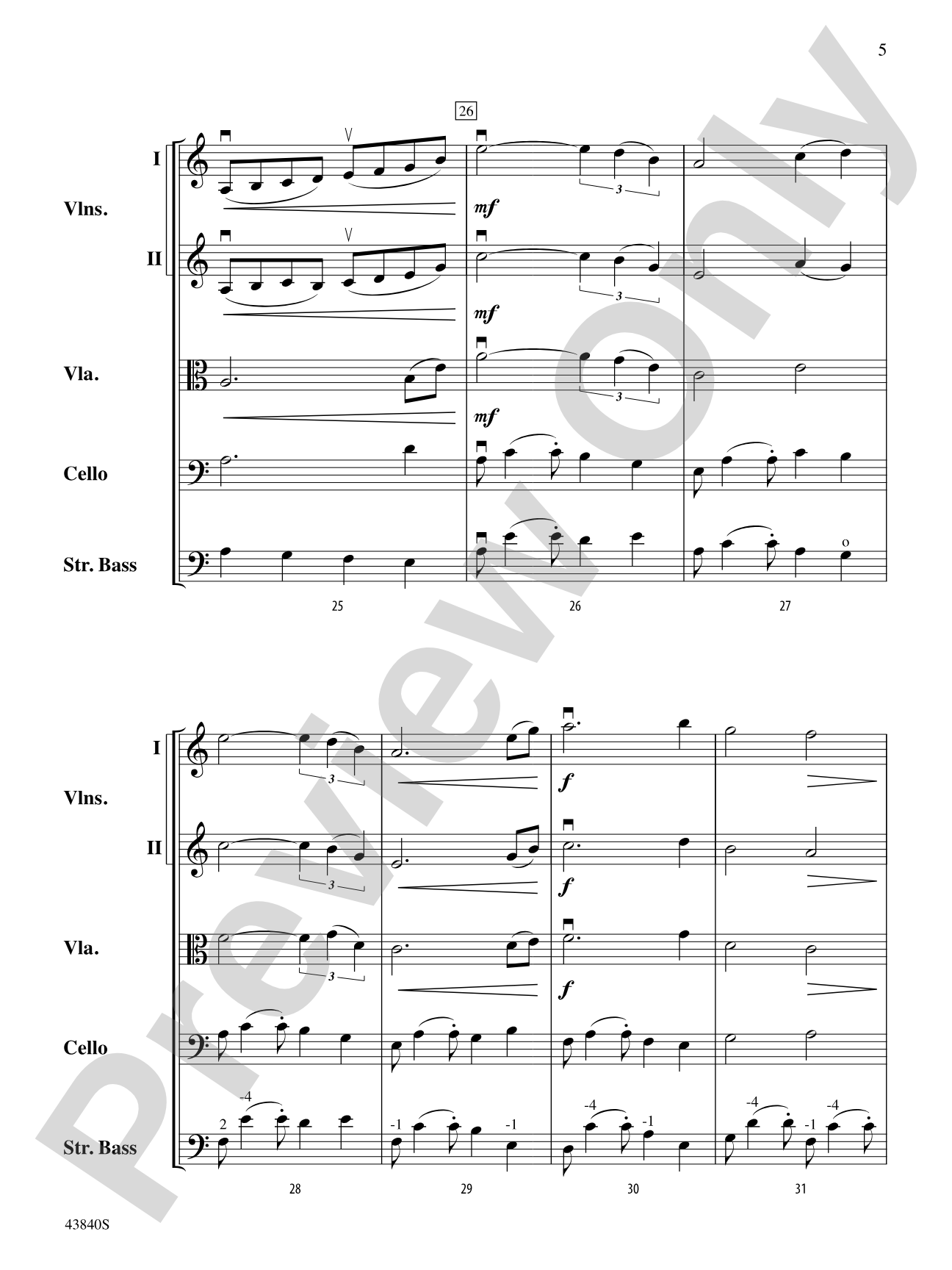
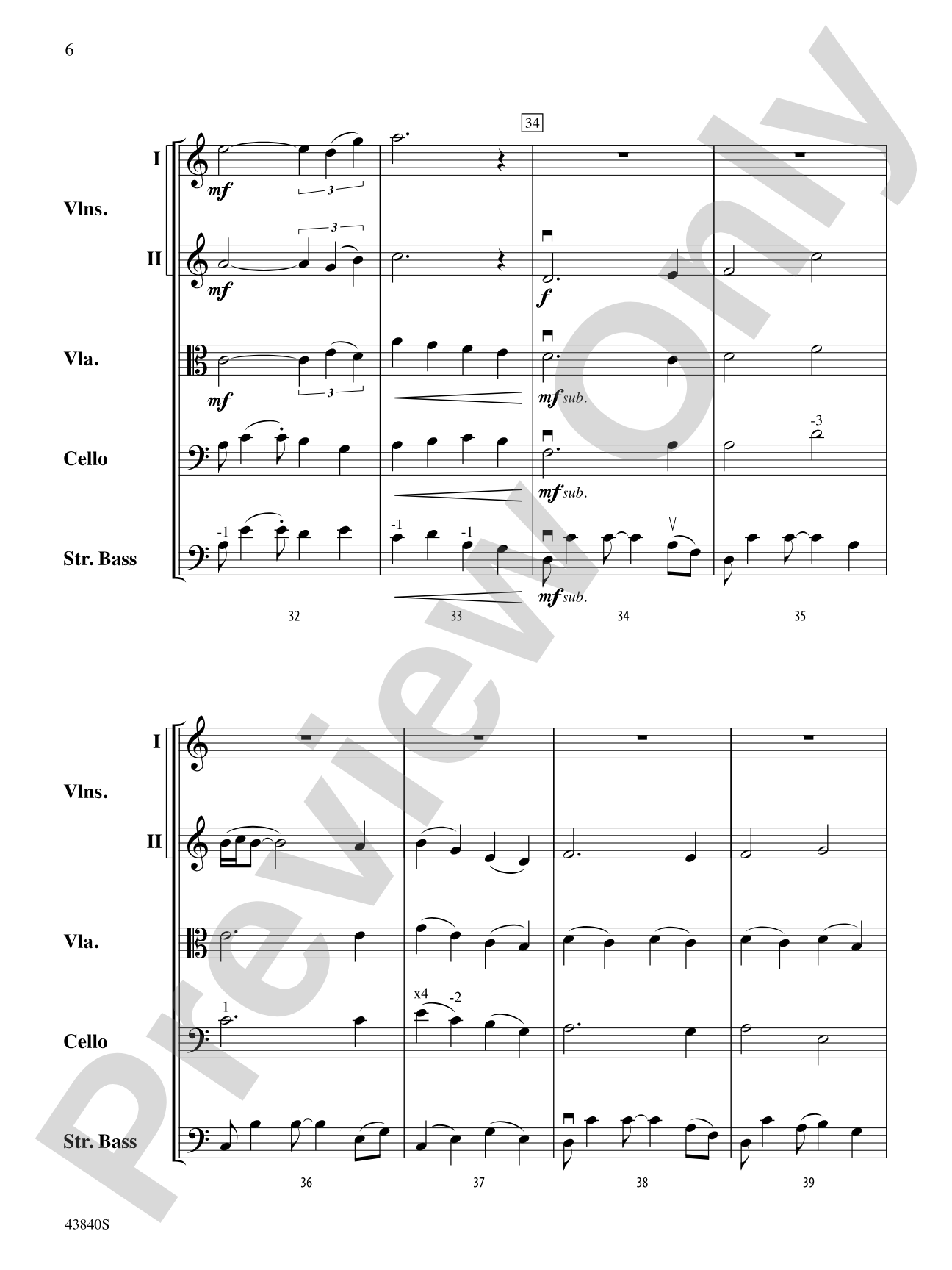
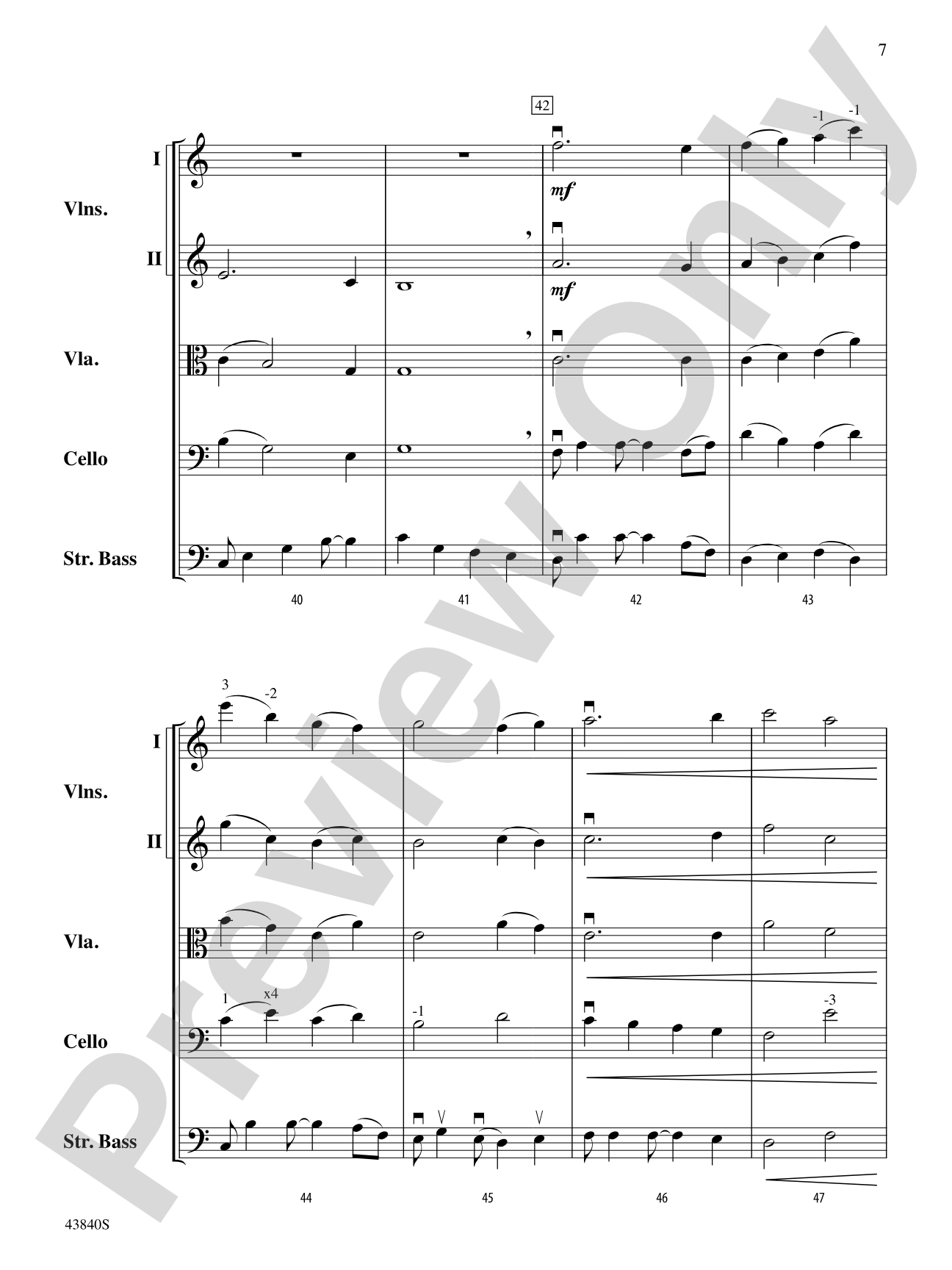
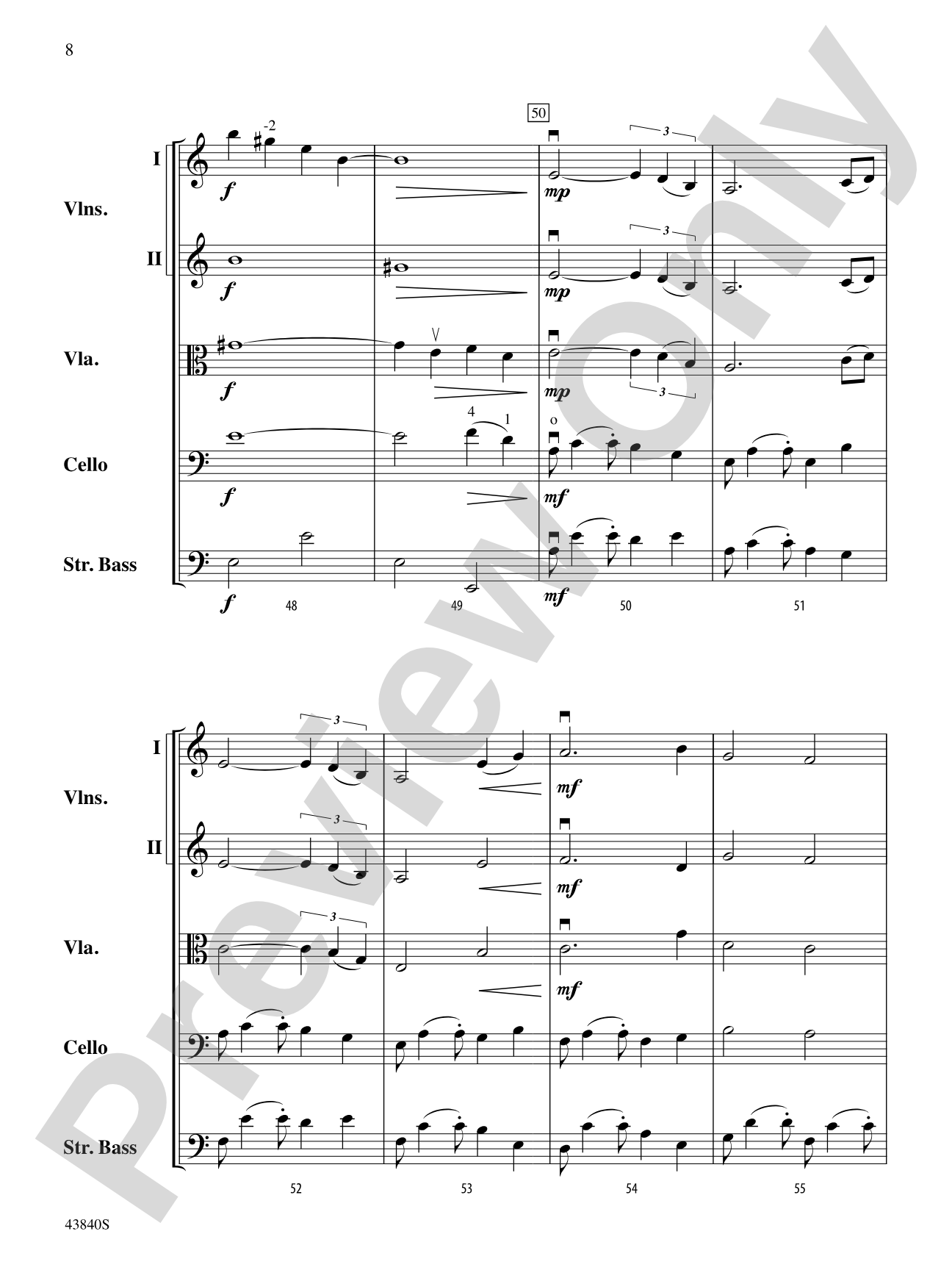
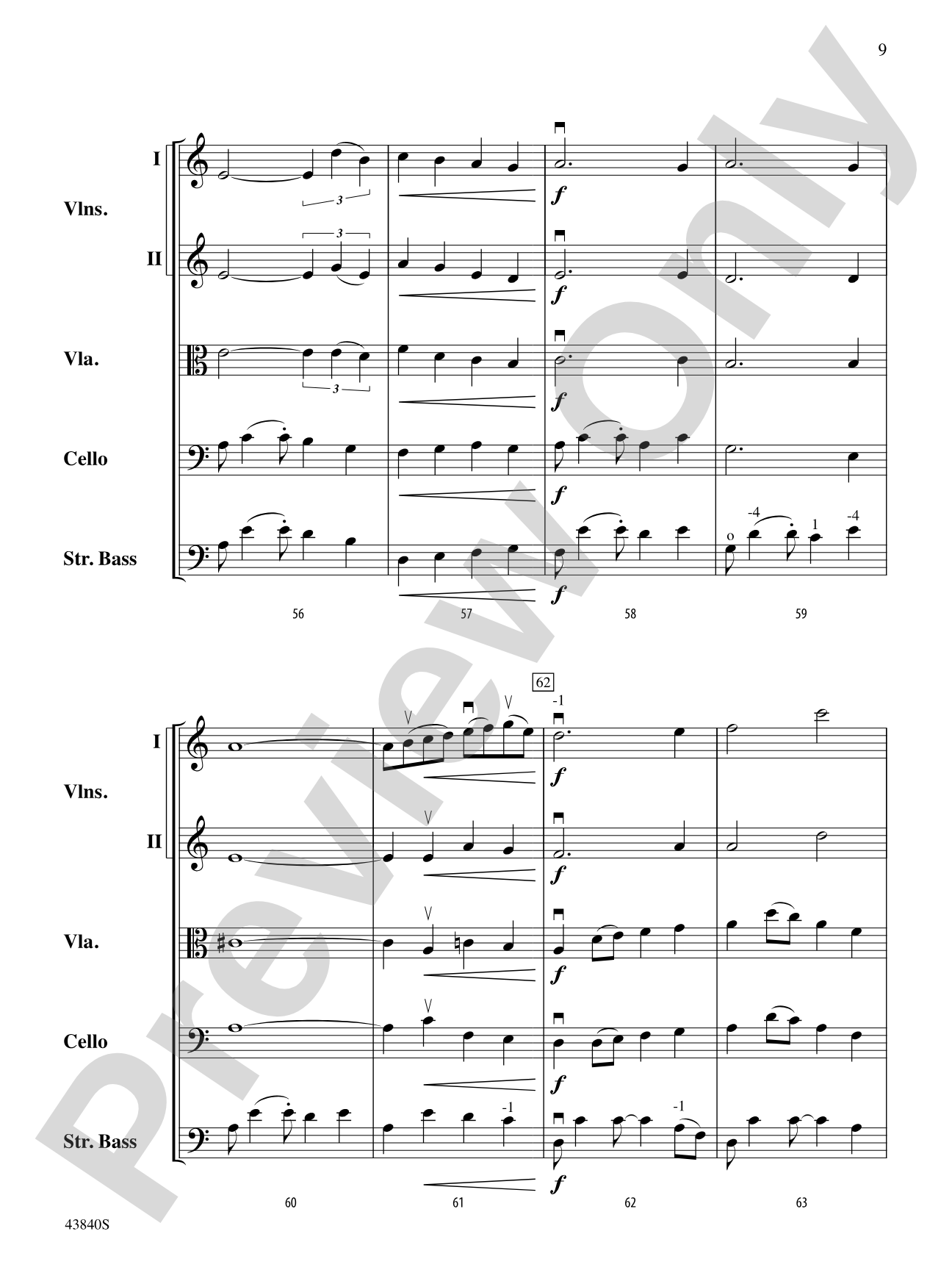
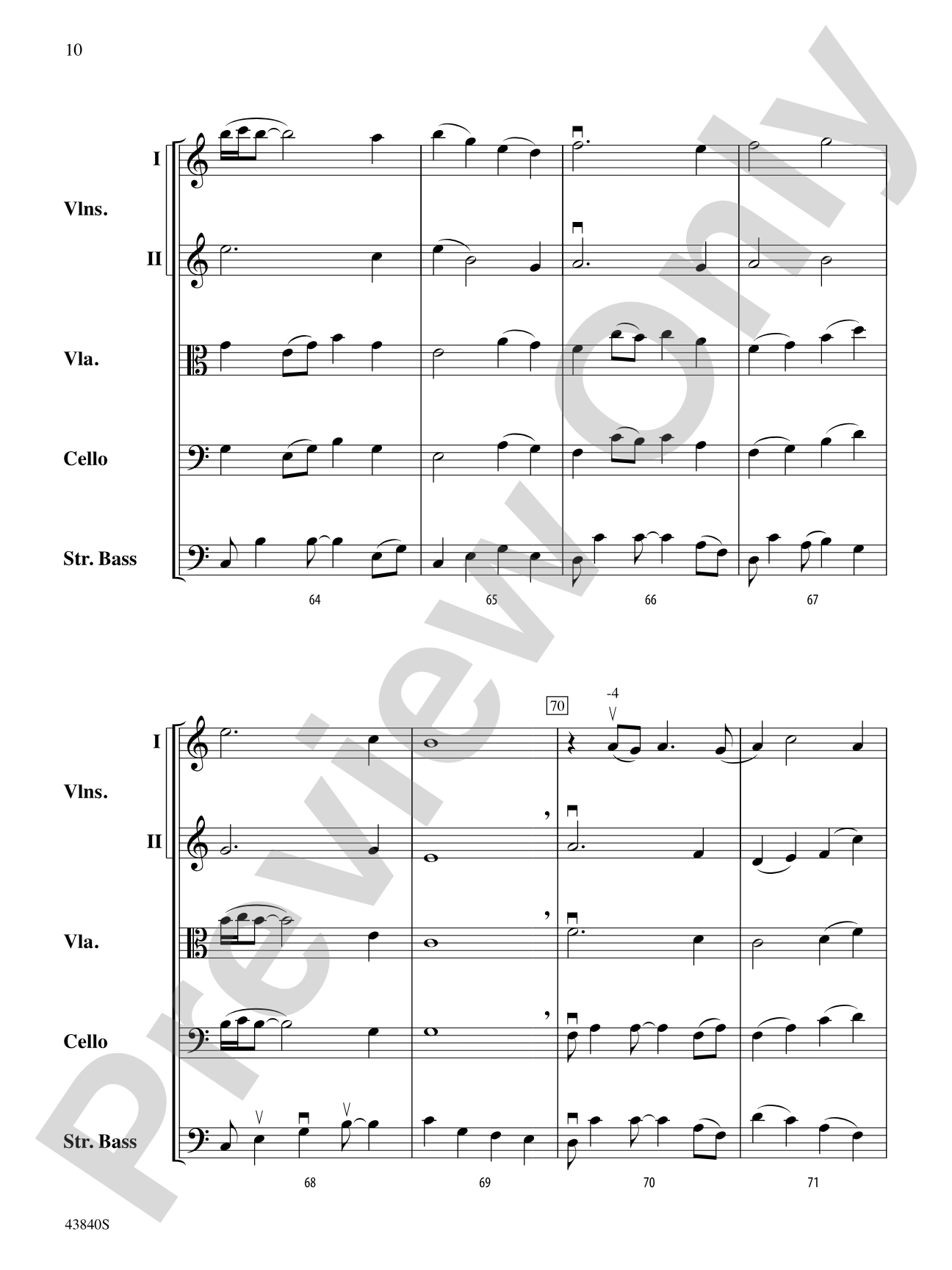
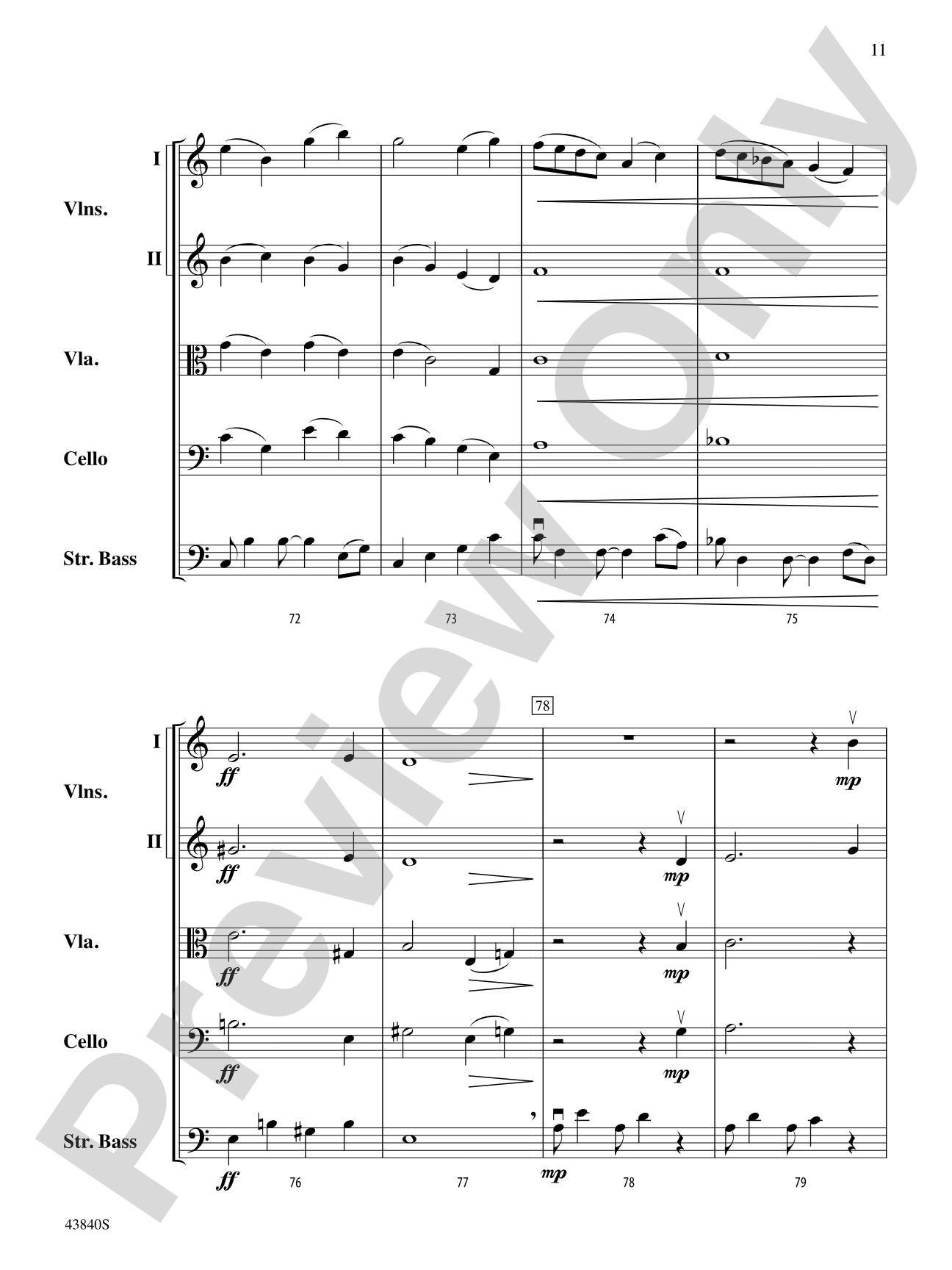
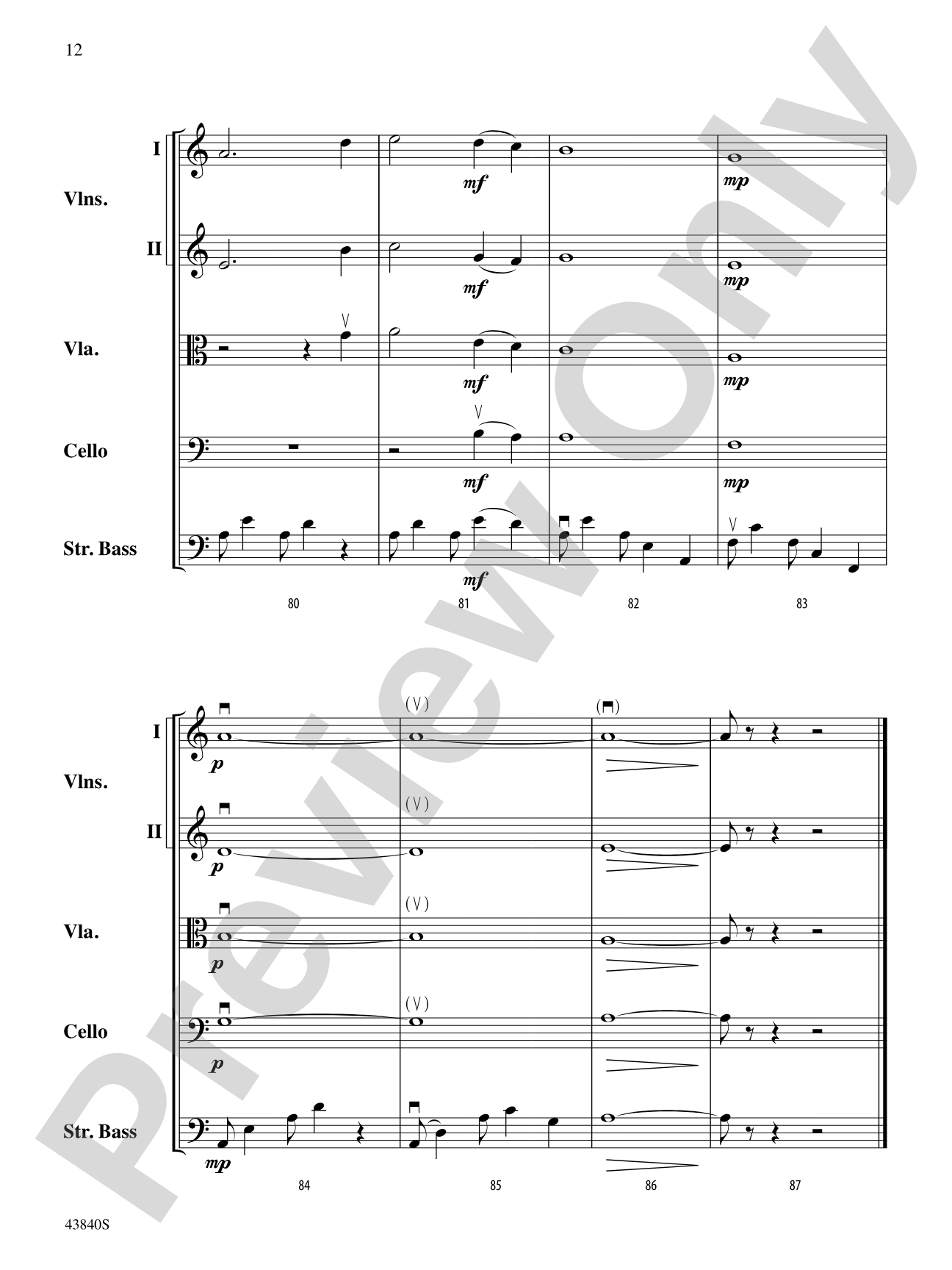

Mystère: String Orchestra Conductor Score & Parts
By Shirl Jae Atwell
Grade: 3
Item: 00-PK-0006689

$49.00
Pickup currently not available
Buy Extra Parts (Digital PDF Download)
| Product | Price | Quantity |
|---|---|---|
| Mystère: Score | $9.00 | |
| Mystère: 1st Violin | $5.99 | |
| Mystère: 2nd Violin | $5.99 | |
| Mystère: Viola | $5.99 | |
| Mystère: Cello | $5.99 | |
| Mystère: String Bass | $5.99 |
Parts Added to Cart!
Description
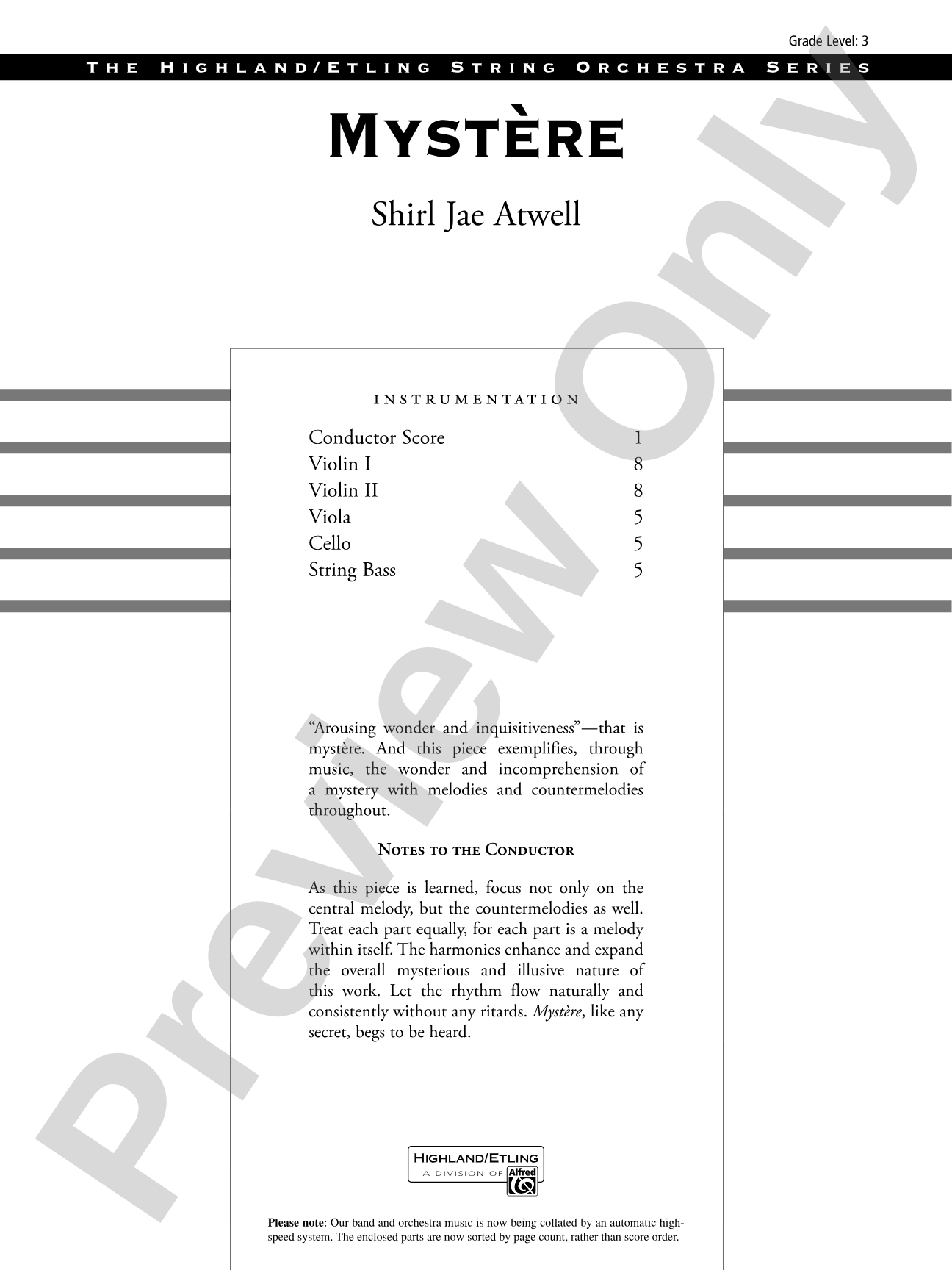
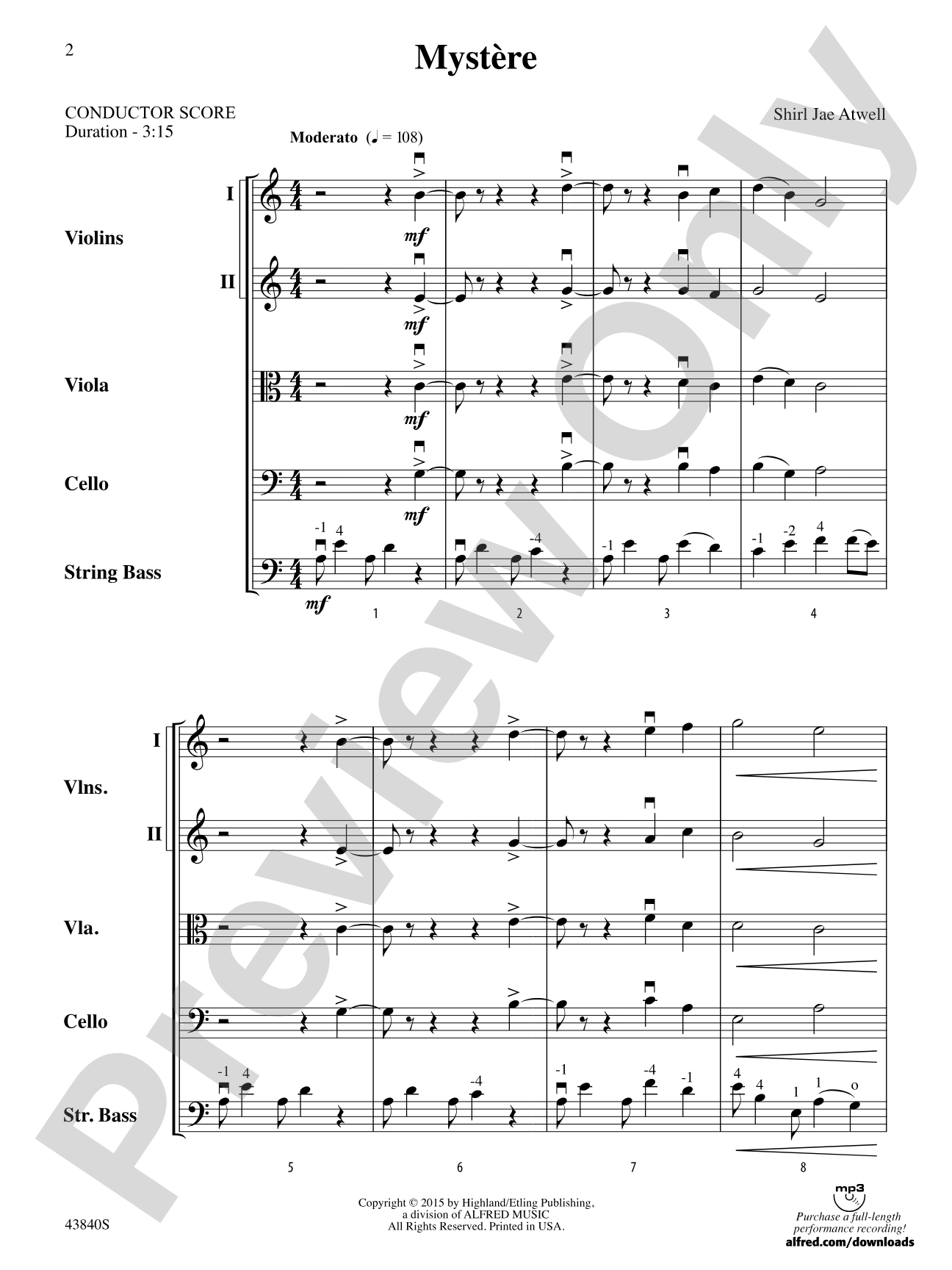
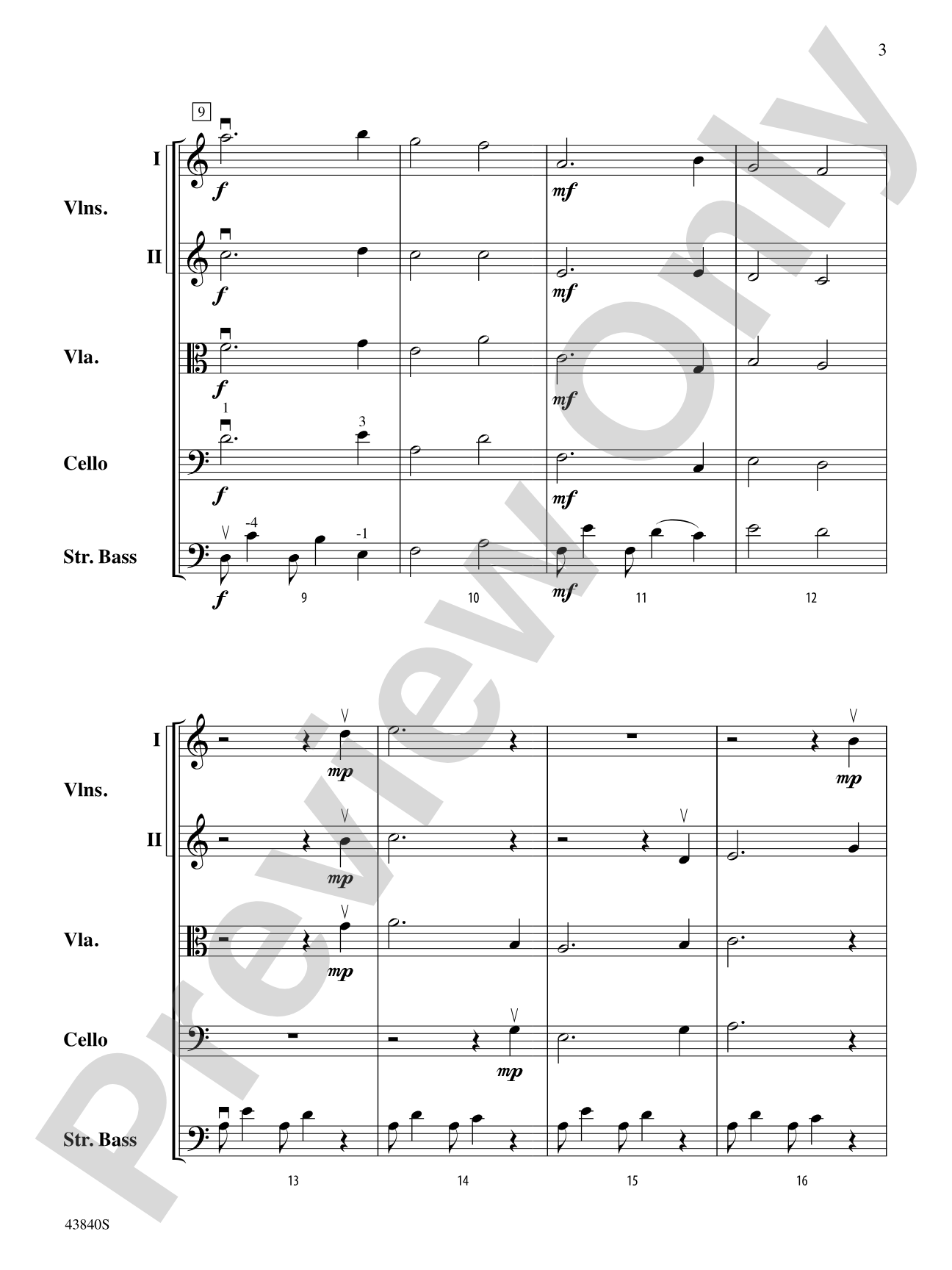
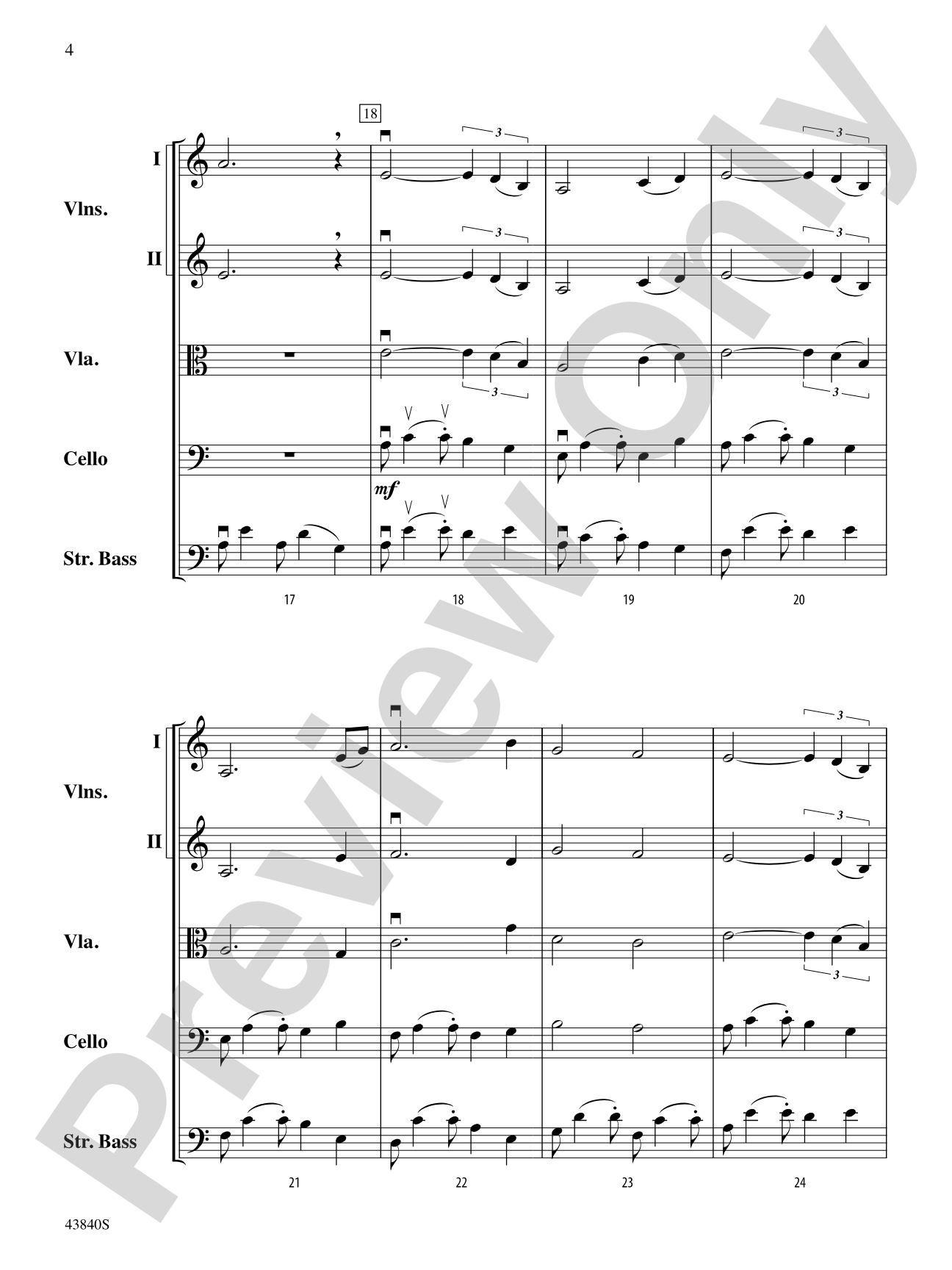
"Arousing wonder and inquisitiveness"---that is mystère. And this piece exemplifies, through music, the wonder and incomprehension of a mystery with melodies and counter melodies throughout. (3:15)


Don't just read it, hear it, play along with it, and watch your students grow with it. In MakeMusic Cloud, Mystère: String Orchestra Conductor Score & Parts comes alive with professional accompaniment, adjustable tempo, and built-in practice tools that turn solo practice into real progress.
Open in the Player
Jump straight in and assign it today.
Start Your Free Trial
Open this title and explore the full library in minutes.
Sample Audio
1
Audio File
--:--
0:00
0:00
Sample Video
No sample videos found.
Additional Details
Series:
Highland/Etling String Orchestra
Publisher:
Alfred Music
Page Count:
124
SKU:
00-PK-0006689
More about this title
About the Composer: Shirl Jae Atwell

Shirl Jae Atwell holds degrees from Kansas State Teachers College and the University of Louisville, where she earned her Master of Music Theory/Composition degree. She continued her studies in composition at the University of South Carolina, completing four years of advanced work in the discipline.
Atwell's catalogue spans multiple genres and has earned significant recognition. She won the Clifford Shaw Memorial Award for Kentucky Composers in 1984 and the National School Orchestra Association composition contest in 1996 for her string orchestra work Modus á Four. Her operas include Sagegrass (New York City debut in 1984), Esta Hargis (premiered at Emporia State University in 1991), and the ballet Lucy (premiered by the Louisville Ballet in 1999, later televised and awarded an Emmy for Arts & Culture in 2000). Her string orchestra compositions have been premiered by regional orchestras throughout the United States, and six of her scores were placed in the permanent collection of the Paris Bibliothèque Internationale de Musique Contemporaine.
Why we love this
Atwell builds intrigue through layered melodies and countermelodies that give students genuine musical material to balance and shade. The piece feels modern without alienating players, making it a smart choice for students ready to move beyond unison-heavy writing but still developing independence in their sections.
What to expect
Mystère draws the listener into an atmosphere of quiet inquiry. Melodies unfold and intertwine like questions asked and answered, with moments of clarity punctuated by gentle uncertainty, creating a sense of discovery throughout the three-minute arc.
Who it's for
Middle school and early high school orchestras looking for a concert or festival piece that goes beyond simple homophonic writing. This score works for ensembles with solid fundamentals who are ready to engage with counterpoint and independent voice leading.
How to get the most out of it
- Establish the character of wonder early in rehearsals by asking students what "mystery" sounds like to them. Let them explore how tempo and dynamics shape the mood before drilling details.
- Highlight the countermelodic writing in individual sections first, then slowly weave them together. This builds confidence and lets students hear how their line contributes to the larger sound.
- Balance the exposed moments between sections carefully; make sure no single line is buried under accompaniment figures, especially in the middle voicings where strings often sit.
How to use it
Pair this with heavier Baroque or Romantic repertoire to create contrast; its moderate length and meditative character make it ideal as an opening piece or as a bridge between more dramatic works. It also stands alone as a thoughtful concert choice or festival entry that showcases ensemble musicality without demanding extreme technical range.
Skills your students will build
- Balancing multiple independent melodic lines within a single section
- Sustaining a consistent accompaniment figure while listening to concurrent melodies
- Shaping phrasing across longer melodic arcs with dynamic control
- Reading and executing countermelodies that require attention to vertical alignment
- Controlling vibrato and tone to distinguish between structural and accompaniment material