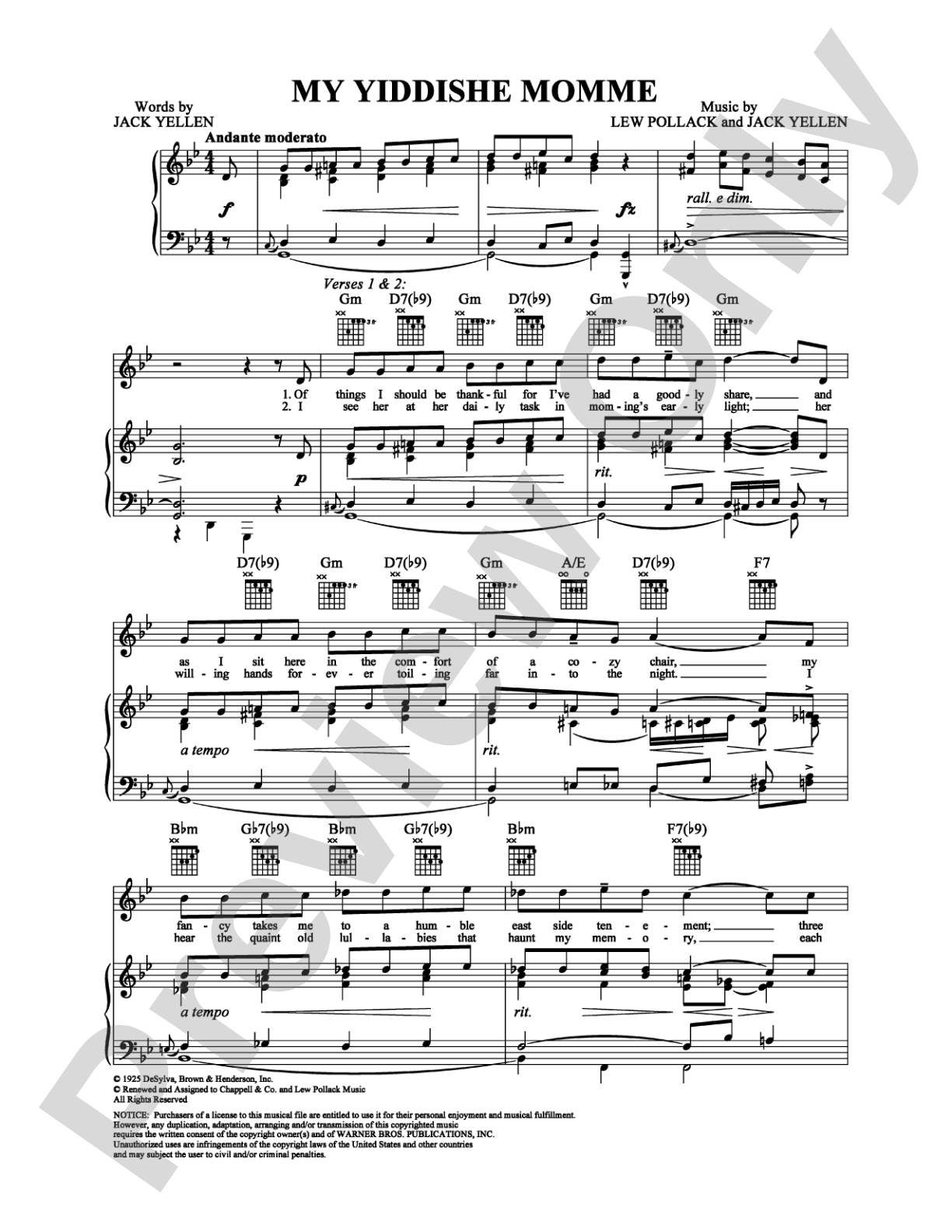
My Yiddishe Momme: Piano/Vocal/Chords Digital Sheet Music

My Yiddishe Momme: Piano/Vocal/Chords Digital Sheet Music

Al Jolson, Lew Pollack, Jack Yellen

Item: 00-PS-0004494

Digital Download
$3.99
Description

My Yiddishe Momme: Piano/Vocal/Chords Digital Sheet Music isn't in MakeMusic Cloud just yet...but it could be. Let us know you'd like to see it, and you'll help shape what comes next. In the meantime, start a free trial and dive into thousands of interactive titles your students can play along with today.

Sample Audio
No sample audio found.
Sample Video
Additional Details
SKU: 00-PS-0004494

More about this title

About the Artist: Al Jolson

Al Jolson (1886, 1950) was one of the most influential entertainers of the early 20th century, known for his powerful voice, dynamic stage presence, and ability to connect emotionally with audiences. A Russian-Jewish immigrant who became a star of vaudeville, Broadway, and early cinema, Jolson drew deeply from his cultural heritage while achieving mainstream success, making him a bridge figure in American popular music.

Why we love this

This arrangement preserves one of the most iconic expressions of filial love and cultural memory in American popular song. The straightforward piano/vocal/chords layout makes it accessible for singers and pianists at various levels while honoring the emotional weight that made Jolson's original recording unforgettable.

What to expect

Tender and reflective, this song evokes the bond between parent and child through a lens of nostalgia and gratitude. The melody unfolds with a gentle simplicity that invites vulnerability, while the emotional subtext of cultural memory gives even quiet moments dignity and depth.

Who it's for

This piece serves singers exploring the American popular song tradition, pianists accompanying vocalists in recital or informal settings, and anyone working with the Jewish American songbook. It works equally well for intermediate adult singers and advanced high school vocalists seeking repertoire rooted in cultural significance.

How to get the most out of it

  • Shape the melody with genuine warmth rather than oversinging; let the lyrics carry the emotional weight while maintaining clear diction through sentimental passages.
  • Balance the vocal line against the piano part so the accompaniment supports rather than competes with the storytelling quality of the text.
  • Use the chord symbols to explore different voicings on piano that reflect the song's nostalgic character without cluttering the arrangement.
  • Allow space for breath and reflection at phrase endings; this song benefits from a conversational, intimate delivery rather than a rushed tempo.

How to use it

Consider programming this alongside other heritage songs or American popular standards in a recital exploring cultural identity and family themes. It can anchor a themed concert about immigrant experiences or serve as a poignant solo piece in a mixed recital of contrasting styles.

Skills your students will build

  • Singing with lyrical phrasing and emotional authenticity
  • Interpreting chord symbols and adjusting accompaniment voicings
  • Balancing vocal expression with piano accompaniment
  • Understanding cultural context and historical significance in song interpretation

You May Also Like