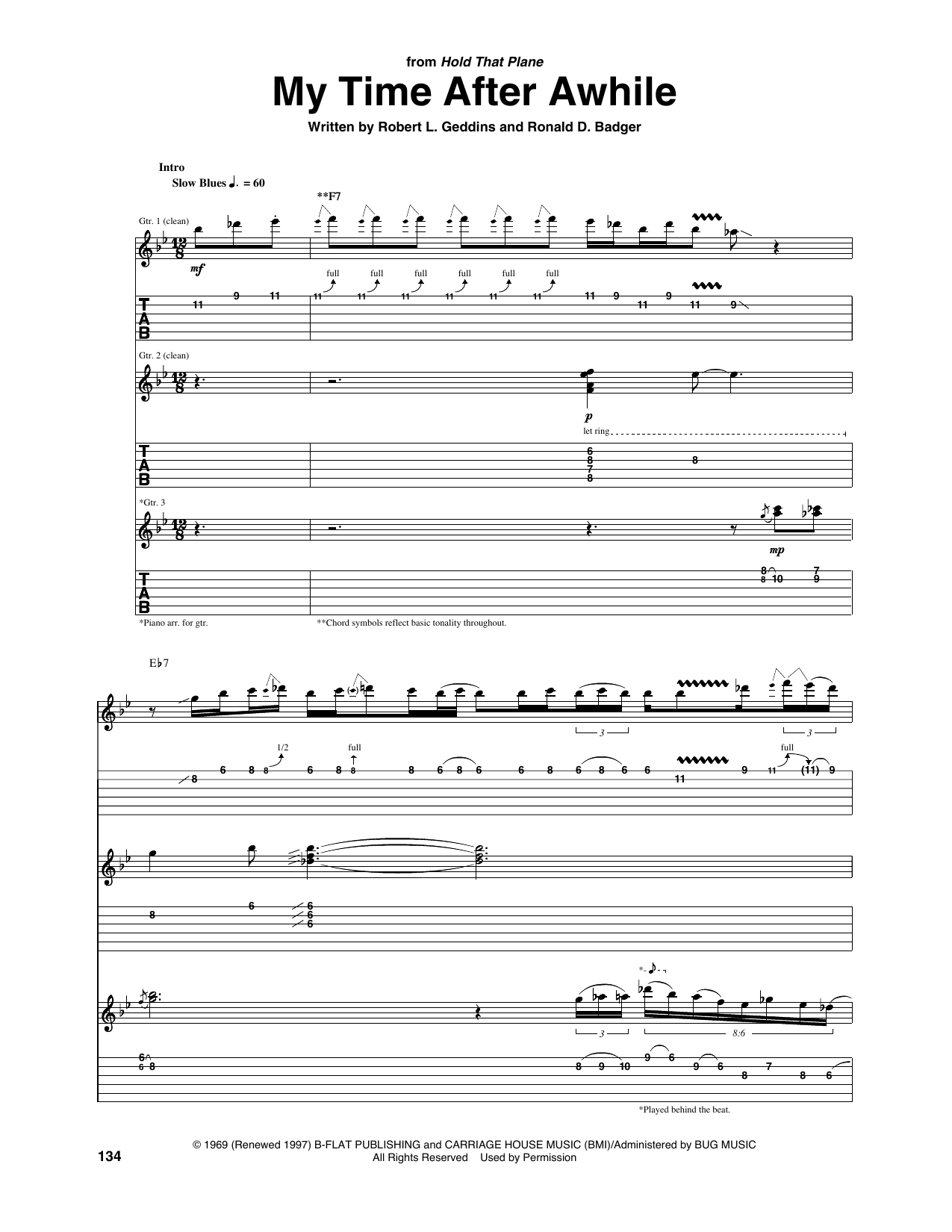
Buddy Guy stands as one of the most influential electric blues guitarists in history, bridging postwar Chicago blues with modern rock and roll. His expressive bending technique, soulful tone, and willingness to push the instrument beyond traditional boundaries shaped generations of players who followed, from Jimi Hendrix to contemporary blues artists.
Why we love this
This tab captures the raw vocabulary of electric blues guitar in a format students can actually decode and internalize. Buddy's phrasing and attack teach players how blues language lives not in note choices but in timing, bend depth, and space between phrases.
What to expect
Direct, conversational, and deeply human. Buddy's playing feels like someone talking to you in a room, not performing for a crowd. There's urgency and intimacy woven through the phrasing, with moments of restraint that make the notes he does play land harder.
Who it's for
Guitar students ready to move beyond pentatonic box patterns and study how a master artist uses dynamics, timing, and space to create emotional weight. Teachers looking for authentic blues repertoire that demonstrates the difference between playing the right notes and playing with conviction.
How to get the most out of it
Study the bend notation carefully; Buddy rarely bends to pitch and holds. Most of his bends happen in quarter and half step increments that resolve or slide into new positions rather than locking into a target note.
Let the rhythm breathe. Where tab shows rests, resist filling them. The silence is part of the language.
Listen to the original recording multiple times to internalize the tone and attack. Tab shows you where his hands go, but the weight he places on each note is essential context.
How to use it
Feature this as a solo interlude in a blues-focused ensemble set, or assign it as a woodshedding project for students studying how expression lives in the margins of rhythm and melody. It works equally well as a listening assignment paired with transcription work.
Skills your students will build
Half step and quarter step bending with precise intonation
Phrasing and space in single-note improvisation
Understanding call and response patterns in blues structure
Interpreting dynamics and articulation from recorded context
Translating ear-driven expression into notated form
You May Also Like
Scan to Complete Your Purchase
Use your phone's camera to scan the code below
You'll log in on your phone and the order will be added to your account