John Denver became one of the most recognizable voices in American popular music during the 1970s, blending folk sensibilities with country warmth and pop accessibility. His catalog spans intimate acoustic compositions and fuller arrangements, all marked by his distinctive tenor and genuine emotional directness. For music educators, Denver's work offers accessible entry points into singer-songwriter craft, with melodies that sit naturally in many vocal ranges and lyrics that resonate across age groups.
Why we love this
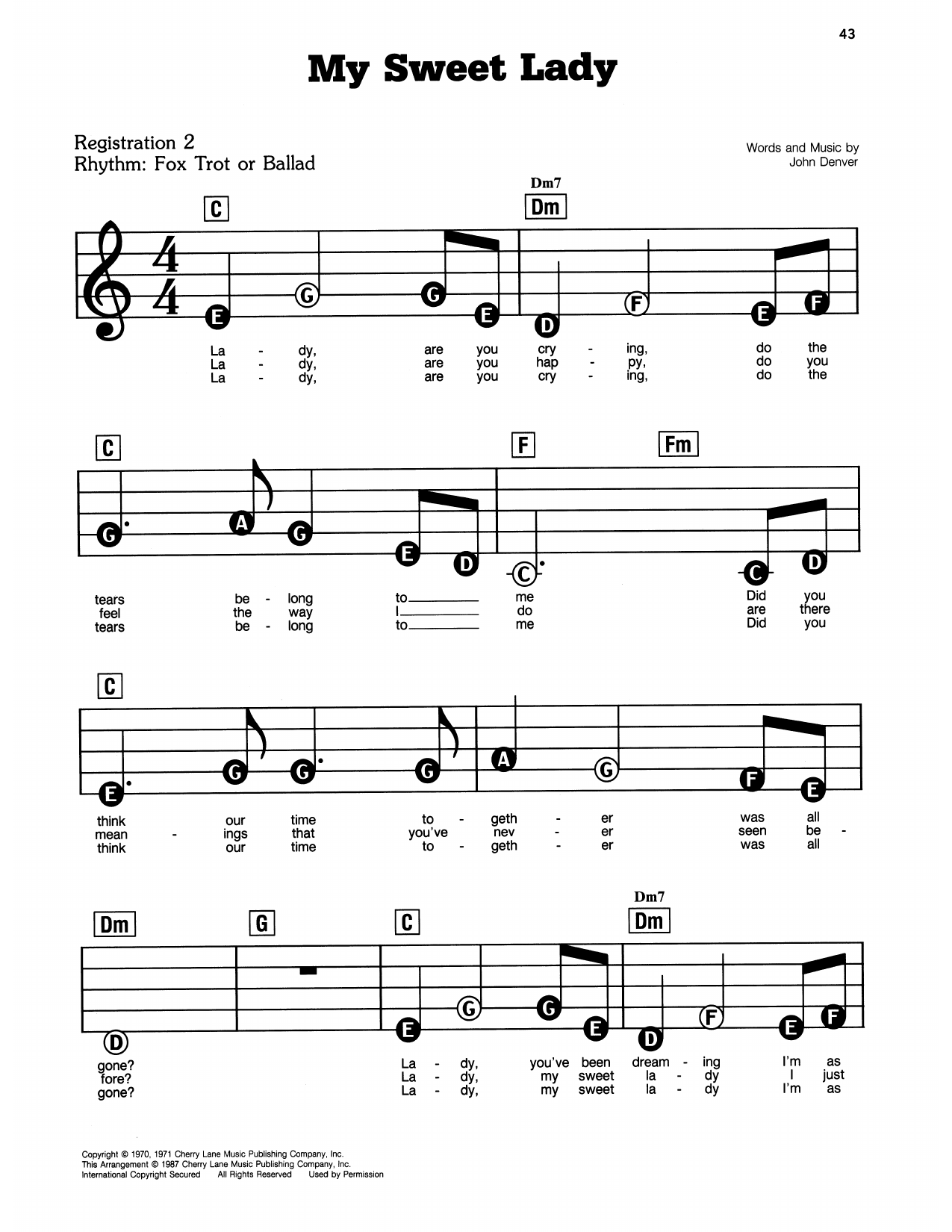
This arrangement captures the unhurried intimacy of Denver's original while giving pianists a manageable framework for expression. The melody sits gracefully on the piano, and the three-page length makes it approachable for students working on stylistic control without overwhelming arrangement demands.
What to expect
Warm, reflective, and unhurried. The piece carries the quiet confidence of someone speaking from genuine affection, with a harmonic language that feels open and conversational rather than formally structured.
Who it's for
Piano students ready to explore folk-influenced repertoire with emotional authenticity will find this piece rewarding. Teachers seeking accessible material that develops both technical and interpretive skills will appreciate how naturally it accommodates different playing levels.
How to get the most out of it
Let the melody breathe by resisting the urge to rush the phrase endings. Denver's phrasing relies on space as much as notes.
Use the left hand accompaniment to establish the song's gentle pulse rather than driving it. Softness here invites listening.
Shape the harmonic movement with subtle dynamic shifts, allowing chord changes to create natural contours without obvious swelling.
Sing or hum the vocal line silently as you play to anchor the piano part to its original vocal character.
How to use it
This works beautifully as a solo offering in casual or student recitals, particularly when paired with other singer-songwriter material. It also serves as an excellent bridge between classical technique work and the expressive freedom students need for contemporary repertoire.
Skills your students will build
Phrasing with silence and space
Translating vocal character to instrumental voice
Dynamic control in quiet passages
Reading simple but expressive harmonic progressions
Balancing melody and accompaniment texture
You May Also Like
Scan to Complete Your Purchase
Use your phone's camera to scan the code below
You'll log in on your phone and the order will be added to your account