
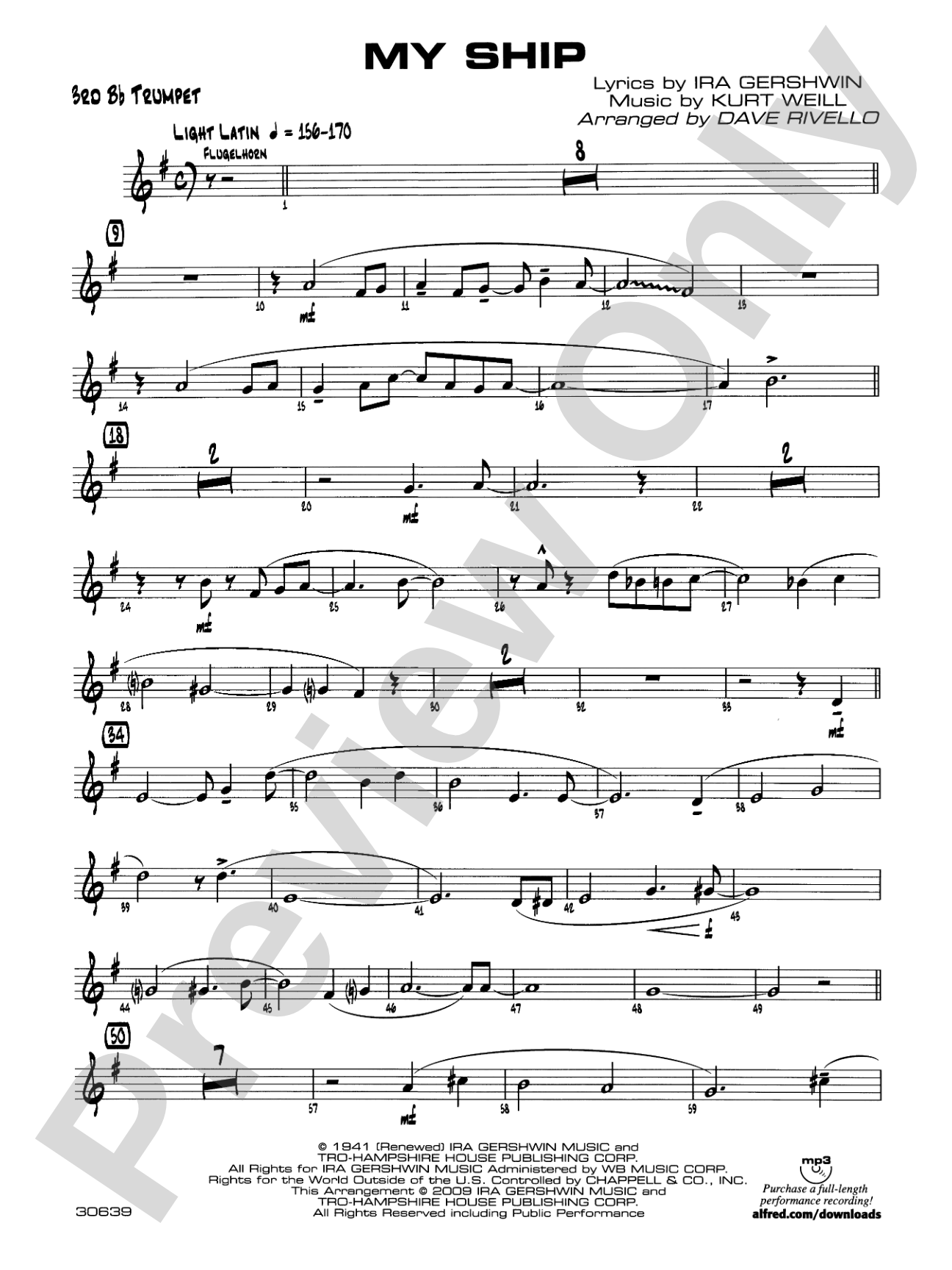

My Ship: 3rd B-flat Trumpet
Lyrics by Ira Gershwin, music by Kurt Weill / arr. Dave Rivello
Grade: 3 (Medium)
Item: 00-PC-0017514_T3
$3.00
Pickup currently not available
Description
Arranger Dave Rivello is excellent at his craft. His treatment of this wonderful tune is a light bossa feel. The melody is stated by alto and trumpet but the solo is (written-out) for baritone sax with an optional solo cue in the 1st tenor part. Weaving lines throughout the band will keep everyone on their toes, and the lead trumpet range is to written G on top of the staff. This chart is tasty, interesting and superbly written. (5:04) This title is available in MakeMusic Cloud.


Don't just read it, hear it, play along with it, and watch your students grow with it. In MakeMusic Cloud, My Ship: 3rd B-flat Trumpet comes alive with professional accompaniment, adjustable tempo, and built-in practice tools that turn solo practice into real progress.
Open in the Player
Jump straight in and assign it today.
Start Your Free Trial
Open this title and explore the full library in minutes.
Sample Audio
1
Audio File
--:--
0:00
0:00
Sample Video
No sample videos found.
Additional Details
Series:
Jazz Band Series
Publisher:
Alfred Music
Page Count:
98
SKU:
00-PC-0017514_T3
More about this title
About the Composer: Kurt Weill
Kurt Weill (1900-1950) was a German-American composer who fundamentally reshaped musical theater by blending classical composition with popular idioms, jazz harmonies, and socially conscious storytelling. His collaborations with lyricist Bertolt Brecht produced works like The Threepenny Opera that challenged conventions and influenced generations of theater composers. Weill's melodies are distinctive for their accessibility and emotional directness, making them ideal vehicles for jazz reinterpretation.
Weill emigrated to the United States in 1935 and became a Broadway composer, creating scores that married serious artistic ambition with popular appeal. His songs have endured as standards in jazz, theater, and concert music because they combine memorable melodic lines with sophisticated harmonic language. For music educators, Weill's output offers rich material across multiple genres and skill levels.
Why we love this
Dave Rivello's arrangement captures the breezy charm of this Weill standard while giving every section meaningful material to navigate. The written-out baritone solo paired with an optional cue in the first tenor part creates flexibility without sacrificing the arrangement's sophisticated voice-leading. Weaving counterlines throughout keep students engaged and accountable, making this a chart that rewards careful preparation and ensemble listening.
What to expect
Light and sophisticated without being precious, this arrangement has the relaxed swing of a summer afternoon. The melodic interplay and carefully voiced harmonies give it an elegant quality while the bossa rhythm and solo section keep everything grounded in groove and authenticity.
Who it's for
Jazz ensemble directors working with intermediate players (Grade 3) who want a stylistically authentic bossa chart with substance. This works equally well for festival preparation or a concert program needing a swinging mid-tempo feature that features the bottom end of the section.
How to get the most out of it
- Emphasize the lightness of the bossa feel by keeping the rhythm section relaxed and conversational rather than driving hard; let the groove breathe.
- Balance the alto and trumpet melody statement so neither overpowers the other; they should feel like equal partners introducing the tune.
- Give the baritone soloist space and confidence during the written solo section; encourage them to phrase idiomatically without rushing the underlying groove.
- Shape the weaving lines throughout the arrangement by highlighting contour and phrase direction rather than playing them as mere accompaniment figures.
How to use it
Pair this with other Latin-tinged charts or straight-ahead jazz standards for a cohesive set that demonstrates your ensemble's stylistic range. The moderate length (5:04) and balanced difficulty make it ideal for filling a concert slot or festival entry without overwhelming younger players.
Skills your students will build
- Bossa nova rhythm and interpretation
- Reading and executing weaving ensemble lines
- Supporting and balancing multiple simultaneous melodic lines
- Jazz soloing (baritone sax) within a written framework
- Listening to and responding to other sections' phrasing and articulation